The death of the street party and why we love swearing
56 min
Listen through the publisher, then discuss the episode here or arrange an in-person Roundtable. Your city determines where to meet.
Roundtables are designed for groups of four, with a shared subject and room for everyone to speak. Come for discussion, with no dating expectation.
Block parties. Street libraries. Kerbside lemonade stands. These are the signs of a neighbourhood that's really alive. But often times, the tangle of red tape required to bring your street to life can get in the way. David Howie, whose decades-long Christmas block party is under threat due to new council rules, joins sociologist Peter Walters to discuss the real price of living in the village. Australians have long had a particularly creative penchant for swearing. We seem to take a strange sort of pride in our colourful language — we've even used it in tourism ads and public safety campaigns. Linguistics professor Kate Burridge and author Amanda Laugesen explore what's behind this cultural attachment to swear words. It's that time of year again — the Black Friday sales are upon us. Last year Australians spent nearly $24 billion in that fortnight alone. But are we really saving anything? Consumer behaviour expert Paul Harrison explains how to tell whether a "sale" really is a bargain, or just clever marketing.
Episode information is provided by the publisher. Listening takes place on the publisher’s service.
This is a Grave Talks CLASSIC EPISODE! PART TWO Preserving history is one thing. Preserving it while uncovering ghostly activity is something else entirely. Saving the Old Properties is a nonprofit dedicated to rescuing endangered historic buildings across Indiana. Founded by Richard Allen and Dann Allen, the organization restores architectural treasures that might otherwise be lost to time. But as walls are opened and floors are lifted, something else often emerges—stories, energy, and sometimes spirits that never left. Joining us are Richard Allen, General Manager Kate Thornberg, and Historian Ted Martin, who share what it’s like to breathe life back into centuries-old structures—while encountering unexplained phenomena within their walls. From shadow figures and strange sounds to the emotional weight that lingers in historic spaces, this conversation explores where preservation meets the paranormal—and how history and hauntings often occupy the same foundation. For more information
The proliferation of dating apps have people thinking romance is dead. But is that what romance really is? In today’s Sunday Pick, we bring you another episode of the TED podcast, Corner Piece, where host Melissa sets out to discover the true definition of romance, and if it’s even achievable in modern life. She interviews Professor Carrie Jenkins to understand the biological and social foundations of romantic love, the core cultural narratives we construct about romance, and whether romance itself is exclusive to relationships. Find more episodes of Corner Piece here: https://link.mgln.ai/u4mZ9C Hosted on Acast.
Charlie Kirk’s assassination will dominate the headlines—but before the truth is even clear, the disinformation machine is already spinning. This video exposes how suppression, radicalization, and division are weaponized—not by ideology, but by systems designed to keep you outraged, divided, and distracted. Uploaded 11-09-25 We’ll reveal: • Why suppression is the biggest red flag in history—and why it always signals weakness, not strength. • How highly suggestible people are radicalized—not by one side or the other, but through media outrage loops, algorithmic echo chambers, and deliberate manipulation. • The illusion of “left vs. right”—a distraction designed to pit neighbors against each other while corruption, corporate power, and elites escape untouched. • The common ground we all share: freedom, safety, stability, fairness—and what none of us want: corruption, endless wars for profit, elites with different rules, surveillance states, and justice systems that bend for the powerful
This week, producer Tim joins Nancy and Nick Clark for Eurotrash at the Young Vic, with Ben Whishaw and Kathryn Hunter as a son and mother on a deeply peculiar road trip through Switzerland, essentially two brilliant actors being very weird indeed. Then Nancy holds the fort for Eugene O’Neill’s Desire Under the Elms at the Almeida, after illness, flights and scheduling mishaps keep everyone else away. A farmer brings home a much younger wife, she falls for his son, and things go about as well as you’d expect in an O’Neill play. Plus, Nick Curtis talks to playwright extraordinaire Natasha Gordon as her superb debut play Nine Night returns at the Kiln. They discuss the Jamaican mourning tradition behind its story of family, grief and celebration, and Gordon sets the record straight about being called the first Black woman to have a play in the West End. And the ridiculously delightful Francesca Mills answers our five questions as she stars alongside Jill Halfpenny and Paul Chuckle in The
Imagine if every big change in our lives came with a whole community stepping up beside us… In this episode, I sit down with Dr Arne Rubinstein, former GP and emergency doctor, founder of the Rites of Passage Institute, and a man who's spent more than 30 years walking young people across the threshold into adulthood. Arne's work began around a fire at his very first men's gathering, listening to a hundred men wrestle with the same handful of wounds. Then in the Emergency Dpt, he kept meeting teenagers who'd pushed it one step too far... kids trying to become adults with nobody there to hold them. He came to believe every young person will go through a rite of passage either way. The question is whether we leave them to create their own, or gather around and help. We talk about why our culture is so good at turning away from the big moments - from first periods to menopause to death - and what opens up when we turn towards them. We explore: Separation, transformation and integration, an
This week, Kate is joined by her friend and fellow solo podcaster Madi Murphy of The Bad Broadcast. They get into how 45 minutes on the internet unraveled her Mormon upbringing, thought-stoppers like "doubt your doubts," Molly Mormons vs. Jack Mormons, and what it's like to watch the church relax the rules on the shoulders you spent your whole girlhood covering. Plus: Secret Lives of Mormon Wives OC, from the slicked-back buns to the self-proclaimed "emasculated" husbands, the lost art of complaining, and a Love/Hate featuring one toddler life hack you'll want to steal immediately. Enjoy! PRE-ORDER (https://www.google.com/url?q=https%3A%2F%2Fstatic.macmillan.com%2Fstatic%2Fsmp%2Fshe-let-herself-go-9781250434968%2F&sa=D&source=calendar&usg=AOvVaw0jHgJi17ziwPR4kj1rl89v&ust=1795461647781770) Kate's upcoming book, She's Let Herself Go (https://www.google.com/url?q=https%3A%2F%2Fstatic.macmillan.com%2Fstatic%2Fsmp%2Fshe-let-herself-go-9781250434968%2F&sa=D&source=calendar&usg=AOvVaw0jHgJi17
Reality TV and social media have turned hoarding into voyeuristic spectacle, but behind the clutter is a widely misunderstood illness affecting an estimated 715,000 Australians. Erain, who has experienced hoarding behaviours for a large part of her life, joins clinical psychologist Jessica Grisham to explore what's really going on underneath. Everyone wants their mates to get along with their significant other. But Life Matters listener Cassie is getting mixed signals about whether their new girlfriend is ready to embrace the friendship camping tradition. Aunties Monica Dux and James Findlay are on the case.
Around 65 per cent of young children have had an imaginary companion by the time they turn seven, and while the friendships might be make-believe, the benefits to children's development can be very real. So why do some kids have them, and others don't? And in the age of AI companions, do we even need imaginary friends anymore? Professor Evan Kidd at Australian National University, has researched imaginary friends and helps us unpack this phenomenon. When it comes to tweens and teens, there's a familiar narrative loop that's evolved. We want kids off screens. We want them to go outside. But when we do see them in public spaces, being kids, which sometimes means a little bit rowdy and feral, someone complains. So is it about building better spaces for them to hang out in, or is it about all of us collectively adjusting our attitudes towards kids in public? Airbnb hosts have became notorious for setting some pretty onerous ones. It led the platform to restrict what hosts can and can't ask
If you live outside the major cities, flying can cost an arm and a leg. A recent Productivity Commission report found short regional flights were, on average, 173 per cent more expensive per kilometre than major city routes. For many travellers, being priced out means missing out on more than family holidays. Regional Capitals Australia chair Josh Black, aviation expert Keith Tonkin and traveller Helen Hall weigh in on what could make regional flights more affordable and reliable. After candidly sharing her heartbreak and hopes through seven years of fertility treatment, comedian Tanya Hennessy finally welcomed her precious daughter Scottie late last year. Instead of slowing down, she's busier than ever, and has just released the second book in her Sunny and Storm series. She shares her insights on motherhood, creativity and keeping going through it all. From decorating the tree to the same old family card game, the rituals we build around Christmas can bring comfort and connection, or
Research announcements should give uncertainty as much attention as promising findings.
Share your view, then see how readers voted. No sign-in required. This poll is shared across stories.
Do you agree or disagree?
Common Quandary
A Common Quandary to discuss
Another conversation to explore, separate from this news story.
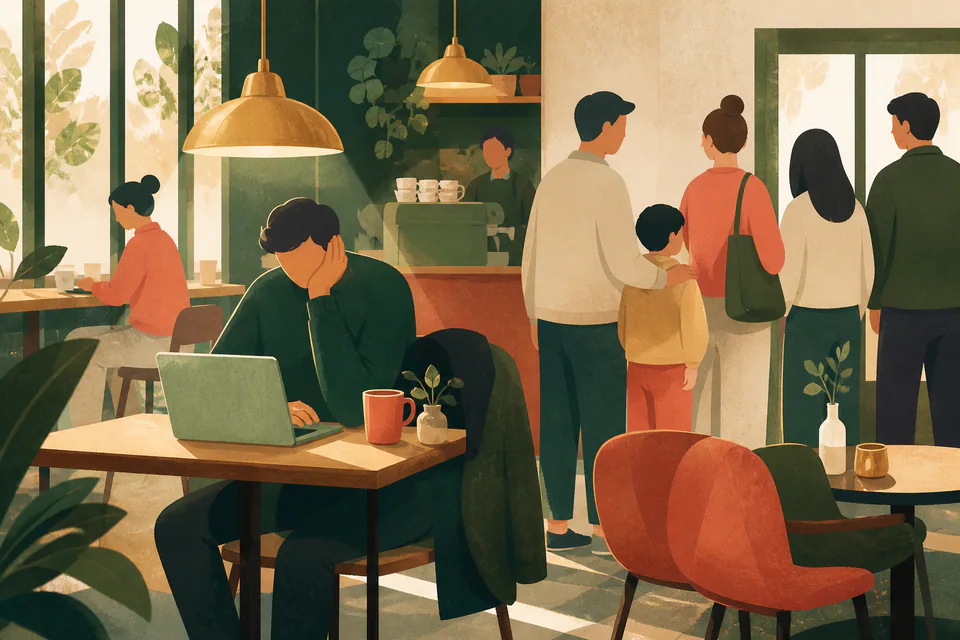
One coffee, four hours, last table. Can the café ask you to leave?
A neighborhood café has become a popular remote workplace. Some guests buy one drink and occupy tables for hours, while families and friends regularly leave because they cannot sit together.