Listen through the publisher, then discuss the episode here or arrange an in-person Roundtable. Your city determines where to meet.
Roundtables are designed for groups of four, with a shared subject and room for everyone to speak. Come for discussion, with no dating expectation.
One of the hardest things about difficult emotions is believing they might never end. But impermanence offers another way to understand what we're going through. Dora reflects on how the constantly changing weather of the Azores helped her see that nothing stays exactly as it is. The sunshine passes, the fog lifts, and the rain eventually stops. Our emotional lives move in much the same way. This doesn't make the hard moments easy, but it can remind us that what we're feeling right now doesn't define what comes next.
Episode information is provided by the publisher. Listening takes place on the publisher’s service.
Fear has a way of quietly taking control of your life. It convinces you to stay where you are, avoid difficult conversations, delay decisions, tolerate situations you know aren’t good for you, and settle for a life that is far smaller than the one you are capable of living. In this episode of The Strong Life Project, we explore how fear impacts your thinking, your relationships, your career, your leadership, and ultimately your ability to live a meaningful life. Fear doesn’t always look like panic. Sometimes it looks like procrastination, overthinking, making excuses, people pleasing, avoiding conflict, or constantly waiting for the perfect moment. The problem is that every time you allow fear to make a decision for you, you reinforce the belief that you are incapable of handling what comes next. Over time, this creates a pattern of avoidance that undermines confidence, resilience, emotional strength, and personal growth. Learning to manage fear doesn’t mean becoming fearless. It means
A kiss can be wonderful. It can create an instant connection, spark romance, or make you feel closer to someone. But a kiss can also have the opposite effect — and sometimes ruin everything. So what makes kissing so powerful, and why can one kiss make such a difference? There's some fascinating science behind it. https://www.scientificamerican.com/article/why-we-kiss/ We spend an enormous amount of time worrying about what's going to change. What's next? What's coming? How do we prepare? But what if we're paying attention to the wrong things? Some of the most important forces shaping our lives never change, and understanding them may be far more valuable than trying to predict the future — something humans are notoriously bad at. Morgan Housel, partner at The Collaborative Fund and author of Same as Ever: A Guide to What Never Changes (https://amzn.to/3SwWn6u) (https://amzn.to/3SwWn6u)), joins me to explain why the things that stay the same may be the most important things to understan
Jay explains why being around family can often pull us back into old emotional patterns, no matter how much we've grown, and shares a five-part framework for navigating these moments. He explores how to recognize the roles we fall back into, prepare for familiar triggers, and set boundaries using a simple three-step approach. Jay also breaks down how to know when to regulate your own emotions and when to address an issue directly, and why letting go of the “perfect” holiday can help you enjoy the one you're actually having. With Love and Gratitude, Jay Shetty Learn More. At https://chase.com/sapphirereserve JAY'S DAILY WISDOM DELIVERED STRAIGHT TO YOUR INBOX What I Discuss: 00:00 Introduction 00:25 Navigating Holiday Stress With Family 03:54 What Is Your Role In Your Family? 06:13 Breaking Free From Old Family Roles 09:30 How to Prepare for Predictable Triggers 12:39 Practice Three: Use the Boundary Ladder 18:00 Handling Family Criticism 18:38 Regulation or Conversation 24:10 Define a
Happy Regular Guy Friday! We fooled them again and somehow made it through another week! This week, we're hauling furniture, dodging birthday cakes, revisiting old memories, and asking one very important question: Why can't we just make things fun? We talk birthdays and why sometimes a vanilla cake and a fork beat a celebrity-filled bash. We talk moving, downsizing, and how getting rid of years of accumulated stuff can make life feel a whole lot lighter. We talk anxiety, the need for control, and how music, laughter, and the right attitude can turn an overwhelming job into a good time. We revisit Blue Collar versus Blue Blood, old family stories, and why the memories we hold onto aren't always the whole story. We talk letting go of old resentments, appreciating the intentions behind difficult decisions, and helping our parents navigate life's later chapters with dignity and love. Plus, Hulk Hogan, Corey Feldman karaoke, Mercedes Moné's big moment with Team USA women's wrestling, and wh
Feeling overwhelmed by anxiety or experiencing a panic attack right now? This gentle guided meditation is designed to help you slow down, reconnect with the present moment, and find a sense of calm, one breath at a time. If you're feeling panic, begin at the very start. Through a soothing voice, gentle breathing exercises, and grounding techniques, you'll be guided to feel the support beneath you, notice your surroundings, and gradually release physical tension. As the meditation continues, you'll explore what happens in your body during a panic attack, why anxiety can feel so intense, and how to respond to those sensations with greater understanding and self compassion. Instead of fighting the wave of anxiety, you'll practise allowing it to rise and pass while remaining connected to the present moment. This peaceful journey includes: • Immediate grounding techniques for moments of panic • Gentle breathing with a longer, slower exhale • Understanding the physical sensations of anxiety
Robert “Bob” Sutton (https://engineering.stanford.edu/people/robert-sutton) is an expert on organizational behavior. He studies a key workplace dynamic he calls friction – moments where reaching goals is more difficult than it should be. In any organization, whether a company, government, university, or nonprofit, there are good kinds of friction and bad, Sutton says. And good friction can undo the bad, but it’s not easy. He champions what he calls a “subtraction mindset,” removing what doesn’t work to focus on what does: virtues like competence, hard work, and compassion. He likens the approach to film editing. The best editors “cut out the bad stuff and keep the good,” Sutton tells host Russ Altman (https://bioengineering.stanford.edu/people/russ-altman) on this episode of Stanford Engineering’s The Future of Everything podcast. Have a question for Russ? Episode Reference Links: TheAI and Organizations Lab at HAI (https://hai.stanford.edu/centers-labs/ai-organizations-lab) Connect wi
Have you ever been somewhere physically, but mentally you've already checked out? Rosie felt that way during her first cruise. Between the work she needed to do and the uncomfortable realization that she couldn't simply leave, she spent much of the trip disconnected from her surroundings. But when she finally stopped resisting the experience, she found a sense of ease she hadn't expected. Sometimes the hardest part of being present is letting go of the wish to be somewhere else.
We tend to think that great performers are simply born with the ability to handle pressure. But what if performing well under pressure is a skill we can actually develop? Dora sits down with Juilliard's Noa Kageyama and John-Morgan Bush to explore the psychology behind performance anxiety. They discuss how to practice in uncomfortable situations, create pre-performance routines, and build confidence through small wins. Whether you're giving a presentation, competing in a race, or stepping onto a stage, you can learn to show up more like yourself when it counts.
We're so used to thinking about where we're going that we rarely appreciate the time it takes to get there. But Rosie has a soft spot for the long, dusty highways of Central California, where the scenery repeats and the road seems to stretch forever. Those drives have become a place for memories, unexpected ideas, and moments of quiet reflection. What if the time we spend getting somewhere isn't something to get through, but something worth experiencing in its own right?
Officials should distinguish confirmed facts from uncertainty during developing incidents.
Share your view, then see how readers voted. No sign-in required. This poll is shared across stories.
Do you agree or disagree?
Common Quandary
A Common Quandary to discuss
Another conversation to explore, separate from this news story.
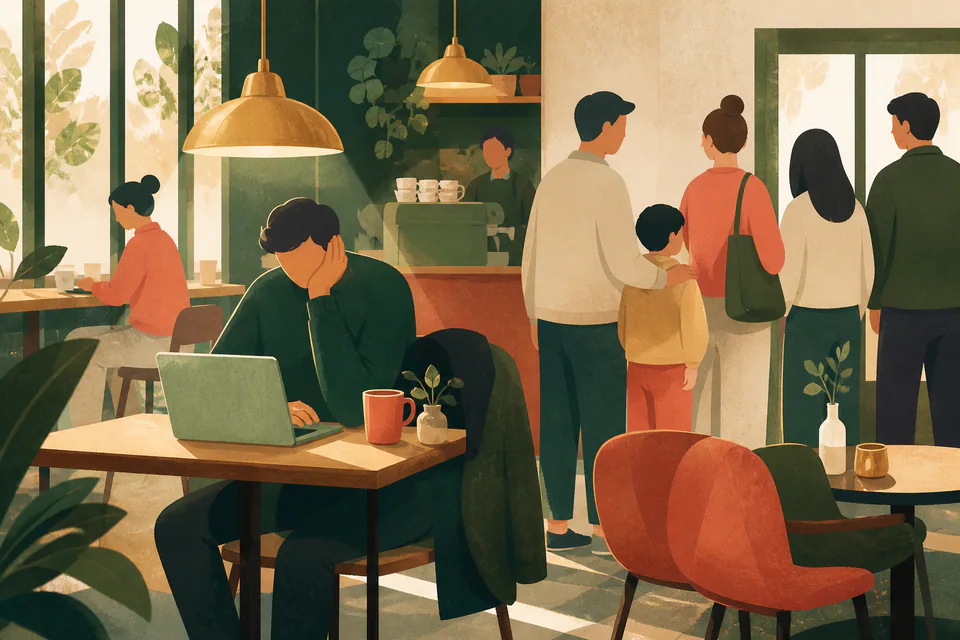
One coffee, four hours, last table. Can the café ask you to leave?
A neighborhood café has become a popular remote workplace. Some guests buy one drink and occupy tables for hours, while families and friends regularly leave because they cannot sit together.