Listen through the publisher, then discuss the episode here or arrange an in-person Roundtable. Your city determines where to meet.
Roundtables are designed for groups of four, with a shared subject and room for everyone to speak. Come for discussion, with no dating expectation.
As results from the midterm elections continue flooding in, for the midweek podcast, we're taking a close look at the social media machinery behind incumbent left-wing Lula da Silva’s dramatic, nail-biting win against Flavio Bolsonaro in Brazil in late October. During the second round of voting on October 25th, da Silva earned 10 million more votes than he had in the first round, a stunning first in modern Brazilian history. In the aftermath of the victory, Adam Bumas (https://www.garbageday.email/authors/adam-bumas), the Head of Research and Associate Editor at the independent news site Garbage Day, wrote a recent piece (https://www.garbageday.email/p/brazil-left-lula-beat-bolsonaro?_bhlid=c495fbf840b6d0b5a6d0508d83cc059a137b05e0) about how a social media strategy called "gamification," which is usually deployed by the far-right, may have boosted da Silva to victory. Host Micah Loewinger speaks to Bumas about the extremely online Brazilian congressman who pitched the strategy to da Silva, and how a "perfect storm" of factors led to the explosion of a WhatsApp group called "Lula's Army," which ended up exerting enormous influence on the election. On the Media is supported by listeners like you. Hosted by Simplecast, an AdsWizz company.
Episode information is provided by the publisher. Listening takes place on the publisher’s service.
This is a Grave Talks CLASSIC EPISODE! Preserving history is one thing. Preserving it while uncovering ghostly activity is something else entirely. Saving the Old Properties is a nonprofit dedicated to rescuing endangered historic buildings across Indiana. Founded by Richard Allen and Dann Allen, the organization restores architectural treasures that might otherwise be lost to time. But as walls are opened and floors are lifted, something else often emerges—stories, energy, and sometimes spirits that never left. Joining us are Richard Allen, General Manager Kate Thornberg, and Historian Ted Martin, who share what it’s like to breathe life back into centuries-old structures—while encountering unexplained phenomena within their walls. From shadow figures and strange sounds to the emotional weight that lingers in historic spaces, this conversation explores where preservation meets the paranormal—and how history and hauntings often occupy the same foundation. For more information on Saving
The Democrats swept the midterms. Donald Trump is still president. What will the next two years look like? And what can history teach us about what comes next? Martin Wolf speaks to historian Heather Cox Richardson about the cycles in the past 250 years of US politics — how renewal (and division) can both follow periods of oligarchy, and how the Democrats should react to a “constitutional crisis”. To enjoy future episodes, be sure to subscribe to ‘Martin Wolf on the World’ wherever you get your podcasts. You can also watch Martin’s podcast series on the FT’s YouTube channel here:https://www.youtube.com/@FinancialTimeshttps://www.youtube.com/@FinancialTimes Host: Martin Wolf Producer: Mischa Frankl-Duval Senior producer: Laurence Knight Video editor: Richard Topping Senior audio engineer: Breen Turner Broadcast engineer: Andrew Georgiades Podcast development: Laura Clarke FT Global Head of Audio: Flo Phillips Learn more at www.ft.com/martin-wolf-on-the-world (http://www.ft.com/martin-wo
Until a little under two weeks ago, Silicon Valley Bank was the sixteenth largest bank in the United States, the favoured choice of tech startups due to the tailored services it provided. But by 10th March 2023, American authorities were taking control of SVB following its collapse. It had assets of over $200bn, making for the second biggest bank failure in US history. There were a number of factors behind the collapse, and it’s causing concern as it’s common for one bank collapse to be followed by another, due to what’s called financial contagion. Indeed, just a few days later it was the turn of New York-based Signature Bank to collapse. And over in Europe, Switzerland’s second largest bank Crédit Suisse had to take out a $54bn to stay afloat, before then being bought out by the country’s largest bank UBS, in a bid to halt the crisis. Why did Silicon Valley Bank collapse? How do stock market crashes happen? In under 3 minutes, we answer your questions! To listen to the last episodes,
November 20, 2026; 10am: Three weeks after the midterms, and losses for the candidates they funded, Elon Musk says he’s not MAGA and Palantir’s Alex Karp calls himself a progressive. Then, mixed messaging over the Ukraine war. Trump says Russia wants peace, but that’s not exactly what Putin told reporters. Plus, new reporting out of Utah on data centers, and the group chat shares their MVPs to close out the week. David Rohde, Mary Harris, Dan Nathan, Paul Mecurio, Michael McFaul and Josh Einiger join the Group Chat. Hosted by Simplecast, an AdsWizz company.
One week after the U.S. midterm elections, join Valérie Beaudoin, one of Canada's most respected commentators on U.S. politics, for a discussion on how Canadian policymakers and officials are digesting the results in Washington. From the new balance of power in Congress to the potential implications for Canada-U.S. relations, trade economic growth, and cross-border policy priorities, we'll explore what the election outcome could mean for Canada in the months ahead. Recorded on November 10, 2026. -- Optique canadienne sur les élections américaines de mi-mandat – Valérie Beaudoin Pour une version avec des sous-titres français, veuillez consulter Une semaine après les élections de mi-mandat aux États-Unis, Valérie Beaudoin, l’une des commentatrices de la politique américaine les plus respectées du Canada, discute des façons dont les décideurs canadiens et Ottawa ont réagi aux résultats à Washington. Du nouvel équilibre des pouvoirs au Congrès aux répercussions possibles sur les relations
Tonight on America At Night with McGraw Milhaven, we explore the legacy of humanity's journey into interstellar space, the cultural phenomenon surrounding one of gaming's most anticipated releases, and the lessons behind a legendary broadcasting career. Ann Druyan, co-creator of Cosmos, Creative Director of the Voyager Interstellar Messaging Project, and widow of Carl Sagan, joins us for Part 2 of our Voyager 1 series. She reflects on the "soul" of Voyager, the Golden Record, and the message humanity sent into the cosmos. Professor Edward Castronova of Indiana University Bloomington examines the extraordinary anticipation surrounding Grand Theft Auto VI, its cultural influence, and the economic power of the gaming industry. Pat Piper, author and former producer for Larry King, discusses his book The Quiet Teacher, sharing its themes and the experiences that shaped his writing. Plus, Mathew Wolfe, our entertainment guru, returns with the latest box office results, movie news, and Hollyw
Micah Loewinger spoke to Gillian Brockell (https://gillianbrockell.com/), journalist and former flight attendant who is covering ICE flights and third-country removals. Brockell explains why all ICE flights, domestic and international, are unsafe, and how the Trump administration is trying to skirt around judges’ orders by sending asylum seekers to countries, often far-flung, that they didn’t come from. More reading: Gillian's article about how a city forced a private equity group to give up ownership of an ICE flight airline: https://prospect.org/2026/10/02/ice-airline-omni-air-chicago-trump-third-country-deportation-flights/ On the Media is supported by listeners like you. Hosted by Simplecast, an AdsWizz company.
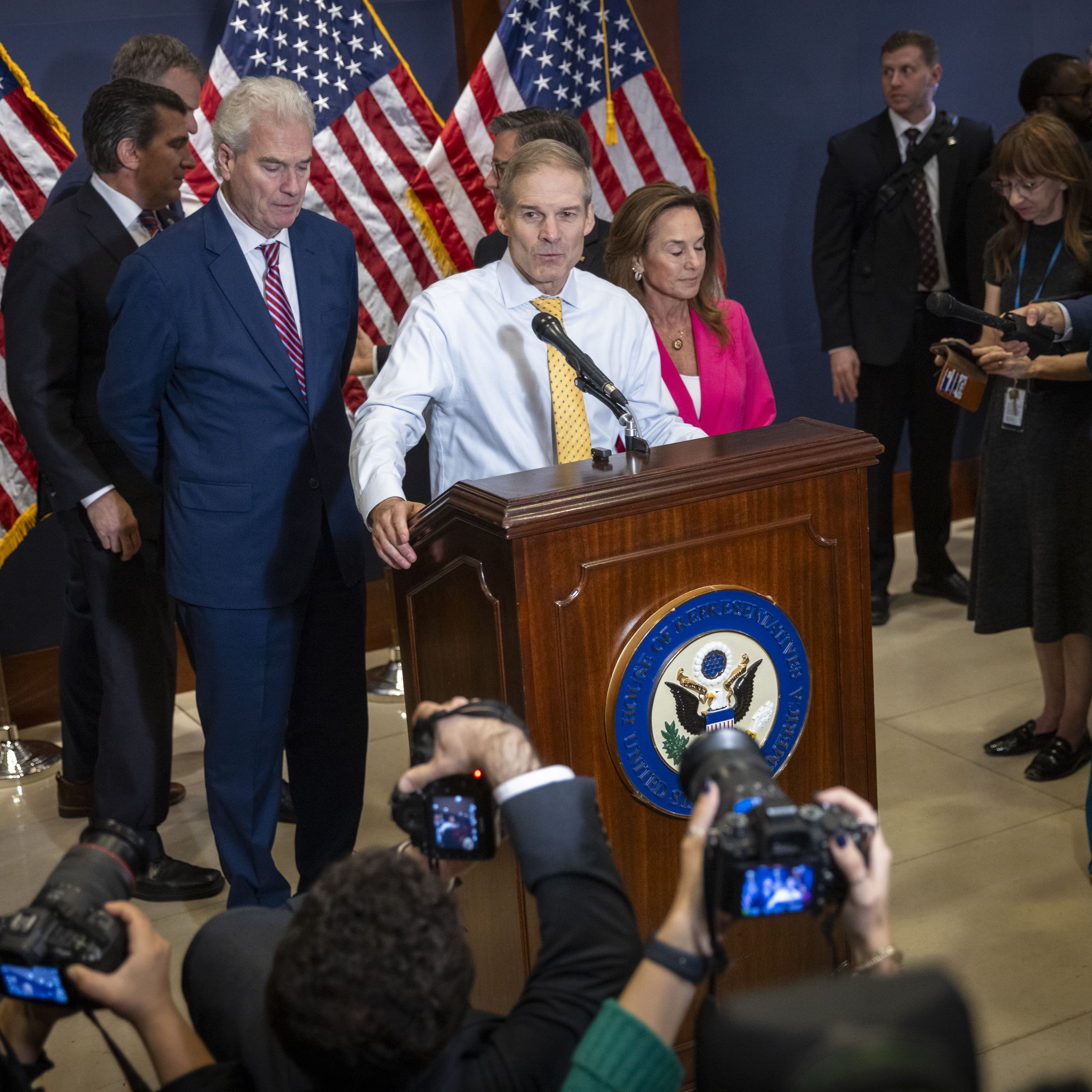
Ohio Representative Jim Jordan is now the House Minority Leader. On this week’s On the Media, how the congressman’s 700-plus appearances on Fox News enabled his ascent within the Republican Party. Plus, a historian chronicles American socialism, and how it got so popular today. [00:00] Micah sits down with Matt Gertz (https://bsky.app/profile/mattgertz.bsky.social), senior fellow at the progressive watchdog Media Matters (https://www.mediamatters.org/), to chat about how Ohio representative Jim Jordan, freshly minted as House Minority Leader, leveraged record-breaking Fox News appearances to ascend to his new role. [00:00] Micah speaks with Noa Landau (https://bsky.app/profile/noalandau.bsky.social), Global Editor of Ha’aretz, to talk about the paper’s growing presence in the U.S., its role in a conservative Israeli media landscape and its recent investigation into the death toll in Gaza. [00:00] Brooke chats with Michael Kazin, history professor at Georgetown University and author of
In the midst of last week’s midterm elections, President Trump doubled down on his goal of eroding the rights of women -- planning a partial rollback of a law securing workplace allowances for pregnancy and reproductive health, allowances that a University of Wisconsin study found contributed to a 10% drop in miscarriages. This follows a slew of Trump administration attacks on abortion rights this past year, including the Justice Department's plan to intervene in the Texas lawsuit against Planned Parenthood, the FDA's ongoing investigation of the abortion drug mifepristone, and the implementation of a near total abortion ban at the VA. And of course, it’s not just here – a UN report earlier this year tracked women’s rights regressing worldwide this year. Globally, women have 64% of the legal rights of men, and more than half of the nation's countries still don't define rape by law on the basis of consent. Eleanor Johnson (https://english.columbia.edu/content/eleanor-b-johnson) is a pro
Cross-party cooperation is worthwhile even when it disappoints committed party supporters.
Share your view, then see how readers voted. No sign-in required. This poll is shared across stories.
Do you agree or disagree?
Common Quandary
A Common Quandary to discuss
Another conversation to explore, separate from this news story.
Software says a student cheated with AI. Is that enough to fail the paper?
A teacher suspects several essays were written with AI. Detection software marks one student's work as highly likely to be generated, but the software is known to make mistakes and the student denies using it.
How should responsibility be assigned when evidence is powerful but unreliable?