The Healthiest Protein, Power Walking, Peptide Parties & Anxiety Hacks
62 min
Listen through the publisher, then discuss the episode here or arrange an in-person Roundtable. Your city determines where to meet.
Roundtables are designed for groups of four, with a shared subject and room for everyone to speak. Come for discussion, with no dating expectation.
What's the healthiest source of protein, and could tofu really be better for us than chicken or salmon? Could walking faster be more beneficial than reaching 10,000 steps a day? And can something as simple as a weighted blanket or spending time with friends help us feel less anxious? This week, we unpack a surprising new ranking of 20 popular protein sources, revealing why there's so much more to healthy eating than simply counting grams of protein. We also explore fascinating research on walking speed, why the pace of our steps matters and how to get more benefits from the movement we're already doing. Plus, the powerful connection between friendships and long-term health, from reducing stress to supporting our immune systems and helping us live longer. We also investigate the rise of experimental peptide injections at wellness parties, whether weighted blankets really improve sleep and anxiety, and a hopeful scientific breakthrough that could help save bananas from disease. For more from Rhi and Ella: Sign up to Rhitrition+ HERE (https://rhitritionplus.com/)
Episode information is provided by the publisher. Listening takes place on the publisher’s service.
Can you rewire your brain to turn down chronic pain? Your pain is real, but your brain decides how loud that pain feels and new science shows that self-hypnosis may offer a new route to pain relief. One that goes beyond relying on pills alone. In today’s episode, Stanford psychiatrist Dr. David Spiegel, who has spent decades researching pain, explains how the brain controls pain. You’ll learn why chronic pain can be worsened by fear, anxiety and poor sleep. David explains how pain signals travel from your body to your brain, and why the brain can turn them up or down. He also shares how tools like hypnosis can help with pain management. By the end of the episode, you’ll have a simple 7-step self-hypnosis exercise for drug-free pain relief you can try at home. Build healthy habits. Download the ZOE app today Join ZOE (https://zoe.com/buymembership) Follow ZOE onInstagram (https://www.instagram.com/zoe/). Timecodes 00:00 Intro 01:49 Is your pain really in your brain? 09:07 Can't sleep? H
Missing someone you love? Struggling with heartbreak, emotional pain, or the sadness of letting go? This gentle sleep hypnosis offers a comforting space to acknowledge your feelings, release some of the weight you're carrying, and drift into peaceful sleep. When someone is no longer part of your life in the way they once were, the nights can feel especially difficult. Memories return, emotions become stronger, and moving forward may seem impossible. You don't have to forget someone to begin finding peace. You don't have to erase the beautiful moments you shared or force yourself to feel better before you're ready. This compassionate guided sleep hypnosis invites you to approach your emotions with kindness, acceptance, and patience. After a soothing relaxation, you'll imagine walking along a quiet path beside a peaceful river, slowly counting down from fifteen to one as your body settles more deeply into rest. Through a gentle visualization, you'll have the opportunity to thank the rela
You've started your fat loss phase, you're doing everything right, and then 3pm hits and you'd happily eat the whole pantry. So you start wondering if something's wrong. In this episode, I share my favourite strategies to stay full while you're in a deficit, and why a bit of hunger is a normal, manageable part of the process. Why some hunger is expected when you're losing fat The difference between real hunger, boredom and habit My top strategies to stay fuller for longer, from protein to volume eating How sleep, stress and drinks sneak up on your appetite The signs your deficit is too aggressive and needs adjusting Walk away with a toolkit to keep hunger manageable, and the confidence to ride it out without derailing your progress. Love this episode? Share it on your intagram story and tag me @sami_livestrong Want to connect? Follow me on Instagram: Ready to start living a Stronger Life — inside and out? Apply for my online coaching program here: bit.ly/ApplywithSami (https://forms.gl
What if the reason you feel lonely isn’t that you don’t have enough people in your life, but that you haven’t been intentional about building deeper connections? In this episode, I’ll show you how to build meaningful adult friendships, find your people, create rituals that strengthen relationships, and become the one who initiates instead of waiting for connection to happen. Because success means nothing if you don’t have people to share it with, and I want to help you build relationships that make your life richer, deeper, and more fulfilling. think about money and build a plan to earn more in 2027. Save your free spot: https://2026workshop.com direction, and focus in life. Rich Roll, and Dr. Steven Gundry. Hosted by Simplecast, an AdsWizz company. See https://pcm.adswizz.com advertising.
Why do some dreams stay with us for decades, while others come back night after night? And what might they reveal about who we’re becoming as we get older? On Destiny, Cliff Dunning welcomes gerontologist Harry R. Moody, PhD, author of The Power of Dreams in Later Life: Interpreting the Signs and Symbols. Moody draws on decades of dreamwork, depth psychology, and the study of aging to explore how our dreams reflect the changes we face in the second half of life, from retirement and caregiving to grief and the search for a renewed sense of purpose. What might a recurring dream tell us about an unresolved chapter in our lives? Why does an old friend or a childhood home suddenly reappear in a dream? And how can a simple dream journal help us remember and reflect on these images? Moody offers practical ways to explore dream symbols and consider what they mean in the context of our own lives. Harry R. Moody, The Power of Dreams in Later Life, dream interpretation, recurring dreams, dream sy
Hey! I’m so glad you’re here. I’m Jody Agard, and today we're beginning a special Affirmation Series built around one simple idea: sometimes you don't need a long practice. Sometimes you just need a few reassuring words at exactly the right moment. So these will be short, simple affirmations you can return to whenever you need them. And we're starting with those moments when anxiety has you wondering how everything is going to work out. Take a breath... and let these words remind you: you don't have to have all the answers right now. Love Jody
Are rice cakes really worse than sugar, even when they're topped with healthy ingredients? Can your body become dependent on coffee to keep your digestion regular? And why does bloating seem to become such a problem during perimenopause? This week, we're answering your questions and tackling some of the confusing, and often alarming, health advice circulating online. We explore the truth about rice cakes, whether they're really as unhealthy as social media suggests, and how coffee affects our digestion, including whether relying on it for a morning bowel movement is something to worry about. We also look at what our poo can tell us about our gut health, why bloating and digestive changes can become more common during perimenopause, and how to choose a probiotic. Plus, the key risk factors and warning signs of heart disease in women, how to balance healthy eating with fun party food, and some brilliant listener recommendations, including a simple meal-prep formula that makes nourishing
Can you actually do anything to avoid the endless cycle of colds and bugs, especially when they keep circulating through the whole family? This week, we look at what really supports the immune system, whether there are things that can reduce how often we get ill, and what actually helps during cold and flu season. We also ask whether nutrition can support healthier, faster-growing hair, particularly if your hair is naturally dry or prone to breakage. Plus, does blending beans into sauces, dips and even brownies change their nutritional benefits? We also tackle how to support a child who wants to become vegetarian but isn't keen on vegetables or beans, and finally, we're talking plums and prunes: why do they make you poo, how many is too many, and can eating lots affect nutrient absorption? The Way 30-day trail: https://www.thewayapp.com/wellnessscoop For more from Rhi and Ella: Sign up to Rhitrition+ HERE (https://rhitritionplus.com/)
Could getting more REM sleep lower your risk of 83 different diseases? Are white carbs really as bad for us as we're led to believe? And if you could only choose one nut for your health, which should it be? This week, we unpack fascinating new research linking different stages of sleep with the risk of 83 diseases, including dementia and heart failure, and explore why sleep quality might matter just as much as quantity. We also tackle some of the biggest myths around white bread, pasta, rice and potatoes, from weight loss to resistant starch, and investigate which nuts offer the most benefits for our brains, hearts and gut health. Plus, why yoga appears to be losing ground to Pilates, the surprising science behind whole nuts versus nut butters, and the latest banana innovations, from gene-edited fruit that stays yellow to bananas growing in British gardens. We're also celebrating two lovely seasonal plants: celeriac and pears. The Way 30-day trail: https://www.thewayapp.com/wellnesssco
Punishments should be evaluated by their effect on future harm, not only their severity.
Share your view, then see how readers voted. No sign-in required. This poll is shared across stories.
Do you agree or disagree?
Common Quandary
A Common Quandary to discuss
Another conversation to explore, separate from this news story.
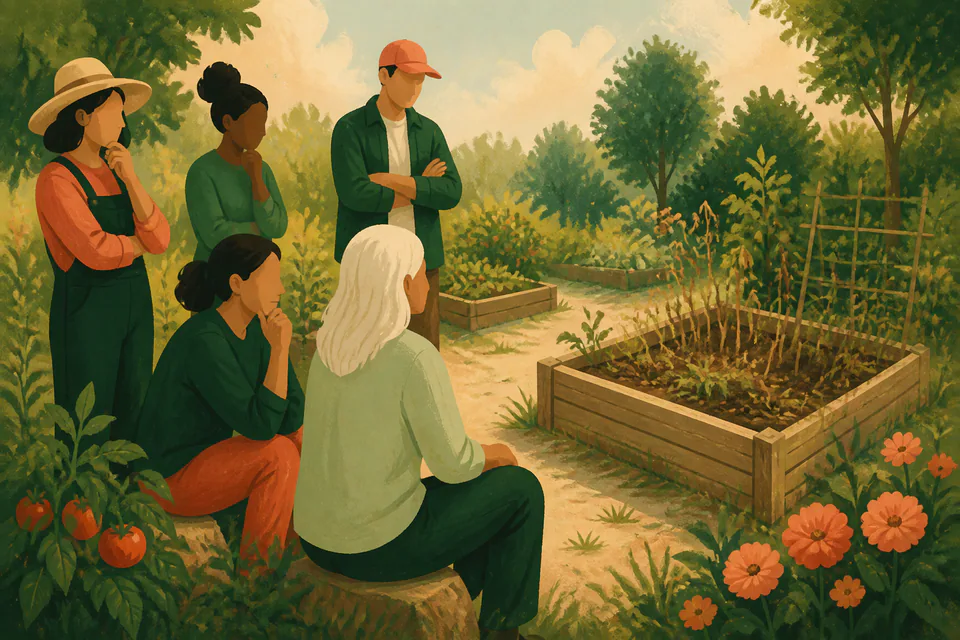
The best garden plot has been abandoned for months. Who gets to take it?
Garden plots have a three-year waiting list. One member's plot has gone untended for months and messages go unanswered, but other gardeners know they recently faced serious health problems.
How long should a shared resource remain reserved out of compassion?