The Hungry Stones by Rabindranath Tagore | Classic Ghost Story Narration
61 min
Listen through the publisher, then discuss the episode here or arrange an in-person Roundtable. Your city determines where to meet.
Roundtables are designed for groups of four, with a shared subject and room for everyone to speak. Come for discussion, with no dating expectation.
Listen to The Hungry Stones by Rabindranath Tagore—an atmospheric classic ghost story of haunting memory, psychological horror, and Indian supernatural fiction. In a lonely marble palace above a shrinking river, a young tax collector discovers that solitude is never truly empty. Footsteps sound where no one walks. Laughter rings out from an invisible bath of unseen maidens. Music trembles through dry, silent halls. Are these memories of a vanished court, or something far more hungry, feeding on the living through echoes of the dead? As night after night the house presses closer around him, the difference between dream, desire and possession begins to thin—and the stones themselves seem to listen. About the Story & Author Originally written in Bengali and collected in Rabindranath Tagore’s short fiction of the early 20th century, The Hungry Stones was first published in English translation in The Hungry Stones, and Other Stories (Project Gutenberg eText #2518: https://www.gutenberg.org/cache/epub/2518/pg2518-images.html). Rabindranath Tagore (1861–1941) was a Bengali poet, novelist, dramatist, and composer, and the first non-European to win the Nobel Prize in Literature (1913). His work ranges from mystical lyric poetry to psychologically acute ghost stories that probe the borderlands between history, memory, and the supernatural. Join the Inner Circle Listen to even more classic audiobooks! Sign up for our free newsletter for direct access to our full archive, member-only ad-free stories, and literary discussions at https://www.classicghost.com (https://www.classicghost.com/)
Episode information is provided by the publisher. Listening takes place on the publisher’s service.
7 True Airport Horror Stories takes you inside the unsettling side of terminals, red-eye flights, empty gates, and the moments when passengers seem to disappear before boarding. From eerie airport encounters and strange behavior near security checkpoints to late-night travel situations that feel completely wrong, these stories explore the fear that can hide behind bright lights, crowded concourses, delayed flights, and silent boarding areas. In this collection of true scary airport stories, you’ll hear chilling accounts connected to airports, flights, baggage claim, runways, layovers, and the uneasy feeling of being trapped between destinations. Whether you’re a frequent flyer, a fan of horror narration, or someone who already gets nervous in airports, these creepy travel stories are designed to pull you into that uncomfortable space where something ordinary turns terrifying. Watch with the lights low, but maybe not right before your next flight. #AirportHorrorStories #TrueHorrorStorie
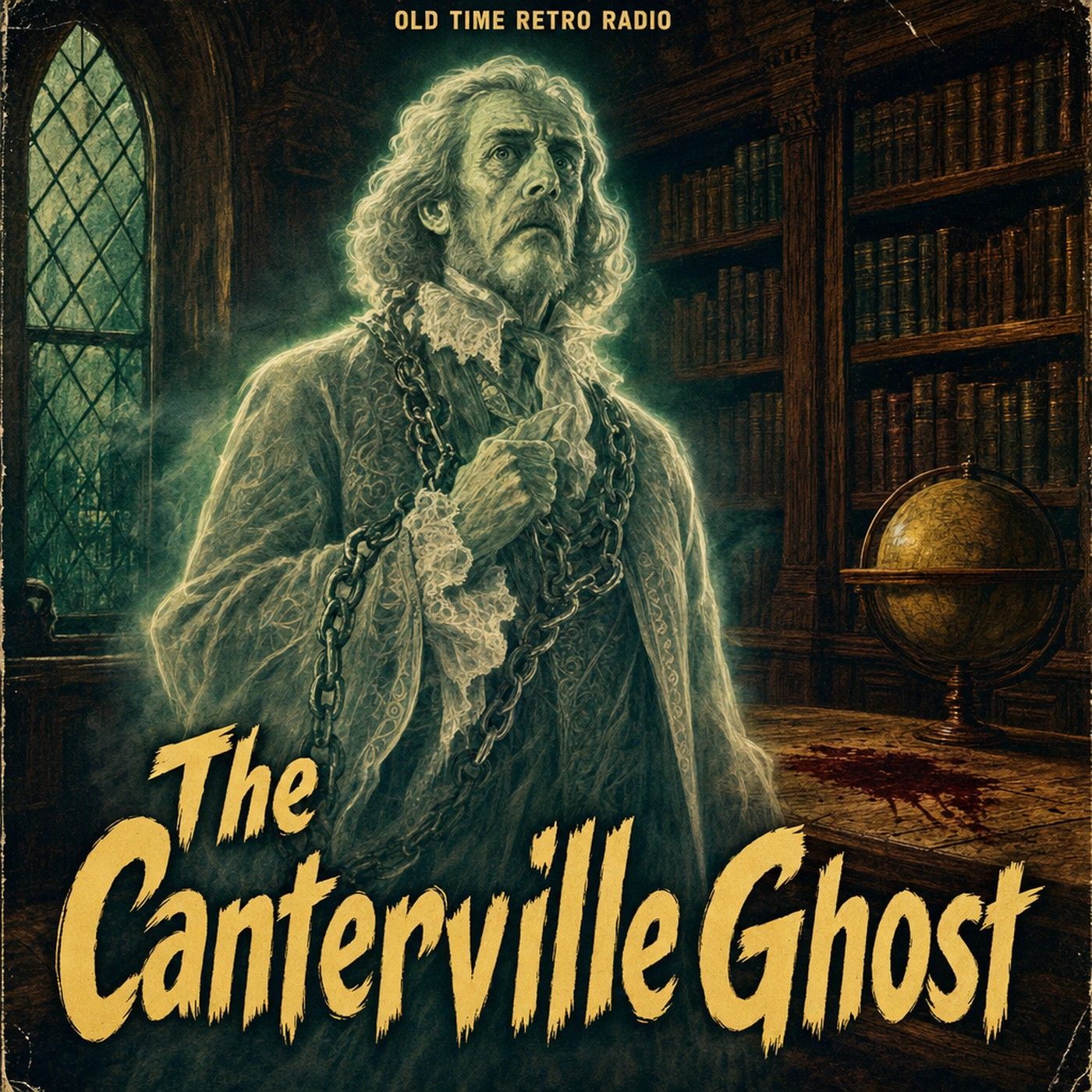
CBS Radio Mystery Theater presents “The Canterville Ghost,” episode 118, originally broadcast July 15, 1974. Hosted by E. G. Marshall, this adaptation of Oscar Wilde’s classic was written by George Lowther and produced and directed by Himan Brown. When wealthy American Hiram Otis relocates England’s ancient Canterville Castle to his Midwestern estate, its resident spirit, Sir Simon de Canterville, expects the new family to be easy prey. Instead, the practical Otises prove unexpectedly difficult to frighten in this comic-tinged supernatural tale featuring Arnold Moss, Marian Seldes, and William Redfield. Chapters: 00:00 Victor Sterling Introduction 00:54 Original Broadcast 45:02 Closing
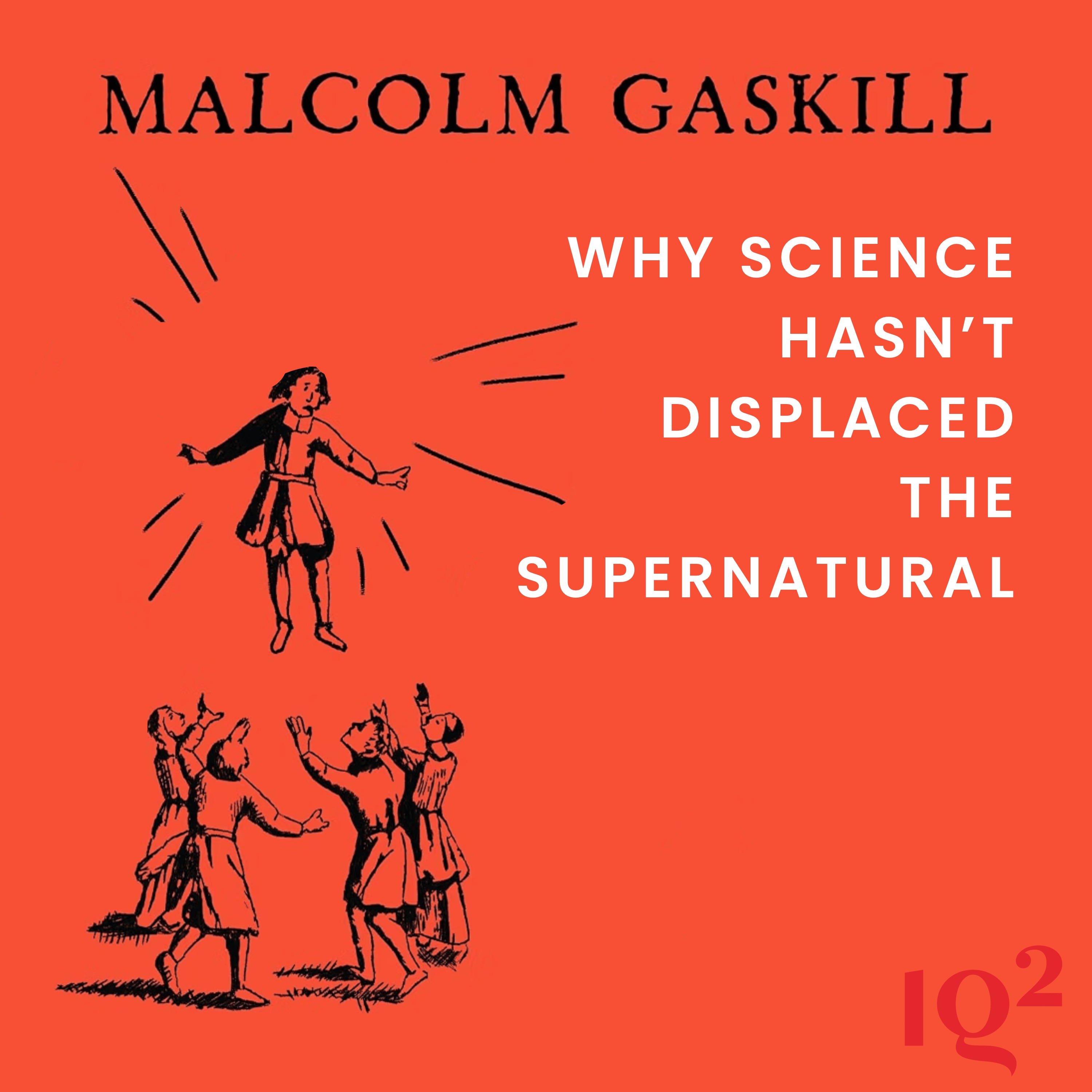
How do we make sense of the unseen? For centuries, the supernatural has offered ways to understand misfortune, find comfort and live with uncertainty. But its history is not simply a story of superstition giving way to reason. Why did people seek evidence in witchcraft trials? Can science and supernatural belief exist alongside one another? And what might today’s encounters with frontier technologies reveal to us about the persistence of the uncanny? In this episode, Margherita Volpato speaks with Malcolm Gaskill about his new book, Worlds of Fear and Wonder: Living with the Supernatural, Past and Present. Together, they explore the emotions behind supernatural beliefs that have shaped culture. They discuss Puritans searching for signs from God, the persistence of enchantment in the modern world and the uneasy relationship between technology and the uncanny. Malcolm Gaskill is Emeritus Professor of Early Modern History at the University of East Anglia and the author of seven books, inc
The Video: He Kicked Her Into The Circle In this episode, we delve into a chilling account that began when a man was eleven years old, in a house that held generations of secrets and a clearing in the woods with an ancient, unnatural presence. This is a story with no police reports or forensic evidence, only one man's terrifying memory. Case: The Video Duration: 47 seconds Location: Clearing in the woods Object: Ring of igneous stones and crystallized salt Witness: Tommy - A 47-second video shows a man kicking a woman into a circle on a concrete floor. - The house had 200 acres of land and a dense tree line where afternoon light died. - A clearing in the woods contained a ring of two-foot-tall igneous stones, not native to the area. - Between the stones were nine alternating layers of crystallized salt, compressed into the soil. - An invisible presence in the circle returned a thrown branch and later caught a ball, varying the angle of return. Tired of ads? Listen to this podcast and 2
Join our Facebook Group: https://bit.ly/3sivr9T Become a member on Patreon: https://bit.ly/3slWZvc Sign up for our newsletter: https://bit.ly/4frcVZo Make a donation via PayPal: https://bit.ly/3dmt9lU Featured Songs: Westside Cowboy, "Pin Up Boys," It Goes On, Island, 2026 The Beatles, "With A Little Help From My Friends," Sgt. Pepper's Lonely Hearts Club Band, Parlophone, 1967 Untitled (halo), "aimee lou wood freestyle," Untitled (halo), Dirty Hit, 2026 Untitled (halo), "sex," Untitled (halo), Dirty Hit, 2026 Untitled (halo), "easy rider," Untitled (halo), Dirty Hit, 2026 Television, "Elevation," Marquee Moon, Elektra, 1977 Television, "Marquee Moon," Marquee Moon, Elektra, 1977 Velvet Underground , "What Goes On," 1969 Velvet Underground Live With Lou Reed, Mercury, 1974 Westside Cowboy, "The Boys (Live)," NA, unreleased, 2025 Westside Cowboy, "Kick Stones (The Boys)," It Goes On, Island, 2026 Westside Cowboy, "Alright Alright Alright," This Better Be Something Great, Heist or Hit an
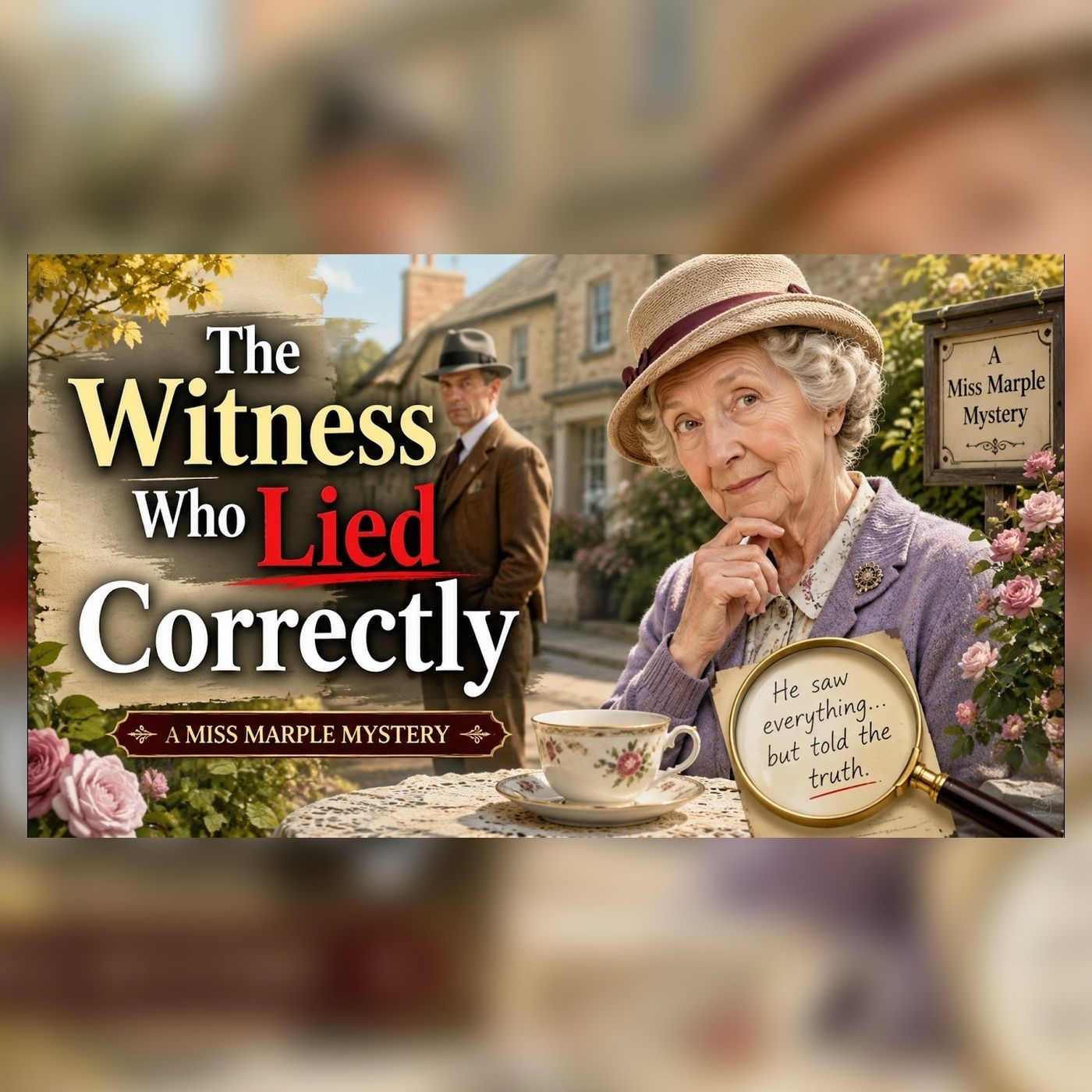
Step into the cozy yet suspenseful world of Miss Marple as she unravels a perplexing mystery involving a witness who lied correctly. In this immersive sleep story, follow the beloved detective through a labyrinth of clues, deception, and unexpected twists in a quaint English village. Let the gentle narration and classic Agatha Christie-style intrigue guide you into a deep, restful slumber while solving the puzzle. Perfect for true crime fans and mystery lovers looking to unwind before bed.
The Novel of the Black Seal by Arthur Machen: classic ghost stories audio This episode of the Classic Ghost Stories Podcast brings you a classic ghost story from the weird tradition, told as audio fiction for the long dark evenings. On a winter night in London, a starving, educated young woman meets a courteous stranger under a gas lamp and finds herself drawn into his private universe. Professor Gregg is an ethnologist by trade, but his true life’s work is hidden in a single drawer: a vanished servant girl, a child lost on the mountains, a few lines of strange red writing on a limestone rock, and a dull black stone carved with characters no scholar can read. In a lonely Welsh valley, under a sky that looks older than history, those fragments begin to arrange themselves into a pattern that is nothing like the playful fairy stories of the fireside. Miss Lally, who began as a rationalist, discovers how thin the crust of ordinary life can be when one man is determined to follow his theory
Extra learning support should avoid publicly labeling students as failures.
Share your view, then see how readers voted. No sign-in required. This poll is shared across stories.
Do you agree or disagree?
Common Quandary
A Common Quandary to discuss
Another conversation to explore, separate from this news story.
Software says a student cheated with AI. Is that enough to fail the paper?
A teacher suspects several essays were written with AI. Detection software marks one student's work as highly likely to be generated, but the software is known to make mistakes and the student denies using it.
How should responsibility be assigned when evidence is powerful but unreliable?