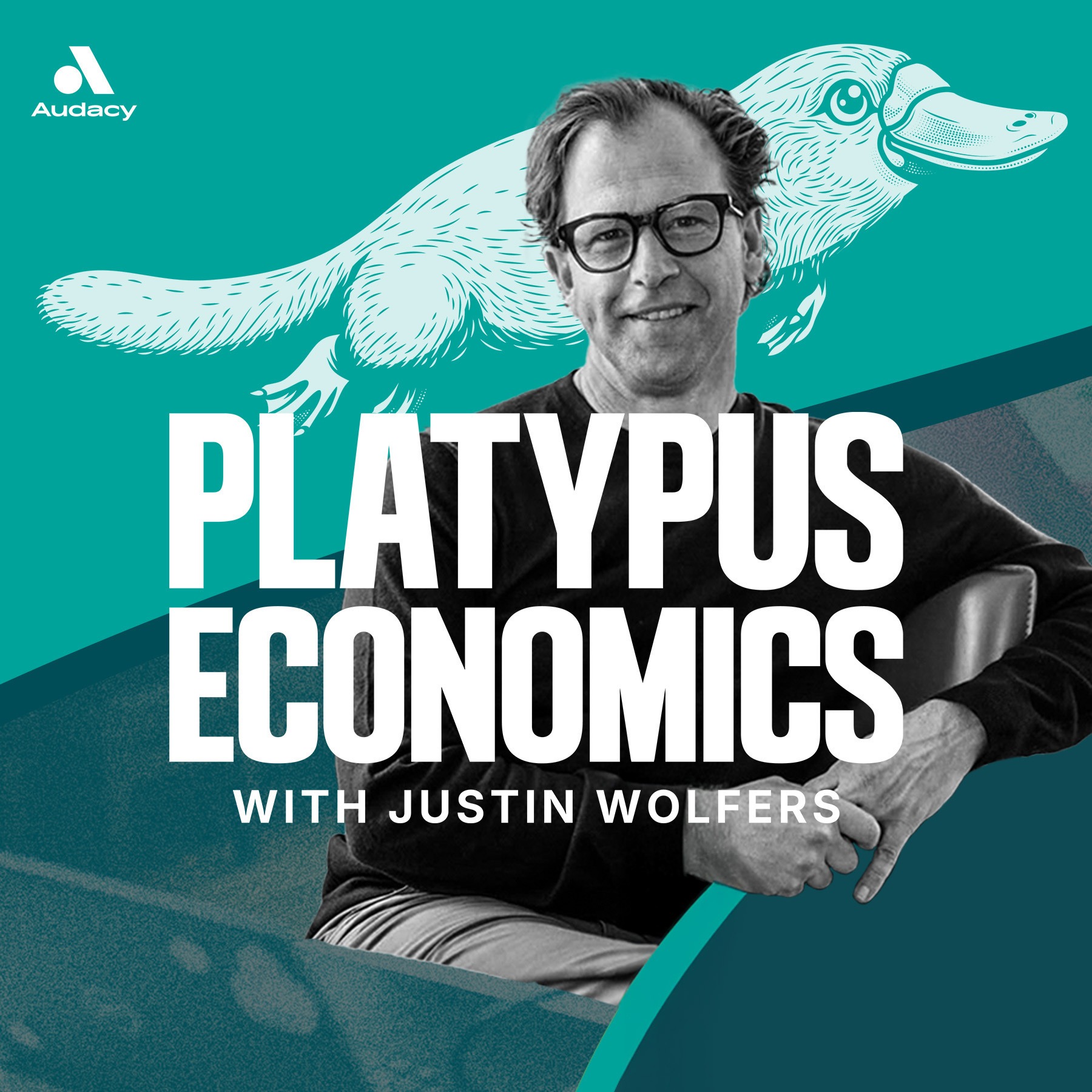
The October Inflation Report Explains That Sinking Feeling | Diving In
19 min
Listen through the publisher, then discuss the episode here or arrange an in-person Roundtable. Your city determines where to meet.
Roundtables are designed for groups of four, with a shared subject and room for everyone to speak. Come for discussion, with no dating expectation.
October 2026 CPI inflation is about 4%—here's why it's an estimate, and why it matters. Justin Wolfers unpacks an October inflation report with a missing headline: last year's government shutdown left no October 2025 price reading. He fills that gap using September and November data to estimate annual inflation at about 4%, up from 3.7% in September. Prices rose 0.4% this month, while core prices, excluding food and energy, rose 0.3%—both hotter than markets expected. on YouTube on Substack the Podcast Follow on Social Media @PlatypusEconomics and @JustinWolfers
Episode information is provided by the publisher. Listening takes place on the publisher’s service.
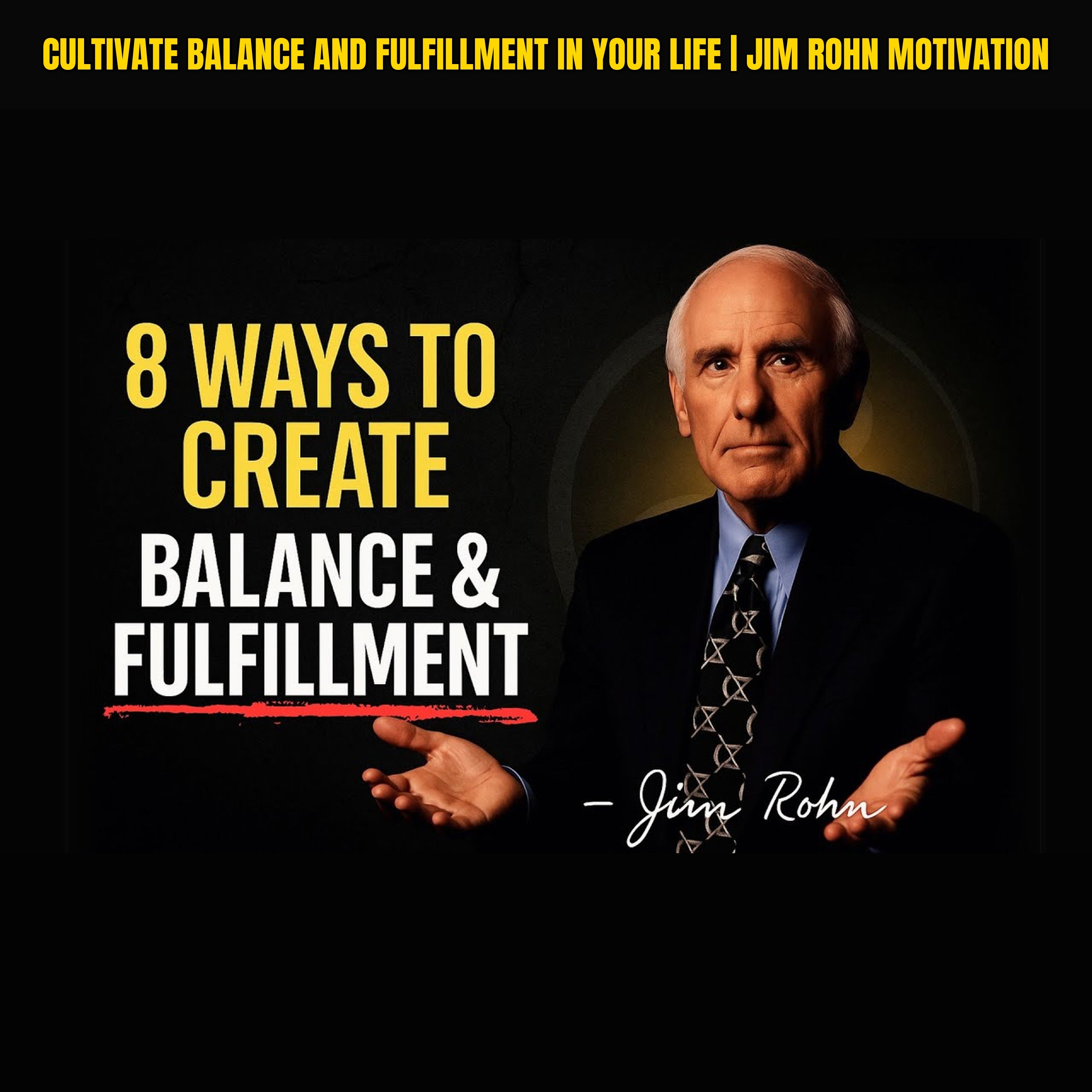
#JimRohnMotivation #JimRohn #JimRohnSpeech In this Jim Rohn Motivation video, we explore the powerful truths about creating real balance and deep fulfillment—not through chasing perfection, but by aligning with your values, honoring your energy, and reconnecting with your purpose. Key Topics From This Motivational Video: How to define your core values and build a life around them Why energy management is more important than time management The importance of honoring life’s seasons and emotional rhythms How flexibility and presence lead to lasting peace Why true fulfillment comes from service, clarity, and alignment Balance isn’t about doing less—it’s about doing what matters most. Fulfillment isn’t something that shows up when you achieve enough; it’s something you build through daily choices rooted in clarity, presence, and purpose. This video unpacks a framework that helps you reset your focus, reconnect with your values, and create a life that feels as good as it looks. This Jim Roh
In today's brief: Lake Erie, 1957: a newly released Air Force report says two boys saw a humming, bell-shaped craft near the Enrico Fermi Atomic Plant. Skinwalker Ranch: owner Brandon Fugal calls the new files landmark and recalls a daylight saucer over the mesa. Warship footage: a 20-second 2020 infrared clip shows a light crossing a US Navy ship in the Middle East, with no Pentagon assessment. Martha's Vineyard, 1957: a spiked, nickel-coloured object that the Air Force put down to a radar-reflector balloon. Loch Ness: reported sightings jump to 15 this year, up from six in 2025. The Book of Miracles: a 16th-century manuscript of comets, blood rain and multiple suns heads to auction at Christie's. Quick hits: a 1952 file blames the saucer wave on temperature inversions; more Pentagon UFO files are on the way. Every story and source: https://believepod.com/ufo-paranormal-news-22-november-2026/ New episodes every morning. Keep your eyes on the sky. Sources: FOX 2 Detroit: https://www.fo
There were some awesome and endearing clues in today's crossword, a Saturday debut for Zhou Zhang, and her twelfth overall. However, both cohosts did thrash about a bit in the top-left corner, wherein lurked clues like 3D, Hammy neighbor, QUAD (ooh, nice one!); 1A, Muslim or Hindu holy person, FAQIR (with a Q??); and 17A, Chinese buns prepared in a bamboo steamer, XIAOLONGBAO (yowser!!); Still, all's fair in love, war, and epic Saturday NYTimes crosswords like today's. Show note imagery: Vegan XIAOLONGBAO, yum! We love feedback! Contact Info: We love listener mail! Drop us a line, [email protected].
Learn to act like nothing bothers you. Episodes created by entrepreneur and masculinity ace Jack Hopkins for his youtube channel, this podcast is dedicated to helping men rediscover their inner strength and confidence in a society that often promotes feminine values over masculine ones.Follow the podcast for valuable insights, inspiring stories, and practical advice on how to embrace your masculinity, build your confidence, and achieve your goals. Whether you're looking to improve your relationships, advance your entrepreneurial career, or simply feel more confident and capable, Jack has valuable insights that can help you achieve your goals.So, if you're ready to reclaim your masculinity and awaken the beast that lives inside you, follow the podcast & turn on notis Follow Jack Hopkins:Insta: @jackhopfitnessYT: @JackhopkinsCEODisclaimer: All content rights belong to @JackhopkinsCEO on YouTube. This is a fan page. --------------- Keywords: men's personal development, millionaire mindset
I just wanted to reach out to all 30,000 people that participated in THE FIRST EVER‼️ VIRTUAL‼️ UNLEASH THE POWER WITHIN event! Uploaded 21-07-20 WE MADE HISTORY TOGETHER! WHAT A WEEKEND WE SHARED! Thank you for inviting me into your homes. It was an absolute honor to be your guest. We enrolled 22,500 ticket-holders but the most magical part was seeing it become 30,000 as participants from 138 countries shared this experience with their roommates, partners, dogs, cats, kids, and sometimes the whole family! I've been so touched reading all of your messages and hearing what this has done for the people that you shared this with — this was really a family experience and that is perhaps what moves me the most about this new format. I have so much gratitude for MY ENTIRE TEAM, the staff, and volunteers, and A/V production support working around the clock to make this happen. (Actually, six different companies came together and joined forces to pull off this great feat in the last 2 and a ha
Instant Access to your FREE training course: https://nci.university (https://nci.university/) Uploaded 27-07-25 This is the simulation you already live inside of—and you’ve been breathing it like oxygen since the day you were born. In this video, we expose the invisible machinery beneath modern life—how symbols have replaced truth, how marketing has replaced meaning, and how our desires are manufactured by the very system that feeds on them. Drawing from the work of Jean Baudrillard and the hidden mechanisms of simulacra, we walk you through 10 real-life “glitches” that reveal the truth: • Why your food is rendered, not real • How social media replaced memory • Why you take photos of things you never actually see • And why even your “rebellion” is likely pre-approved This isn’t a conspiracy. It’s a mirror. And once you see it, you can’t unsee it. simulation theory, simulated reality, Baudrillard simulation, are we in a simulation, hyperreality explained, social media illusion, digital
Are we in an AI stock bubble, or are investors betting on a genuinely bigger economy? Justin Wolfers examines AI stock valuations with Stacey Vanek Smith, separating what the technology could do for the economy from what investors might actually earn. A deliberately hypothetical valuation exercise shows why a trillion-dollar company isn't automatically absurd—but a breakthrough for society doesn't guarantee profits for shareholders. Competition can give you powerful tools at low prices while squeezing the companies selling them. The Thanksgiving turkey problem illustrates why a long run of good news can hide rare, severe risks. Justin connects that analogy to fat tails and the peso problem, then explains why spotting a bubble and successfully betting against it are different challenges. He also unpacks what the CAPE ratio can—and can't—tell you about whether stocks are overpriced. The stakes are your savings, not just Wall Street's scoreboard: Justin discusses an S&P 500 decline of 7.5
How does the federal budget deficit reach your wallet—and what would a fiscal crisis look like? Justin Wolfers answers your questions about the federal budget deficit, starting with the $2 trillion figure cited for fiscal 2026. He explains why acting early gives you time to plan for changes to taxes, retirement rules, and government services—and how lost lender confidence could force much sharper adjustments. on YouTube on Substack the Podcast Follow on Social Media @PlatypusEconomics and @JustinWolfers
Why is the US budget deficit $2 trillion when there’s no recession? Justin Wolfers explains why the US budget deficit reached $2 trillion in fiscal 2026: Washington collected $5.4 trillion and spent $7.4 trillion. At 6.2% of GDP, he argues, that’s the largest federal deficit outside a war or recession, even after adjusting for the economy’s size. You’ll learn the difference between this year’s borrowing and the debt built up over decades, then follow how aging, tax cuts, tariffs and reduced immigration shape the gap. Customs duties brought in $173 billion—a bucket next to a $2 trillion swimming pool. Justin also compares America’s borrowing with other countries to put those numbers in perspective. Why should you care? With about $32 trillion owed, a one-percentage-point rise in interest rates would eventually add roughly $320 billion a year to the government’s interest bill—about $1,000 per American. That’s not a bill mailed to your house, but it is an extra cost your government has to
Companies should be responsible for serious harm caused by suppliers they choose.
Share your view, then see how readers voted. No sign-in required. This poll is shared across stories.
Do you agree or disagree?
Common Quandary
A Common Quandary to discuss
Another conversation to explore, separate from this news story.
A private joke from years ago goes public. How long should it follow the person who wrote it?
Someone shares a screenshot of a tasteless joke made years ago in a private friends' chat. The person who wrote it says they were performing for a small audience, have changed, and never agreed to have the message made public.
How private should speech remain when it reveals something troubling?