The Philly House of Horrors: Seven Missing Women and the Horsch Case
41 min
Listen through the publisher, then discuss the episode here or arrange an in-person Roundtable. Your city determines where to meet.
Roundtables are designed for groups of four, with a shared subject and room for everyone to speak. Come for discussion, with no dating expectation.
On June 19, 2026, a park ranger approached a black BMW parked illegally near Philadelphia's Independence Hall. The woman in the passenger seat said she was afraid of the driver. She was also carrying the ID of Blair Tonzelli, a woman who had been missing since 2023. That encounter led investigators to a rowhouse on West Chew Avenue in the Olney neighborhood, and to one of the most disturbing cases in the country. The house belonged to Eugene Horsch and his late father, Raymond “R.C.” Horsch, a pornographic filmmaker and novelist whose work blurred the line between staged violence and reality for decades. Inside, investigators reportedly found 50 hard drives containing hundreds of thousands of images and videos, a 55-gallon drum connected to the home's plumbing, five urns, and an unsigned letter ending with the words “it was fun.” Police have linked seven missing women to the house. None have been found. Jonathan and Cooper break down what investigators have uncovered so far, including the traffic stop that brought police to the house, footage that authorities say shows R.C. Horsch strangling a woman, the three-week FBI excavation, and the federal gun and fake ID charges against Eugene Horsch, whose attorney maintains his innocence. This is a developing story, and Crime Scene will continue following the investigation. Survey link: thebingesurvey.com (https://eur01.safelinks.protection.outlook.com/?data=05%7C02%7Cashleyanne.krigbaum.ext%40sonymusic.com%7C24b477b6cbf843ff094c08df45b93823%7Cf0aff3b791a54aaeaf71c63e1dda2049%7C0%7C0%7C639306333951756394%7CUnknown%7CTWFpbGZsb3d8eyJFbXB0eU1hcGkiOnRydWUsIlYiOiIwLjAuMDAwMCIsIlAiOiJXaW4zMiIsIkFOIjoiTWFpbCIsIldUIjoyfQ%3D%3D%7C0%7C%7C%7C&reserved=0&sdata=cV%2FNjd9HV8yVFTkXvR7iU4JdMRZD%2BNku12Z1rvL5OL4%3D&url=http%3A%2F%2Fthebingesurvey.com%2F). We want to hear from you!
Episode information is provided by the publisher. Listening takes place on the publisher’s service.
What We Spend is back for another season of diving into the financial questions you never get to ask. In Season 2 we’ll ask a brand new set of people from across the country and the financial spectrum to open their wallets — and their lives — and share what they make, what they want, and, for one week, what they spend. If you want to be on What We Spend, we’d love to hear from you. Write us at: [email protected] Available now: link.pscrb.fm/f0281/WWS_TCN (https://nam11.safelinks.protection.outlook.com/?data=05%7C02%7CDavid.Song%40telepixtv.com%7C6e6515d6142e4f2ff9d208df41b2da3b%7C0eb48825e8714459bc72d0ecd68f1f39%7C0%7C0%7C639301908547856612%7CUnknown%7CTWFpbGZsb3d8eyJFbXB0eU1hcGkiOnRydWUsIlYiOiIwLjAuMDAwMCIsIlAiOiJXaW4zMiIsIkFOIjoiTWFpbCIsIldUIjoyfQ%3D%3D%7C0%7C%7C%7C&reserved=0&sdata=DCilLuhtCUCAgAZpE6TploEZehLrCw%2FJn7KRJrMfenM%3D&url=http%3A%2F%2Flink.pscrb.fm%2Ff0281%2FWWS_TCN)
One prosecutor publicly cleared JonBenét Ramsey's family. Another says he would never have done it. That's the fight getting lost in the latest headlines about a murder that remains unsolved thirty years later. Back in 2008, Boulder County DA Mary Lacy sent John Ramsey a letter explaining why DNA recovered from JonBenét's clothing led her office to stop treating the immediate family as suspects. Now DA Michael Dougherty says he would not issue that kind of clearance in any open homicide. He did not announce fresh evidence against the Ramseys or name any suspect. John Ramsey says police should charge him if they believe he's responsible. No one has ever been charged in JonBenét's murder. Tony Brueski, Producer Todd and Lisa examine the gulf between what a district attorney can say and what the evidence actually establishes. A ransom note prepared on a pad from inside the home, materials linked to Patsy's art supplies and decades of arguments about fibers all fed public suspicion. But su
Hit subscribe so you don't miss any updates. Supported by True Crime Channel. ------- On the evening of 18 March 2009, Claudia Lawrence, a 35-year-old chef at the University of York, went home to her house on Heworth Road. The next morning she failed to arrive for her early shift, and she has never been seen since. More than seventeen years later, nobody has been charged, her body has never been found, and North Yorkshire Police treat her disappearance as suspected murder. Now, newly upscaled CCTV footage offers a clearer look at that night than ever before. In this special documentary, filmed on location in York, we retrace the streets around Claudia's home: from the Minster to Heworth Road, the alleyway behind her house and the corner where a CCTV camera was recording that night. We're also among the first to be allowed to film inside the Nags Head, Claudia's local pub, and we sit down with Tom McDermott to go through what happened in the hours before she vanished. At the centre of t
"I can say with 100% confidence I was raped." Those were Jane Doe's words to Cornell University Police. But when the district attorney explained why no criminal charges had been filed, he characterized her signed statement as describing sexual activity that was voluntary, conscious, and consensual. Then a much longer police interview became public. The prosecutor said he'd never seen it. In Part 2, Tyrella and Nikita examine the six-page statement at the center of the controversy, the evidence behind the decision not to prosecute, and why Cornell's own investigation reached very different disciplinary outcomes. What does New York law actually require to establish a sexual offense? How does that differ from a university's consent policy? And what happens when two institutions examine the same night but answer fundamentally different questions? With the case reopened and institutional decisions under renewed scrutiny, the Cornell 7 story raises a question much bigger than one fraternity
In this remastered Crime Analyst series, Laura Richards puts the women back at the centre of the story. For decades, the women murdered and attacked by Peter Sutcliffe (known as PS in this series) were overshadowed by the man who targeted them. In this episode, Laura interviews author, journalist, campaigner and survivor Julie Bindel, who was living in Leeds during PS's reign of terror. The day before Jacqueline Hill was murdered, and close to where Jacqueline was killed, Julie was followed home from the pub by a man fitting PS's description. Julie shares what happened that night, what it was like living under the threat of male violence in West Yorkshire, and the police response. Laura and Julie also explore the terminology surrounding prostitution versus sex work, societal attitudes towards women, and what needs to change to prevent male violence. Julie has written extensively on rape, domestic violence, sexually motivated murder, prostitution and trafficking, child sexual exploitati
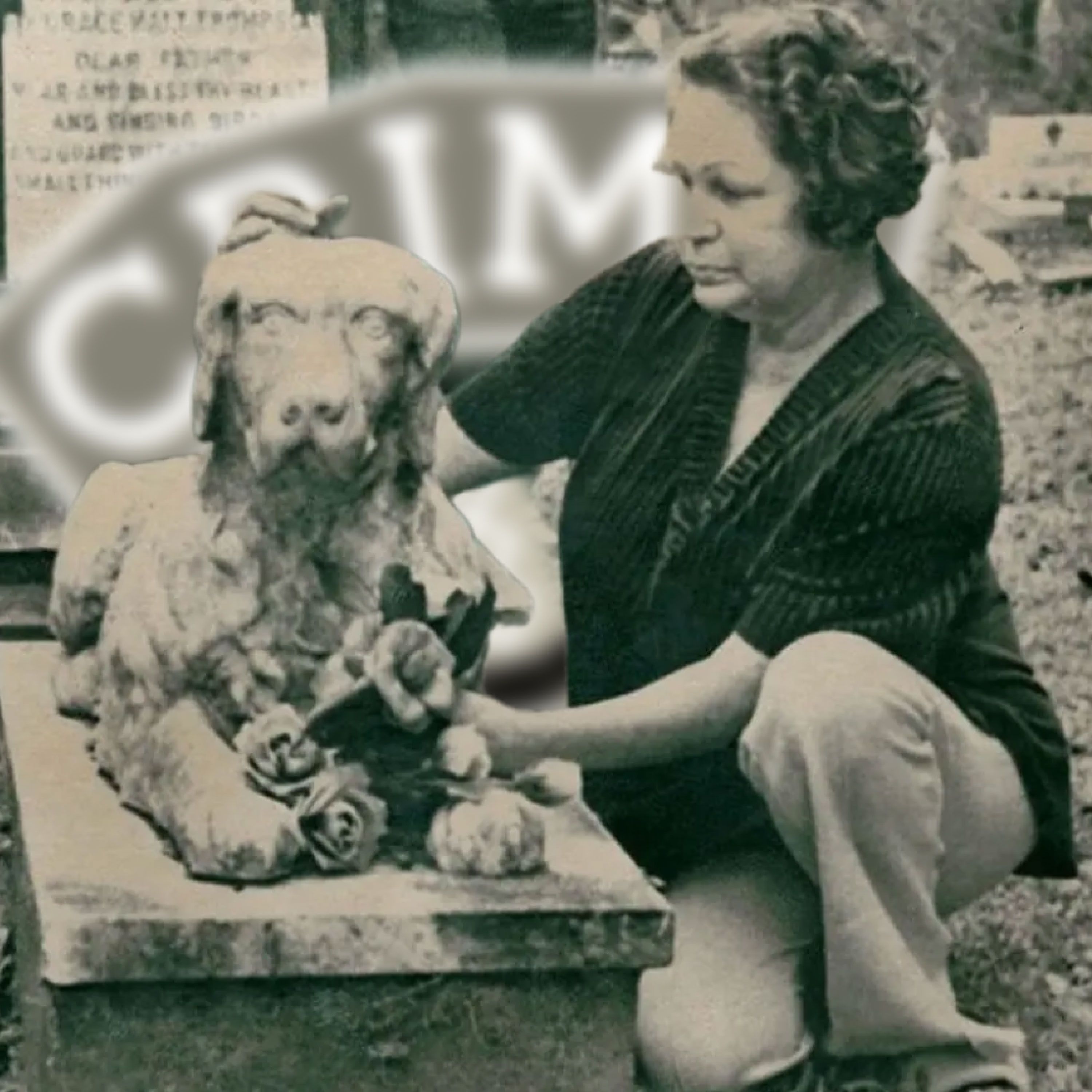
In 1985, when the body of 61-year-old Dorothy Lou Thompson was discovered in the Mississippi River, authorities assumed her murder was somehow connected to her unusual family business. For years her late mother ran a pet cemetery on an abandoned sugar cane plantation, which neighbors found both odd and eerie. While a handful of suspects emerged, the murder case soon went cold. Decades later, witnesses came forward to report what they knew about the homicide. What convinced them to finally tell their stories? They said they were visited by Dorothy’s ghost. The HBO Documentary series “The Pet Cemetery Murders: A Ghost Story” leans into the spooky elements of this Southern Gothic tale. The case goes beyond the homicide and its creepy crime scene, tying historical stories of violence within the family and this community, made for those who like their true crime served with a dash of the supernatural. OUR SPOILER-FREE REVIEWS OF "THE PET CEMETERY MURDERS" BEGIN IN THE FINAL 11 MINUTES OF TH
In November 2016, Sherri Papini disappeared while out for a run near her home in Northern California. Her husband found her phone and earbuds on the side of the road, tangled with strands of her blonde hair. Three weeks later, she turned up on a highway shoulder, chained at the waist, with her hair cut off and a word burned into her shoulder. She claimed two masked women had kidnapped her. The country called her the supermom who survived. In a twist of events, Sherri would later plead guilty to faking her abduction. But now, the question is, did she? Ten years after her disappearance, Jonathan and Cooper revisit the case and the story Sherri is telling today. They examine the competing accounts presented in Hulu's Perfect Wife: The Mysterious Disappearance of Sherri Papini and the ID docuseries Sherri Papini: Caught in the Lie. In the ID series, Sherri claims the kidnapping was real. What happens when a convicted hoaxer gets another chance to tell her story? And what does the evidence
In May 2005, 18-year-old Natalee Holloway disappeared on the final night of her high school graduation trip to Aruba. Her mother, Beth Holloway, arrived on the island within hours and quickly pointed police toward Joran van der Sloot. Ahead of Netflix’s Taken: Natalee Holloway, premiering November 4, Jonathan and Cooper revisit the case that captivated the world. They trace the investigation, the massive search that turned up no trace of Natalee, and a series of twists that kept the case in the headlines for years. From a controversial hidden-camera confession to a shocking attempt to profit from Beth Holloway’s desperation for answers, the case became even more complicated as the years passed. Nearly two decades later, van der Sloot finally described what happened to Natalee as part of a deal with U.S. prosecutors. But her remains have never been found. Jonathan and Cooper examine the unanswered questions that remain and the determination of a mother who refused to let her daughter’s
Conservation policies should include practical support for affected local livelihoods.
Share your view, then see how readers voted. No sign-in required. This poll is shared across stories.
Do you agree or disagree?
Common Quandary
A Common Quandary to discuss
Another conversation to explore, separate from this news story.
The company printer sits idle all day. Can you print two hundred wedding invitations?
Your office has a fast color printer that is rarely used, and supplies are ordered automatically. Printing your wedding invitations after hours would save substantial money. Personal use is technically prohibited but routinely ignored for small jobs.
When does an insignificant workplace perk become taking?