The secret life of secrets and convincing Dad it's time to hand over the car keys
54 min
Listen through the publisher, then discuss the episode here or arrange an in-person Roundtable. Your city determines where to meet.
Roundtables are designed for groups of four, with a shared subject and room for everyone to speak. Come for discussion, with no dating expectation.
Everyone has secrets — from small omissions to things we’ve never told a soul, carrying them with us can feel heavier than actually sharing them. Michael Slepian, author of The Secret Life of Secrets, explains why secrets gnaw at us even when they’re not technically wrong, and what the research actually says about the risk of revealing them. When Dad can no longer remember the route home, how do you convince him it's time to hand over the car keys? Aunties Kerri Sackille and Nelly Thomas give listener Ari some advice on supporting ageing parents clinging onto their independence.
Episode information is provided by the publisher. Listening takes place on the publisher’s service.
Rob reveals his secrets to keeping things hot in the bedroom throughout his marriage and well after menopause and he called in to talk all about it. Tune in to hear all the details including how things changed in their bedroom once his wife finally spoke up about her not having orgasms, what he learned about pleasing her and how he went on a mission to figure her out, the books he read that completely changed the game, how their sex life changed when she went through menopause, all the things he tried to make sex more pleasurable again for her, how he came up with a unique way to apply lubricant that helped prevent pain and tearing, how his wife had a prolapsed cervix and the surgery she had to correct it, how and why she became way to tight afterwards, what he introduced in the bedroom that completely loosened her up and allowed her to start having sex again, why she refused to go on HRT and the over-the-counter products he found for her that helped with vaginal dryness and tearing, h
TONGUE: A Cognitive Hazard: https://a.co/d/6GU1oFe Uploaded 23-11-25 You’ve been walking around thinking you’re seeing the world, but really you’re just seeing whatever your language lets you have. Once you catch it in the act, it feels like finding a glitch in your own brain. Until this hits you, you don’t realize how much of your life has been pre-chewed, pre-labeled, and handed to you like baby food. And yeah, I’m about to show you the part that makes people sit in silence for a minute and rethink everything. Reality’s been on autopilot while language has been editing your perception like a drunk film editor. Every emotion, every memory, every “truth” you think you discovered—turns out most of it was installed, not chosen. Go ahead and watch the live demo in this video and feel how fast your mind slaps a label on anything it sees, like it’s terrified of raw experience. Once you try even two seconds of not naming something, you’ll feel the world punch through your skull in a way you
Two members of this family knelt beside wounded strangers this week. Only one was seen doing it. Mark Francis on the week India went perfectly for William and Kate — street cricket with Sachin Tendulkar, sixty rupees on the Metro, five Earthshot winners, and Kate alone at a Mumbai maternity hospital on the final day, holding the hand of a mother who had just lost one of her newborn twins. And on Harry in Lviv, meeting the newest members of Ukraine’s Invictus community, in a visit that landed on the one weekend nobody could look — followed by a Telegraph interview in which he said that if asked to sign up again, “I will 100 per cent be there to serve my country”. Plus Camilla’s private letter, Charles and the Butlin’s holiday he never got, and the royal accounts welcoming Robert Pattinson: “Welcome to His Majesty’s Secret Service, Mr Bond.” One subscription, the whole family, no ads. Try it free for 30 days: tap Try Free in Apple Podcasts. Got an App Store gift card? This is a good use
Inner Peace Meditation Music: Calming the Body and Soul Enter a state of profound tranquility as you embark on a journey of inner peace with our soothing meditation music. Designed to calm the body and soul, this melodic oasis invites you to release stress, find solace, and reconnect with your innermost self. Let the gentle melodies and harmonious tones envelop you, creating a serene atmosphere that gently guides you into a deep state of relaxation. As the music resonates within, feel the tensions of the body melt away, and the mind become still and clear. Allow the soothing sounds to wash over you, bringing a sense of harmony to every fiber of your being. As you surrender to the music's embrace, experience a gentle release of worries, anxieties, and the weight of daily life. In this peaceful sanctuary, you can cultivate a connection to your innermost self. The meditation music acts as a gentle guide, supporting you in finding clarity, balance, and inner harmony. As you immerse yoursel
What if the behavior that frustrates you most about your child is actually connected to one of their greatest God-given strengths? In this special Q&A episode of the Celebrate Kids Podcast, Dr. Kathy Koch and Wayne Stender answer real questions from parents and leaders they recently met in San Antonio. They explore how to help children develop genuine belonging, why the 8 Great Smarts can change how we understand misbehavior, and how Christian families can navigate difficult relationships during the holidays with biblical conviction, unconditional love, and thoughtful hospitality. Dr. Kathy explains why knowing how God made our children changes the way we correct them, encourage them, and prepare them for healthy relationships. Wayne also shares how understanding his own children's strengths has helped him become a father whose kids know they are seen, understood, and loved. As Celebrate Kids prepares to expand its ministry in 2027, we're also exploring new ways to bring Dr. Kathy's te
After her father died suddenly, she inherited more than the family farm. She inherited the responsibility of keeping it running without the man who had spent nearly his entire life there. Then the longtime farmhands began quietly sharing strange experiences. One heard her father whistling outside the machine shed. Another heard his familiar footsteps in an empty barn. Someone else saw a man wearing his old brown work jacket standing beside a gate—only to look again and find no one there. She told them grief and memory could make familiar sounds feel more meaningful than they were. Then one evening, while working alone after everyone else had gone home, she heard three notes outside the barn. It was a whistle she had known since childhood. And nobody else on the farm would have understood what it meant. #GhostStories #FamilyGhost #SpiritVisit #HauntedFarm #Afterlife #SignsFromBeyond #Paranormal #FatherAndDaughter #Unexplained #Signs Love real ghost stories? Want even more? Want even mor
Reality TV and social media have turned hoarding into voyeuristic spectacle, but behind the clutter is a widely misunderstood illness affecting an estimated 715,000 Australians. Erain, who has experienced hoarding behaviours for a large part of her life, joins clinical psychologist Jessica Grisham to explore what's really going on underneath. Everyone wants their mates to get along with their significant other. But Life Matters listener Cassie is getting mixed signals about whether their new girlfriend is ready to embrace the friendship camping tradition. Aunties Monica Dux and James Findlay are on the case.
Around 65 per cent of young children have had an imaginary companion by the time they turn seven, and while the friendships might be make-believe, the benefits to children's development can be very real. So why do some kids have them, and others don't? And in the age of AI companions, do we even need imaginary friends anymore? Professor Evan Kidd at Australian National University, has researched imaginary friends and helps us unpack this phenomenon. When it comes to tweens and teens, there's a familiar narrative loop that's evolved. We want kids off screens. We want them to go outside. But when we do see them in public spaces, being kids, which sometimes means a little bit rowdy and feral, someone complains. So is it about building better spaces for them to hang out in, or is it about all of us collectively adjusting our attitudes towards kids in public? Airbnb hosts have became notorious for setting some pretty onerous ones. It led the platform to restrict what hosts can and can't ask
If you live outside the major cities, flying can cost an arm and a leg. A recent Productivity Commission report found short regional flights were, on average, 173 per cent more expensive per kilometre than major city routes. For many travellers, being priced out means missing out on more than family holidays. Regional Capitals Australia chair Josh Black, aviation expert Keith Tonkin and traveller Helen Hall weigh in on what could make regional flights more affordable and reliable. After candidly sharing her heartbreak and hopes through seven years of fertility treatment, comedian Tanya Hennessy finally welcomed her precious daughter Scottie late last year. Instead of slowing down, she's busier than ever, and has just released the second book in her Sunny and Storm series. She shares her insights on motherhood, creativity and keeping going through it all. From decorating the tree to the same old family card game, the rituals we build around Christmas can bring comfort and connection, or
Classroom technology should prove educational value before becoming standard.
Share your view, then see how readers voted. No sign-in required. This poll is shared across stories.
Do you agree or disagree?
Common Quandary
A Common Quandary to discuss
Another conversation to explore, separate from this news story.
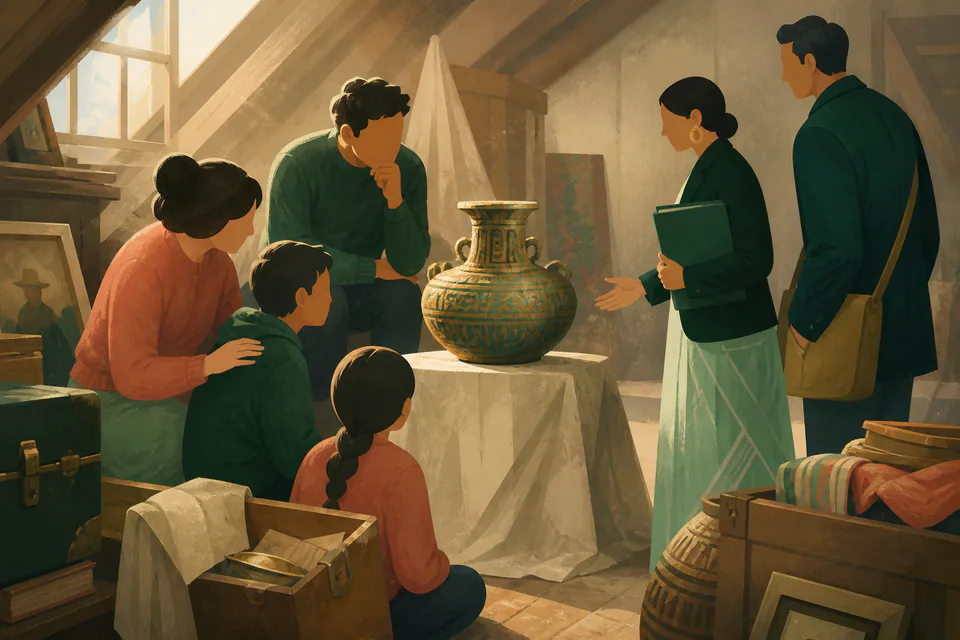
Your grandfather brought home an ancient artifact. A museum wants it back. Do you surrender it?
In your grandfather's attic you discover a beautiful ancient object he brought home while working overseas decades ago. Your family treasures it and his papers suggest the rules were murky. A museum from that country says it belongs to their collection and asks for its return.
Can a family inherit clear ownership of something acquired through unclear power?