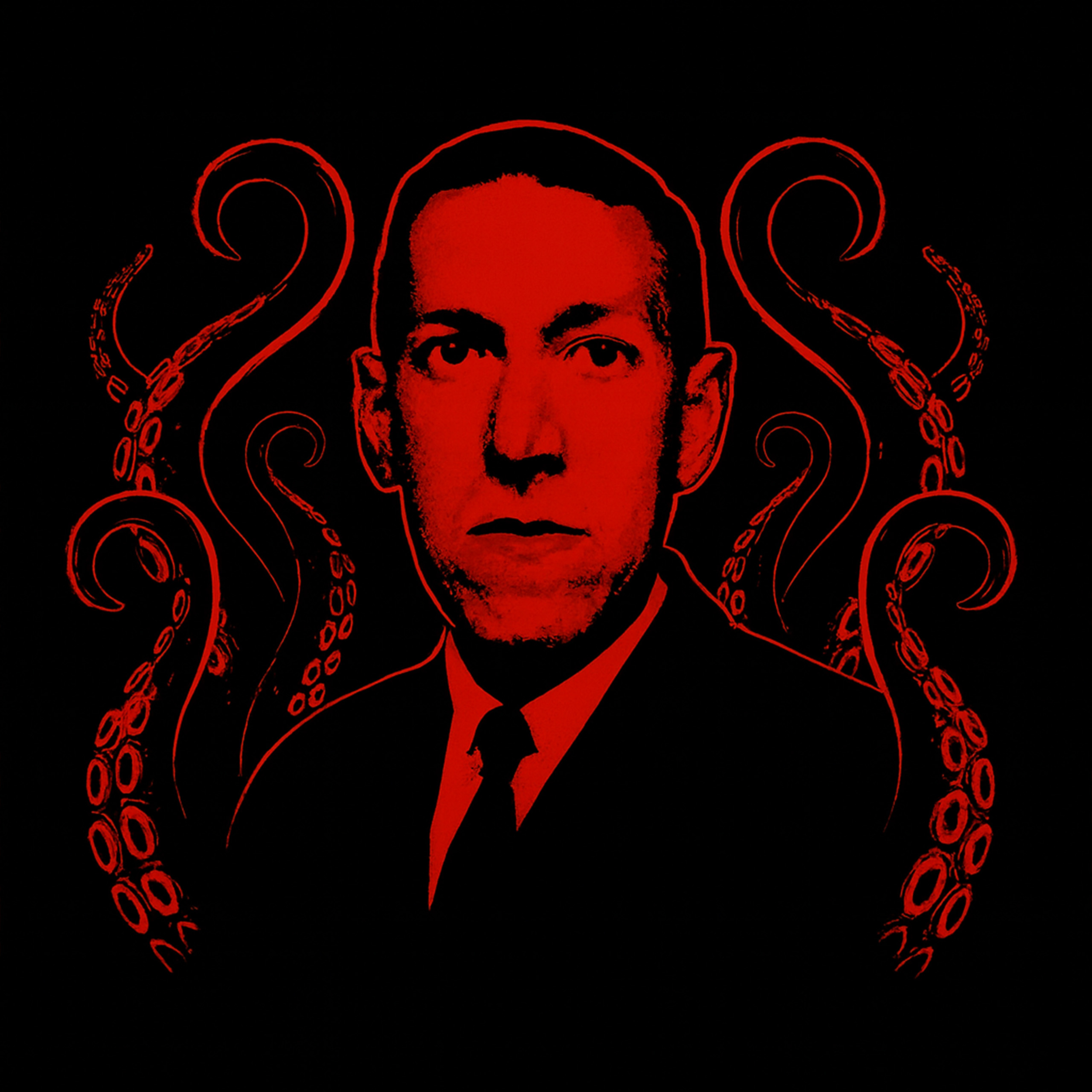
The Sorcerer's Jewel by Robert Bloch | A Cthulhu Mythos Story
44 min
Listen through the publisher, then discuss the episode here or arrange an in-person Roundtable. Your city determines where to meet.
Roundtables are designed for groups of four, with a shared subject and room for everyone to speak. Come for discussion, with no dating expectation.
THE SORCERER'S JEWEL (https://horrorbabble.bandcamp.com/album/the-sorcerers-jewel) is a Cthulhu Mythos story by Robert Bloch, first published in the February 1939 edition of Strange Stories, under the pseudonym, Tarleton Fiske. “Those forms were spawned in the nightmares and dreams of the Pit."
Episode information is provided by the publisher. Listening takes place on the publisher’s service.
Today's Adventure: When an African tribe threatens to execute its aging chief for refusing to relocate their village, Tarzan learns that the chief is waiting for his son, Yafu, to return from the diamond mines. Traveling to the mining town of Yeagerstown, Tarzan discovers that Yafu has stolen a diamond and is terrified of the brutal punishment awaiting him if he is caught. Determined to help Yafu make amends and become worthy of succeeding his father, Tarzan devises a dangerous plan to return the stolen jewel. But when the ruthless mine owner discovers the diamond, Tarzan faces a potentially deadly punishment. Originating Radio Broadcast Date: April 19, 1951 Originating from Hollywood Starring Lamont Johnson as Tarzan, Jack Moyles, Ken Christy To subscribe to this podcast and follow more adventures of Tarzan go to https://greatadventures.info/ Become one of our Patreon supporters at https://patreon.greatdetectives.net (https://patreon.greatdetectives.net/) Patreon Supporter of the Day:
Nine days after the Directorate garrison holding Westmere, the canal capital of a settled world three years under occupation, stopped answering its radios, a six-man team of the Federal Army's special reconnaissance slips across the outer canals at night to map what changed before the Federal assault on the city goes in. Every checkpoint is still manned: on the bridges the sentries stand where they died in the first minutes, crushed face-first onto the muzzles of the rifles they turned on one another, and those rifles hang in the empty air where they were aimed, with no hand on them. Something in Westmere exists only along the line of a loaded, aimed weapon: the moment a barrel rests on a living body for one slow breath, a taut strand of red cartilage, ringed like a windpipe and hooked every hand's width, runs from the muzzle to the target, the gun locks in the air as if bolted there, and the strand winches the target down its line, through anything and anyone in the way, until bone me
"The Maze of Maal Dweb" is one of two stories concerning the titular character, Maal Dweb, by the Californian weird fiction writer, Clark Ashton Smith. The story was first published in the October 1938 edition of Weird Tales Magazine. "What strange fate awaited the hunter and the girl in the fearsome labyrinth of the enchanter?"
7 True Motel Horror Stories | "The Room Key Opened Something Else Too" takes you inside unsettling overnight stays where a simple room, a flickering hallway light, or a misplaced key turns into something far more disturbing. These true motel horror stories explore the fear of being alone in an unfamiliar place, surrounded by strangers, thin walls, locked doors, and the eerie feeling that someone—or something—knows you’re there. From creepy motel encounters and late-night knocks to suspicious guests, strange noises, and terrifying moments after check-in, this collection is made for fans of real scary stories, hotel horror stories, travel nightmares, and chilling bedtime narrations. If you’ve ever stayed in a roadside motel and felt like something was wrong, these stories will make you think twice before ignoring that feeling. Turn down the lights, lock the door, and listen carefully—because sometimes the scariest part of a trip begins after you get the key. #TrueMotelHorrorStories #Mote
Of all the things Nick Grime could have promised his ten-year-old son on Halloween, "your dreams will come true" might be the cruelest. Nick knows about the man in the castle. He knows Michael has spent hours in therapy trying to explain what happens there. He just never thought of those dreams when he tucked a handful of good fortunes into the barmbrack he was baking for his family. At 1:35 in the morning, Nick sits on the edge of Michael’s bed. His son is wide awake, staring at the ceiling. He knows something comes to the window at 1:36. He also knows that every time he dreams this part, he ends up looking, no matter how hard he tries to keep his eyes on the plaster. Nick puts an arm around him. For once, when the thing his son fears comes to the glass, his dad will be there. It hasn’t occurred to Nick to ask what happens to the parents in Michael’s dream. Listen on YouTube: https://www.youtube.com/@chillingtalesfordarknights/ FEATURED STORY: "A Fine Barmbrack" by Seth Paul Performed
A windmill repairman spends one December week on a northern Arizona winter range, and every night a campfire burns at the last windmill he fixed, one mill closer to camp. Three skinwalker stories, about three hours, told by the men who were there.Story One: A windmill man and an old line-camp cowboy watch a fire move across the cinder country toward them, one windmill at a time. Story Two: An appliance repairman in the North Carolina mountains wakes to find his service van warm, the seat run all the way back, and one of yesterday's customers gone. Story Three: A man night-calving on his brother-in-law's Montana ranch keeps seeing something standing where his shadow ends under the yard light.0:00 Story One 1:00:46 Story Two 2:01:03 Story ThreeDarkHorrorNarrations Merch Store Is Now Live: https://darkhorrornarrations.com
AT THE MOUNTAINS OF MADNESS (https://thelovecraftvault.bandcamp.com/album/at-the-mountains-of-madness-a-cthulhu-mythos-story) is a Cthulhu Mythos novella, first published in the February 1936 edition of Astounding Stories. The story follows an Antarctic expedition led by geologist William Dyer, whose academic curiosity turns into a harrowing descent into the unknown.
Punishments should be evaluated by their effect on future harm, not only their severity.
Share your view, then see how readers voted. No sign-in required. This poll is shared across stories.
Do you agree or disagree?
Common Quandary
A Common Quandary to discuss
Another conversation to explore, separate from this news story.
Your coworker's religious holiday means you work the unpopular shift again. Is that fair?
A workplace accommodates religious observances by asking other employees to cover unpopular shifts. One coworker objects that nonreligious commitments can be equally meaningful but receive less formal protection.
Does equal respect require treating every kind of commitment identically?