In recent years, parents across the US have faced scrutiny – and even legal consequences – for letting their children play outside unsupervised. American expectations of constant parental supervision differ sharply from those in other countries, where greater emphasis is placed on children’s independence and allowing them to take age-appropriate risks. In today’s episode, The Global Story’s Asma Khalid and Tristan Redman compare their childhoods and how they raise their own kids now. Tristan explores how a short-lived child safety campaign from the 80s had a lasting impact with BBC executive producer Annie Brown. And Asma finds out what the Japanese approach to parenting can teach us about independence by talking to author Lisa Katayama. Producer: Cat Farnsworth Editor: Martine Powers Mix: Travis Evans Studio manager: Jonny Hall Digital producer: Charlie Firth Senior news editor: China Collins Photo: Children playing. Credit: Getty
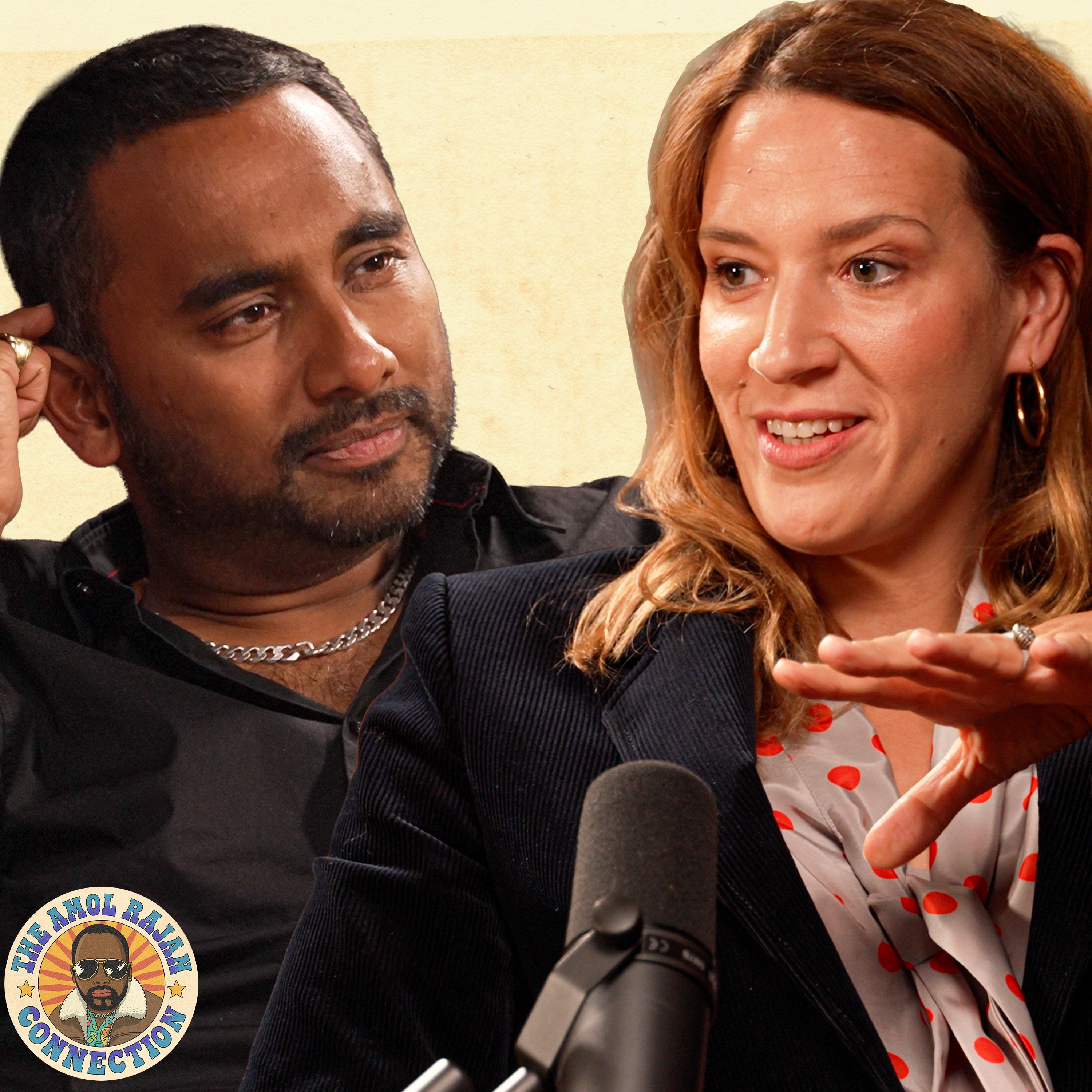
What happens when you’ve got the degree and the job, yet the only friends getting onto the property ladder are the ones whose parents can help them buy? Amol Rajan is joined by historian Dr Eliza Filby, author of Inheritocracy, for a deep dive into the social and economic forces shaping our future. Together, they explore how the 3Ps—pay, property, and pensions—have changed dramatically over recent decades; and look at the urgent need to control and shape our future, and rebuild society, in a fast changing world. Please click and follow the Amol Rajan Connection (it’s free). Thank you - it means a lot. NEWSLETTER: If you would like the free newsletter, this is the link to sign up or join our club here. ON TOUR: Need a Christmas present? Amol is on tour in 2027 with the Amol Rajan Connection. Details here. Books mentioned by Amol and Eliza: The Inheritocracy by Dr Eliza Filby God and Mrs Thatcher: The Battle for Britain’s Soul - by Dr Eliza Filby HillBilly Elegy - JD Vance Chapters: 00:0
Fox News senior medical analyst Dr. Marc Siegel's new book is 'The Angels Among Us: How God's Messengers Play a Role in Healing', published on November 17. It combines medicine, faith, personal testimonies, and spiritual guidance, focusing on how everyday people, intuition, and moments of grace can serve as healing or protective messengers. The book includes real-life accounts involving Benjamin Hall, Chris Smith, Spencer Milo, Marta Cecilia Asman, Ronald Reagan, and Bob Dylan, alongside Dr. Siegel's personal reflections on his parents and medical cases FOX's Eben Brown speaks with Dr. Marc Siegel, Senior Medical Analyst for Fox News, is also a Clinical Professor of Medicine and a practicing internist at NYU Langone Medical Center, who shares the inspiration behind his new book and tells some of the stories of survival within it. Click here to Follow the FOX News Rundown: Evening Edition: https://link.podtrac.com/fnr_podeve
Texas is chasing an SEC championship and a national title, but critical roster decisions are already looming. Jeff Howe, CJ Vogel and Hank South explain how Steve Sarkisian can remain focused on the playoff race while Brandon Harris and the personnel department handle retention, back-channel communication and transfer-portal evaluations. At the center of everything is Arch Manning’s NFL decision—a choice that could fundamentally change Texas’ offseason strategy at quarterback and beyond. The crew also identifies the Longhorns’ biggest potential portal needs, including linebacker, safety, edge rusher and the defensive line. Did the extended playing time against Arkansas reveal enough about Texas’ young talent to prevent departures or reduce the need for outside additions? Plus, they examine which veterans Texas must prioritize, the rising players who could earn larger roles and why roster management during a championship run presents both enormous challenges and opportunities. Thank you
Four years on from the end of the last episode, David Moyes has established a culture at Everton, and a brotherhood in the dressing room, both of which are plunged into crisis by his most valuable player for the opening day visit of... *checks notes*... oh no it's Arsenal again. We may as well all go home. On a positive note, the death toll's only low. Dive into the Le Coq Years with your boys and reminisce about Titanic Tim Cahill, the Blues upending America and offending New Zealand, Bily's derby sitter and loads, loads more. This episode is supported by The Excelsior. Thanks to Sean Ponzini and Gary Lunt for their contributions.
Plus: today on The Big Story - could a notorious killer be linked to one of Canada’s most gripping unsolved cases?, Health Canada is warning of a serious side-effect of GLP1 medications, federal aviation officials in the U.S. are investigating a ground-stop at Miami International Airport, the Macy’s Thanksgiving Day Parade is being postponed for the first time in 100 years, and what Black Friday shopping trends could reveal about the Canadian economy. We love feedback at The Big Story, as well as suggestions for future episodes. You can find us: Through email at [email protected] Or @thebigstory.bsky.social on Bluesky Hosted by Simplecast, an AdsWizz company. See https://pcm.adswizz.com for information about our collection and use of personal data for advertising.
How much is Anthropic actually worth? And were investors assured by Nvidia’s strong earnings report? Plus, will "Grand Theft Auto VI" lift Take-Two Interactive’s stock? Host Vicky Ge Huang discusses the biggest stock moves of the week and the news that drove them. Hosted by Simplecast, an AdsWizz company.
Where does Nvidia stock go after Jensen Huang’s exit? And What does Coreweave earnings say about the AI trade? Plus, how much of the global economy depends on Microsoft? Host Imani Moise discusses the biggest stock moves of the week and the news that drove them. Hosted by Simplecast, an AdsWizz company.
What do the midterms mean for AI stocks? And why are Tesla and SpaceX shares under pressure? Plus, is the housing market ready for a rebound? Host Imani Moise discusses the biggest stock moves of the week and the news that drove them. Hosted by Simplecast, an AdsWizz company.
A workable temporary compromise is often better than delaying all action.
Share your view, then see how readers voted. No sign-in required. This poll is shared across stories.
Do you agree or disagree?
Common Quandary
A Common Quandary to discuss
Another conversation to explore, separate from this news story.
Your boss offers lessons to make you sound “more professional.” Do you take them?
Clients sometimes ask an employee to repeat themselves during calls. Their manager offers company-paid speech coaching framed as clearer communication, but the employee experiences the request as pressure to hide part of their identity.
When does improving communication become demanding conformity?