The Strange Story of Astroarcheology - Ronald Hutton
42 min
Listen through the publisher, then discuss the episode here or arrange an in-person Roundtable. Your city determines where to meet.
Roundtables are designed for groups of four, with a shared subject and room for everyone to speak. Come for discussion, with no dating expectation.
Of all the components of the environment around British prehistoric monuments, the sky is the one that has changed least across the millennia. This, and the fact that some of the most famous of these monuments were clearly aligned on heavenly bodies, should make the study of the relationship between those structures and celestial features a central concern to the archaeologists investigating them. Indeed, scholars have emerged for well over a century who have addressed that concern, but they have tended to come from outside the community of professional archaeology and to have had a fraught interaction with, or even an estrangement from, it. This lecture is designed to show why this is so, and why is it really a British phenomenon, and to ask whether things are likely to be different in the future. This lecture was recorded by Professor Kate Hill on 25th of September 2026 at Barnard’s Inn Hall, London. Professor Hutton is Professor of History at the University of Bristol. He took degrees at Cambridge and then Oxford Universities, and was a fellow of Magdalen College, Oxford. He is now a Fellow of the British Academy, the Royal Historical Society, the Society of Antiquaries and the Learned Society of Wales, and has won awards for teaching and research. He has lectured all over the world, authored twenty books and ninety-six essays, appeared in or presented scores of television and radio programmes, and sits on the editorial boards of six journals concerned with the history of religion and magic. He is currently working on the third volume of his biography of Oliver Cromwell. There are currently over 2,500 lectures free to access. Website: https://gresham.ac.uk X: https://x.com/GreshamCollege Facebook: https://facebook.com/greshamcollege Instagram: https://instagram.com/greshamcollege Bluesky: https://bsky.app/profile/greshamcollege.bsky.social TikTok: https://www.tiktok.com/@greshamcollege
Episode information is provided by the publisher. Listening takes place on the publisher’s service.
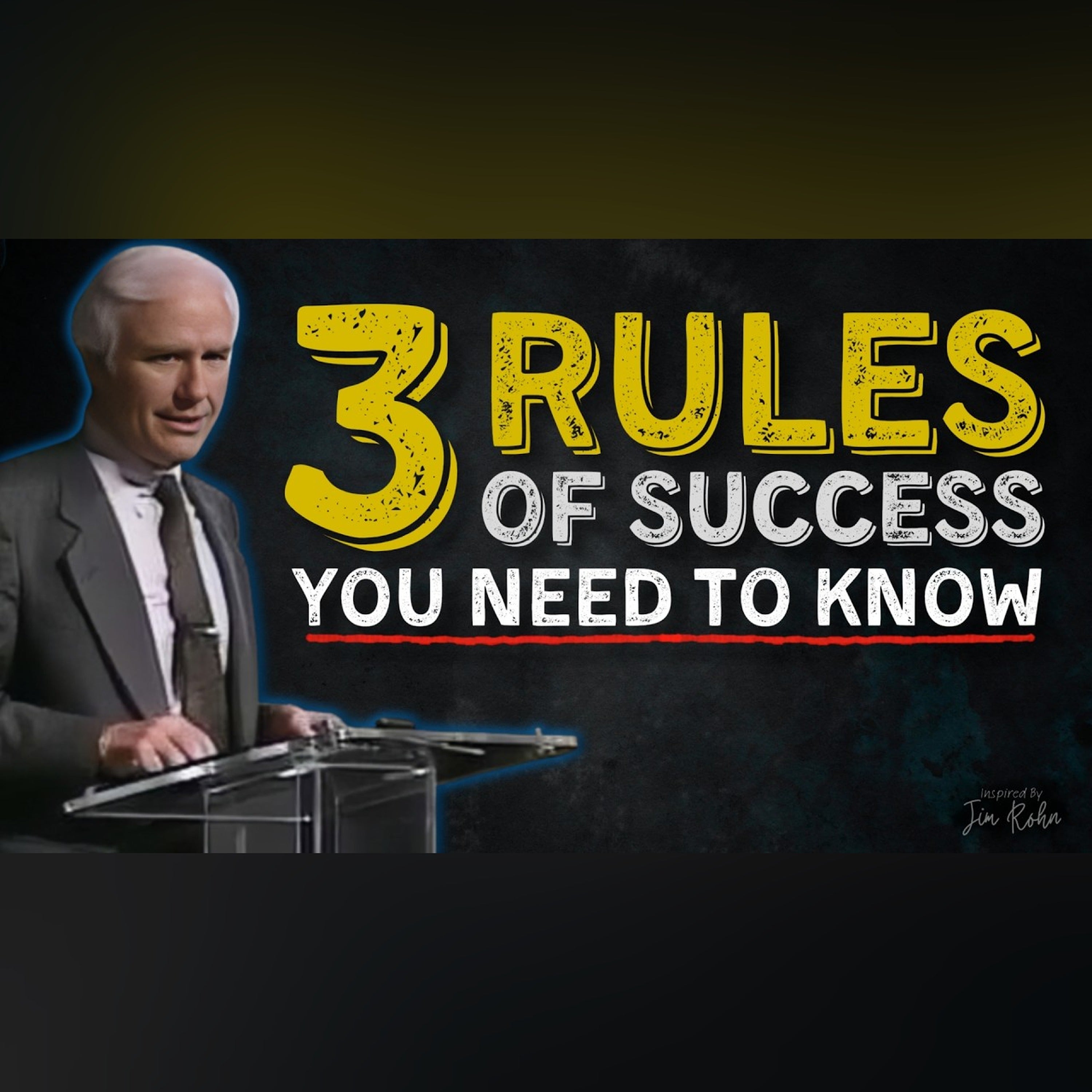
Every significant result anyone has ever built is the meeting of three things. Most people only see one — the part that's theirs — and treat that one as the whole picture. Then they push harder on it when the result doesn't come, as if effort alone is the equation. Uploaded 14-05-26 It isn't. The "self-made" story quietly hides the other two parts — the ones that aren't under anyone's control, and that determine whether what you've built ever meets what the world actually needs. CHAPTERS 0:00 The Self-Made Myth (And What It Hides) 4:09 The 3 Ingredients of Every Significant Result 8:47 What "Showing Up" Actually Means 13:30 The Positioning Trap 17:36 Outcome Pursuit vs. Readiness 22:23 Curiosity as a Strategic Resource 27:08 Gratitude as Accurate Seeing 31:18 Nobody Self-Made Anything THE 3 INGREDIENTS OF EVERY SIGNIFICANT RESULT: ▸ THE PREPARED PERSON — Built real capability over a long stretch of attention and practice. The only one of the three that's actually yours. ▸ THE NEED — A
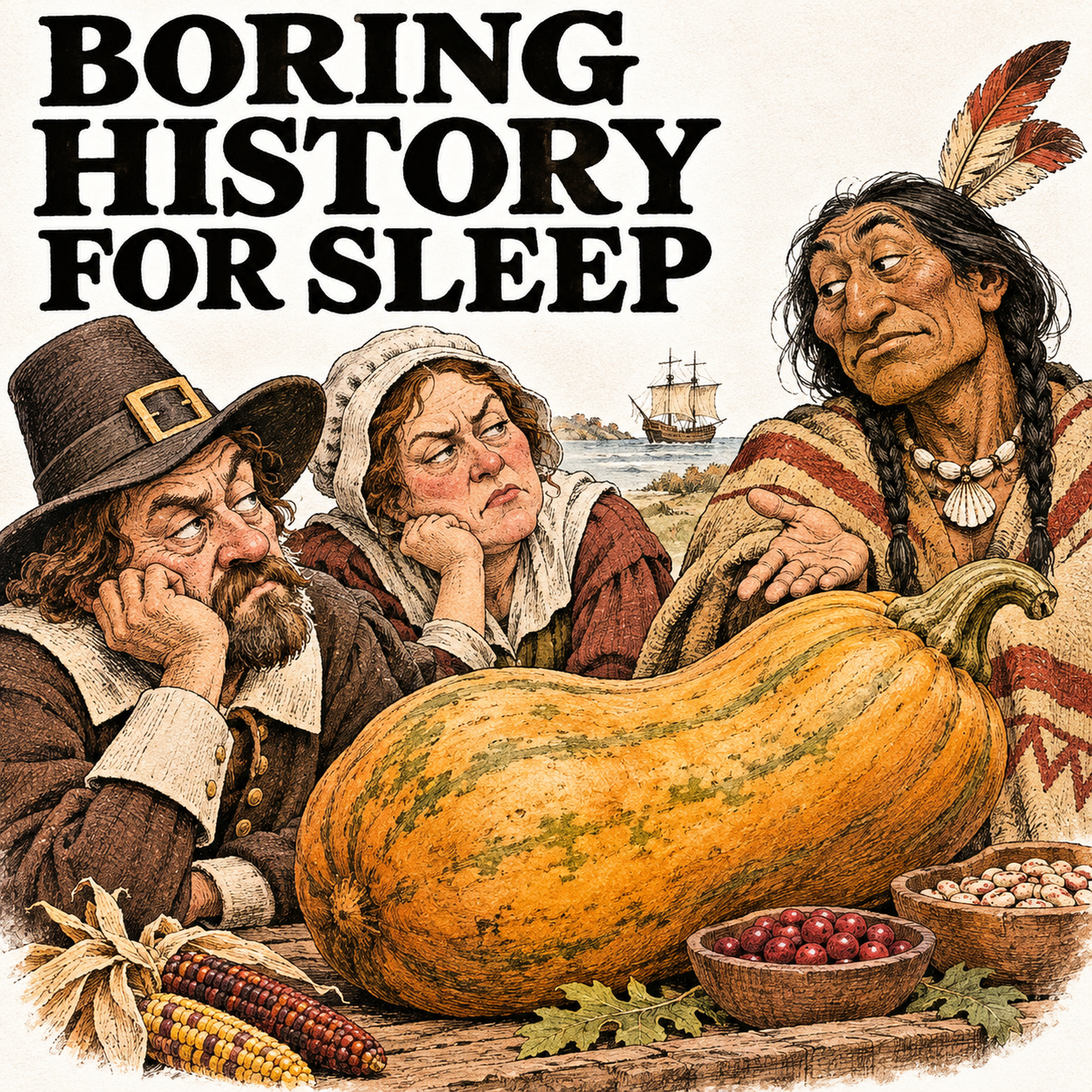
In 1620, a small ship called the Mayflower crossed the Atlantic carrying English settlers in search of a new life. Their arrival in North America became one of the most familiar stories in American history, but the reality behind the legend was far more complicated than the traditional Thanksgiving tale suggests. Discover why the Pilgrims left England, what their dangerous voyage was really like, and how they survived their first winter in an unfamiliar land. Explore their encounters with the Wampanoag people, the role of Tisquantum, also known as Squanto, and the assistance that helped the struggling settlers establish their colony. Uncover what happened at the harvest gathering of 1621, who actually attended, what was served, and how this event became connected to the modern Thanksgiving holiday. Follow the history beyond the familiar celebration and discover the people, cultural encounters, and historical realities behind the Mayflower story. Boring History for Sleep — Soft stories
Your free behavior course: https://nci.university/learn Uploaded 10-05-25 Exclusive NCI-4 (Grad School) Vault Release This is Behavioral Magnetics—the hidden force that draws you back to chaos, to patterns you swore you’d outgrow, to people who echo your oldest pain. It’s why peace feels boring. Why CALM makes you anxious. It’s not intuition—it’s your nervous system recycling what it knows. In this Grad School lecture, we uncover the 4 emotional magnets that shape who you trust, chase, or sabotage... even when it hurts. If you've ever said, “Why do I keep doing this?”—this is your answer. Why you're attracted to the wrong people The 4 types of emotional magnets How trauma rewires your compass Why peace can feel like withdrawal How to break free from recycled patterns Please note that the content provided in this broadcast is for informational and educational purposes only and should not be construed as legal, medical, financial, or professional advice. No material in this communication
A tow truck driver arrived at a rural accident scene after midnight, after the ambulance had left and the police were finishing up. His job was routine: pull the badly damaged sedan from the embankment and take it back to the tow yard. Then, while working alone beside the wreck, he heard a woman’s voice. “Wait.” He searched the car, checked the seats and floorboards, and looked around the accident scene. No one was there. A few minutes later, the voice came again—clearer this time and seemingly from inside the empty vehicle. “Please wait.” He tried to convince himself that exhaustion and the strange acoustics of the roadside had fooled him. Then the next afternoon, someone else at the tow yard heard a woman speaking from the same car. #GhostStories #HauntedCar #SpiritVoice #Paranormal #Spirits #GhostEncounter #Afterlife #Unexplained #ParanormalStory #TheUnexplained Love real ghost stories? Want even more? Want even more? Stay connected with us on social: Instagram: https://www.instagra
Have you ever tried something so hard, failed, and then tried again anyway? Meet Tony Hawk, the boy who turned his restless energy into skateboarding history! Growing up in sunny San Diego, California, Tony was a frustrated kid until his brother gave him a scratched-up blue skateboard. It was pure magic! By age 14, he was a fearless professional skater inventing wild, sky-high tricks on massive wooden ramps. Imagine being at the 1999 X Games, watching Tony attempt the ultimate, "impossible" trick: the 900! That's two and a half dizzying spins high in the air. Crash after crash, he fell ten times. But on his eleventh try? He landed it perfectly, while the crowd went absolutely wild! That same year, his smash-hit video game made him a superstar all around the world. But Tony didn't just want fame. He wanted every kid to have a safe place to ride, fall, and get back up. Through his charity, he has helped build hundreds of free public skateparks everywhere! Grab your helmet and drop in as
This is a Grave Talks CLASSIC EPISODE! PART TWO Built in 1901 in the small railroad town of Wymore, Nebraska, the Haunted Stephenson Building has carried more than a century of stories within its walls. Located in the heart of downtown near the railroad line that built the town, the structure was part of the early business district and reportedly served over the years as a dance hall, saloon, gambling space, and possibly even a brothel — the kind of place where money flowed, tempers flared, and secrets were buried. Today, it operates as a paranormal investigation site and oddities museum, attracting those who want to see if the rumors are true. Visitors consistently report footsteps pacing on empty upper floors, whispers captured in silent rooms, cold air that moves against logic, and shadow figures that vanish the moment you focus on them. Owner Christie Ayers joins us to discuss the building’s layered past and the unsettling question at the center of it all: are these simply echoes o
Algorithms are fundamental to the story of mathematics – they’ve been around for over four thousand years. A theorem may prove that a solution to a problem exists, but an algorithm gives you the directions to actually find it. This lecture explores four key algorithms that have not just shaped pure mathematics, but have found unexpected applications in areas as diverse as nuclear physics, film-making, medicine, and music. This lecture was recorded by Sarah Hart on October 15th 2026 at Binks Hall, St John's College, Durham University, Durham. Sarah Hart was the first woman Professor of Geometry at Gresham College, and Acting Provost between March and October 2025. She is also Professor Emerita of Mathematics at Birkbeck, University of London. Professor Hart studied at Oxford and Manchester, gaining her PhD in 2000. Postdoctoral research and teaching followed, including a prestigious Engineering and Physical Sciences Research Council Fellowship, before she was appointed to a lectureship
This lecture was recorded by Professor Alain Goriely FRS on 10th of November 2026 at Barnard’s Inn Hall, London. Alain Goriely is a mathematician with broad interests in mathematical methods, mechanics, sciences, and engineering. He is well known for his contributions to dynamical systems, mathematical biology, as well as fundamental and applied mechanics. He is particularly well known for the development of a mathematical theory of biological growth, culminating with his seminal monograph The Mathematics on Mechanics of Biological Growth (2017). The transcript and downloadable versions of the lecture are available from the Gresham College website: https://www.gresham.ac.uk/watch-now/end-maths There are currently over 2,500 lectures free to access. Website: https://gresham.ac.uk X: https://x.com/GreshamCollege Facebook: https://facebook.com/greshamcollege Instagram: https://instagram.com/greshamcollege Bluesky: https://bsky.app/profile/greshamcollege.bsky.social TikTok: https://www.tik
Unless it’s Christmas Eve, that chain of lights moving across the sky is probably not Santa’s sleigh but Starlink’s low earth orbit satellites (LEOs). To meet demand for ubiquitous, instantaneous, and uninterrupted communication, our internet infrastructure now extends into outer space. This talk explores who owns it, who has to clean up after it, and its impact on terrestrial politics. We’ll also take a look at how a new interplanetary internet might help shape the future of space exploration, to Mars and beyond. This lecture was recorded by Professor Victoria Baines on 25th of September 2026 at Barnard’s Inn Hall, London. Professor Victoria Baines FBCS is a leading authority in the field of online trust, safety and cybersecurity. She frequently contributes to major broadcast media outlets on digital ethics, cybercrime and the misuse of emerging technologies, including Extended Reality and Artificial Intelligence. Her areas of research include electronic surveillance, cybercrime futur
A club's identity belongs partly to its community, not solely to its owners.
Share your view, then see how readers voted. No sign-in required. This poll is shared across stories.
Do you agree or disagree?
Common Quandary
A Common Quandary to discuss
Another conversation to explore, separate from this news story.
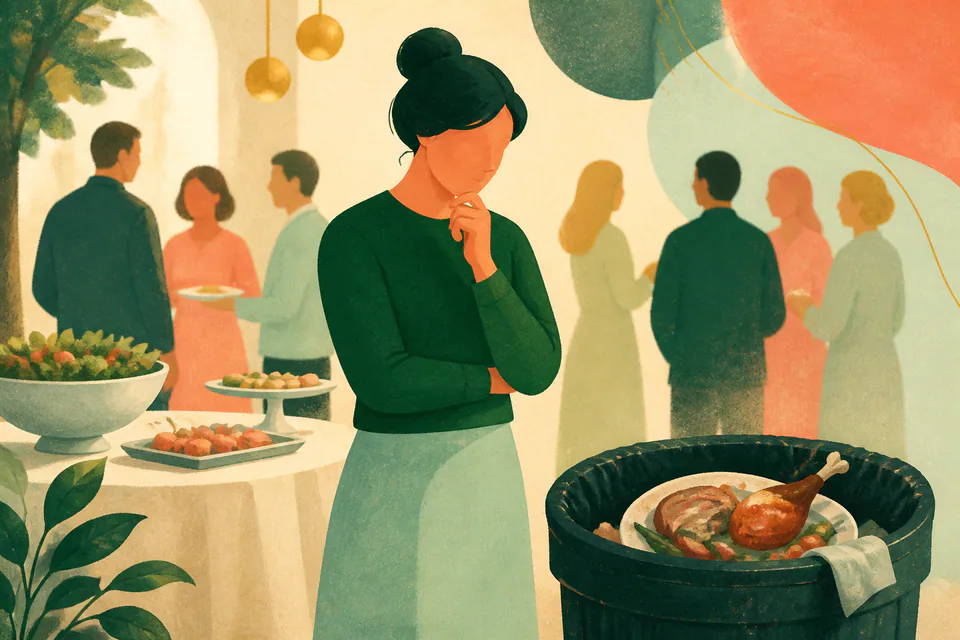
You are vegetarian, but the leftover steak is headed for the trash. Do you eat it?
A vegetarian avoids buying meat because of animal welfare concerns. At work events, untouched meat is routinely thrown away, and eating it would neither increase demand nor cause another animal to be harmed.
Should a moral practice be judged by its consequences or its consistency?