Listen through the publisher, then discuss the episode here or arrange an in-person Roundtable. Your city determines where to meet.
Roundtables are designed for groups of four, with a shared subject and room for everyone to speak. Come for discussion, with no dating expectation.
Did it take a trust fund to save rock and roll? This week, we’re traveling back to the rock revival epicenter, New York City in the early 2000s, to talk The Strokes and their 2003 single “Reptilia”. Diallo & LUXXURY get into the band’s not-so-humble origins and not-so-hidden influences, why 2001 was the year music fandom began to fragment, and Julian Casablancas’s process of “writing sideways”. Then, we break open the stems to get into the surprisingly symphonic composition, the human percussion that sounds like a drum machine, and the grungy lounge lizard-ness of Julian’s isolated vocals. Songs Discussed: “It Never Rains in Southern California” (1972) - Albert Hammond “The Air That I Breathe” (1972) - The Hollies “Creep” (1992) - Radiohead “Yellow Ledbetter” (1992) - Pearl Jam “Hard to Explain” (2001) - The Strokes “Since U Been Gone” (2004) - Kelly Clarkson “In the End” (2000) - Linkin Park “Blurry” (2001) - Puddle of Mudd “It’s Been A While” (2001) - Staind “Smooth Criminal” (2001) - Alien Ant Farm “Flavor of the Weak” (2000) - American Hi-Fi “Fat Lip” (2001) - Sum 41 “Rock and Roll” (1970) - The Velvet Underground “American Girl” (1976) - Tom Petty & The Heartbreakers “Last Nite” (2001) - The Strokes “Freeze Frame” (1981) - The J. Geils Band “Let’s Go Crazy” (1984) - Prince “Bull in the Heather” (1994) - Sonic Youth “12:51” (2003) - The Strokes Engineering by Katie Gilchrist Produced by Eric Hicks and Demian Kendall Edited and mixed by Eric Hicks
Episode information is provided by the publisher. Listening takes place on the publisher’s service.
Can artificial intelligence replace the voices of rock’s greatest singers? And if it can, what happens to the musicians who spent decades developing those unmistakable sounds? On this episode of CHRIS AKIN PRESENTS, Chris welcomes Danny Vaughn of TYKETTO for a revealing conversation about the band’s latest release, CLOSER TO THE SUN, the changing music industry, and the growing influence of AI-generated music. Get Tyketto's CLOSER TO THE SUN on Vinyl while supplies last! https://link.amazon/B0c4HJfbA Danny doesn’t hold back when discussing artificial intelligence. From computer-generated singers that sound eerily similar to established rock vocalists to technology that can imitate an artist’s unique phrasing, he raises serious questions about where creativity ends and exploitation begins. Could AI eventually produce new AC/DC albums without AC/DC? And who should profit when technology recreates a musician’s signature sound? But there’s much more to this interview than AI. Danny takes u
Thirteen years between GTA V and GTA 6 is a long time. Long enough to lose an entire generation of rock legends, apparently. And while we're processing that emotional damage, Joe Buck and Troy Aikman might be heading for a very expensive breakup, an NFL player gets punished for telling an uncomfortable truth about his hometown, and the entertainment world keeps delivering plenty of reasons to turn up the volume. It's another packed episode of The Rizzuto Show, the St. Louis comedy podcast that mixes music, sports, celebrity news, questionable opinions, and the kind of conversations that somehow go from rock history to a mustache controversy without missing a beat. Cam Janssen joins the crew for a look at the headlines, the legends, and the stories that make this comedy podcast appointment listening. We lost some rockstars between GTA V and GTA 6. GTA V came out 13 years ago, and the hosts use that enormous gap to take a look back at the musicians we've lost along the way. David Bowie,
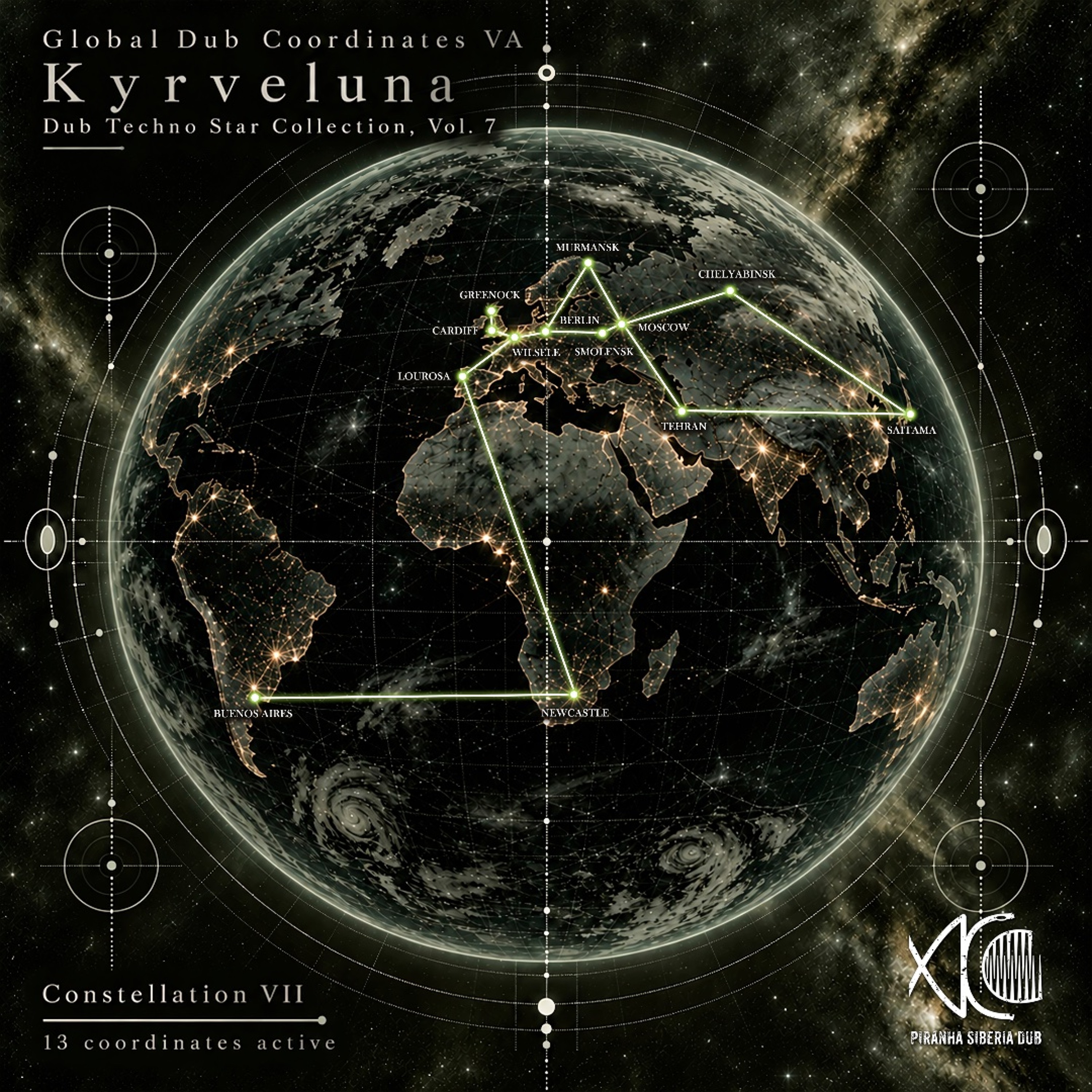
[PIRANHA SIBERIA DUB] is tremendously pleased to present the 120th release — Global Dub Coordinates VA: Kyrveluna Dub Techno Star Collection, Vol. 7 The seventh constellation of Global Dub Coordinates is called Kyrveluna. Thirteen more coordinates continue to assemble the global map of the series — from South Africa, Belgium, and Argentina to Wales, Russia, Portugal, Iran, Germany, and Japan. But in Kyrveluna, geography increasingly begins to function as a system of signs: an ancient temple becomes a personal memory, a house number turns into a recurring code throughout an entire life, a thunderstorm becomes part of a recording, and ordinary weather can completely alter the perception of a familiar city. Here, the map no longer simply shows where a person is — it begins to preserve coincidences, routes, symbols, and traces that cannot be explained by coordinates alone. :::Emmasoul (@emmasoul-115314911) — Zulu Dub Chronicles comes from Newcastle, South Africa, and opens Kyrveluna with a
The Traitors: New Blood Season 1 finale comes down to the final pouch, as Victor's secret shield blows up the castle's trust before the Fire of Truth. BachelorClues and PaceCase recap the final two episodes of The Traitors: New Blood Season 1, all the way to the last pouch thrown into the Fire of Truth. Jay goes out swinging after a round table showdown with Victor, earning the Face Play of the Game for his legendary eye roll. Clyde is murdered at the final breakfast, and Katie and Abby rappel out of a helicopter in the final mission as the prize pot hits $246,300. Then Victor makes the unforced Error of the Game: revealing he secretly had the shield all along. The news tears through the castle, Shane calls it a knife in his back, and Christy tells the table they don't deserve the money if they don't vote Victor. From there it's the Fire of Truth, where the hosts crown their Play of the Game and break down every pouch. Plus: the hosts pick their season MVP and favorite player, and a bo
This week the Deadpod returns to the Providence Civic Center for the second set of the November 4, 1979 show. Last week's first set had four songs that were only a few months old, and set two opens with one that was brand new. This is the first Alabama Getaway the Dead ever played. It already sounds finished on its first night, and it went on to be a regular rocker through most of the 1980s. Greatest Story Ever Told follows. The band had just brought it back in 1979 after more than four years away, and the two songs were often paired after this. Ship of Fools slows things down before Estimated Prophet leads into He's Gone. Instead of the usual opening, Jerry, Brent and Bobby trade licks on the riff that normally comes near the end of He's Gone, then settle into the song. The jam that follows goes in several directions, with a few sudden bursts of speed, before Space and Drums. The Other One and Wharf Rat carry the late part of the set, and Around and Around and U.S. Blues close the nig
Today Paul Hawksbee was joined by Luke Moore for another installment! Today, we were joined by the late Danny Kelly's brother, John Kelly, to remember the legendary broadcaster and to preview Spurs' first game since he passed. Comedian Bert Broadbent joined us as we discussed an unconventional way a couple decided which last name they would take on their wedding day. Musician Tomi Edwards from Redchecks joined us to discuss his new album, and US sports expert Todd Macklin stopped by to cover our weekly US sports roundup Additionally, You can find more from us here: Instagram: @tSHandJ Twitter: @tSHandJ YouTube: talkSPORT Website: Live Radio, Breaking Sports News, Opinion - talkSPORT Hosted on Acast.
What makes a song sexy vs. sleazy? This week, we’re getting into the rare industrial to mainstream crossover hit with Nine Inch Nails’ “Closer”. Diallo and LUXXURY break down the violent, visceral, and fluid-drenched origin of the industrial scene and what makes it unique from subcultures like the punks and goths. Then, we break open the stems to get into the distinctly Reznor-ian blend of distorted samples, stabby synths, and pounding bass, before isolating the vocals of potentially the most vulgar chorus of all time. Plus, the first edition of America's favorite new game: Sexy or Sleazy? Let us know in the comments: Is “Closer” by Nine Inch Nails a sexy song or a sleazy song? Songs Discussed: “Thieves” (1989) - Ministry “I Feel Love” (1977) - Donna Summer “Murderous” (1987) - Nitzer Ebb “Head Like a Hole” (1989) - Nine Inch Nails “Nightclubbing” (1977) - Iggy Pop “Closer (Nine Inch Noize)” (2025) - Nine Inch Noize “Take A Chance With Me” (1982) - Roxy Music “Let’s Get It On” (1973) -
From behind the Patreon paywall... Steven Hyden answers the question: What happened to the rock and roll middle class? The acclaimed rock critic and author of the new book on The Strokes, Is This It? The Never-Ending Rise and Fall of the Strokes (and Rock ‘n’ Roll), joins the Patreon to talk about the legacy of the band, the undiscovered gems of 2000s New York City, and why some bands become better known for their tee shirts instead of their music. Episode produced by Demian Kendall.
Neighboring communities should share responsibility for problems crossing their boundaries.
Share your view, then see how readers voted. No sign-in required. This poll is shared across stories.
Do you agree or disagree?
Common Quandary
A Common Quandary to discuss
Another conversation to explore, separate from this news story.
One sibling did years of caregiving. Should they get more of the inheritance?
One sibling lives near an aging parent and handles appointments, errands, and emergencies. The others live far away, call regularly, and assume the nearby sibling will receive the same inheritance despite years of unpaid work.
When does family care become labor that should be repaid?