Welcome to Ep#3 in our Full Table & a Well-Fed Soul Series When Food Becomes More Than Fuel Why Food Is About Connection—and How to Keep It from Becoming Self-Sabotage Food was never meant to be just another thing to manage, measure, or get right. It's nourishment, yes—but it's also tradition, celebration, connection, and some of our most meaningful memories. In this episode of A Full Table and Well-Fed Soul, Jess and Micah explore what happens when we allow food to become part of the moments that matter most. From Christmas Eve traditions and family recipes to the deeper spiritual significance of sharing a meal, they unpack why food has always been about more than nutrition. But what happens when the holiday table brings complicated family dynamics, emotional triggers, or pressure to eat perfectly? How do we enjoy the experience without swinging between restriction and overindulgence? Want to dive into this 1:1 with Jess and prep your January plan? Snag the limited-time Empowered Eati
For the days you got through and nobody saw what it took. A quiet place this evening where it counts. About 12 minutes with Steven Webb's calm voice and music underneath. Perfect for the evening. We let the body soften, from the jaw and the eyes down to the belly, because it's been on alert all day. Then we look at what today really cost. Getting up when your body said no. Being kind to someone while you were falling apart inside. Saying "yeah, fine" because where would you even start? There's an old Zen idea I keep coming back to: a thing doesn't need to be seen to be real. The rain falls on an empty field, nobody watches, and it still soaks in. We put the day down for a minute, not away, just down, and finish with three gentle wishes. May the hard days I got through be counted. I've been paralysed a long time, and I know what it can take just to get through the day. You're not doing this on your own. Treat me to a coffee, keep the podcast free, and get my Weekly Calm every Sunday. It
Why does our culture make it so easy to walk away from commitment? What did Jesus reveal about God's original design for marriage? And what does marriage show us about the way God loves his people? In today's episode, Jeff explores Matthew 19:1–12 and explains why marriage is more than a commitment between two people; it's a picture of the faithful love of Jesus. Want to become a more consistent Bible reader? Read the Bible with us! We're almost done exploring the Gospels—Matthew, Mark, Luke, and John—but it's never too late to jump in! Your support makes TMBT possible. Ten Minute Bible Talks is a crowd-funded project. Join the TMBTeam to reach more people with the Bible. Give now (https://info.tenminutebibletalks.com/support). Like this content? We'd love to hear from you! Passage: Matthew 19:1–12 (https://www.biblegateway.com/passage/?search=Matthew+19%3A1%E2%80%9312&version=NIV)
Fear has a way of quietly taking control of your life. It convinces you to stay where you are, avoid difficult conversations, delay decisions, tolerate situations you know aren’t good for you, and settle for a life that is far smaller than the one you are capable of living. In this episode of The Strong Life Project, we explore how fear impacts your thinking, your relationships, your career, your leadership, and ultimately your ability to live a meaningful life. Fear doesn’t always look like panic. Sometimes it looks like procrastination, overthinking, making excuses, people pleasing, avoiding conflict, or constantly waiting for the perfect moment. The problem is that every time you allow fear to make a decision for you, you reinforce the belief that you are incapable of handling what comes next. Over time, this creates a pattern of avoidance that undermines confidence, resilience, emotional strength, and personal growth. Learning to manage fear doesn’t mean becoming fearless. It means
Robert “Bob” Sutton (https://engineering.stanford.edu/people/robert-sutton) is an expert on organizational behavior. He studies a key workplace dynamic he calls friction – moments where reaching goals is more difficult than it should be. In any organization, whether a company, government, university, or nonprofit, there are good kinds of friction and bad, Sutton says. And good friction can undo the bad, but it’s not easy. He champions what he calls a “subtraction mindset,” removing what doesn’t work to focus on what does: virtues like competence, hard work, and compassion. He likens the approach to film editing. The best editors “cut out the bad stuff and keep the good,” Sutton tells host Russ Altman (https://bioengineering.stanford.edu/people/russ-altman) on this episode of Stanford Engineering’s The Future of Everything podcast. Have a question for Russ? Episode Reference Links: TheAI and Organizations Lab at HAI (https://hai.stanford.edu/centers-labs/ai-organizations-lab) Connect wi
So many of us have learned to be strong by pushing through difficult things, ignoring our needs, and holding everything together, even when we're struggling inside. And while these strategies may have helped us through difficult times, they can also leave us feeling disconnected from ourselves. But our authentic inner strength feels very different. It's rooted in our ability to stay connected to ourselves, trust our inner knowing, and make choices that reflect our deepest values and needs. And it can help us feel more empowered to shape our lives in ways that feel meaningful and aligned. The beautiful thing is that this strength is already within us, even if we learned to disconnect from it somewhere along the way. In this episode of Somatic Healing Meditations (https://helloinnerlight.com/podcast), I'll guide you on a soothing journey inward to reconnect with the depth and breadth of the true strength you carry within. Together, we'll explore some of the beautiful and powerful qualiti
Today's Scripture: Galatians 2:11–14 Have you ever noticed yourself changing your behavior depending on who's in the room? Even the apostle Peter struggled with the fear of other people's disapproval. His story reveals something surprising about people-pleasing: our attempts to keep the peace can sometimes hurt the very people we care about. We explore: Why even Peter struggled with the fear of disapproval How fawning can cause us to compromise our convictions The hidden costs of keeping everyone happy How to stand firm in what's right without being controlled by others' reactions Go Deeper: For more on breaking free from people-pleasing and developing healthier relationships, explore my book The Best of You (https://link.amazon/B05zuKNkh) Connect with Dr. While Dr.
For many of us, faith has been framed primarily around the promise of going to heaven when we die. But what if the biblical story is about something much bigger? This week, Dr. Alison is joined by one of the world's most renowned biblical scholars, N. T. Wright, whose work has profoundly shaped her own faith. Drawing from his new book, Into the Heart of Isaiah: The Meaning and Message of Isaiah 40–55, Tom invites us into some of the most beautiful and hopeful passages in Scripture. Together, they explore what these ancient words meant to people living in exile, how they help us understand Jesus, and why their message of hope and restoration still speaks so powerfully to us today. You’ll discover: *What if we've misunderstood heaven? *The surprising connection between suffering and hope *What Isaiah reveals about the true nature of God's power *The modern-day idols we don't always recognize *Why following Jesus requires a different kind of courage *What it really means to live as people
Today's Scripture: Exodus 3:10–14 What happens when you're facing something that feels bigger than your capacity to handle it? Like Moses, we can become consumed with our own limitations and fears. But God's response to Moses reveals something extraordinary about where true confidence comes from—and the reality we can anchor ourselves to when everything inside us feels uncertain. explore: - The fear of not being enough - God's surprising response to Moses - The deeper meaning of “I AM” - Where to find confidence when your feelings change Read The Secure Soul (https://link.amazon/B09qFgTyE) and The Secure Soul Companion Guide. Connect with Dr. While Dr.
People directly affected by a local change should have more influence than other residents.
Share your view, then see how readers voted. No sign-in required. This poll is shared across stories.
Do you agree or disagree?
Common Quandary
A Common Quandary to discuss
Another conversation to explore, separate from this news story.
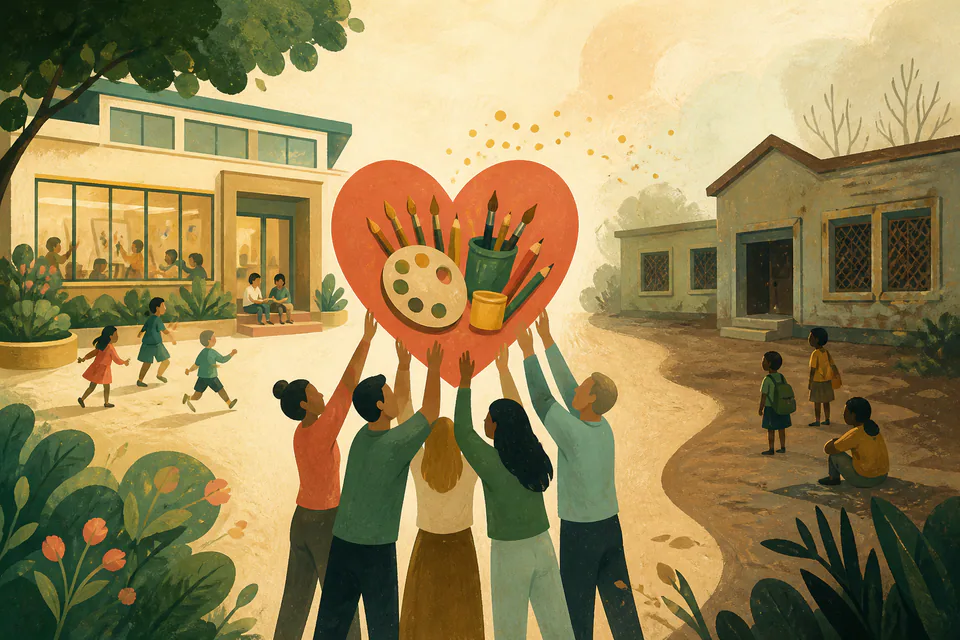
Rich parents want to buy their public-school class an art teacher. Should the school say no?
Parents at a well-resourced public school raise enough money for art teachers and smaller classes. Nearby schools cannot raise comparable amounts, widening differences within the same district.
Can helping your own community become unfair to the larger one?