Listen through the publisher, then discuss the episode here or arrange an in-person Roundtable. Your city determines where to meet.
Roundtables are designed for groups of four, with a shared subject and room for everyone to speak. Come for discussion, with no dating expectation.
What do the US midterms mean for Big Tech? While the elections have been dubbed a referendum on President Trump, in many states, tech bosses and AI were also on the ballot. Elon Musk became the Republicans’ most prominent financial backer, donating an incredible $446 million to the unsuccessful campaign. But public backlash to data centres, fears about AI and the dislike for the billionaires developing it has turned the tech industry into a key battleground this election cycle. Danny and Katie break down how Big Tech became the villain of the US midterms and ask if the defeat could threaten Silicon Valley’s grand plans for the AI buildout? Read more: The American dream is turning into a Silicon Valley nightmare (https://www.thetimes.com/us/business-us/article/us-midterms-american-dream-turning-into-silicon-valley-nightmare-79w82gvdc) Get in touch: [email protected] Presenters: Katie Prescott, Technology Business Editor, The Times Danny Fortson, US West Coast Correspondent, The Sunday Times Producer: Marnie Duke Executive Producer: Priyanka Deladia Video Producer: Super Llama Image: Getty Hosted on Acast.
Episode information is provided by the publisher. Listening takes place on the publisher’s service.
The Democrats swept the midterms. Donald Trump is still president. What will the next two years look like? And what can history teach us about what comes next? Martin Wolf speaks to historian Heather Cox Richardson about the cycles in the past 250 years of US politics — how renewal (and division) can both follow periods of oligarchy, and how the Democrats should react to a “constitutional crisis”. To enjoy future episodes, be sure to subscribe to ‘Martin Wolf on the World’ wherever you get your podcasts. You can also watch Martin’s podcast series on the FT’s YouTube channel here:https://www.youtube.com/@FinancialTimeshttps://www.youtube.com/@FinancialTimes Host: Martin Wolf Producer: Mischa Frankl-Duval Senior producer: Laurence Knight Video editor: Richard Topping Senior audio engineer: Breen Turner Broadcast engineer: Andrew Georgiades Podcast development: Laura Clarke FT Global Head of Audio: Flo Phillips Learn more at www.ft.com/martin-wolf-on-the-world (http://www.ft.com/martin-wo
Until a little under two weeks ago, Silicon Valley Bank was the sixteenth largest bank in the United States, the favoured choice of tech startups due to the tailored services it provided. But by 10th March 2023, American authorities were taking control of SVB following its collapse. It had assets of over $200bn, making for the second biggest bank failure in US history. There were a number of factors behind the collapse, and it’s causing concern as it’s common for one bank collapse to be followed by another, due to what’s called financial contagion. Indeed, just a few days later it was the turn of New York-based Signature Bank to collapse. And over in Europe, Switzerland’s second largest bank Crédit Suisse had to take out a $54bn to stay afloat, before then being bought out by the country’s largest bank UBS, in a bid to halt the crisis. Why did Silicon Valley Bank collapse? How do stock market crashes happen? In under 3 minutes, we answer your questions! To listen to the last episodes,
November 20, 2026; 10am: Three weeks after the midterms, and losses for the candidates they funded, Elon Musk says he’s not MAGA and Palantir’s Alex Karp calls himself a progressive. Then, mixed messaging over the Ukraine war. Trump says Russia wants peace, but that’s not exactly what Putin told reporters. Plus, new reporting out of Utah on data centers, and the group chat shares their MVPs to close out the week. David Rohde, Mary Harris, Dan Nathan, Paul Mecurio, Michael McFaul and Josh Einiger join the Group Chat. Hosted by Simplecast, an AdsWizz company.
Jonathan Rinderknecht is found guilty of starting the deadly Palisades fire in Los Angeles, which displaced thousands of people and became one of the most destructive fires in the city’s history. Also: Donald Trump describes his relationship with the leaders of Russia and China as “fantastic”, after meeting with them in Shenzhen. The US president also threatens a ban on American firms building AI data centres overseas, saying they must stay in the US. Russian drones continue to attack Ukraine, with Poland caught in the crossfire. Students in more than 20 European countries protest over education, climate change and military conscription. Cyber security experts in the UK conduct a highly secretive operation to protect its fridges and freezers. Cincinnati Zoo announces the death of the beloved hippo, Fiona. The BBC speaks to the stars of the latest The Hunger Games franchise series, and Christmas comes early for residents in an English town in the form of wrapped cars. Follow or subscrib
Can artificial intelligence replace the voices of rock’s greatest singers? And if it can, what happens to the musicians who spent decades developing those unmistakable sounds? On this episode of CHRIS AKIN PRESENTS, Chris welcomes Danny Vaughn of TYKETTO for a revealing conversation about the band’s latest release, CLOSER TO THE SUN, the changing music industry, and the growing influence of AI-generated music. Get Tyketto's CLOSER TO THE SUN on Vinyl while supplies last! https://link.amazon/B0c4HJfbA Danny doesn’t hold back when discussing artificial intelligence. From computer-generated singers that sound eerily similar to established rock vocalists to technology that can imitate an artist’s unique phrasing, he raises serious questions about where creativity ends and exploitation begins. Could AI eventually produce new AC/DC albums without AC/DC? And who should profit when technology recreates a musician’s signature sound? But there’s much more to this interview than AI. Danny takes u
In a controversial broadcast to his millions of YouTube followers, the wife of the convicted rapist Russell Brand read out a letter that he sent her from prison. In it, he protests his innocence. So what is Laura Brand up to and exactly how deluded is she? Times writer Polly Vernon reflects. Guest: Polly Vernon, feature writer, The Times Producer: Sophie McNulty We want to hear from you - email: [email protected] Read more: Brainwashed or complicit: what’s going on with Laura Brand? (https://www.thetimes.com/life-style/celebrity/article/brainwashed-or-complicit-whats-going-on-with-laura-brand-nmwx2pkzn) Further listening: I’m Alice | The Trial of Russell Brand (https://podfollow.com/the-story/episode/23b2347a9044d66b2a18530c8fbaf2ea9c1e6f4d/view) Photo: YouTube - Russell Brand. Hosted on Acast.
Anthropic has raised a record-breaking sum of $81.3bn from its IPO, eclipsing the $75bn raised by Elon Musk’s SpaceX in June. Danny Fortson and Mark Sellman, Tech Correspondent for The Times, explain how Anthropic came to be one of the most highly valued companies in the world and why this is likely to become a defining moment for the next phase of AI. They are joined by Senior Analyst at Pitchbook, Harrison Rolfes, to break down what the numbers tell us and what it says about public attitudes to AI, just weeks after the US midterms. Read more: Who is cashing in from Anthropic’s historic IPO? (https://www.thetimes.com/video/business-video/article/who-is-cashing-in-on-the-artificial-intelligence-boom-blvf9q8n0) Get in touch: [email protected] Presenters: Danny Fortson, US West Coast Correspondent, The Sunday Times Mark Sellman, Tech Correspondent, The Times Producer: Marnie Duke Executive Producer: Priyanka Deladia Image: Getty Hosted on Acast.
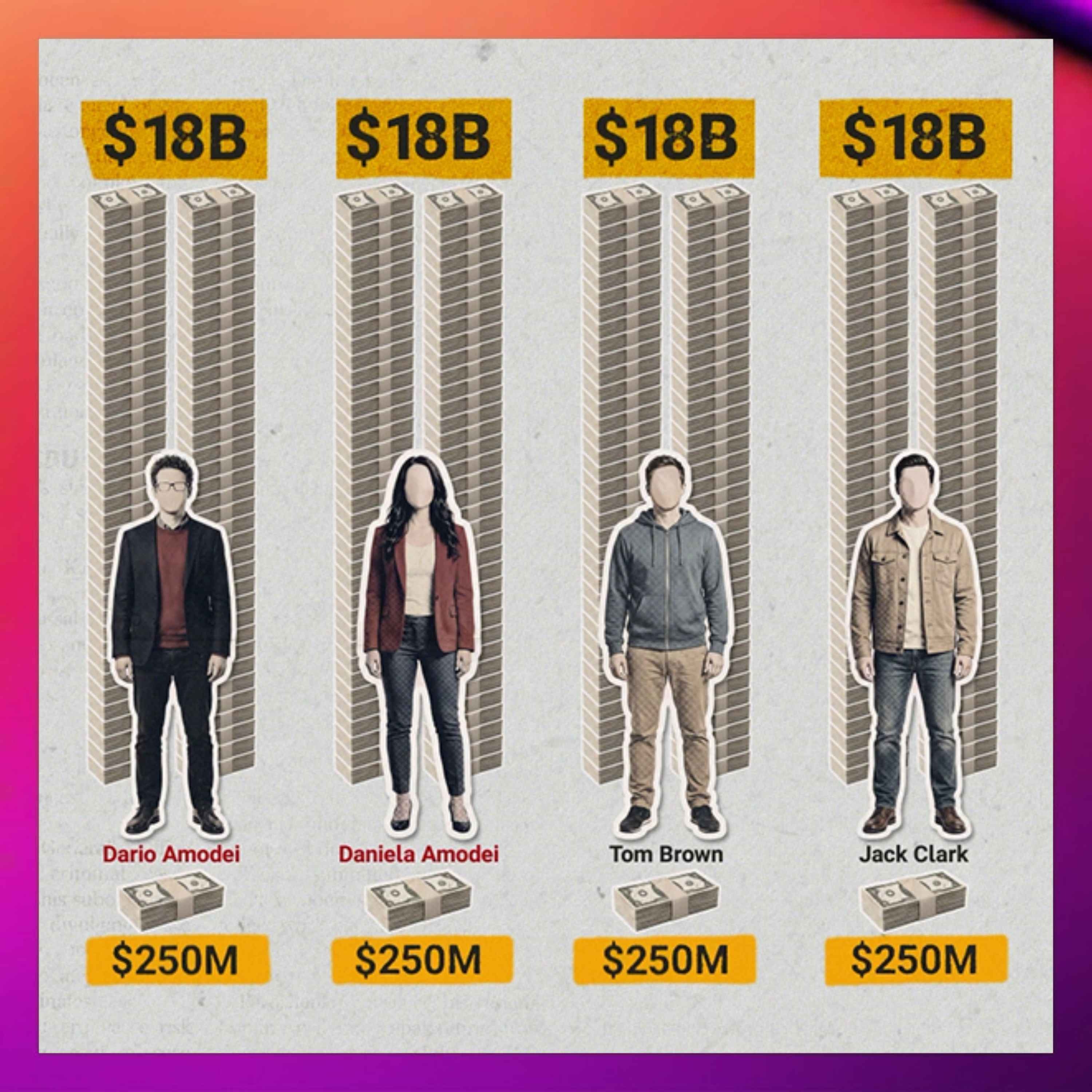
Anthropic was founded in 2021 by a group of seven former OpenAI employees. Now, the AI powerhouse behind the Claude models is selling its shares to the public for the first time. Katie explains who stands to make an absolute fortune from Anthropic’s mega-float. More from Times Video (https://www.thetimes.com/video) Get in touch: [email protected] Presenter: Katie Prescott, Technology Business Editor, The Times. Producer: Yasmin Butt Image: Times Hosted on Acast.
Evan Spiegel, co-founder and chief executive of Snap joins Danny and Katie live on stage at the Times Tech Summit to discuss why he’s spent the last 10 years investing in a new type of computer built into a pair of glasses. He explains why he thinks it’s "really weird" that Meta made ‘spy glasses’, addresses the growing wave of lawsuits against social media companies and shares his thoughts on the AI backlash currently sweeping across the United States. The Interview is our weekly conversation with the people shaping the future of technology. Read more: Snap boss takes swipe at ‘really weird’ Meta glasses (https://www.thetimes.com/us/business-us/article/evan-spiegel-snap-smart-glasses-meta-raybans-vs7lwcq2d) Get in touch: [email protected] Guest: Evan Spiegel, Co-founder and Chief Executive of Snap, Inc. Presenters: Katie Prescott, Technology Business Editor, The Times Danny Fortson, US West Coast Correspondent, The Sunday Times Producer: Marnie Duke Executive Producer: Peter Sale
Public cultural institutions should present contested works with context instead of simply removing them.
Share your view, then see how readers voted. No sign-in required. This poll is shared across stories.
Do you agree or disagree?
Common Quandary
A Common Quandary to discuss
Another conversation to explore, separate from this news story.
Your partner checks your location whenever you reply slowly. Is that caring or creepy?
A couple shares live phone locations for convenience and safety. One partner begins checking the map whenever a message goes unanswered, even though they have never agreed on when checking is appropriate.
Does granting access also grant permission to monitor?