The Uyghurs found fighting in Syria, plus the Sally Rooney censorship furore
55 min
Listen through the publisher, then discuss the episode here or arrange an in-person Roundtable. Your city determines where to meet.
Roundtables are designed for groups of four, with a shared subject and room for everyone to speak. Come for discussion, with no dating expectation.
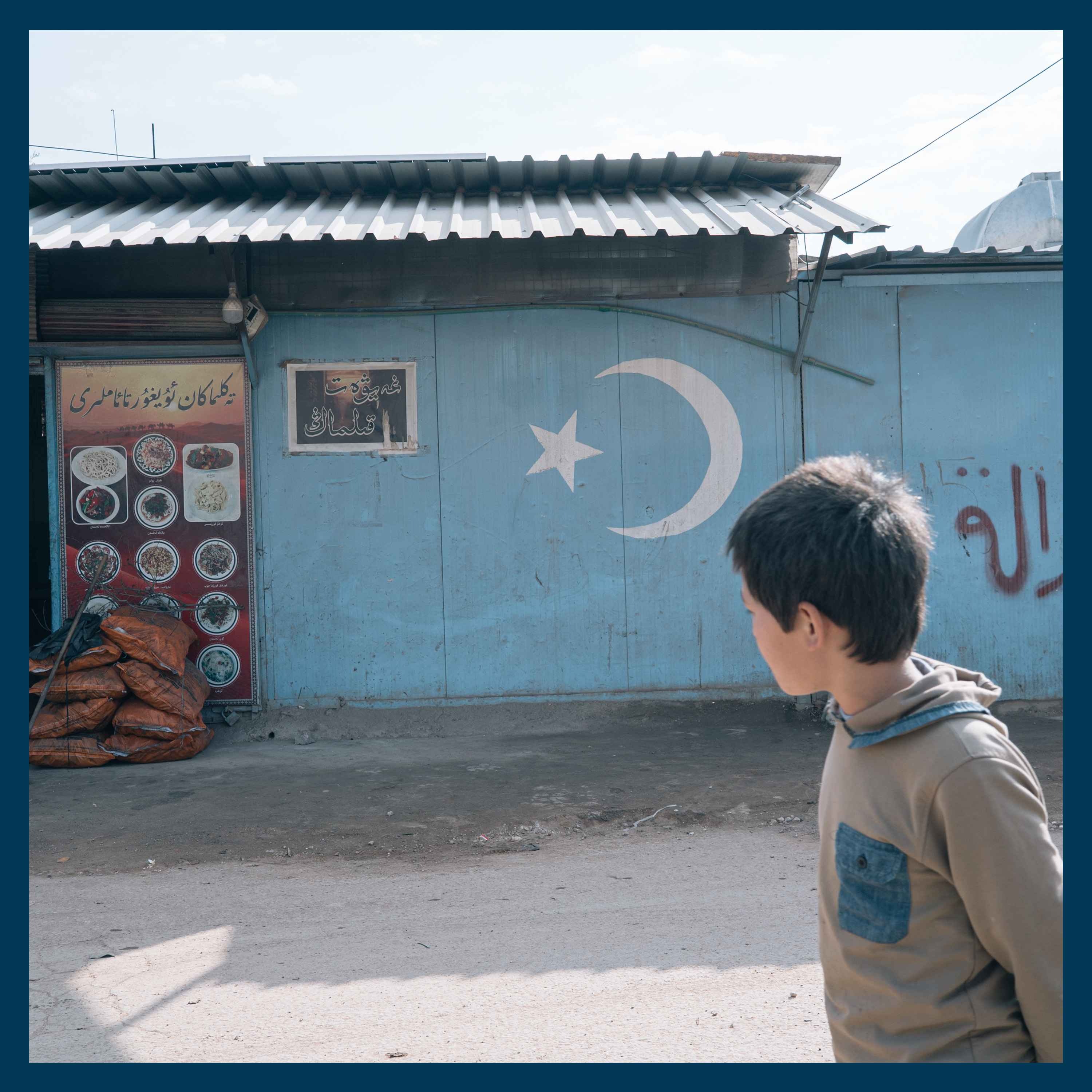
When the Assad regime fell in Syria in 2024, NPR correspondent Emily Feng was surprised to find thousands of Uyghurs amongst the victorious rebel forces. What were they doing there and why were they fighting? Plus, bestselling author Sally Rooney and her publisher have pulled he books from UK shelves, while legislation continues to designate the group 'Palestine Action' as a terror organisation. Does this amount to censorship? Guests: Emily Feng, NPR correspondent and author of 'Our hearts burned from home: Uyghur militants in Syria's civil war' Tanjil Rashid, culture editor at the New Statesman Get in touch: Email us at [email protected]
Episode information is provided by the publisher. Listening takes place on the publisher’s service.
Over 20,000 Uighur refugees escaped repression in China by fleeing to Syria at the height of its brutal civil war. Originally from north western China, the Muslim minority fought fiercely against the Assad regime. But now that the war is over, they live in limbo, unable to return home or even contact loved ones while the Chinese state continues its campaign against their community. So will the new Syrian government honour their sacrifice? Or try to stay on good terms with the Chinese state? Our reporter has been to northern Syria to meet them. Guest: Anthony Loyd, special correspondent, The Times Host: Luke Jones Producer: Robyn Simon and Harry Stott We want to hear from you - email: [email protected] Read more: They fought for Syria’s freedom. Will they fight for their own? (https://www.thetimes.com/world/middle-east/article/uighur-fighters-syria-xinjiang-china-cfv5733d8) Further listening: SAS in Syria: the untold murder probe (https://pod.fo/e/6c8ea9) Clips: The New York Times,
For review: 1. Iraq has reached a compromise with the powerful Iran-backed militia Kataeb Hezbollah, three senior security officials said, after Prime Minister Ali al-Zaidi readied security forces to move against the group. Reflecting the gravity of the situation, Iraqi Shiite political sources said Esmail Qaani, commander of Iran’s elite Revolutionary Guards’ Quds Force, arrived in Baghdad late on Monday to help defuse tensions with Kataeb Hezbollah, Tehran’s most powerful militia ally in Iraq. 2. Lebanese President Joseph Aoun launched a lengthy rebuke of Iran in an Independence Day address, arguing that the Islamic Republic does not have the right to interfere in Lebanon’s internal affairs, as it long has via support for its local terror proxy, Hezbollah. 3. Yemen’s Houthis launched strikes on the Saudi capital Riyadh on Saturday, after vowing reprisals for a “special operation” by the Saudi-led coalition fighting them. The coalition later said it had “intercepted and destroyed” thr
The ransom note was discovered inside the Ramsey home, written on paper investigators traced to a household notepad. Nearly thirty years later, John Ramsey is pressing police to test more evidence. How can investigators reconcile what happened inside that house with what new forensic technology might finally reveal? Tony Brueski brings Producer Todd and Lisa into the conversation about JonBenét Ramsey’s still-unsolved 1996 murder. The ransom note demanded $118,000, a figure close to John’s prior bonus. Investigators found what appeared to be the beginning of another note in the same pad. Patsy Ramsey called police that morning; John later discovered his daughter’s body in a basement room. These details remain consequential, but they do not identify a killer. John says several items initially returned from labs were not tested and wants additional DNA analysis of the note and other objects. Boulder Police dispute the idea they are ignoring viable evidence. At a November 2026 briefing, o
Read: Romans 5:10; 1 Corinthians 15:57-58; 16:13-14 (https://www.biblegateway.com/passage/?search=Romans+5%3A10%3B+1+Corinthians+15%3A57-58%3B+16%3A13-14) “I’m done trying to be nice to Josh!” Eli told his mom. “He’s so mean! When I asked if he wanted to be my lab partner in science today, he laughed and said he wouldn’t be caught dead with a—well, I won’t repeat what he called me.” Eli flung his backpack into the hallway closet. “I was just trying to reach out to him because he doesn’t have any friends. Now I know why—he doesn’t want any!” Mom was about to respond when a sharp yip followed by a howl of pain came from outside. “That’s Mitsy!” Eli shot out the back door. He found his puppy crouched on the ground, her paw caught underneath the fence. Every time she moved, a sharp barb of wire jabbed her flesh. Eli knelt beside her and reached for the trapped paw. “Grrrr!” Mitsy growled, baring her teeth. Eli drew back in surprise. “Mitsy! Why are you growling at me? I only want to help y
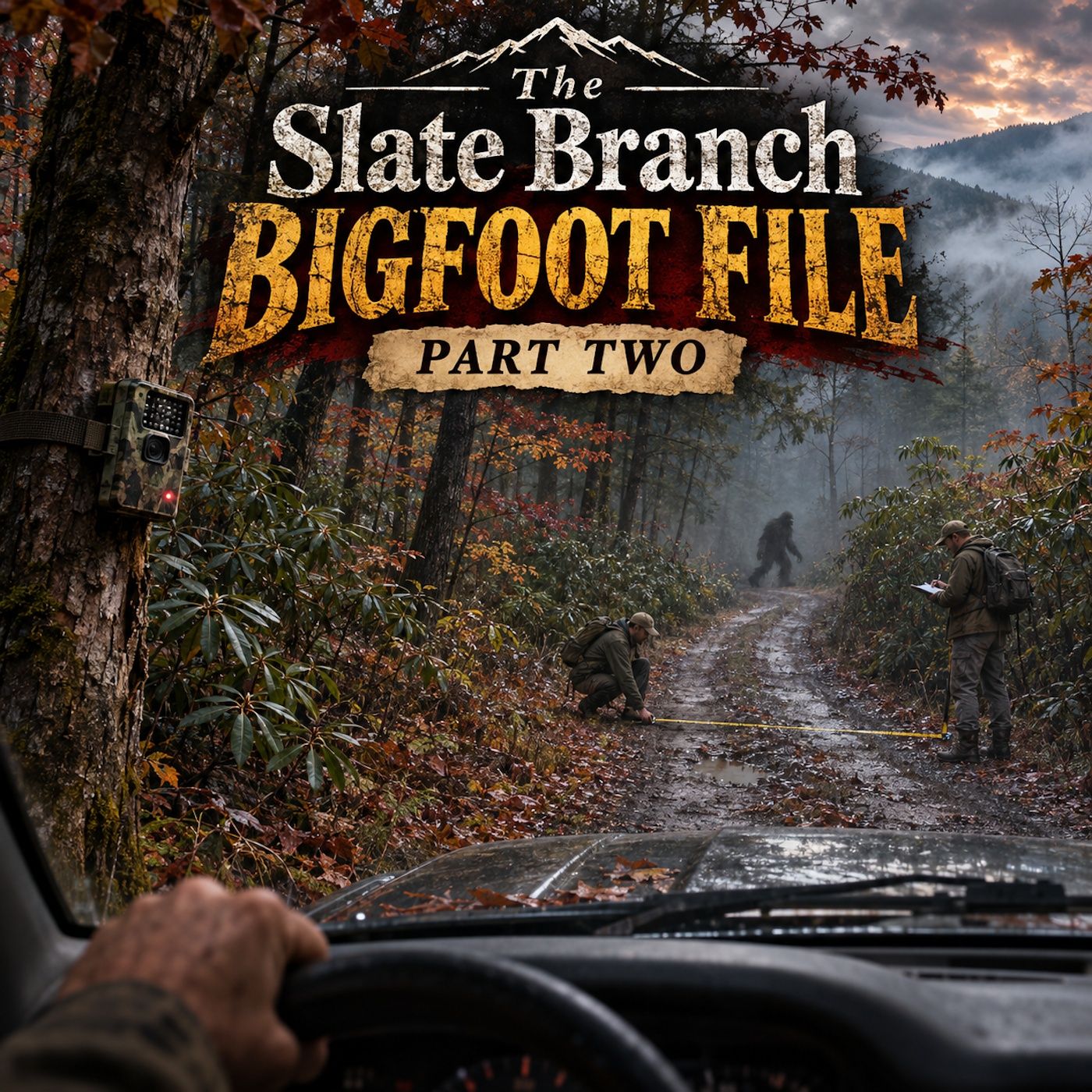
On October 7, 2017, Tom Rigsby watched something large, dark, and walking upright cross a remote logging road in western North Carolina. The encounter lasted less than five seconds. Tom waited two days before reporting it, and when he finally put his experience in writing, he never once used the word Bigfoot. In Part Two of The Slate Branch File, Brian takes a closer look at the encounter that started it all. Drawing from the field notebooks of former wildlife survey technician Nate Calder, Brian examines Tom’s credibility, his years of experience working in bear country, and the details he initially refused to include in his official statement. When Nate and Evan Harlan return to the crossing site to recreate the encounter, their measurements raise more questions than answers. Meanwhile, a mysteriously repositioned trail camera, an overlooked access route through the surrounding national forest, and troubling gaps in the crew’s assumptions suggest the remote property may not have been
In May 2015, Eugene Scardifield’s life changed forever when his brother Michael was tragically murdered in Stoke-on-Trent. In this special interview, Eugene joins me to talk about Michael, the impact of his murder on those who loved him and what life has been like for the family in the years since. Eugene is an author, fundraiser and ambassador for SAMM National (Support After Murder and Manslaughter), an organisation supporting people whose lives have been affected by homicide. This is a conversation about loss, the experience of families bereaved by murder and the importance of ensuring that those left behind are not forgotten. 1, Buy Eugene's book: 2, SAMM National (Support After Murder & Manslaughter): I release new episodes of the UK True Crime podcast every Tuesday and Friday - please do join me for the next episode on Tuesday. Find out more about me, Adam Lloyd, & UK True Crime https://uktruecrime.com (https://uktruecrime.com/) Support me at Patreon: Buy Me a Coffee Watch my You
New Zealanders are still waiting weeks to see who will run their country, two weeks after a knife-edge election result. New players, such as the Opportunity Party, are likely to bring change, regardless of who forms the government. And the many ways to interpret a kiss, over time. From public symbolic displays of trust, to unwelcome kissing of babies. Guests: Anna Fifield, Wellington-based journalist and commentator, author of the Between Giants newsletter on Substack. Former foreign correspondent Katie Barclay, Professor of History, and ARC Future Fellow, Macquarie University. Author of 'The Kiss: a History of Passion and Power' (Reaktion, Nov 2026) Get in touch: Email us at [email protected]
"Attack, counterattack, and never apologise". That was the advice of attorney Roy Cohn to the embattled real estate mogul Donald Trump in the 1970s and 80s, decades before Trump's entry into politics. A new biography reveals the ruthlessness of Mr Cohn, a brutal fixer from the McCarthy era, until his death from HIV/AIDS in 1986. It's quite a story. Guests: Kai Bird and Susan Goldmark, co-authors of 'American Scoundrel: Roy Cohn's Dark Journey from Joe McCarthy to Donald Trump (https://www.simonandschuster.com.au/books/American-Scoundrel/Kai-Bird/9781398566903)' Producer: Catherine Zengerer Get in touch: Email us at [email protected]
Bruce Shapiro surveys a changed US political landscape, as the dust settles on the US midterm results. Chinese President Xi Jinping has just conducted an internal purge of historic proportions - but is this a show of strength, or weakness? Plus, new documents paint a vivid picture of life inside Adolf Hitler's wartime bunker in Poland, the 'Wolf's Lair'. Guests: Bruce Shapiro, contributing editor with The Nation, executive director of the Global Center for Journalism and Trauma Neil Thomas, Senior Geoeconomics Analyst for China at Bloomberg Felix Bohr, journalist and author of 'Before the Downfall: Hitler's years in the Wolf's Lair' Get in touch: Email us at [email protected]
Expanding universities should help pay for the pressures they create on surrounding neighborhoods.
Share your view, then see how readers voted. No sign-in required. This poll is shared across stories.
Do you agree or disagree?
Common Quandary
A Common Quandary to discuss
Another conversation to explore, separate from this news story.
You spot your friend's partner on a dating app. Do you send the screenshot?
While browsing a dating app, you see the long-term partner of a close friend. The profile looks active, but you have no way to know whether it is current, permitted, fake, or simply forgotten.
When does loyalty require sharing uncertain information?