The Watch List That Never Caught a Terrorist | Sonya LaBosco & David Londo | Ep. 481
156 min
Listen through the publisher, then discuss the episode here or arrange an in-person Roundtable. Your city determines where to meet.
Roundtables are designed for groups of four, with a shared subject and room for everyone to speak. Come for discussion, with no dating expectation.
Sonya LaBosco is a former Virginia state trooper who became a federal air marshal in 2002, one of the last classes required to pass the old tactical pistol course. She was medically retired in 2014 and now runs the Air Marshal National Council as its executive director. David Londo joined the service in 2006 and spent 20 years on aircraft, including time as a recruiter, before retiring. He is the council's president. Together they spent years working with the Boston Globe, Judicial Watch, and congressional oversight committees to expose the Quiet Skies program, and they are now producing a documentary called Watchlisted in America. This conversation covers how a program meant to find threats to aviation turned into undercover surveillance of citizens who were never suspected of anything. A computer flagged travel habits, a team of three marshals was dispatched to shadow the person, and after-action reports came back saying the same thing every time: not a threat. They walk through how it expanded after January 6, how an air marshal ended up assigning his own wife's surveillance detail, and why a Senate investigation and an inspector general audit found zero threats ever caught. We also get into the pre-9/11 standards that got thrown out, why they want the program pulled out of TSA and rebuilt as a small specialized unit, the holes in private aviation and the northern border, and a geotracking contract they say has quietly replaced Quiet Skies. Today's Sponsors: Montana Knife Company: https://www.montanaknifecompany.com (https://www.montanaknifecompany.com/) BÆRSkin: Right now, you can get twenty dollars off the BAERSkin Hoodie 5.0. Just text CLEAREDHOT to 36912 and they'll send the link straight to your phone.
Episode information is provided by the publisher. Listening takes place on the publisher’s service.
Read: Romans 5:10; 1 Corinthians 15:57-58; 16:13-14 (https://www.biblegateway.com/passage/?search=Romans+5%3A10%3B+1+Corinthians+15%3A57-58%3B+16%3A13-14) “I’m done trying to be nice to Josh!” Eli told his mom. “He’s so mean! When I asked if he wanted to be my lab partner in science today, he laughed and said he wouldn’t be caught dead with a—well, I won’t repeat what he called me.” Eli flung his backpack into the hallway closet. “I was just trying to reach out to him because he doesn’t have any friends. Now I know why—he doesn’t want any!” Mom was about to respond when a sharp yip followed by a howl of pain came from outside. “That’s Mitsy!” Eli shot out the back door. He found his puppy crouched on the ground, her paw caught underneath the fence. Every time she moved, a sharp barb of wire jabbed her flesh. Eli knelt beside her and reached for the trapped paw. “Grrrr!” Mitsy growled, baring her teeth. Eli drew back in surprise. “Mitsy! Why are you growling at me? I only want to help y
Suspecting someone is one thing. Proving what happened is another. Former Scotland Yard Detective Inspector Steve Keogh joins Max Palasi on Shaun Attwood’s channel to take us inside the decisions, breakthroughs and setbacks behind catching killers. Steve spent thirty years with the Metropolitan Police, including twelve investigating homicide. Drawing on his experience, we’ll explore how detectives separate evidence from assumption, establish what happened and recognise when their first theory could be wrong. What happens when the evidence doesn’t fit? How do you interview someone who may be hiding the truth? And how do you tell a family that the answers they desperately need haven’t come? We’ll also discuss Steve’s work on the investigation into the deaths of actress Sian Blake and her two young sons, the personal impact of the job and the cases that stay with detectives long after they leave policing. Thursday 19 November 2026 9pm UK Join us live and bring your questions for Steve. ST
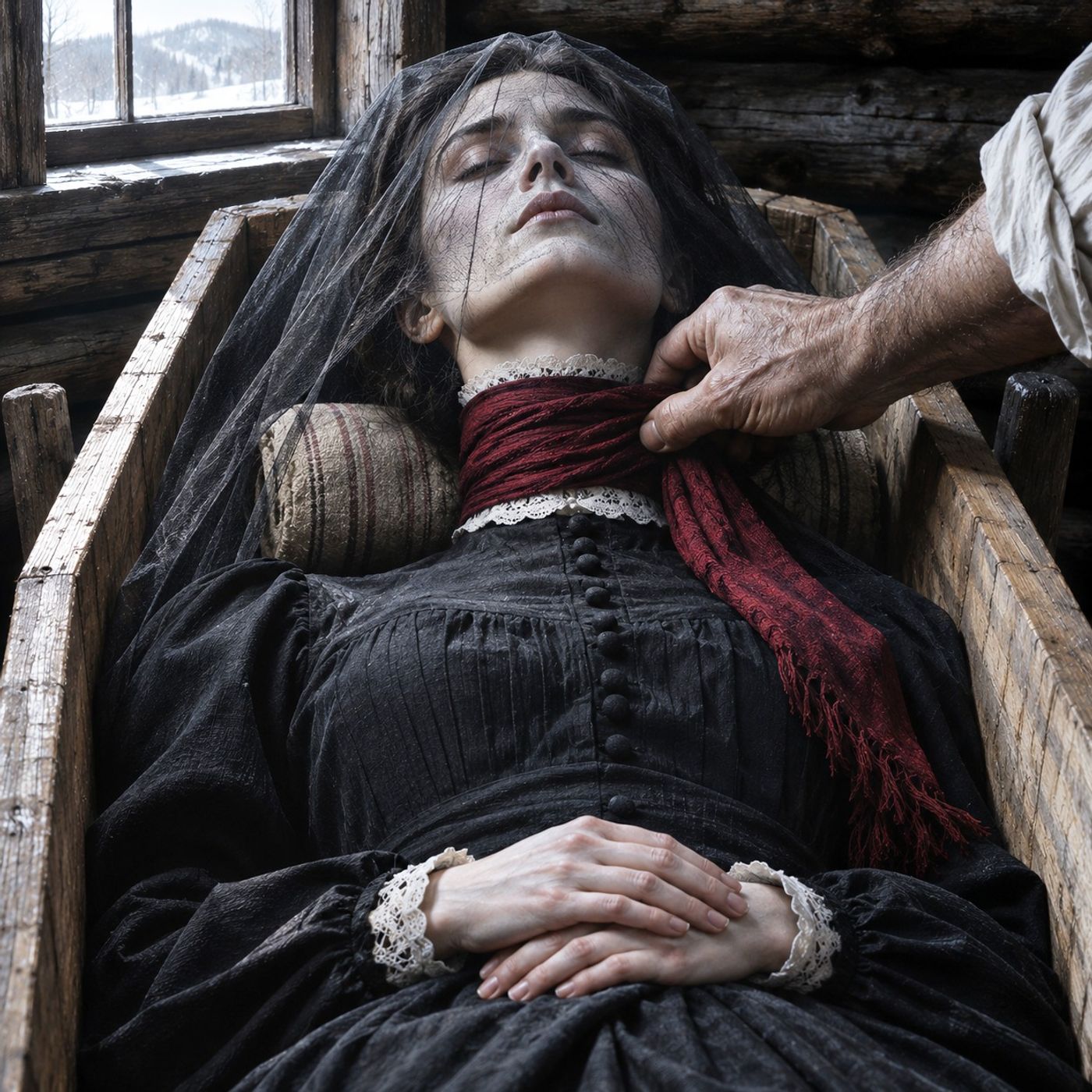
In January 1897, blacksmith Edward Shue washed and dressed his bride of three months for burial before the coroner ever reached their log house in Greenbrier County, West Virginia, and at her funeral he kept fussing with her head and neck, propping it on a pillow and wrapping a scarf around her high collar. Her mother, Mary Jane Heaster, had never liked him, and for weeks afterward she prayed every evening for her daughter to come back and tell her what had really happened. FEATURED STORIES IN THIS EPISODE: This Weird Darkness episode runs from the Greenbrier Ghost, the 1897 West Virginia murder victim whose mother said she came back to name her killer, to a bottomless pit in Washington, a wave of Mothman sightings over Chicago, and a London tomb rumored to be a time machine. Elva Heaster was dead – but that didn’t stop her ghost from solving the murder. *** In Stephen King’s “Pet Semetery”, beloved family pets could come back from the dead. *** In Washington there is a hole that some
Louisiana State Penitentiary, more commonly known as Angola Prison, is America’s biggest maximum security prison in a state that incarcerates more people than any other. That means they are there for having committed the most serious crimes, including murder. Most will never leave jail. Several days a year, some inmates are allowed to take part in the US's last prison rodeo. Whilst the inmates are primarily black, the paying audience is mostly white. Supporters of the rodeo say it’s a chance for the prisoners to interact with people from outside the prison and also potentially earn some money to send back to family or make their life more palatable. Opponents say it is exploitation - not unlike a roman gladiatorial contest, where the audience gleefully waits to see if the bulls are going to get the better of the cowboys. Anna Adams reports from Louisiana.
As a young mother preparing for her first baby, she was delighted when her husband's grandparents offered her an old oak rocking chair. After stripping away layers of paint and restoring it, she placed it in the living room, where she spent countless nights rocking her newborn son. But soon, she began hearing the chair's unmistakable creaking long after everyone had gone to bed. Her husband never found anything unusual, yet the sound continued. Then one night, she woke on the couch to hear the chair rocking behind her—and caught a glimpse of something heartbreaking. Unable to live with the experience, she returned the chair to the grandparents. Their strangely unsurprised reaction, followed by something they revealed about its history, raised an unsettling question: Had another mother's grief remained attached to the chair all those years? #RealGhostStoriesOnline #HauntedRockingChair #HauntedAntiques #HauntedObjects #GhostlyApparitions #SpiritAttachments #ParanormalEncounters #HauntedF
My special guest tonight is author and cryptozoologist Lyle Blackburn who's here to discuss an upright walking creature that resembles a lizard terrorizing a town in South Carolina. From the swamplands near Bishopville, South Carolina, come reports of a seven-foot-tall, scaly humanoid creature the locals call the "Lizard Man." Over the years, the creature has been seen by numerous witnesses, including a teenager who claimed it attacked him one night near a remote area called Scape Ore Swamp. The young man's testimony and physical evidence was so compelling, it not only launched a serious investigation by the local sheriff's office but an all-out monster hunt that drew hundreds of people to the small town. This real-life "creature from the black lagoon" has inspired major national news coverage, even a call from the famous CBS news anchor, Dan Rather, as he and the rest of the world clamored to know more about Bishopville's elusive monster. The case is often mentioned in books, websites
This conversation starts with what that growth cost. He borrowed more than $20 million to build the facility, hired 80 people this year, and says the company is the least profitable it has ever been. We talk about carrying that kind of debt, a payroll he puts near $1.5 million a month, and why neither of us is printing money, no matter how it looks from the outside. He also explains why ad platforms will not let a knife company use the word "dagger." From there we get into the midterm results, fuel prices, housing costs, and tariffs on steel. We cover the reaction to his new store in Bozeman, the northern border, flying, hunting, and why he still believes the American dream is possible. Join the Cleared Hot Newsletter: https://www.clearedhotpodcast.com (https://www.clearedhotpodcast.com/) Today's Sponsors: Perplexity Computer: Start your free trial of Perplexity Computer today at https://www.PPLX.ai/clearedhot (https://www.pplx.ai/clearedhot) and experience the next phase of AI.
Michael Wayne says he spent 25 years as a CIA contractor working under non-official cover, recruited in 1998 after two years at the Naval Academy and a stretch running his family's sporting goods business in Mississippi. His cover was real work: real estate, medical consulting, and eventually a hedge fund split between New York and Miami. In 2023 he pleaded guilty to one count of wire fraud and served six months of a year-and-a-day sentence in a federal prison camp. We talked about why contractors exist, the deniability built into the job, getting shot, and how he explained two and a half decades to his sister over dinner at Chili's. He argues the federal case was retaliation for protesting stolen aid shipments in Ukraine, and that he pleaded guilty to protect his family. The Department of Justice tells a different story. We also covered BUD/S, bureaucracy, and why you don't argue with a cop on the side of the road. Join the Cleared Hot Newsletter: https://www.clearedhotpodcast.com (ht
This week's questions come from a parent, a son, and a man who hopes to be a father someday. Each one is facing a decision that has no right or wrong answer, only pros and cons. The first is whether to sign the consent form for a teenager who wants to join the Royal Marines and has never shown an aggressive streak. I walk through the difference between being aggressive and being capable of violence, what the military actually teaches, and why waiting a little costs him nothing. The second is about staying away while a parent dies of cancer and wondering whether that is a choice or an excuse. I share how I handled my mom's death, which was poorly, and why I prefer to remember people as they were. Grief is the price we pay for love. The third is about fearing marriage and fatherhood after growing up around divorce and a difficult relationship with a father. I explain why a title does not change who you are, what my own divorce taught me, and why nobody is ever ready to be a parent. Join
Public bodies should publish the evidence behind important decisions.
Share your view, then see how readers voted. No sign-in required. This poll is shared across stories.
Do you agree or disagree?
Common Quandary
A Common Quandary to discuss
Another conversation to explore, separate from this news story.
A patient records every doctor visit for their followers. Can the doctor refuse to be filmed?
A patient with a large social-media following livestreams their health journey and wants to record every appointment. They say the videos help others and keep doctors accountable. Their physician finds the camera distracting and worries that casual remarks will be edited out of context.
Whose comfort should control a conversation about one person's body and another person's work?