Listen through the publisher, then discuss the episode here or arrange an in-person Roundtable. Your city determines where to meet.
Roundtables are designed for groups of four, with a shared subject and room for everyone to speak. Come for discussion, with no dating expectation.
Oil jumps after Iran attacks ships in the Strait of Hormuz. Australian home lending slumps as investors retreat in the face of interest rate hikes. And New Zealand’s economic recovery is set to continue. In our deep-dive interview, ANZ Chief Economist for South East Asia and India Sanjay Mathur explains how South Korea is avoiding Dutch Disease as the semiconductor boom takes off.
Episode information is provided by the publisher. Listening takes place on the publisher’s service.
Is the property downturn shifting from city to city, or are national headlines hiding what is happening on the ground? On this week's Australian Property Podcast, Pete Wargent and Chris Bates look at changing listings, buyer demand and price movements across Australia's housing markets. If you're considering a first home, an upgrade or an investment property, this episode offers questions to ask before acting. Check current lending and tax rules, and seek qualified personal advice rather than treating a podcast discussion as a recommendation. Episode resources Show partner resources Rask resources – Pete's Buyers Agency (https://www.allenwargent.com.au/) – All services (https://bit.ly/R-services) – Financial Planning (https://bit.ly/R-plan) – Invest with us (https://bit.ly/R-invest) – Access Show Notes (https://bit.ly/R-notes) – Ask a question (https://bit.ly/R-quest) – We love feedback! (https://raskau.typeform.com/to/ZbfHy6IP) – Instagram: @rask.invest (https://www.instagram.com/rask
For review: 1. Iraq has reached a compromise with the powerful Iran-backed militia Kataeb Hezbollah, three senior security officials said, after Prime Minister Ali al-Zaidi readied security forces to move against the group. Reflecting the gravity of the situation, Iraqi Shiite political sources said Esmail Qaani, commander of Iran’s elite Revolutionary Guards’ Quds Force, arrived in Baghdad late on Monday to help defuse tensions with Kataeb Hezbollah, Tehran’s most powerful militia ally in Iraq. 2. Lebanese President Joseph Aoun launched a lengthy rebuke of Iran in an Independence Day address, arguing that the Islamic Republic does not have the right to interfere in Lebanon’s internal affairs, as it long has via support for its local terror proxy, Hezbollah. 3. Yemen’s Houthis launched strikes on the Saudi capital Riyadh on Saturday, after vowing reprisals for a “special operation” by the Saudi-led coalition fighting them. The coalition later said it had “intercepted and destroyed” thr
Hey everybody, Tom Bilyeu here. On today’s episode of Impact Theory, we’re taking on a topic that’s got the whole world holding its breath: the escalating crisis between the United States and Iran. As tensions ratchet up, we’re asking the tough questions—how did we get stuck in this “escalation trap,” and what does it mean for America’s global leverage, our economy, and our very sense of security? The conversation focused on why the traditional idea of “strategy” might be failing policymakers, using powerful analogies—like chess versus roulette—to show how doubling down in conflict can spiral out of control. We’ll break down the risks of tactical “wins” that create even bigger crises, the real leverage Iran holds with control of the Strait of Hormuz, and the mounting pressure on President Trump as political support erodes and legacy hangs in the balance. A key theme that emerged is what happens when military might runs into decentralized opposition, and why high-stakes gambles—like the
A Sri Lankan woman who sought to live in New Zealand has been stuck for three years in a small neighbouring South Pacific island nation, in a case that raises questions about asylum and visa laws. Ruchira Ranasingha arrived in New Zealand in 2022 and was granted a temporary asylum-linked visa, but when she sought to turn it into a longer-term work visa, things went wrong. Based on what she says was advice from an immigration advisory firm, she left for the Cook Islands, believing she needed to leave New Zealand temporarily to lodge a new visa application. But by leaving, she inadvertently breached the rules of her existing asylum visa, resulting in New Zealand cancelling it and barring her from entering the country again. Now after three years of futile efforts, Ms Ranasingha just wants to return home to Sri Lanka. But New Zealand and Australia have refused her transit visas, which she needs to fly home. So is her case a sign that asylum and visa laws are too tough? Or that they’re wor
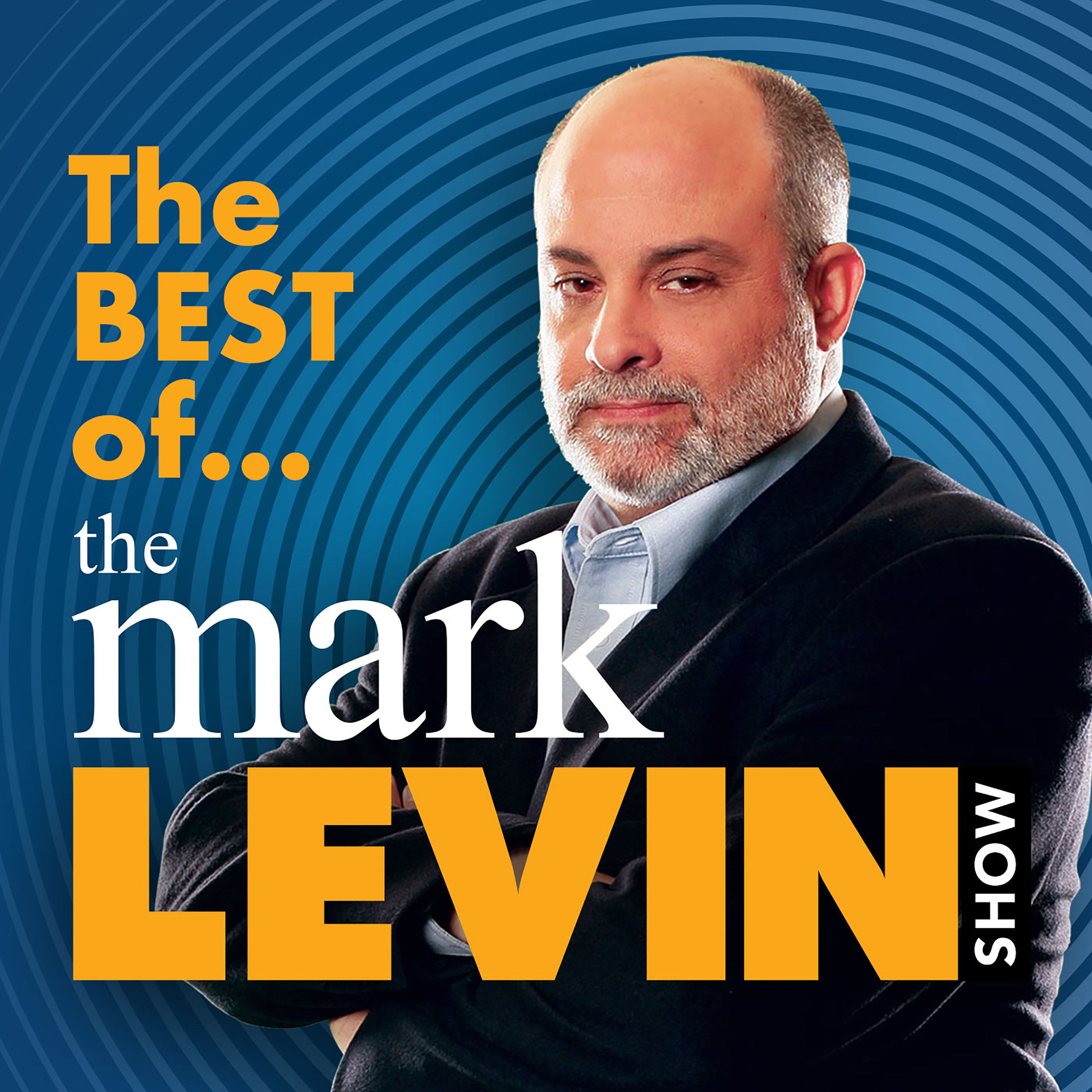
This week on the Mark Levin Show, 2028 Republican Presidential candidates must directly address the urgent threats to the country - Marxism and Islamism. These candidates should deliver bold, courageous speeches that clearly explain what is happening in the country, identify those responsible, and directly challenge these threats rather than leaving such warnings to a small number of media voices. Also, it is difficult to believe so many major outages affecting entities such as the NSA, FAA, airline systems, Microsoft, and Apple services could be merely coincidental. The timing and scale of the incidents are troubling and remain inadequately explained. President Trump had proposed a major modernization and restructuring of air traffic control in 2017 that Congress failed to enact. Had those reforms been adopted, many current FAA failures might have been avoided. Later, does Senator John Kennedy know anything about originalism? Originalism is not pure textualism. The meaning and intent
Iran says it shot down a U.S. drone over the Strait of Hormuz as CBS News reports the U.S. and Israel are weighing a new assault on Iran. MIKE DROP NEWSROOM | 21 NOVEMBER 2026 Iranian state TV claimed Saturday that Iran downed a U.S. drone near Qeshm Island; the U.S. has not confirmed it. CBS News reported, citing sources, that the U.S. and Israel are considering a new assault in the short term, driven by Israeli concern over how fast Iran is rebuilding its missile production and moving sites underground. President Trump told Israel's Channel 12 he is not rushing any decision. At the same time, the New York Times reported Israeli warnings that Iran has made progress on chemical and biological weapons and could use them against U.S. officials, though some U.S. officials doubt those warnings. Mike Ritland breaks down why a single intelligence source shouldn't drive a decision this big, how corroboration works when lives are on the line, and what would actually change his mind. Also cover
Australia’s unemployment rate jumps, taking pressure off the RBA. The Aussie dollar drops as attention turns away from rate hikes. Anthropic starts trading 33% above its IPO price. And ANZ Research expects an additional Bank of England rate hike. In our deep-dive interview, ANZ Commodities Strategist Soni Kumari tracks the Gold price’s slump from record highs at the start of the year.
Europe’s core inflation rises so the ECB remains set to hike again. Australia’s wages grow faster, but still can’t keep up with price inflation. Bank Indonesia hikes. And New Zealand businesses swallow price increases. In our deep-dive interview, ANZ Economist Sophia Angala reviews Australia’s widening investment and savings gap.
US retail sales are stronger than expected, backing expectations for Fed rate hikes, as ANZ Research lifts its Fed rate call. And New Zealand medium-term inflation expectations hold as more OCR hikes are seen. In our deep-dive interview, ANZ Head of Australian Economics Adam Boyton reviews a set of uncertain RBA November meeting minutes.
Synthetic images and videos should carry clear labels when presented as real events.
Share your view, then see how readers voted. No sign-in required. This poll is shared across stories.
Do you agree or disagree?
Common Quandary
A Common Quandary to discuss
Another conversation to explore, separate from this news story.
You make a hilarious deepfake of a friend for their birthday. Must you ask first?
For a private birthday party, someone creates a convincing video of a mutual friend delivering an absurd speech. Everyone, including the subject, will immediately understand that it is fake.
Does obvious fiction eliminate the need for consent?