Trump Embraces Xi and Putin as Europe Watches From the Sidelines
57 min
Listen through the publisher, then discuss the episode here or arrange an in-person Roundtable. Your city determines where to meet.
Roundtables are designed for groups of four, with a shared subject and room for everyone to speak. Come for discussion, with no dating expectation.
President Trump’s unprecedented summit with Chinese President Xi Jinping and Russian President Vladimir Putin signals a potential shift in the US-led world order. Georgetown University professor and former Biden National Security Council China advisor Rush Doshi joins the show. Also on today's show: New York Times staff writer Ronen Bergman on reports that Trump is considering fresh strikes on Iran amid growing pressure from Israeli Prime Minister Benjamin Netanyahu UN High Commissioner for Human Rights Volker Türk on the International Court of Justice’s ruling that Myanmar committed genocide against the Rohingya “Rebooting the Machines” author and incoming Spelman College President Dr. Ayanna Howard on the ethics of rapidly evolving artificial intelligence
Episode information is provided by the publisher. Listening takes place on the publisher’s service.
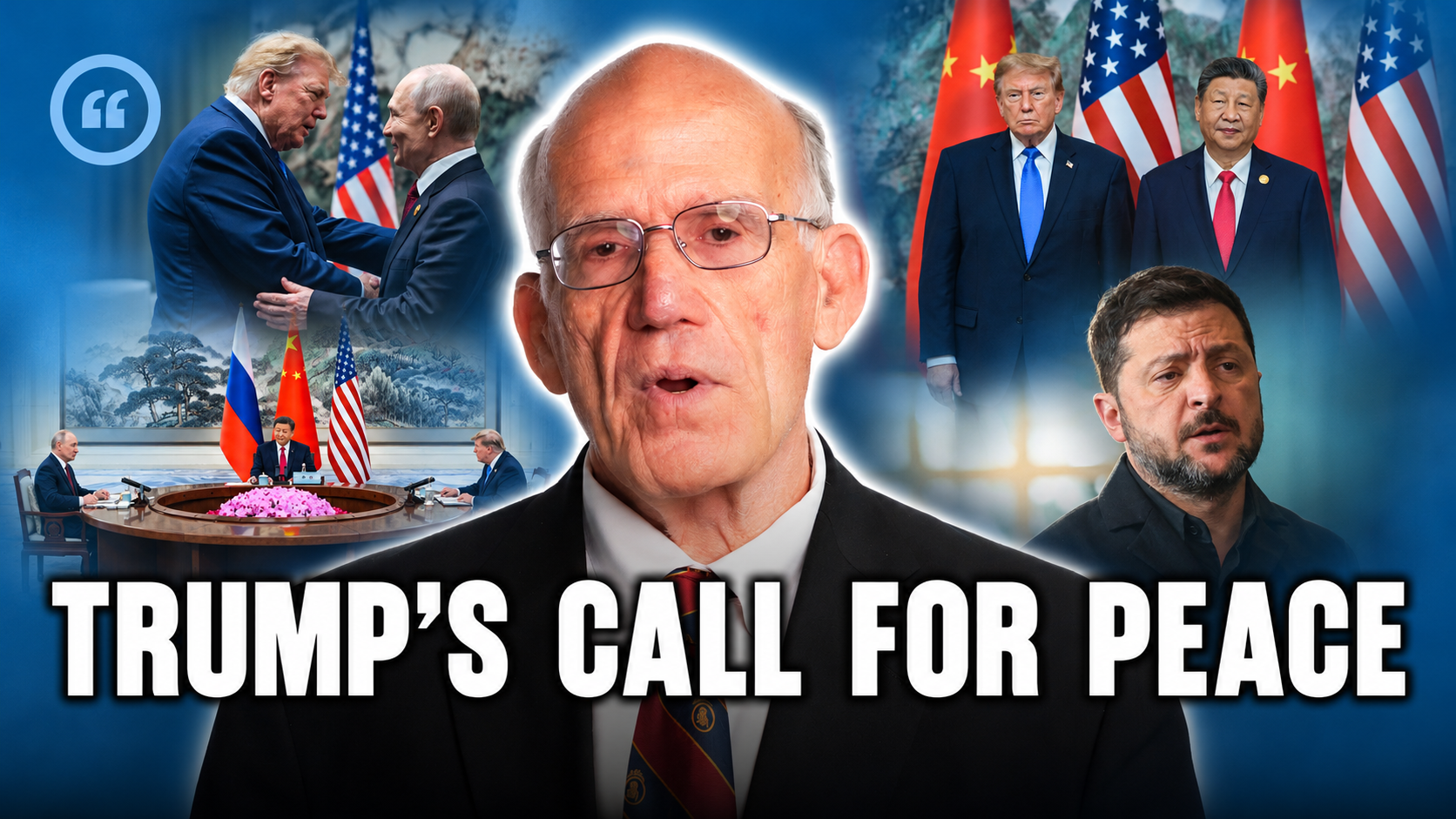
President Donald Trump's first ever trilateral summit with Vladimir Putin and Xi Jinping raises questions about the future of the war in Ukraine and whether a peace agreement could finally be within reach. Victor Davis Hanson and Sami Winc examine the summit on today’s edition of “Victor Davis Hanson: In His Own Words,” discussing Russia's declining influence, potential territorial concessions in Ukraine, and Europe's frustration over Trump's peace negotiations. Hanson criticizes Hillary Clinton's attacks on Trump's diplomacy; he also argues that European leaders have weakened their influence by neglecting defense spending and relying on American military protection. They discuss Elon Musk's shifting political allegiances, and Hanson warns that distancing himself from MAGA may not protect him from Democrat investigations. They also discuss the potential economic benefits of artificial intelligence and the challenges facing Hakeem Jeffries as Democrats prepare to take control of the Hou
November 20, 2026 On November 19, Trump met with Xi Jinping and Vladimir Putin in Shenzhen, China, The fact that the president of the US would meet with leaders of China and Russia was bizarre since both China and Russia have been helping Iran in its current fight against the US, Trump appeared to want the fanfare and President Xi played that up, Putin wanted the meeting because it would suggest that Russia was a great power, although it is far from being so and Putin’s war on Ukraine is going poorly, The meeting’s purpose seemed to be to produce propaganda for each of the three leaders, Beyond the propaganda is the larger story of the destruction of the post-World War II rules-based international order, In its place is the idea of dividing the world into spheres of influence, The three leaders met for 90 minutes and issued only a vague "joint declaration toward peace," which vowed to reform the UN and weaken the International Criminal Court, where Putin is already under indictment for
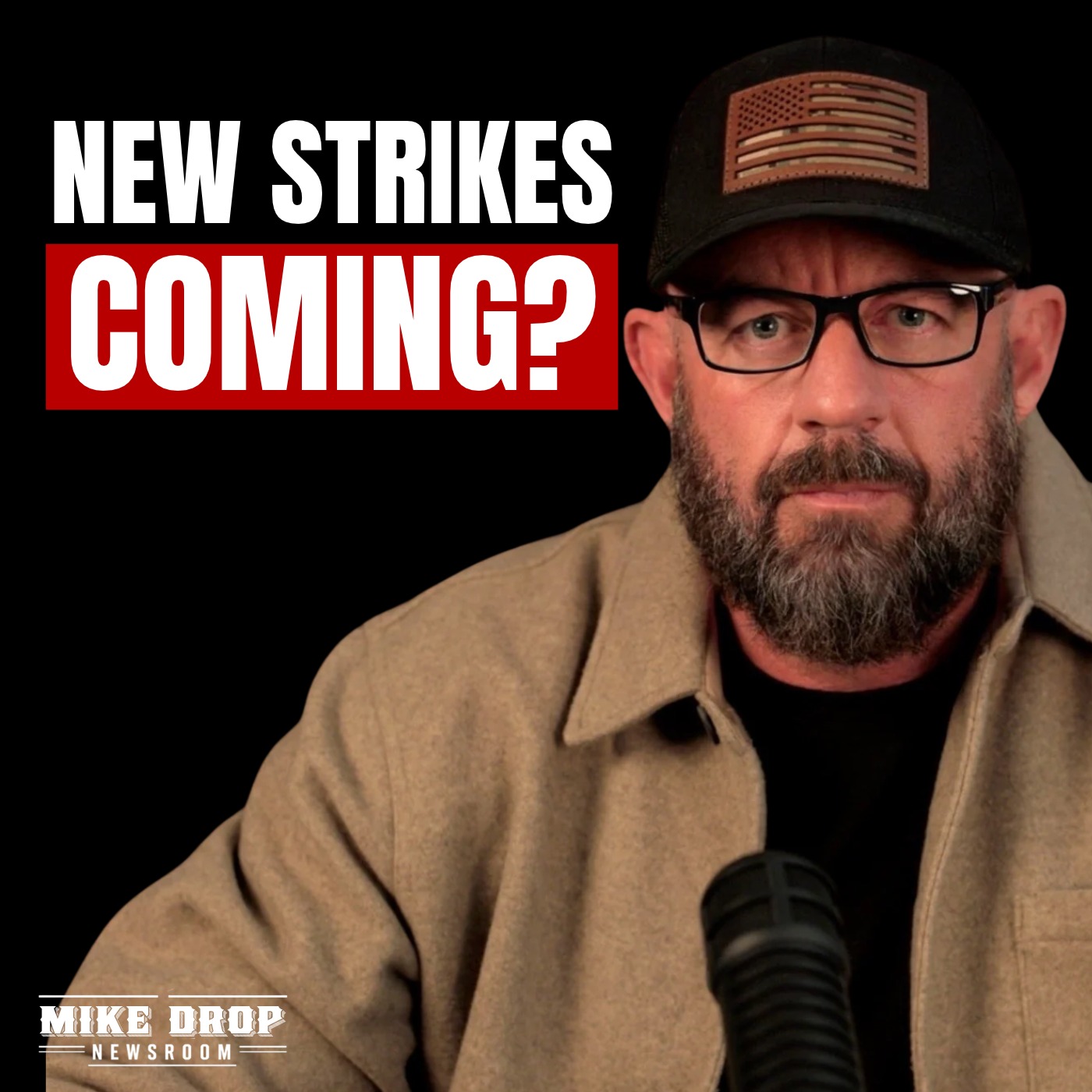
Iran says it shot down a U.S. drone over the Strait of Hormuz as CBS News reports the U.S. and Israel are weighing a new assault on Iran. MIKE DROP NEWSROOM | 21 NOVEMBER 2026 Iranian state TV claimed Saturday that Iran downed a U.S. drone near Qeshm Island; the U.S. has not confirmed it. CBS News reported, citing sources, that the U.S. and Israel are considering a new assault in the short term, driven by Israeli concern over how fast Iran is rebuilding its missile production and moving sites underground. President Trump told Israel's Channel 12 he is not rushing any decision. At the same time, the New York Times reported Israeli warnings that Iran has made progress on chemical and biological weapons and could use them against U.S. officials, though some U.S. officials doubt those warnings. Mike Ritland breaks down why a single intelligence source shouldn't drive a decision this big, how corroboration works when lives are on the line, and what would actually change his mind. Also cover
November 21, 2026; 7am: Yesterday, President Trump held a press conference recapping his trip to Asia, where he met with Chinese President Xi Jinping and Russian President Vladimir Putin, whom he described as “friends.” On Friday, Trump insisted Putin wants to end his war with Ukraine, but hours earlier Russia fired hundreds of missiles and drones into Ukraine, with two missiles and a suspected drone crashing into neighboring Poland. MS NOW Chief White House reporter Paula Reid and Jon Finer, former principal deputy national security advisor in the Biden administration, join “The Weekend” to discuss. For more, follow us on social media Bluesky: @theweekendmsnow.bsky.social Instagram: @theweekendmsnow TikTok: @theweekendmsnow Hosted by Simplecast, an AdsWizz company.
This week on The Necessary Conversation, it's Chad, Haley, and Mary Lou. Bob is still recovering but sent in a video message about Trump calling Putin his friend that we watch together. 🇷🇺 Trump held the first-ever three-way talks with Putin and Xi, called it a "12 out of 10," and produced nothing. Then at a press conference he called Putin his friend — and when asked if Putin is a friend to America, the president of the United States said, "I can't speak to America." That same day, Trump's friend Putin launched massive strikes into Ukraine, hit Poland with two missiles — an act of war against a NATO ally — then struck near a Ukrainian restaurant and drone-bombed the first responders, killing a 7-year-old child and a 20-year-old paramedic. We watch Bob's video and ask Mary Lou: is Russia our friend? 🇨🇳 The House Foreign Affairs Committee revealed Trump's Commerce Department approved nearly 880,000 advanced AI chips for Chinese military-linked companies including Alibaba, Tencent, a
In this episode of The President’s Daily Brief: President Trump meets face-to-face with Vladimir Putin and Xi Jinping in a historic summit bringing together the leaders of three nuclear superpowers. Peter Doran of the Foundation for Defense of Democracies joins us to examine each leader's objectives and what could come next. Ukraine launches a devastating attack on Russia's Kerch Bridge, sending a section of the strategically important crossing into the sea. Open Source Intelligence Analyst Ryan McBeth joins us to explain the operation and its implications for Russia's war effort. YouTube: youtube.com/@presidentsdailybrief (https://youtube.com/@presidentsdailybrief) Aura Frames: Life is amazing. Remember that with Aura Frames. Additional $5 off at https://auraframes.com/pdp/PDBwith Promo Code PDB Spring Sleep: Thanks to today’s sponsor, Spring Sleep: an FDA-cleared, prescription-only device for primary snoring and mild obstructive sleep apnea.
A summit like no other. In a political first, President Trump sat down with President Putin and President Xi for an unprecedented trilateral meeting. He insists they’re all friends, but what does this mean for their conflicting agendas in Iran and Ukraine? Former Biden adviser Rush Doshi joins Christiane Amanpour to assess what was, or wasn’t, achieved. Then, in a landmark case, the International Court of Justice has found Myanmar guilty of committing genocide against the minority Rohingya population. The U.N. High Commissioner for Human Rights, Volker Türk, joins the show to discuss why this moment is so important. Plus, CNN’s Clare Sebastian takes us underground to look at how Ukraine’s innovative operation is helping the country make substantial gains. And best-selling author Elizabeth Strout discusses her new book ‘The Things We Never Say’, exploring the political and personal tensions of America that emerged during the 2024 presidential election. From the archive, my report from U
Former USAID Administrator Andrew S. Natsios discusses the Trump administration’s dismantling of USAID and why he argues the consequences could threaten Americans’ health, safety and prosperity. Natsios, author of “Guns Are Not Enough: Foreign Aid in the National Interest,” explains why foreign aid remains a critical tool of US soft power. Also on today’s show: British model and actress Twiggy reflects on her journey from working-class London to becoming a defining face of the 1960s and a British cultural icon, as chronicled in a new documentary by Sadie Frost. Olivia Harrison joins Walter Isaacson to discuss “The Third Eye: Early Photographs by George,” a collection of more than 200 photographs and film stills from her husband George Harrison’s personal archives, and what they reveal about the late Beatle’s personality and artistic curiosity.
In an unprecedented trilateral meeting, President Trump is meeting with the leaders of China and Russia, with the wars in Ukraine and the Nvidia scandal looming over the high-stakes summit. Former US Deputy National Security Advisor Matt Pottinger joins Christiane to discuss what the meeting means for Western alliances and US national security. Also on today's show: Bioethicist and oncologist Dr. Ezekiel Emanuel, "Eat Your Ice Cream"; former American Express CEO Ken Chenault, "Equal to the Task"
Health systems should prioritize the most urgent needs when capacity is limited.
Share your view, then see how readers voted. No sign-in required. This poll is shared across stories.
Do you agree or disagree?
Common Quandary
A Common Quandary to discuss
Another conversation to explore, separate from this news story.
A pill can erase your most painful memory without changing anything else. Do you take it?
A safe new treatment can remove the emotional pain attached to one chosen memory while leaving the factual memory intact. Losing the pain might bring enormous relief, but the experience shaped your relationships, choices, and sense of who you are.
Are painful memories injuries to heal or parts of ourselves to keep?