The Democrats swept the midterms. Donald Trump is still president. What will the next two years look like? And what can history teach us about what comes next? Martin Wolf speaks to historian Heather Cox Richardson about the cycles in the past 250 years of US politics — how renewal (and division) can both follow periods of oligarchy, and how the Democrats should react to a “constitutional crisis”. To enjoy future episodes, be sure to subscribe to ‘Martin Wolf on the World’ wherever you get your podcasts. You can also watch Martin’s podcast series on the FT’s YouTube channel here:https://www.youtube.com/@FinancialTimeshttps://www.youtube.com/@FinancialTimes Host: Martin Wolf Producer: Mischa Frankl-Duval Senior producer: Laurence Knight Video editor: Richard Topping Senior audio engineer: Breen Turner Broadcast engineer: Andrew Georgiades Podcast development: Laura Clarke FT Global Head of Audio: Flo Phillips Learn more at www.ft.com/martin-wolf-on-the-world (http://www.ft.com/martin-wo
Hey everybody, Tom Bilyeu here. On today’s episode of Impact Theory, we’re taking on a topic that’s got the whole world holding its breath: the escalating crisis between the United States and Iran. As tensions ratchet up, we’re asking the tough questions—how did we get stuck in this “escalation trap,” and what does it mean for America’s global leverage, our economy, and our very sense of security? The conversation focused on why the traditional idea of “strategy” might be failing policymakers, using powerful analogies—like chess versus roulette—to show how doubling down in conflict can spiral out of control. We’ll break down the risks of tactical “wins” that create even bigger crises, the real leverage Iran holds with control of the Strait of Hormuz, and the mounting pressure on President Trump as political support erodes and legacy hangs in the balance. A key theme that emerged is what happens when military might runs into decentralized opposition, and why high-stakes gambles—like the
Lt. Col. Allen West (Ret.) joins Brian Kilmeade to push back on Vice President JD Vance’s "forever war" remarks regarding Iran, arguing that neutralizing Tehran’s nuclear and terror capabilities does not require endless nation-building and pointing to Ron DeSantis as the biggest Republican winner of the 2026 midterms. West also warns Texas Governor-elect Gina Hinojosa that halting border enforcement violates both the U.S. and Texas Constitutions, critiques Barack Obama’s shift to the far left, and agrees with Kilmeade that Sen. John Fetterman could switch to the Republican Party over Democrats’ hostility toward Israel.
One week after the U.S. midterm elections, join Valérie Beaudoin, one of Canada's most respected commentators on U.S. politics, for a discussion on how Canadian policymakers and officials are digesting the results in Washington. From the new balance of power in Congress to the potential implications for Canada-U.S. relations, trade economic growth, and cross-border policy priorities, we'll explore what the election outcome could mean for Canada in the months ahead. Recorded on November 10, 2026. -- Optique canadienne sur les élections américaines de mi-mandat – Valérie Beaudoin Pour une version avec des sous-titres français, veuillez consulter Une semaine après les élections de mi-mandat aux États-Unis, Valérie Beaudoin, l’une des commentatrices de la politique américaine les plus respectées du Canada, discute des façons dont les décideurs canadiens et Ottawa ont réagi aux résultats à Washington. Du nouvel équilibre des pouvoirs au Congrès aux répercussions possibles sur les relations
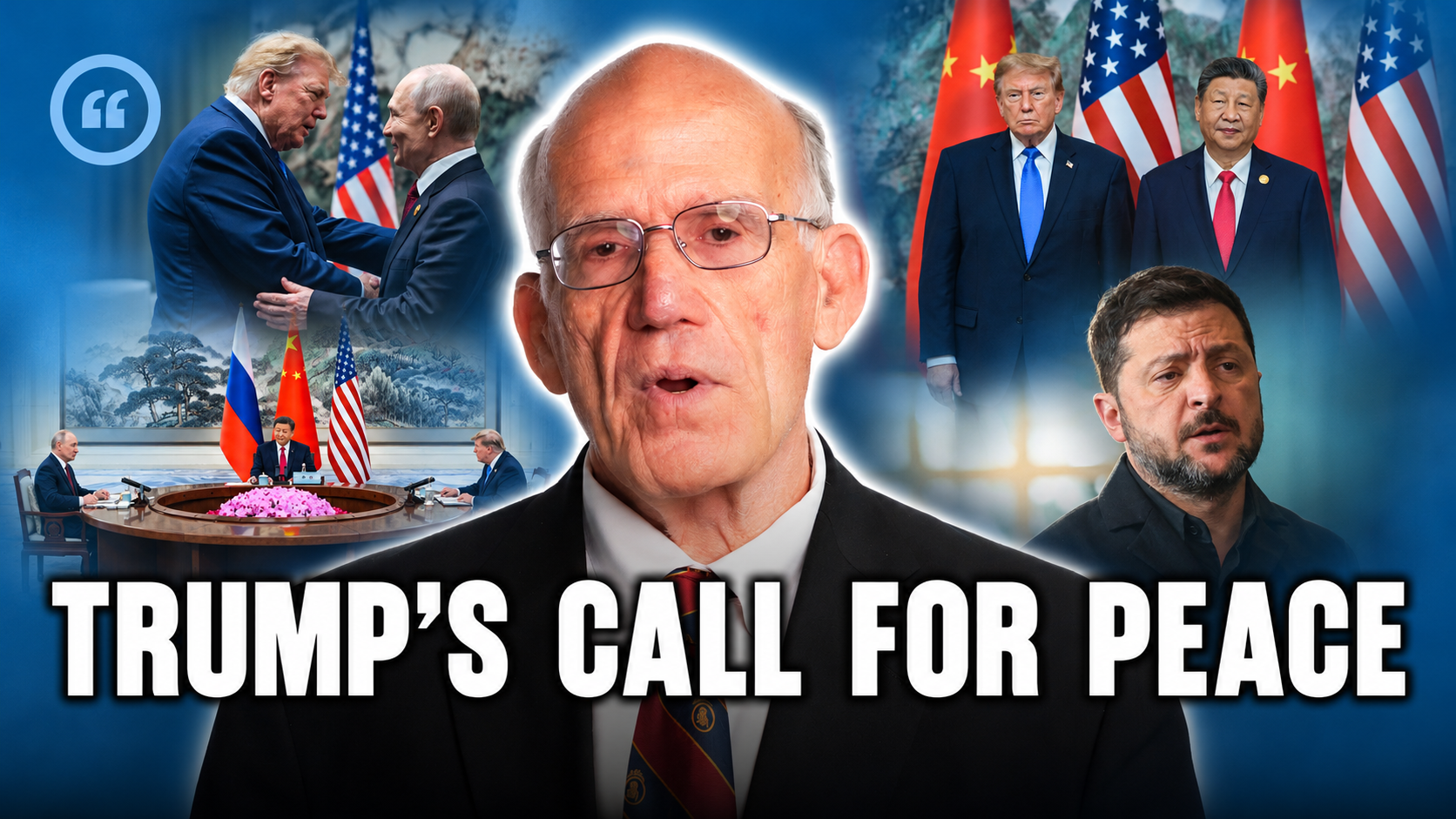
President Donald Trump's first ever trilateral summit with Vladimir Putin and Xi Jinping raises questions about the future of the war in Ukraine and whether a peace agreement could finally be within reach. Victor Davis Hanson and Sami Winc examine the summit on today’s edition of “Victor Davis Hanson: In His Own Words,” discussing Russia's declining influence, potential territorial concessions in Ukraine, and Europe's frustration over Trump's peace negotiations. Hanson criticizes Hillary Clinton's attacks on Trump's diplomacy; he also argues that European leaders have weakened their influence by neglecting defense spending and relying on American military protection. They discuss Elon Musk's shifting political allegiances, and Hanson warns that distancing himself from MAGA may not protect him from Democrat investigations. They also discuss the potential economic benefits of artificial intelligence and the challenges facing Hakeem Jeffries as Democrats prepare to take control of the Hou
A summit like no other. In a political first, President Trump sat down with President Putin and President Xi for an unprecedented trilateral meeting. He insists they’re all friends, but what does this mean for their conflicting agendas in Iran and Ukraine? Former Biden adviser Rush Doshi joins Christiane Amanpour to assess what was, or wasn’t, achieved. Then, in a landmark case, the International Court of Justice has found Myanmar guilty of committing genocide against the minority Rohingya population. The U.N. High Commissioner for Human Rights, Volker Türk, joins the show to discuss why this moment is so important. Plus, CNN’s Clare Sebastian takes us underground to look at how Ukraine’s innovative operation is helping the country make substantial gains. And best-selling author Elizabeth Strout discusses her new book ‘The Things We Never Say’, exploring the political and personal tensions of America that emerged during the 2024 presidential election. From the archive, my report from U
American voters' aversion to data centres and suspicion of AI's potential to destroy jobs played a major role in the Republican Party's losses in the US midterms. Then the tech-heavy US stock market tumbled as investors became concerned that a Democrat-controlled congress might be less accommodating of hyperscalers. Recovery has been shaky, and the resignation of NVIDIA's CEO Jensen Huang following his affair with an alleged Chinese spy is likely to make things worse. Bronwen Maddox is joined by David Lubin from our Global Economy and Finance Programme, and Alex Krasodomski, director of our Digital Society Programme. Produced by Podmasters for Chatham House, with thanks to Stephen Farrell and Sara Seth. Visit the Chatham House shop (https://shop.chathamhouse.org/) Explore Chatham House's latest work: Comment | Europe faces faster cyberattacks than ever. But many of the solutions are long known (https://www.chathamhouse.org/2026/11/europe-faces-faster-cyberattacks-ever-many-solutions-ar
Cost should not prevent students from joining school activities.
Share your view, then see how readers voted. No sign-in required. This poll is shared across stories.
Do you agree or disagree?
Common Quandary
A Common Quandary to discuss
Another conversation to explore, separate from this news story.
The stadium can ban violent fans by scanning every face at the gate. Would you walk in?
A stadium can use facial recognition to identify people banned for violence and shorten security lines. Every visitor would be scanned, error rates are not zero, and the resulting biometric data could become useful to police or advertisers.
How much privacy may a crowd be asked to trade for collective safety?