Listen through the publisher, then discuss the episode here or arrange an in-person Roundtable. Your city determines where to meet.
Roundtables are designed for groups of four, with a shared subject and room for everyone to speak. Come for discussion, with no dating expectation.
John celebrates another stunning post-midterm shift, from Democrat Chuck Hubbard’s razor-thin win over Virginia Foxx in North Carolina to the possibility of a Democratic senator from Mississippi. He takes aim at J.D. Vance’s attempt to blame the Iran war for Republican losses after publicly defending it, arguing that the vice president wants credit for seeing the consequences without owning his role in them. Then, legal analyst Dr. Tracy Pearson joins John to explain what voters can realistically expect from a Democratic Congress: investigations, hearings, and a public record—not criminal prosecutions—and why accountability must come with clear expectations. They also discuss the economic issues behind the election results, the need to protect health care, and the reforms listeners hope Democrats will pursue. Finally, Kendall Scudder, chair of the Texas Democratic Party, explains how grassroots organizing, local candidates, and a coordinated statewide campaign helped Democrats make historic gains in Texas—and what the party should do next on corruption, property taxes, and public schools.
Episode information is provided by the publisher. Listening takes place on the publisher’s service.
Europe's Little Anarchy: The Rise and Fall of Neutral Moresnet (https://bookshop.org/a/12343/9781501788147)(Cornell UP, 2026) uncovers the history of Neutral Moresnet: a once-forgotten space without borders, nationalism, or a recognized government. Between 1815 and 1919, this square mile of land wedged between Belgium, the Netherlands, and Germany was home to thousands of people living off the grid, free of taxation and oversight. But they also had no political status, police, legal currency, proper law courts, or government presence in sectors like public health, infrastructure maintenance, or education. Meanwhile, practical control over Neutral Moresnet lay in the hands of the local industry: a for-profit, multinational mining company that, because it owned rights to the land, also held a near monopoly on the supply of high-quality zinc to the rest of the world. Dr. Steven Press explores how the residents of Neutral Moresnet sought to improve their quality of life, appealing to Germa
Lt. Col. Allen West (Ret.) joins Brian Kilmeade to push back on Vice President JD Vance’s "forever war" remarks regarding Iran, arguing that neutralizing Tehran’s nuclear and terror capabilities does not require endless nation-building and pointing to Ron DeSantis as the biggest Republican winner of the 2026 midterms. West also warns Texas Governor-elect Gina Hinojosa that halting border enforcement violates both the U.S. and Texas Constitutions, critiques Barack Obama’s shift to the far left, and agrees with Kilmeade that Sen. John Fetterman could switch to the Republican Party over Democrats’ hostility toward Israel.
On Friday’s Mark Levin Show, Alabama residents are speaking out over plans to expand the Auburn Islamic Center and build a mosque. Residents argued their opposition was not political or based on religious hatred, but on concerns about an ideology which threatens American society. These local governments are treating mosques the same as other houses of worship under zoning rules, but officials should use regulatory and ordinance processes to scrutinize such projects. This Auburn Islamic Center is about a foreign power attempting to extend its influence deeper into America. Local zoning boards should put a stop to this. Meanwhile, Texas Governor-elect Gina Hinojosa, despite campaigning as a centrist focused on the American Dream, is pursuing policies that favor migrants and H-1B visa holders over American citizens by expanding migrant hiring in schools and state jobs. These policies will lower wages, reduce job opportunities for citizens, increase housing costs, and weaken public infrast
Runaway government spending, rising costs, and a new wave of legal battles over constitutional rights. With Democrats preparing to take control of Congress and several state governments, Republicans are confronting a very different political landscape. John Solomon and Amanda Head welcome Montana Senator-elect Kurt Alme, who says Washington must get serious about reining in spending, lowering inflation, and making everyday life affordable again. Already preparing for his arrival in the Senate, Alme discusses his priorities for protecting Montana's way of life, keeping taxes low, creating good-paying jobs, and working across party lines when possible. He also addresses the challenges Republicans face in the minority, the remaining lame-duck session, and concerns about efforts to expand the Supreme Court and eliminate the filibuster. Then, Southeastern Legal Foundation President Kimberly Hermann joins the show with a warning about potential policy reversals in states where Democrats have
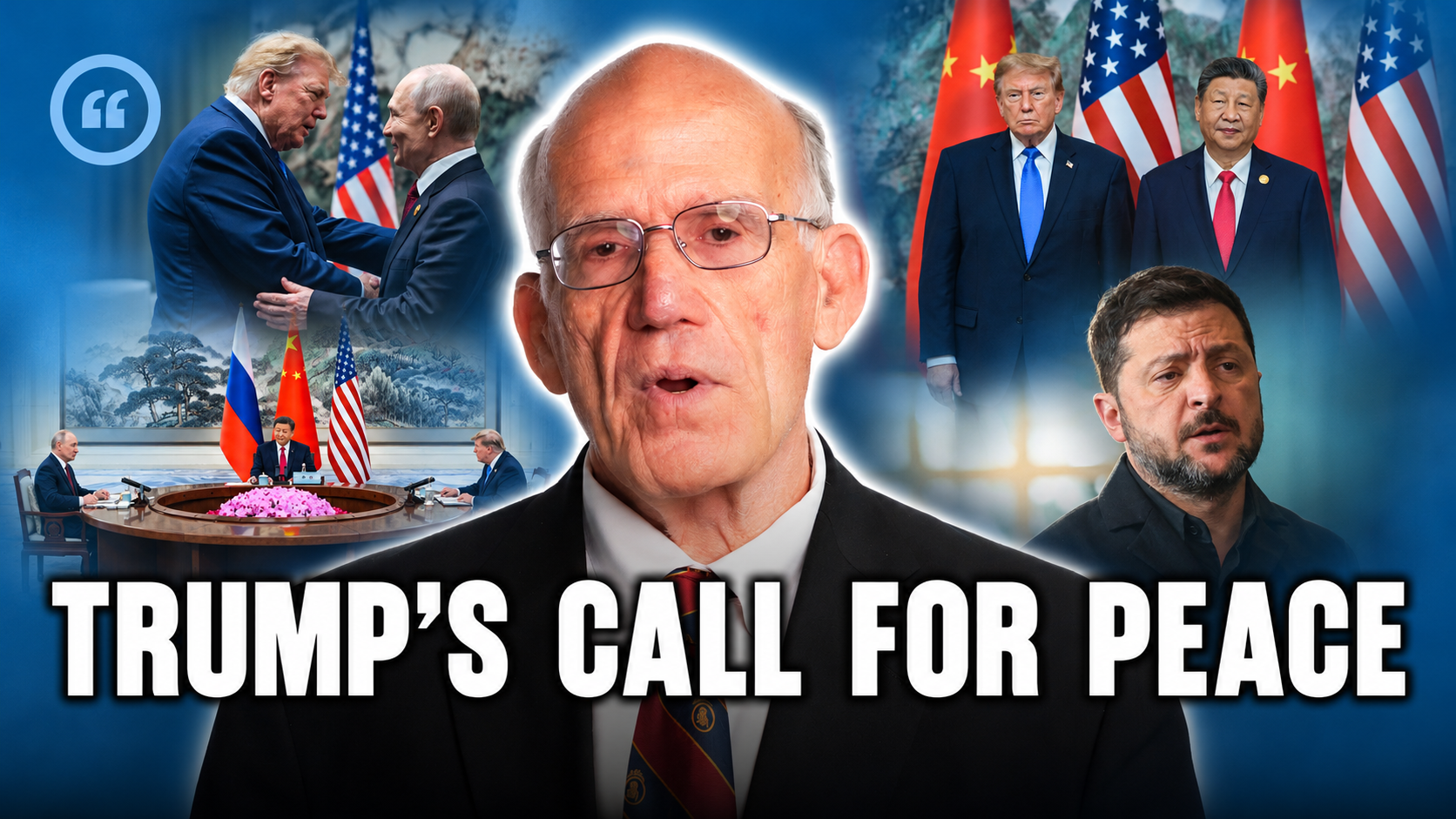
President Donald Trump's first ever trilateral summit with Vladimir Putin and Xi Jinping raises questions about the future of the war in Ukraine and whether a peace agreement could finally be within reach. Victor Davis Hanson and Sami Winc examine the summit on today’s edition of “Victor Davis Hanson: In His Own Words,” discussing Russia's declining influence, potential territorial concessions in Ukraine, and Europe's frustration over Trump's peace negotiations. Hanson criticizes Hillary Clinton's attacks on Trump's diplomacy; he also argues that European leaders have weakened their influence by neglecting defense spending and relying on American military protection. They discuss Elon Musk's shifting political allegiances, and Hanson warns that distancing himself from MAGA may not protect him from Democrat investigations. They also discuss the potential economic benefits of artificial intelligence and the challenges facing Hakeem Jeffries as Democrats prepare to take control of the Hou
A summit like no other. In a political first, President Trump sat down with President Putin and President Xi for an unprecedented trilateral meeting. He insists they’re all friends, but what does this mean for their conflicting agendas in Iran and Ukraine? Former Biden adviser Rush Doshi joins Christiane Amanpour to assess what was, or wasn’t, achieved. Then, in a landmark case, the International Court of Justice has found Myanmar guilty of committing genocide against the minority Rohingya population. The U.N. High Commissioner for Human Rights, Volker Türk, joins the show to discuss why this moment is so important. Plus, CNN’s Clare Sebastian takes us underground to look at how Ukraine’s innovative operation is helping the country make substantial gains. And best-selling author Elizabeth Strout discusses her new book ‘The Things We Never Say’, exploring the political and personal tensions of America that emerged during the 2024 presidential election. From the archive, my report from U
Journalist Simon Moya-Smith and Indigenous studies professor Julie Francella join John Fugelsang for a wide-ranging conversation on Indigenous rights, environmental protections, media representation, and the cost of speaking out. They explain how the proposed American Affordability and Jobs Act could weaken environmental reviews, tribal consultation, and protections for sacred sites—and why pipelines, data centers, and other development projects can bring serious risks to Indigenous communities, including threats to water, land, and safety. They also examine racist stereotypes in political and media coverage, from a cartoon targeting Deb Haaland to a U.S. attorney’s letter mocking Senator Elizabeth Warren with harmful tropes. Simon and Julie discuss why these depictions persist, how underrepresentation in newsrooms contributes to the problem, and why precise language and Indigenous voices matter. Along the way, callers share perspectives on community activism, Native traditions, and th
John takes aim at the right-wing backlash to Mayor Zohran Mamdani’s plan to close Rikers Island, arguing that rehabilitation and humane treatment make for safer communities—and better economics. Then, political commentator Bob Cesca joins the fun to discuss Trump’s summit with Vladimir Putin and Xi Jinping, the fight over Chuck Schumer’s Senate leadership, and what Democrats need to do to meet the moment. Then finally, comedians Adam Sank and TV's Frank Conniff stop by for a hilarious conversation about party unity, Elon Musk’s latest MAGA rebrand, James Bond casting, and Frank’s new holiday comedy special, "Santa Claus Conquers His Demons". Plus, listeners call in to weigh in on data centers, a hazardous chemical disposal plan in Iowa, and more.
John takes aim at Trump’s disastrous summit with Vladimir Putin and Xi Jinping, asking what happens when America’s president treats dictators as friends and the International Criminal Court as an enemy. Then, legal analyst Dr. Tracy Pearson is back to discuss Elon Musk’s post-election retreat from MAGA, Trump’s attempt to overturn his New York felony conviction, and the leadership fights facing Democrats in Congress. Then finally, Families Over Billionaires executive director Kristen Crowell explains how cuts to Medicaid and food assistance are affecting families, why trickle-down economics has failed, and what Democrats should do to make the wealthy and corporations pay their fair share.
Public health information should explain uncertainty even when simpler messages are easier to communicate.
Share your view, then see how readers voted. No sign-in required. This poll is shared across stories.
Do you agree or disagree?
Common Quandary
A Common Quandary to discuss
Another conversation to explore, separate from this news story.
A pill can erase your most painful memory without changing anything else. Do you take it?
A safe new treatment can remove the emotional pain attached to one chosen memory while leaving the factual memory intact. Losing the pain might bring enormous relief, but the experience shaped your relationships, choices, and sense of who you are.
Are painful memories injuries to heal or parts of ourselves to keep?