Listen through the publisher, then discuss the episode here or arrange an in-person Roundtable. Your city determines where to meet.
Roundtables are designed for groups of four, with a shared subject and room for everyone to speak. Come for discussion, with no dating expectation.
Walter Mosley is one of America’s most celebrated writers. He was given the 2020 National Book Award’s Medal for Distinguished Contribution to American Letters, named a Grand Master of the Mystery Writers of America, and honored with a Grammy award, a PEN USA Lifetime Achievement Award, numerous Edgars, and several NAACP Image Awards, and so much more. His debut novel, Devil in a Blue Dress, put him on the literary map. He’s published dozens of novels, short stories, books on writing, and his new novel is Hanging and Burning. His website is waltermosley.com (http://waltermosley.com/). Walter joins Barbara DeMarco-Barrett to talk about his characters, beginnings and endings, poetry, visiting with your work, writing every day, and so much more. For more information on Writers on Writing and to become a supporter, visit our Patreon page (https://www.patreon.com/writersonwriting). For a one-time donation, visit Ko-fi. (https://ko-fi.com/writersonwriting) You can help out the show and indie bookstores by buying books at our bookstore (https://bookshop.org/shop/writersonwriting) on bookshop.org (http://bookshop.org/). It’s stocked with titles by our guest authors, as well as our personal favorites. And on Spotify, you’ll find an album’s worth of typewriter music like what you hear on the show. It’s perfect for writing. Look for the artist, Just My Type. You can find hundreds of past interviews on our website (https://www.writers-on-writing.com/). (Recorded on September 18, 2026) Host: Barbara DeMarco-Barrett (https://www.barbarademarcobarrett.com/) Host: Marrie Stone (https://marriestone.com/) Music: Travis Barrett (https://travisbarrett.mykajabi.com/)(Stream his music on Spotify, Apple Music, etc.) 2026-11-10_WOW_Walter_Mosley Barbara DeMarco-Barrett Download (https://static1.squarespace.com/static/6366e424023972079675b676/t/6af3b93ba6aa3143e818f318/1794357598132/2026-11-10_WOW_Walter_Mosley.mp3)
Episode information is provided by the publisher. Listening takes place on the publisher’s service.
In Exile and Other Stories by Mary Hallock Foote. Six short stories by Mary Hallock Foote (1847–1938), an American author and illustrator. She is best known for her illustrated short stories and novels portraying life in the mining communities of the turn-of-the-century American West. She is famous for her stories of place, in which she portrayed the rough, picturesque life she experienced and observed in the old West, especially that in the early mining towns. She wrote several novels, and illustrated stories and novels by other authors for various publishers. She died at age 90. Her legacy in American history is as a stalwart of the American Old West and a teller of its stories. Her work—the numerous stories for books and periodicals, with her drawings and woodcut illustrations; the correspondence from western outposts; her novels and nonfiction—gained her notice as a skilled observer of the frontier and an accomplished writer. Featured on Anne of Green Gables - Lucy Maud Montgomery.
What happens when photography becomes more than just a profession, and transforms into something that can change lives? This week on The Camera Life Podcast, we're joined by Gavin Blue OAM, an accomplished Melbourne-based commercial photographer with more than 30 years of experience capturing people, places and stories. From photographing CEOs, politicians, royalty and Olympic athletes to working with major Australian brands, Gavin has built an extraordinary career across advertising, editorial and corporate photography. He's also played a significant role in shaping Australia's photography industry, having served as President of the Australian Commercial and Media Photographers (ACMP). But Gavin's most meaningful contribution to photography goes far beyond his commercial work. Following the heartbreaking loss of his daughter Alexandra in 2006, Gavin went on to co-found Heartfelt in 2010, a volunteer organisation providing professional photographic memories, free of charge, to families
The secret to perfect pie crust? John Kanell, the baker and creator behind Preppy Kitchen, has the answer. John shares his best baking tips, the desserts that will make you a star this Thanksgiving, and what it’s been like trading city life for a farm in Connecticut—beekeeping included! We also get into the business behind Preppy Kitchen: growing his YouTube channel to six million subscribers, building a massive recipe website, and finding balance between work and parenting. Come for the baking advice, stay for the honest conversation about building a business and a life you love. Check out John's new book, Preppy Kitchen Everyday Baking https://link.amazon/B0afjeNvd. This episode is sponsored by: For a limited time, HexClad is offering its biggest discount of the year during its Black Friday Sale! After your purchase, be sure to let them know you heard about HexClad from our show. Visit Ro.co/table to see if you qualify. For safety information and side effects of GLP-1 medications, in
This week on From the Front Porch, we announce our Conquer a Classic book club selection for 2027! We’re excited to announce The Thorn Birds (https://bookshelfthomasville.com/products/the-thorn-birds?_pos=1&_psid=8b2c3e438&_psq=thorn&_ss=e) by Colleen McCullough, a sweeping, plot-driven epic about an Australian family. Listen to learn how to join our From the Front Porch Patreon (https://www.patreon.com/fromthefrontporch) Conquer a Classic book club (you’ll also find details below). To purchase the books mentioned in this episode, stop by The Bookshelf in Thomasville, visit our website (https://www.bookshelfthomasville.com/) (search episode 608) or download and shop on The Bookshelf’s official app (https://apps.apple.com/us/app/the-bookshelf-thomasville/id6467071086): From the Front Porch Patreon (https://www.patreon.com/fromthefrontporch) Conquer a Classic 2027 Selection (https://bookshelfthomasville.com/products/the-thorn-birds?_pos=1&_psid=7ee43e011&_psq=thorn&_ss=e) Now is the perf
Bestselling author Ann Brashares speaks with Zibby Owens to celebrate the special 25th anniversary collector's edition of her iconic novel, The Sisterhood of the Traveling Pants. Ann opens up about her unconventional journey into publishing, reflecting on how her early days working behind the scenes at a book packager shaped her commercial storytelling instincts. Ann also discusses her own childhood reading inspirations—including her love for Judy Blume—and reflects on the unforgettable coincidence of her debut novel publishing on September 11, 2001. Learn more about Ann here (https://annbrashares.com/), and follow her on Instagram @ann.brashares (https://www.instagram.com/ann.brashares/). You can purchase The Sisterhood of the Traveling Pants: Collector’s Edition here (https://bookshop.org/p/books/the-sisterhood-of-the-traveling-pants-ann-brashares/042b5a17b43fb3e7?ean=9798217231522). ********* A story for the messy middle. Love to listen? She narrated the audiobook. Hosted on Acast.
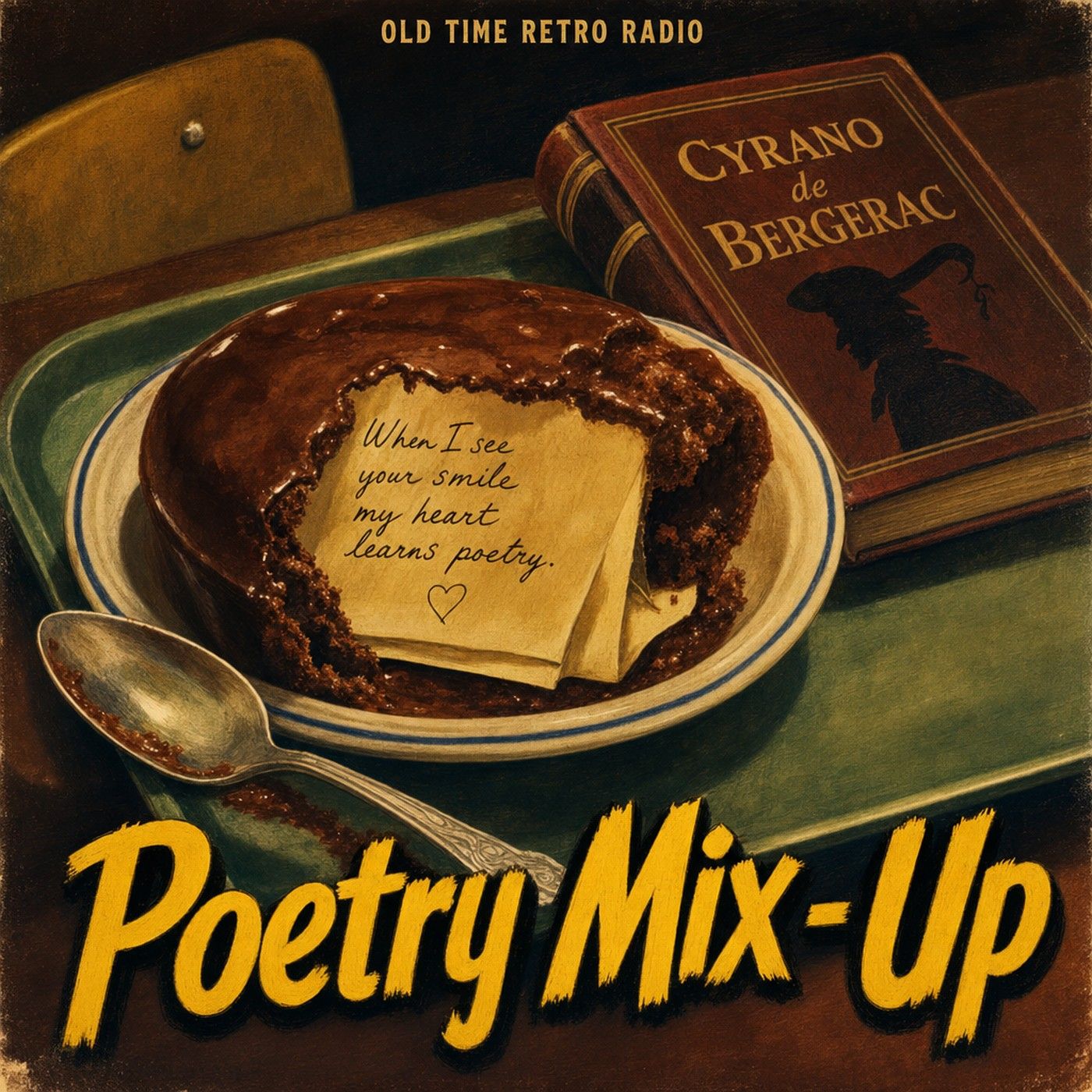
Our Miss Brooks, “Poetry Mix-Up” (episode 33), originally broadcast on CBS Radio on March 20, 1949. Eve Arden stars as Madison High English teacher Connie Brooks, with Gale Gordon, Jeff Chandler, Richard Crenna, and Gloria McMillan. Anonymous love poems tucked into cafeteria desserts set off a romantic mystery at Madison High. As Walter Denton worries over Harriet Conklin’s secret admirer, Connie’s borrowed copy of Cyrano de Bergerac adds a literary twist to the school-day comedy. Chapters: 00:00 Victor Sterling Introduction 00:53 Original Broadcast 30:23 Closing
Mikki Brammer (https://www.mikkibrammer.com/) is the author of two novels. The Collected Regrets of Clover (https://bookshop.org/p/books/the-collected-regrets-of-clover-a-novel-mikki-brammer/591fb394d868d35d?ean=9781250870247), about a death doula, came out in 2023. It was a USA Today bestseller and named a Best Book of Summer that year by the New York Times and NPR, and was a Book of the Month pick. Her latest, Good Joy, Bad Joy, (https://bookshop.org/p/books/good-joy-bad-joy-a-novel-mikki-brammer/64614f541d100ed8?aid=96127&ean=9781250284433&listref=authors-on-the-show) came out this past spring and was a Barnes and Noble Book Club pick, a Reader's Digest Book Club pick, and a Book of the Month pick. Both were published by St. Martin’s. She joined Marrie to talk about navigating the publishing world as a relatively new novelist and the difficulty of the second novel, as well as the pleasures and perils of a two-book deal. She also discusses getting typed as a particular kind of author
People should receive clear risk information before buying property in hard-to-insure areas.
Share your view, then see how readers voted. No sign-in required. This poll is shared across stories.
Do you agree or disagree?
Common Quandary
A Common Quandary to discuss
Another conversation to explore, separate from this news story.
Someone you love asks, “Do you think I’ll be okay?” What if you do not?
A relative with a poor prognosis asks whether you think they will recover. They seem to need reassurance, but you believe the odds are very low and do not want to spend the remaining time pretending.
Can preserving hope justify saying more than you believe?