Listen through the publisher, then discuss the episode here or arrange an in-person Roundtable. Your city determines where to meet.
Roundtables are designed for groups of four, with a shared subject and room for everyone to speak. Come for discussion, with no dating expectation.
November is Native American Heritage Month—and this year, it arrives amid a historic wave of Indigenous political representation and renewed debate over the federal government’s obligations to Native nations. Journalist Simon Moya-Smith and Indigenous studies educator and mental health professional Julie Francella join John to discuss Peggy Flanagan’s election to the U.S. Senate and Deb Haaland’s election as governor of New Mexico, and why these breakthroughs mean far more than representation alone. They explore Indigenous women’s leadership and the return of balance, the cultural significance of wearing Indigenous-made jewelry, and why Native communities’ treaty rights and federal funding are obligations—not charity. The discussion also looks at the impact of reported funding cuts, the protection of sacred sites and petroglyphs, and how listeners can learn from Indigenous voices, support Native-led work, and challenge familiar misconceptions. Along the way, callers celebrate the election results and reflect on identity, language, and the importance of listening directly to Indigenous people.
Episode information is provided by the publisher. Listening takes place on the publisher’s service.
🇺🇸 TWO NAVY SEALS. TWO INCREDIBLE JOURNEYS. ONE POWERFUL MISSION TO TRANSFORM YOUR FINANCIAL FUTURE! Michael Jaco welcomes fellow former Navy SEAL Larry Yatch, founder of TruPath Mastery, for an eye-opening conversation about success, leadership, financial trauma, and the hidden subconscious patterns that can keep even the most accomplished people from reaching their full potential. With 24 years as a Navy SEAL and 11 years as a CIA security operative, Michael shares the powerful lessons of mental discipline, intuition, and personal transformation that shaped his extraordinary journey. Larry brings 10 years of Navy SEAL service and an impressive career advising Fortune 50 executives. But despite achieving tremendous professional success, he discovered that the survival patterns that once made him successful were also keeping him trapped in his own business. THE BIG REVELATION: YOUR MONEY HABITS MAY HAVE VERY LITTLE TO DO WITH MONEY! From childhood programming and fear of scarcity to
One week after the U.S. midterm elections, join Valérie Beaudoin, one of Canada's most respected commentators on U.S. politics, for a discussion on how Canadian policymakers and officials are digesting the results in Washington. From the new balance of power in Congress to the potential implications for Canada-U.S. relations, trade economic growth, and cross-border policy priorities, we'll explore what the election outcome could mean for Canada in the months ahead. Recorded on November 10, 2026. -- Optique canadienne sur les élections américaines de mi-mandat – Valérie Beaudoin Pour une version avec des sous-titres français, veuillez consulter Une semaine après les élections de mi-mandat aux États-Unis, Valérie Beaudoin, l’une des commentatrices de la politique américaine les plus respectées du Canada, discute des façons dont les décideurs canadiens et Ottawa ont réagi aux résultats à Washington. Du nouvel équilibre des pouvoirs au Congrès aux répercussions possibles sur les relations
- - - - - - - P.S. Happy Birthday, David Sr.! Today is a red-letter day in Sower Nation as we celebrate my dad turning 86. And to mark the occasion, he and Mom (Susan) are matching the first $500 given to our Harvest Campaign to help sow seeds for a great awakening! You can also send a note along with any gift you give. Click here to give and join Dad's $500 Matching Gift Challenge: https://givebutter.com/david500 - - - - - - - - - - - - - - - - - - - JD Walt opens the Sower Nation wake-up call wearing a shirt that reads "Ask Me About My Band." The entry of that name is based on Romans 15:14-22, where Paul describes his priestly duty of proclaiming the gospel so that the Gentiles might become an offering acceptable to God, and his ambition to preach where Christ was not yet known. JD says the shirt, designed by his friend Nick, lets him talk about his country band, JD and the Dukes, or his Seedbed band, and he saves the Dukes story for another day. He tells how he, Mark, and Omar start
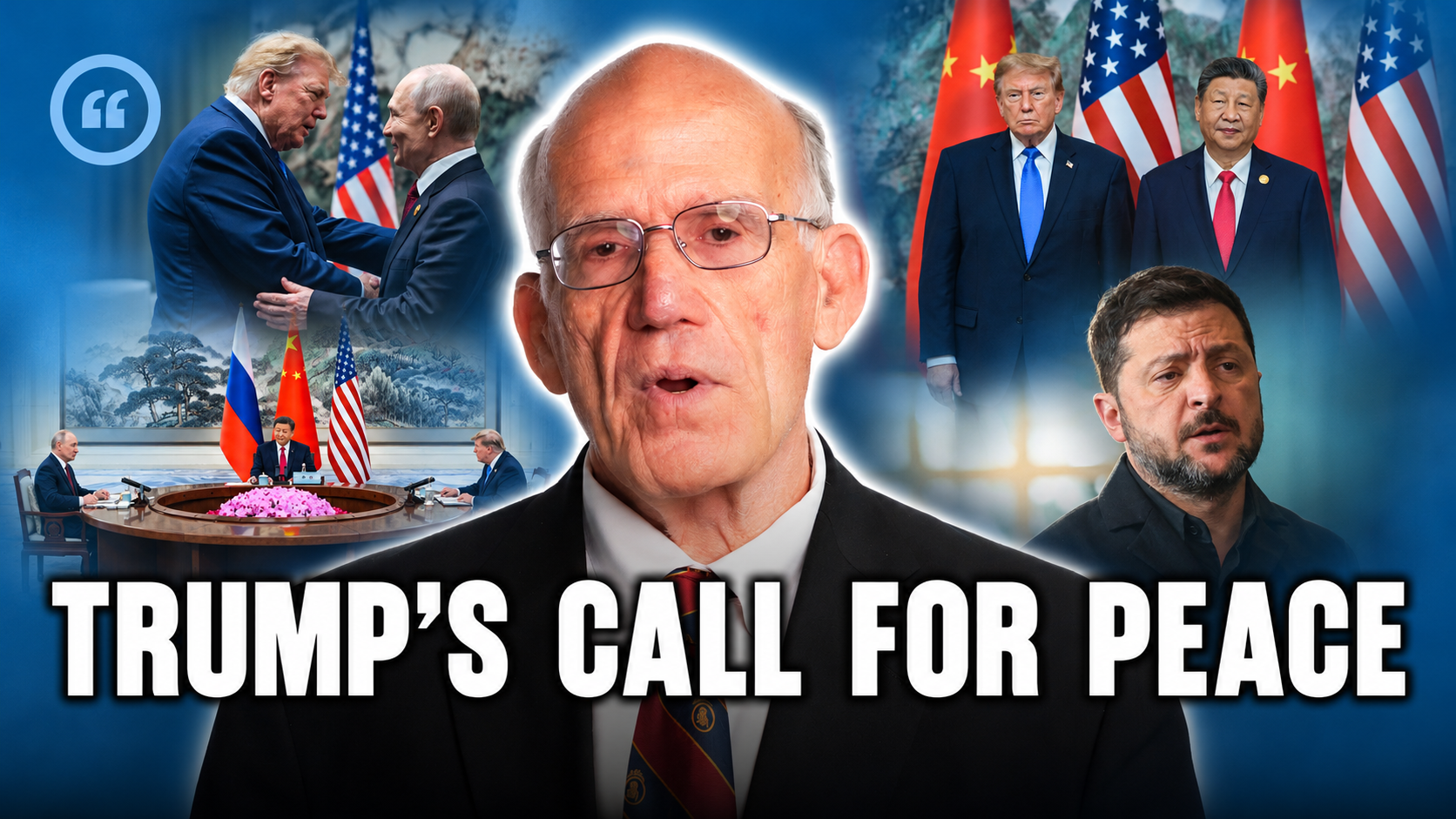
President Donald Trump's first ever trilateral summit with Vladimir Putin and Xi Jinping raises questions about the future of the war in Ukraine and whether a peace agreement could finally be within reach. Victor Davis Hanson and Sami Winc examine the summit on today’s edition of “Victor Davis Hanson: In His Own Words,” discussing Russia's declining influence, potential territorial concessions in Ukraine, and Europe's frustration over Trump's peace negotiations. Hanson criticizes Hillary Clinton's attacks on Trump's diplomacy; he also argues that European leaders have weakened their influence by neglecting defense spending and relying on American military protection. They discuss Elon Musk's shifting political allegiances, and Hanson warns that distancing himself from MAGA may not protect him from Democrat investigations. They also discuss the potential economic benefits of artificial intelligence and the challenges facing Hakeem Jeffries as Democrats prepare to take control of the Hou
Hey everybody, Tom Bilyeu here. On today’s episode of Impact Theory, we’re taking on a topic that’s got the whole world holding its breath: the escalating crisis between the United States and Iran. As tensions ratchet up, we’re asking the tough questions—how did we get stuck in this “escalation trap,” and what does it mean for America’s global leverage, our economy, and our very sense of security? The conversation focused on why the traditional idea of “strategy” might be failing policymakers, using powerful analogies—like chess versus roulette—to show how doubling down in conflict can spiral out of control. We’ll break down the risks of tactical “wins” that create even bigger crises, the real leverage Iran holds with control of the Strait of Hormuz, and the mounting pressure on President Trump as political support erodes and legacy hangs in the balance. A key theme that emerged is what happens when military might runs into decentralized opposition, and why high-stakes gambles—like the
November 21, 2026; 9am: ICE released data showing that it has deported more than 483K people this year alone, the highest annual figure in ICE’s reported history. New findings by an internal department watchdog discovered a plan under former Sec. Kristi Noem that loosened training standards for thousands of ICE officers hired to support the President’s mass deportation agenda. The draft report, obtained by The New York Times, reveals that the department allowed recruits with prior law enforcement experience to complete their basic training online, instead of at a training center over the course of a month. Some of the officers completed the training in less than one day. Texas Lieutenant Governor-elect Vikki Goodwin joins “The Weekend” to discuss. For more, follow us on social media Bluesky: @theweekendmsnow.bsky.social Instagram: @theweekendmsnow TikTok: @theweekendmsnow Hosted by Simplecast, an AdsWizz company.
Journalist Simon Moya-Smith and Indigenous studies professor Julie Francella join John Fugelsang for a wide-ranging conversation on Indigenous rights, environmental protections, media representation, and the cost of speaking out. They explain how the proposed American Affordability and Jobs Act could weaken environmental reviews, tribal consultation, and protections for sacred sites—and why pipelines, data centers, and other development projects can bring serious risks to Indigenous communities, including threats to water, land, and safety. They also examine racist stereotypes in political and media coverage, from a cartoon targeting Deb Haaland to a U.S. attorney’s letter mocking Senator Elizabeth Warren with harmful tropes. Simon and Julie discuss why these depictions persist, how underrepresentation in newsrooms contributes to the problem, and why precise language and Indigenous voices matter. Along the way, callers share perspectives on community activism, Native traditions, and th
John takes aim at the right-wing backlash to Mayor Zohran Mamdani’s plan to close Rikers Island, arguing that rehabilitation and humane treatment make for safer communities—and better economics. Then, political commentator Bob Cesca joins the fun to discuss Trump’s summit with Vladimir Putin and Xi Jinping, the fight over Chuck Schumer’s Senate leadership, and what Democrats need to do to meet the moment. Then finally, comedians Adam Sank and TV's Frank Conniff stop by for a hilarious conversation about party unity, Elon Musk’s latest MAGA rebrand, James Bond casting, and Frank’s new holiday comedy special, "Santa Claus Conquers His Demons". Plus, listeners call in to weigh in on data centers, a hazardous chemical disposal plan in Iowa, and more.
John takes aim at Trump’s disastrous summit with Vladimir Putin and Xi Jinping, asking what happens when America’s president treats dictators as friends and the International Criminal Court as an enemy. Then, legal analyst Dr. Tracy Pearson is back to discuss Elon Musk’s post-election retreat from MAGA, Trump’s attempt to overturn his New York felony conviction, and the leadership fights facing Democrats in Congress. Then finally, Families Over Billionaires executive director Kristen Crowell explains how cuts to Medicaid and food assistance are affecting families, why trickle-down economics has failed, and what Democrats should do to make the wealthy and corporations pay their fair share.
Major sporting events should offer ways for people with limited budgets to take part.
Share your view, then see how readers voted. No sign-in required. This poll is shared across stories.
Do you agree or disagree?
Common Quandary
A Common Quandary to discuss
Another conversation to explore, separate from this news story.
Software says a student cheated with AI. Is that enough to fail the paper?
A teacher suspects several essays were written with AI. Detection software marks one student's work as highly likely to be generated, but the software is known to make mistakes and the student denies using it.
How should responsibility be assigned when evidence is powerful but unreliable?