Weimar America: Totalitarianism Is Coming | Rod Dreher
68 min
Listen through the publisher, then discuss the episode here or arrange an in-person Roundtable. Your city determines where to meet.
Roundtables are designed for groups of four, with a shared subject and room for everyone to speak. Come for discussion, with no dating expectation.
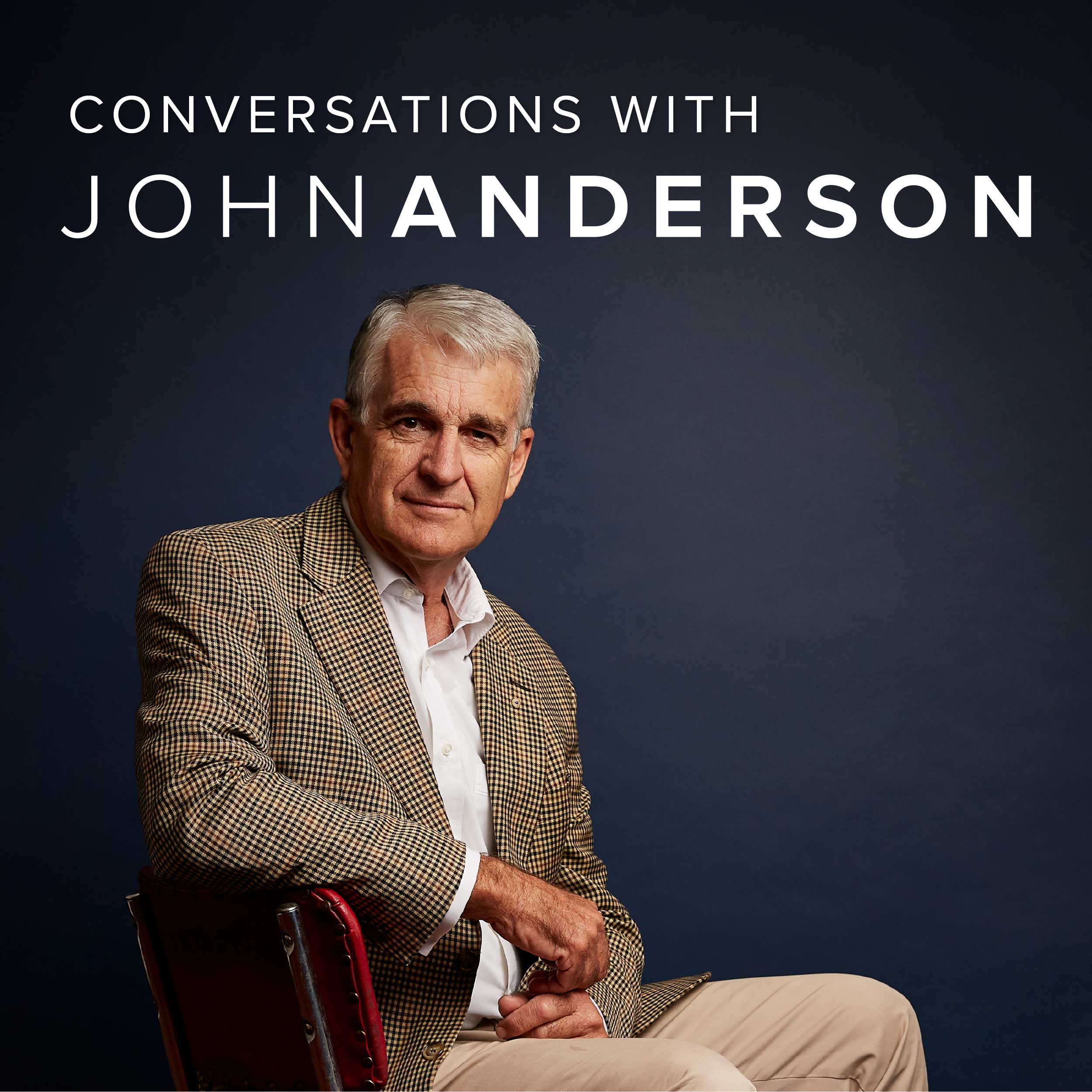
John sits down with Rod Dreher to discuss how a civilisation holds on to hope, trust and meaning when its institutions have lost the confidence of the people. Rod argues that the West now shares the psychosocial conditions of 1920s Germany without having suffered its defeat in war, hyperinflation or depression, and that the collapse of trust, the atomisation of daily life and the loss of any shared sense of truth leave a generation open to whoever promises deliverance.That danger, Dreher contends, is most acute among young men who feel dispossessed and are being drawn to the far right and to a revival of antisemitism, which he believes a sensible right must confront rather than excuse or try to control. His answer reaches to beauty, holiness and the old idea of life as a pilgrimage, with the conversation closing on why Christian hope, which he distinguishes from optimism, can endure even if the West falls.Rod Dreher is an American author, journalist and social commentator, and is a contributing editor at The American Conservative. He has written three New York Times bestsellers: Live Not By Lies, The Benedict Option, and The Little Way of Ruthie Leming. His upcoming book Weimar America is due to be published in May 2027.
Episode information is provided by the publisher. Listening takes place on the publisher’s service.
One of the best Christian films that Glenn Beck has ever seen was written by… Ben Shapiro? Glenn speaks with Ben about his new film, “Confession,” starring Rob Lowe and James Franco, a gritty drama about a prisoner in Stalin’s USSR. They discuss why Ben wanted to tell this story, why it feels very different from your standard Christian film, and what it may signal about Hollywood, which is snubbing it. Glenn also gets Ben’s thoughts on why antisemitism has become so popular on both the left and right, as well as what it truly means to be a man. Plus, Ben gives his rapid-fire takes on this week’s biggest news stories: the release of GTA VI, the outages, Jensen Huang and Nvidia, Robert Pattinson’s casting as James Bond, the midterms, the next leaders of the Republican and Democratic parties, data centers in space, how Joe Rogan became a right-wing icon, and whether woke is coming back. Glenn’s Sponsors: PreBorn: This Christmas, you can sponsor an ultrasound and help save a baby’s life fo
The position of Surgeon General remains vacant, a federal court struck down vaccine overhauls (for now), and anger from ‘Make America Healthy Again’ activists has some wondering whether Health and Human Services Secretary Robert F. Kennedy Jr. has lost his grip on the movement that helped propel President Donald Trump back to the White House. We hear from one activist — outraged by an executive order about weedkiller — who says some voters “will not be coming back.” Plus, what’s going on with all the whole hype videos? --- Guests: Kelly Ryerson, ‘Glyphosate Girl’ & Sarah Owermohle, CNN Health Policy Reporter Host/Producer: David Rind Producer: Paola Ortiz Showrunner: Felicia Patinkin
A summit like no other. In a political first, President Trump sat down with President Putin and President Xi for an unprecedented trilateral meeting. He insists they’re all friends, but what does this mean for their conflicting agendas in Iran and Ukraine? Former Biden adviser Rush Doshi joins Christiane Amanpour to assess what was, or wasn’t, achieved. Then, in a landmark case, the International Court of Justice has found Myanmar guilty of committing genocide against the minority Rohingya population. The U.N. High Commissioner for Human Rights, Volker Türk, joins the show to discuss why this moment is so important. Plus, CNN’s Clare Sebastian takes us underground to look at how Ukraine’s innovative operation is helping the country make substantial gains. And best-selling author Elizabeth Strout discusses her new book ‘The Things We Never Say’, exploring the political and personal tensions of America that emerged during the 2024 presidential election. From the archive, my report from U
Hey everybody, Tom Bilyeu here. On today’s episode of Impact Theory, we’re taking on a topic that’s got the whole world holding its breath: the escalating crisis between the United States and Iran. As tensions ratchet up, we’re asking the tough questions—how did we get stuck in this “escalation trap,” and what does it mean for America’s global leverage, our economy, and our very sense of security? The conversation focused on why the traditional idea of “strategy” might be failing policymakers, using powerful analogies—like chess versus roulette—to show how doubling down in conflict can spiral out of control. We’ll break down the risks of tactical “wins” that create even bigger crises, the real leverage Iran holds with control of the Strait of Hormuz, and the mounting pressure on President Trump as political support erodes and legacy hangs in the balance. A key theme that emerged is what happens when military might runs into decentralized opposition, and why high-stakes gambles—like the
Until a little under two weeks ago, Silicon Valley Bank was the sixteenth largest bank in the United States, the favoured choice of tech startups due to the tailored services it provided. But by 10th March 2023, American authorities were taking control of SVB following its collapse. It had assets of over $200bn, making for the second biggest bank failure in US history. There were a number of factors behind the collapse, and it’s causing concern as it’s common for one bank collapse to be followed by another, due to what’s called financial contagion. Indeed, just a few days later it was the turn of New York-based Signature Bank to collapse. And over in Europe, Switzerland’s second largest bank Crédit Suisse had to take out a $54bn to stay afloat, before then being bought out by the country’s largest bank UBS, in a bid to halt the crisis. Why did Silicon Valley Bank collapse? How do stock market crashes happen? In under 3 minutes, we answer your questions! To listen to the last episodes,
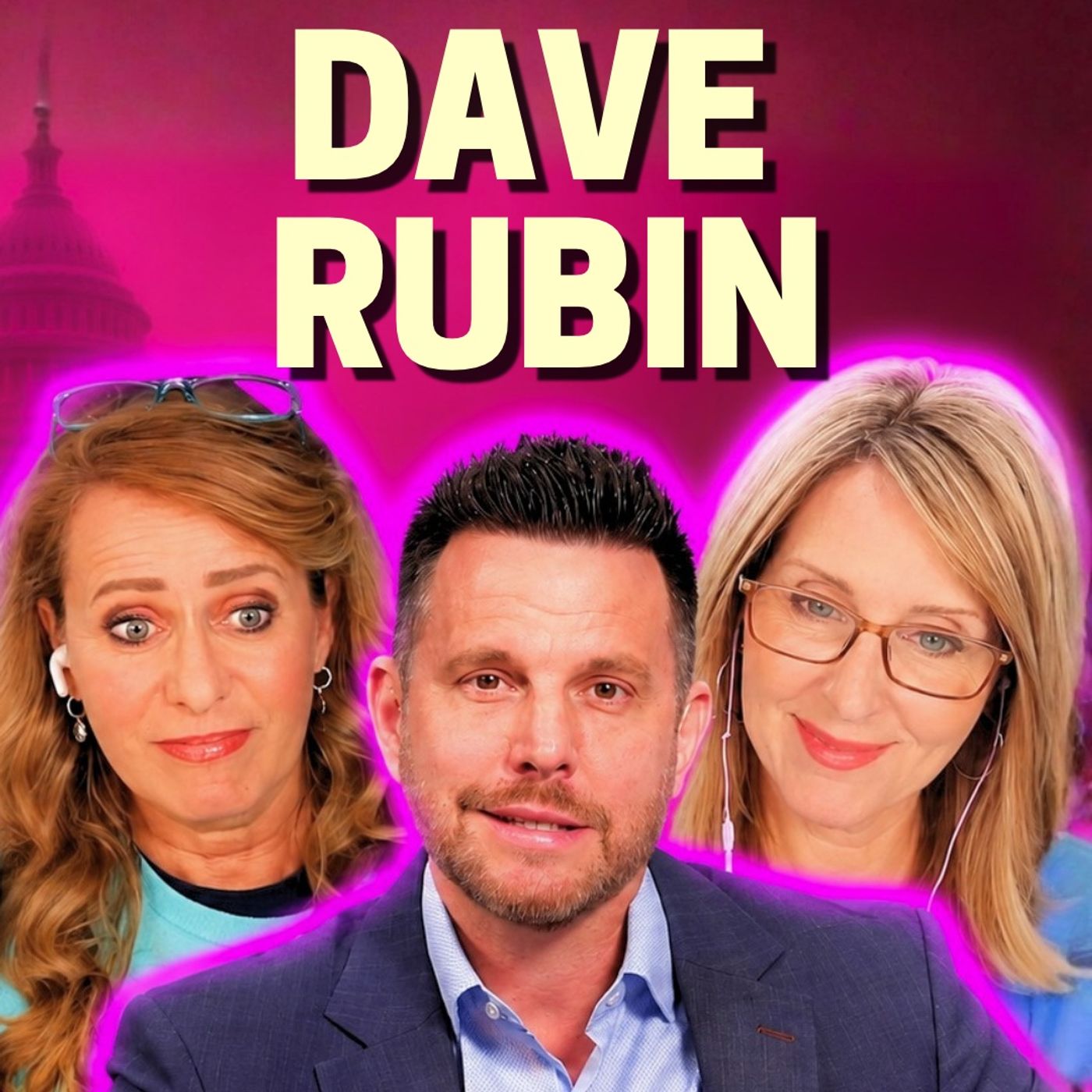
Is the Republican Party heading for a major reckoning in 2028? Dave Rubin joins The Chicks on the Right for a brutally honest conversation about Trump's final two years, the future of the GOP, and the growing divisions threatening conservatives. Dave weighs in on the Republican Party's recent election losses, whether JD Vance, Marco Rubio, or Ron DeSantis can carry Trump's agenda forward, and why he's increasingly concerned about the political direction of America. The conversation heats up as Dave takes on Nick Fuentes, the rise of extremist voices on the right, and the socialist movement gaining influence within the Democratic Party. He also discusses radical Islamism, antisemitism, the dangers of online outrage, and why he believes Western civilization faces serious challenges. Plus, with cyberattacks, banking disruptions, and nationwide outages raising concerns, Dave shares his thoughts on whether Americans should be preparing for more chaos. And don't miss the lighter side of Dave
John sits down with United States federal judges Amul Thapar and Andrew Oldham to discuss the purpose of a constitution, and who should have the power to change it. They argue that a constitution is a set of agreed rules that can only be understood in the context in which they were adopted, and that when unelected judges update those rules to suit the times, the people lose the ability to govern themselves. The conversation turns to the American founders, their sober view of human nature, and the checks and balances built to constrain power. They also compare the American and Australian Constitutions, including their perspectives on free speech and the right to bear arms. Thapar and Oldham contend that the rule of law is the right that makes every other freedom possible, and that keeping it is a duty shared by citizens and government alike. Judge Andrew Oldham serves as a United States Circuit Judge on the U.S. Court of Appeals for the Fifth Circuit, appointed by President Donald Trump
John sits down with author and social critic Os Guinness to ask whether Americans still understand the freedom they have inherited. Os argues that the republic the founding fathers built rests on what he calls the Golden Triangle of Freedom: freedom requires virtue, virtue requires faith and faith requires freedom of conscience, and each of those legs is undermined today.He traces the loss of that understanding to a breakdown in how the public is taught what America is, and to a long march through the institutions, and argues that renewal begins with civility in public speech and a ‘civil public square’ in which every right carries a responsibility. He also discusses the rise of authoritarianism and AI as threats to a human-friendly future, and explains the biblical roots that undergird human dignity.Os Guinness is an English author and social critic who has worked as a reporter for the BBC and served as Executive Director of the Williamsburg Charter Foundation. He has been a Guest Sch
Independent oversight bodies need real investigatory powers, not only advisory roles.
Share your view, then see how readers voted. No sign-in required. This poll is shared across stories.
Do you agree or disagree?
Common Quandary
A Common Quandary to discuss
Another conversation to explore, separate from this news story.
A pill can erase your most painful memory without changing anything else. Do you take it?
A safe new treatment can remove the emotional pain attached to one chosen memory while leaving the factual memory intact. Losing the pain might bring enormous relief, but the experience shaped your relationships, choices, and sense of who you are.
Are painful memories injuries to heal or parts of ourselves to keep?