What does Europe want from Andy Burnham's reconciliation bid?
36 min
Listen through the publisher, then discuss the episode here or arrange an in-person Roundtable. Your city determines where to meet.
Roundtables are designed for groups of four, with a shared subject and room for everyone to speak. Come for discussion, with no dating expectation.
This week’s EU-UK reset has been long in the making. After the final squeeze by negotiators, will the summit pave the way for a closer relationship and maybe even lead to Britain rejoining the bloc – or are the strains of the Brexit divorce still too raw to overcome? As British Prime Minister Andy Burnham arrives in Brussels to sign off on a deal covering agri-food, energy and youth mobility, Anne McElvoy asks how Europe sees Britain’s desire to move closer to the fold and what might come next. She's joined by Sandro Gozi MEP, who chairs the EU delegation to the EU-UK Parliamentary Partnership Assembly and is a member of the centrist Renew Europe Group. Gozi previously sat in Italy’s parliament and was Secretary of State for European Affairs in the Renzi and Gentiloni governments from 2014 to 2018. Later in the podcast, she'll talk to Nick Thomas-Symonds, who until a few months ago led the UK’s negotiations on the reset deal. He made way for the current EU Relations Minister Hamish Falconer when Andy Burnham moved into 10 Downing Street, but still keeps a close eye on the London-Brussels relationship from the government backbenches in the House of Commons. Does he think the deal will pave the way for a much bigger debate about Britain and Europe and what the costs might look like?
Episode information is provided by the publisher. Listening takes place on the publisher’s service.
For review: 1. Iraq has reached a compromise with the powerful Iran-backed militia Kataeb Hezbollah, three senior security officials said, after Prime Minister Ali al-Zaidi readied security forces to move against the group. Reflecting the gravity of the situation, Iraqi Shiite political sources said Esmail Qaani, commander of Iran’s elite Revolutionary Guards’ Quds Force, arrived in Baghdad late on Monday to help defuse tensions with Kataeb Hezbollah, Tehran’s most powerful militia ally in Iraq. 2. Lebanese President Joseph Aoun launched a lengthy rebuke of Iran in an Independence Day address, arguing that the Islamic Republic does not have the right to interfere in Lebanon’s internal affairs, as it long has via support for its local terror proxy, Hezbollah. 3. Yemen’s Houthis launched strikes on the Saudi capital Riyadh on Saturday, after vowing reprisals for a “special operation” by the Saudi-led coalition fighting them. The coalition later said it had “intercepted and destroyed” thr
Today, the dust has settled in Brussels and back in the Newscast studio in London Laura and Paddy take a look at how yesterday’s new EU-UK deal is going down with ministers, in Westminster more widely and most importantly with voters at home. Laura has been speaking to the foreign secretary Ed Miliband about whether the issue of tuition fees for EU students could scupper the rest of the deal. Plus, More in Common pollster Luke Tryl explains what the polls tell us about public opinion of our relationship with the EU and whether voters are ready to reopen the Brexit debate. You can now listen to Newscast on a smart speaker. It works on most smart speakers. New episodes released every day. The presenter was Adam Fleming. It was made by Anna Harris with Jesse Fox. The social producer was Grace Braddock. The technical producer was Mike Regaard. The assistant editor is Chris Gray. The senior news editor is Sam Bonham.
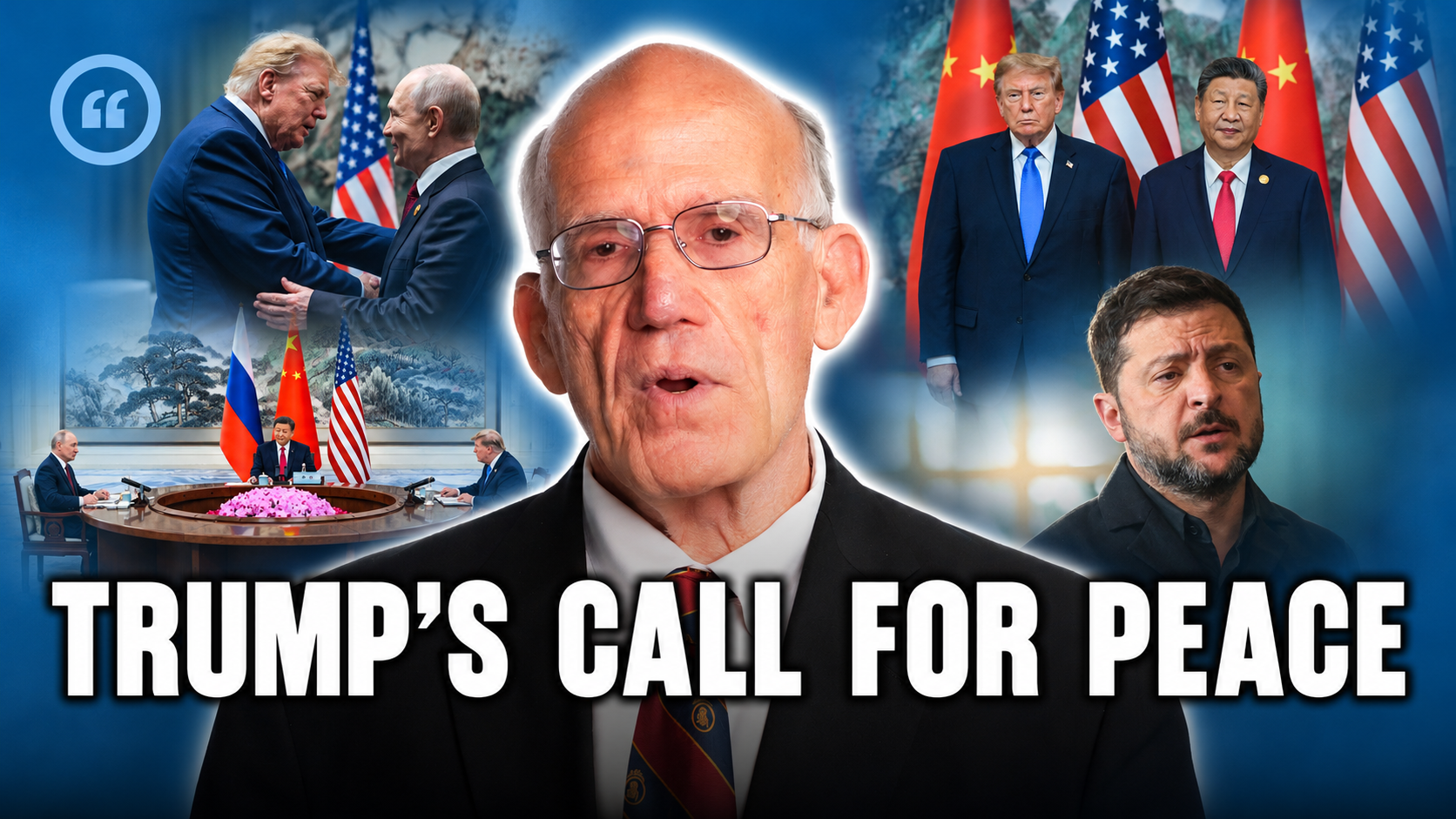
President Donald Trump's first ever trilateral summit with Vladimir Putin and Xi Jinping raises questions about the future of the war in Ukraine and whether a peace agreement could finally be within reach. Victor Davis Hanson and Sami Winc examine the summit on today’s edition of “Victor Davis Hanson: In His Own Words,” discussing Russia's declining influence, potential territorial concessions in Ukraine, and Europe's frustration over Trump's peace negotiations. Hanson criticizes Hillary Clinton's attacks on Trump's diplomacy; he also argues that European leaders have weakened their influence by neglecting defense spending and relying on American military protection. They discuss Elon Musk's shifting political allegiances, and Hanson warns that distancing himself from MAGA may not protect him from Democrat investigations. They also discuss the potential economic benefits of artificial intelligence and the challenges facing Hakeem Jeffries as Democrats prepare to take control of the Hou
Hey everybody, Tom Bilyeu here. On today’s episode of Impact Theory, we’re taking on a topic that’s got the whole world holding its breath: the escalating crisis between the United States and Iran. As tensions ratchet up, we’re asking the tough questions—how did we get stuck in this “escalation trap,” and what does it mean for America’s global leverage, our economy, and our very sense of security? The conversation focused on why the traditional idea of “strategy” might be failing policymakers, using powerful analogies—like chess versus roulette—to show how doubling down in conflict can spiral out of control. We’ll break down the risks of tactical “wins” that create even bigger crises, the real leverage Iran holds with control of the Strait of Hormuz, and the mounting pressure on President Trump as political support erodes and legacy hangs in the balance. A key theme that emerged is what happens when military might runs into decentralized opposition, and why high-stakes gambles—like the
Until a little under two weeks ago, Silicon Valley Bank was the sixteenth largest bank in the United States, the favoured choice of tech startups due to the tailored services it provided. But by 10th March 2023, American authorities were taking control of SVB following its collapse. It had assets of over $200bn, making for the second biggest bank failure in US history. There were a number of factors behind the collapse, and it’s causing concern as it’s common for one bank collapse to be followed by another, due to what’s called financial contagion. Indeed, just a few days later it was the turn of New York-based Signature Bank to collapse. And over in Europe, Switzerland’s second largest bank Crédit Suisse had to take out a $54bn to stay afloat, before then being bought out by the country’s largest bank UBS, in a bid to halt the crisis. Why did Silicon Valley Bank collapse? How do stock market crashes happen? In under 3 minutes, we answer your questions! To listen to the last episodes,
Rebuilding the government after Trump and DOGE will take more than rehiring the people they fired last year. The Supreme Court enabled the administration’s assault on services and protections millions of Americans rely upon, and it could still block the rebuilding, too. On this week’s Amicus, Dahlia Lithwick talks with Cornell law professor and former Biden administration official K. Sabeel Rahman about his new book, Remaking the State: A New Blueprint for American Democracy (https://www.amazon.com/dp/1967190208?tag=slatmaga-20&th=1), about why restoring the old machinery of the administrative state won’t be enough. Rahman connects DOGE’s slash-and-burn campaign to a much longer legal project. He explains why doctrines that constrain regulation remain a threat to future policymaking, even as the high court supercharges Trump’s executive power grabs. But this is not just a damage assessment. From stronger consumer protections to easier access to public benefits and a meaningful democrat
European leaders gather in Berlin for a high-stakes meeting on Ukraine, just as Donald Trump, Vladimir Putin and Xi Jinping hold talks in China. With Washington and Moscow sending conflicting signals about Europe's role in peace negotiations, can the Coalition of the Willing secure a seat at the table — and find the money to keep Ukraine fighting? Also on the podcast: Host Zoya Sheftalovich and Kathryn Carlson discuss the upcoming EU–UK summit in Brussels, where British Prime Minister Andy Burnham is promising a fresh start after Brexit. And mysterious cyber incidents disrupt the European Commission's internal systems. Questions? Comments? Message us on WhatsApp here (https://api.whatsapp.com/send/?app_absent=0&phone=32491050629&text=Hey+Zoya+and+crew%21+&type=phone_number) or at +32 491 05 06 29.
Kaja Kallas may be the EU’s top diplomat, but her role in key diplomatic discussions —whether on Ukraine or Israel — remains murky. Today on the show, Zoya Sheftalovich and Ian Wishart examine the increasingly overlapping job descriptions of Kaja Kallas and the EU’s Commissioner for the Mediterranean, Dubravka Šuica, and unpack what that says about EU diplomacy. Also on the podcast: Is Russian President Vladimir Putin serious about peace? Lithuania’s Foreign Minister Kęstutis Budrys doesn’t think so. And finally, nobody seems to want to live in Luxembourg — which is problematic for the institutions based there looking to recruit more people. How would you feel about moving to Luxembourg? Let us know by messaging us on WhatsApp here (https://api.whatsapp.com/send/?app_absent=0&phone=32491050629&text=Hey+Zoya+and+crew%21+&type=phone_number) or at +32 491 05 06 29. Articles mentioned in this episode: Faking it: Europe thinks Putin isn’t serious about peace. (https://www.politico.eu/articl
Europe’s sports rulebook is getting an update. EU Sports Commissioner Glenn Micallef joins us to discuss illegal sports streaming, the future of FIFA President Gianni Infantino and the controversy over Russian athletes returning to international competitions. Also on the podcast: Zoya and Ian discuss the EU's upcoming 22nd round of sanctions against Russia and growing questions over how well existing measures are enforced. And our colleague Sonja Rijnen takes us inside the fiercely competitive — and sometimes bizarre — exam process for landing a job at the EU institutions. Did you take the AD5 exam for a shot at working at the EU institutions? How did it go? Let us know by messaging us on WhatsApp here (https://api.whatsapp.com/send/?app_absent=0&phone=32491050629&text=Hey+Zoya+and+crew%21+&type=phone_number) or at +32 491 05 06 29. Articles mentioned in this episode: Europe’s top soccer bodies face EU antitrust complaint. (https://www.politico.eu/article/uefa-efc-face-eu-antitrust-com
Basic classroom needs should take priority over optional school programs when budgets are cut.
Share your view, then see how readers voted. No sign-in required. This poll is shared across stories.
Do you agree or disagree?
Common Quandary
A Common Quandary to discuss
Another conversation to explore, separate from this news story.
A parent clearly built the winning science project. Who should lose the prize?
An elementary student submits an elaborate science project far beyond their apparent ability. The parent proudly describes working together all weekend, and the child clearly learned something, but other students completed simpler projects themselves.
What is a fair response when help improves learning but distorts achievement?