Listen through the publisher, then discuss the episode here or arrange an in-person Roundtable. Your city determines where to meet.
Roundtables are designed for groups of four, with a shared subject and room for everyone to speak. Come for discussion, with no dating expectation.
Have you ever wondered why a toy on sale feels like such a massive deal? Or why the very first number you hear can actually control your brain? Join Mira and Finn on an incredible journey back to 1974 to uncover a sneaky mental glitch called anchoring bias! You will learn about two brilliant psychologists, Amos Tversky and Daniel Kahneman, who set up a wild experiment using a giant, rigged carnival wheel of fortune. By spinning the wheel and stopping on a random number like 10 or 65, they secretly changed how people guessed the answers to totally unrelated geography questions! How did a meaningless number drag guesses so far off track? It turns out, our brains drop a heavy mental anchor on the very first piece of information we get. You will discover how toy stores use crossed-out prices to trick us, why even expert judges fall for this number glitch, and how knowing about it can make you super smart! Tune in for mind-bending science, tricky experiments, and an epic trivia quiz to see if you can outsmart the anchor!
Episode information is provided by the publisher. Listening takes place on the publisher’s service.
Have you ever seen pictures of giant stone heads sitting in the grass and wondered how they got there? Get ready for a mind-blowing adventure to one of the most remote places on Earth: Rapa Nui, also known as Easter Island! About 800 years ago, expert Polynesian sailors found this tiny island in the middle of the Pacific Ocean using only the stars and ocean currents to guide them. Once there, they carved nearly a thousand massive stone statues called moai! But here is the biggest surprise: these statues aren't just heads—they have full bodies buried underground! Some weigh as much as 40 cars, and the islanders moved them without wheels, cranes, or metal tools. How did they do it? The local legends say the statues literally walked to their places, waddling side to side with the help of ropes and incredibly smart human engineering! Join Mira and Finn as they uncover the secrets of the moai, find out how the island got its English name from a Dutch captain, and learn all about the giganti
Did you know your mouth is a nonstop biological water park?! Every single day, your body makes enough saliva to fill up to four whole water bottles! But spit isn't just warm water—it's a magical biological potion packed with incredible superpowers. Join Mira and Finn as they explore the wild world of saliva! Discover how a microscopic machine called amylase starts digesting your favorite foods the exact millisecond you take a bite. Find out how spit turns sharp, crunchy chips into soft, squishy balls to protect your throat! Plus, did you know saliva actually builds invisible armor for your teeth by filling in holes with special minerals like calcium and phosphate? It even works as a magical liquid key to unlock flavors—without saliva, chocolate and pizza would taste like absolute cardboard! From amazing spit factories hiding inside your cheeks to real-life birds that build entire nests out of spit, get ready for a mind-blowing biological adventure! Tune in to find out why your mouth is
Have you ever told someone, "Thanks a million!" or claimed you have "a million toys to clean up"? We use the word "million" all the time to mean "a whole lot," but have you ever stopped to wonder just how big a real million actually is? Join Mira and Finn on a mind-blowing math adventure as they discover the quiet power of giant numbers! Imagine counting one number every single second without ever stopping to eat or sleep. It wouldn't take a few hours or a long weekend—it would take you about eleven and a half days just to reach one million! And what about its giant neighbor, the billion? Counting to a billion the exact same way would take a whopping thirty-two years. That's a grown-up's whole life so far! In this amazing episode, we won't just look at numbers on a page; we’ll learn to feel their true size. Find out how much space a million grains of rice would take up, and discover exactly how far a million footsteps would carry you. Get ready to stretch your brain and learn why being
🇺🇸 TWO NAVY SEALS. TWO INCREDIBLE JOURNEYS. ONE POWERFUL MISSION TO TRANSFORM YOUR FINANCIAL FUTURE! Michael Jaco welcomes fellow former Navy SEAL Larry Yatch, founder of TruPath Mastery, for an eye-opening conversation about success, leadership, financial trauma, and the hidden subconscious patterns that can keep even the most accomplished people from reaching their full potential. With 24 years as a Navy SEAL and 11 years as a CIA security operative, Michael shares the powerful lessons of mental discipline, intuition, and personal transformation that shaped his extraordinary journey. Larry brings 10 years of Navy SEAL service and an impressive career advising Fortune 50 executives. But despite achieving tremendous professional success, he discovered that the survival patterns that once made him successful were also keeping him trapped in his own business. THE BIG REVELATION: YOUR MONEY HABITS MAY HAVE VERY LITTLE TO DO WITH MONEY! From childhood programming and fear of scarcity to
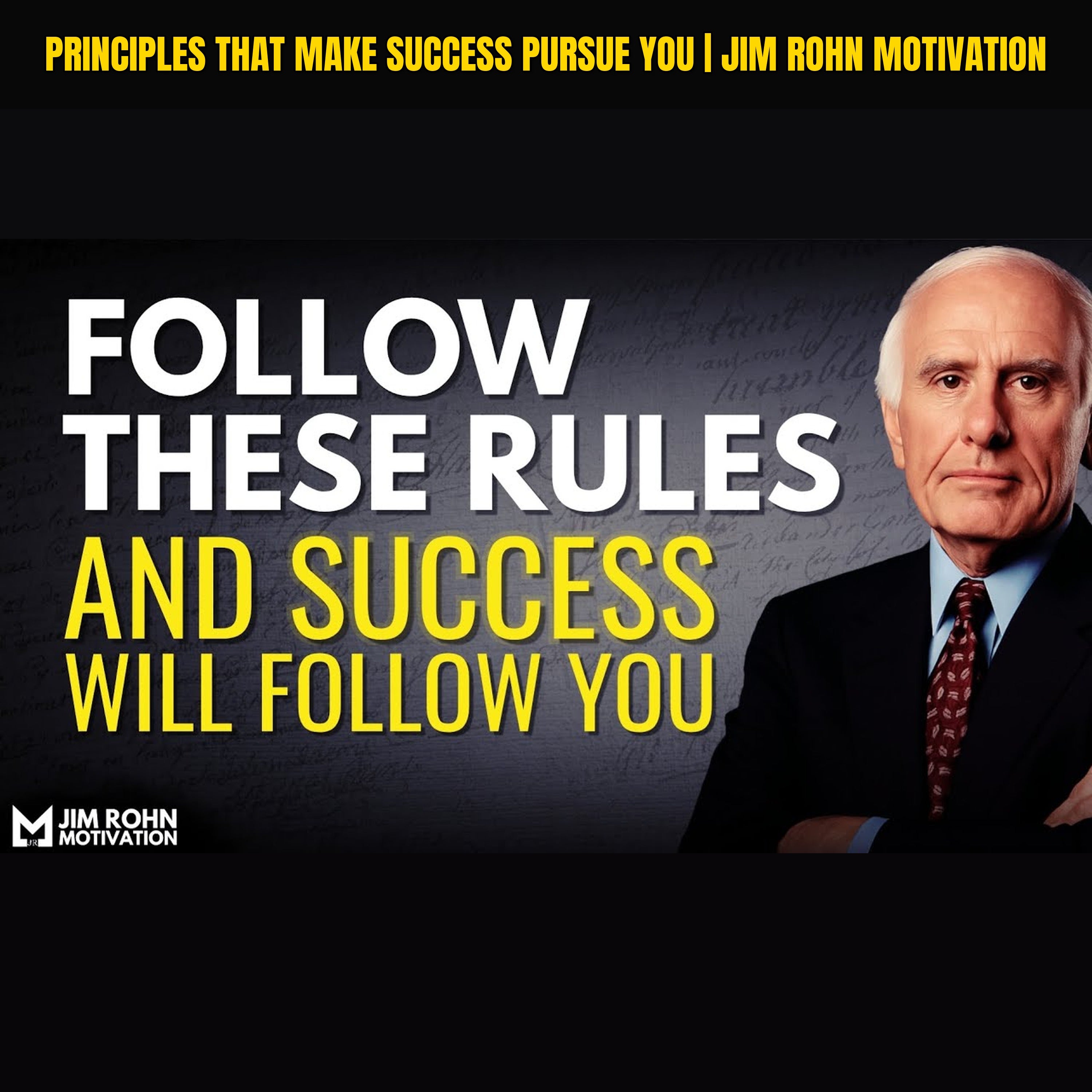
#JimRohnMotivation #JimRohn #JimRohnSpeech In this Jim Rohn Motivation video, uncover 10 rules that will completely shift how you lead your life. This isn’t about motivation—it’s about structure, identity, and relentless standards that anchor your behavior and elevate your performance every day. Key Topics From This Motivational Video: Why success requires structure, not just inspiration How to enforce personal standards that never drop The danger of chasing comfort, distractions, and approval Training your mindset for clarity, consistency, and execution Living by rules that lead to identity-level transformation This Jim Rohn-style motivational video outlines a blueprint for building a high-performance life. Learn how to replace motivation with rules, emotion with execution, and hesitation with leadership. These 10 rules aren’t suggestions—they’re anchors that create stability, protect your clarity, and rewire your habits so you don’t need hype to move, just identity. This Jim Rohn Mot
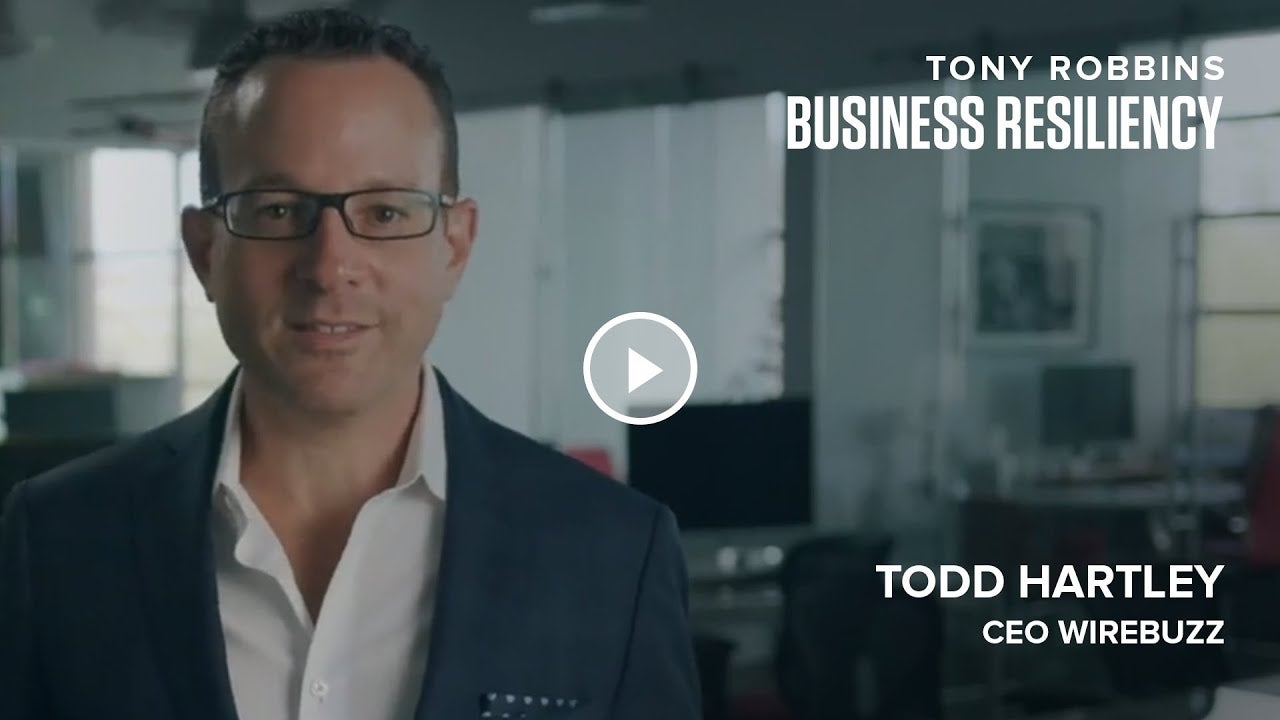
We’re living in a new world filled with new business challenges. Salesperson access is at an all-time low as prospects gravitate toward on-demand and remote buying experiences. It’s a real challenge for many businesses, but as Tony teaches, within every challenge is an opportunity. In this video you’ll hear from Todd Hartley, renowned expert in remote selling and sales optimization, on how you can better engage your prospects using new channels and strategies. Uploaded 27-04-20 As Todd shares, right now, your website needs to be your best salesperson. It must inspire people to either learn more or make a purchase. Like a superstar salesperson, it must pull your prospects through the funnel with a powerful message that leads to an on-demand buying experience. An effective sales page will deliver only the highest-quality leads to your team and ensure your business runs at peak efficiency. Discover how to build a killer team to follow up on those leads at https://www.tonyrobbins.com/ask-t
Have you ever noticed how quiet grown-ups are on a crowded bus or train? It's like everyone has an invisible forcefield around them! People just stare at their shoes, read a book, or scroll on their phones in total silence. But why do we ignore each other? In 2014, scientists Nicholas Epley and Juliana Schroeder at the University of Chicago decided to find out! They set up an amazing experiment on a morning commuter train. They asked one group of tired people to sit in quiet solitude, and another group to actually strike up a conversation with a total stranger! The results were shocking. Even though people predicted that talking to a stranger would be super awkward and annoying, the group who said "hello" ended up having a much happier trip! It turns out, humans are naturally built to connect. Ancient Greek philosophers like Aristotle called us "social animals," and the Stoics believed we are all part of one big human family. Join Mira and Finn as they explore why a simple, safe "hello
Have you ever been told to do something just "because I said so"? It can feel super unfair! But did you know that just by being a kid, you have actual, real-life rights? In this thought-provoking episode of Philosophy is Not Boring, Mira and Finn dive into the incredible true story of Janusz Korczak! He was a brilliant doctor in Poland who strongly believed children are "people of today," not just adults-in-training. Imagine living in a place where kids actually get to make the rules! Dr. Korczak ran a famous orphanage where children had their very own court of law, and they could even put grown-ups (including Dr. Korczak himself!) on trial for being unfair! He completely changed how the world treats kids. His groundbreaking ideas even inspired the United Nations to create the Convention on the Rights of the Child—a giant global rulebook that says every kid has the right to be safe, to be heard, and even the right to play! Tune in to discover mind-bending facts about this hero of child
Did you know that over half the people on planet Earth share the exact same great-great-great-great grandfather in their faith? It is true! Join Mira and Finn as they explore the amazing ancient story of Abraham! Thousands of years ago in the ancient city of Ur, Abraham made a massive, brave decision. He packed up his entire family and walked right into the unknown desert! Why? Because he believed in one God who promised him his family would become as huge and uncountable as the stars in the night sky! Today, nearly four billion people trace their family tree of beliefs back to him! Discover why Jewish people call him their very first ancestor, why Christians see him as the ultimate hero of faith, and why Muslims honor him as the mighty prophet Ibrahim who helped build the Kaaba in Mecca! Three huge world religions, billions of people, and one incredible family story! Tune in to find out how people all over the world are so much more connected than we ever imagined. Get ready for a min
Environmental monitoring data should be accessible to affected communities.
Share your view, then see how readers voted. No sign-in required. This poll is shared across stories.
Do you agree or disagree?
Common Quandary
A Common Quandary to discuss
Another conversation to explore, separate from this news story.
You are training the software that may replace your team. Do you warn them?
A manager is asked to help test software that could eliminate several jobs on their team. Leadership insists the project is uncertain and confidential, while employees are making major financial decisions.
When does loyalty to colleagues override professional confidentiality?