Listen through the publisher, then discuss the episode here or arrange an in-person Roundtable. Your city determines where to meet.
Roundtables are designed for groups of four, with a shared subject and room for everyone to speak. Come for discussion, with no dating expectation.
Imagine you are walking down a huge, beautiful beach looking for the absolute best spot to build an epic sandcastle. But there is a massive catch! You can only walk forward, and once you pass a spot, you can never go back! How do you know when to stop and choose? If you pick too early, you might miss the perfect spot. If you wait too long, the best spot is already miles behind you! It feels like an impossible guessing game, but guess what? Maths has a secret superpower to solve it! It is called Optimal Stopping, and it will completely bend your brain! In this thrilling episode, Mira and Finn uncover the magical 37 percent rule. Made famous in 1960 by brilliant puzzle master Martin Gardner, this rule tells you exactly how long to look before making your big choice! Whether you are picking a giant scoop of ice cream, catching a massive wave to surf, or hunting for the best seat on a train, this amazing maths trick works perfectly. Get ready to turn blind luck into a brilliant winning strategy!
Episode information is provided by the publisher. Listening takes place on the publisher’s service.
Did you know your mouth is a nonstop biological water park?! Every single day, your body makes enough saliva to fill up to four whole water bottles! But spit isn't just warm water—it's a magical biological potion packed with incredible superpowers. Join Mira and Finn as they explore the wild world of saliva! Discover how a microscopic machine called amylase starts digesting your favorite foods the exact millisecond you take a bite. Find out how spit turns sharp, crunchy chips into soft, squishy balls to protect your throat! Plus, did you know saliva actually builds invisible armor for your teeth by filling in holes with special minerals like calcium and phosphate? It even works as a magical liquid key to unlock flavors—without saliva, chocolate and pizza would taste like absolute cardboard! From amazing spit factories hiding inside your cheeks to real-life birds that build entire nests out of spit, get ready for a mind-blowing biological adventure! Tune in to find out why your mouth is
Have you ever seen pictures of giant stone heads sitting in the grass and wondered how they got there? Get ready for a mind-blowing adventure to one of the most remote places on Earth: Rapa Nui, also known as Easter Island! About 800 years ago, expert Polynesian sailors found this tiny island in the middle of the Pacific Ocean using only the stars and ocean currents to guide them. Once there, they carved nearly a thousand massive stone statues called moai! But here is the biggest surprise: these statues aren't just heads—they have full bodies buried underground! Some weigh as much as 40 cars, and the islanders moved them without wheels, cranes, or metal tools. How did they do it? The local legends say the statues literally walked to their places, waddling side to side with the help of ropes and incredibly smart human engineering! Join Mira and Finn as they uncover the secrets of the moai, find out how the island got its English name from a Dutch captain, and learn all about the giganti
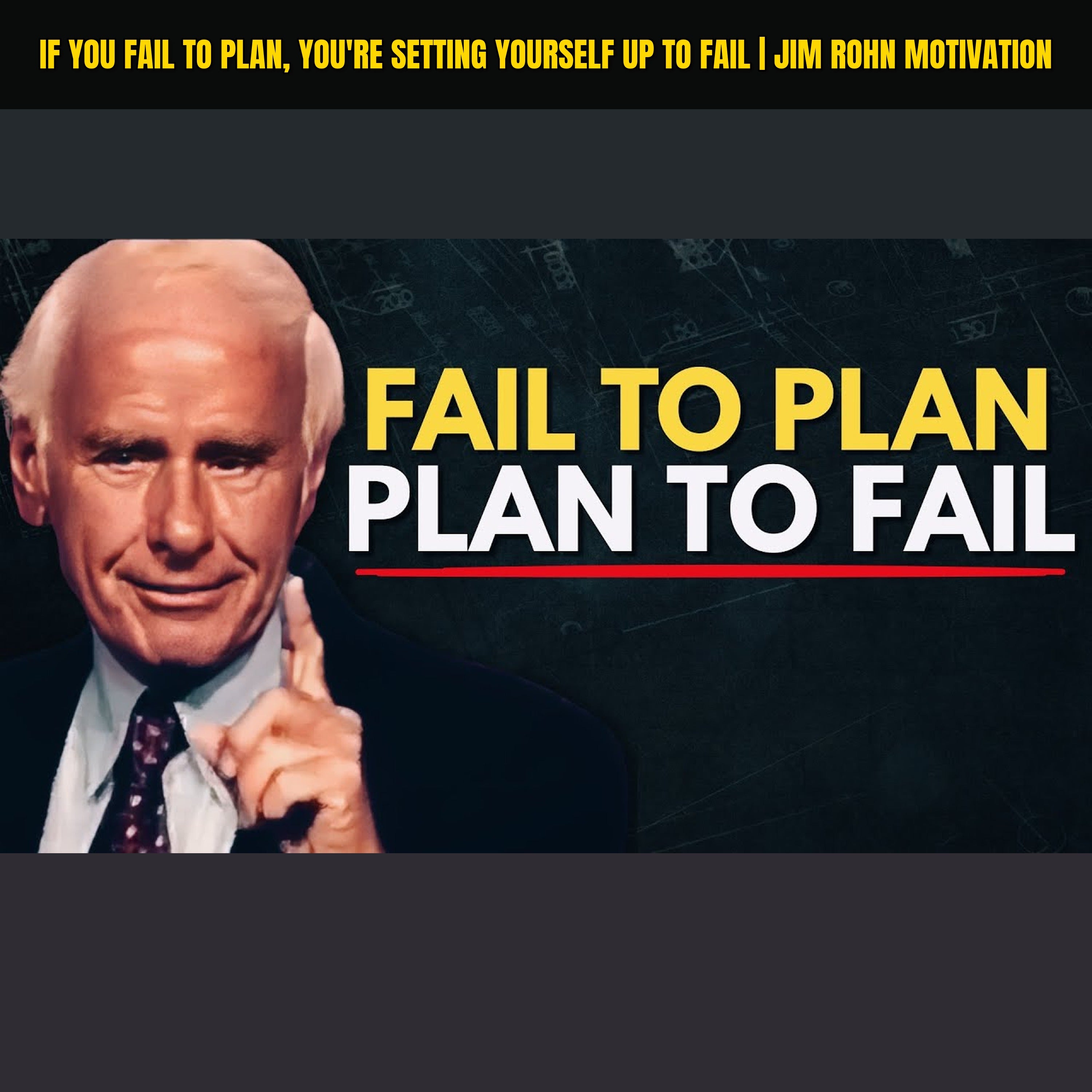
#JimRohnMotivation #JimRohn #JimRohnSpeech In this Jim Rohn Motivation video, discover the powerful truth that your future isn’t something you wait for—it’s something you intentionally design. Learn how clarity, discipline, habits, and momentum create lasting success and why decisive action—not perfect timing—is the real key to unlocking your potential. Key Topics From This Motivational Video: How to take control of your future with decisive action The importance of vision in shaping direction and purpose Why habits—not one-time effort—create lasting success How to sustain momentum even during tough times What successful people do to overcome barriers and stay consistent This Jim Rohn-style motivational video is a masterclass in personal development, goal-setting, and disciplined action. You’ll learn that extraordinary futures aren’t built on chance, luck, or external approval—but through daily clarity, strategic habits, and relentless momentum. This is about becoming the designer of y
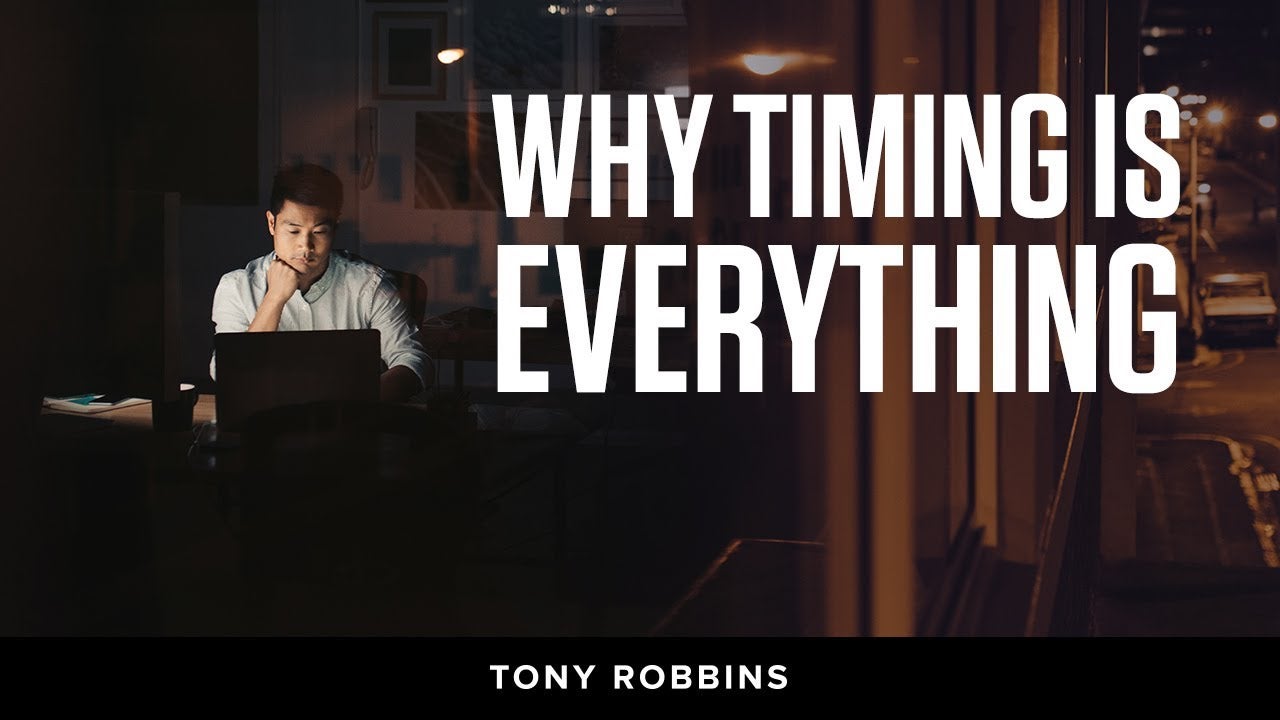
When you set a goal, what do you focus on? Odds are, you put most of your energy towards how you will achieve the results you’re after. But what if you shifted that focus from the how to the when. What if timing was that important? What if good timing could not only enhance your performance – it could actually give you the edge that you need to achieve your goal? Uploaded 30-07-19 In this episode of the Tony Robbins podcast, we have a very special guest – New York Times bestselling author and one of the most influential business minds of our time, Daniel Pink. Dan is widely regarded as one of the foremost thinkers in behavioral sciences. He’s upended conventional wisdom about what gives people drive and motivation. He’s challenged the value that society places on left brain over right brain skills. And he’s dispelled preconceived notions about what really makes a great salesman. His latest work is no exception. In When: The Scientific Secrets of Perfect Timing – Dan offers profound ins
Get the 200+ Page Optimal Living Daily Workbook (PDF) - Free. Want to turn today's episode into an actionable plan? Episode 3779: Joshua Fields Millburn and Ryan Nicodemus of The Minimalists explain the first steps they took to regain control of their money after years of six-figure debt. It starts with a written monthly budget that sorts every expense into essentials, nonessentials and junk, plus a small safety net for emergencies, and then reframes investing as simply paying your future self, automated so you never miss the money. Read along with the original article(s) here: https://www.theminimalists.com/freedom/ Quotes to ponder: "Most of us have no idea where our money is going. We think we know, but we don't really know." "The stricter you are, the sooner you'll be free." "Right now is the best time to start planning for your future." Airwallex is a financial technology company, not a bank. Services in the US are provided by Airwallex US, LLC, a licensed money transmitter (NMLS
Master the skills that change lives — enroll in your free human behavior course today: https://nci.university/learn Uploaded 09-01-26 You were never reacting to chaos — you were responding to structure. Outcomes don’t appear suddenly; they’re assembled long before you notice them. Understanding how pressure is built changes how the world feels immediately. All influence follows patterns once you know where to look. Reality doesn’t break — it gets reshaped in layers. Every system depends on predictable human responses. Given the right conditions, behavior becomes almost automatic. Once you see the architecture, panic loses its leverage. Detection beats reaction — every time. Please note that the content provided in this broadcast is for informational and educational purposes only and should not be construed as legal, medical, financial, or professional advice. No material in this communication establishes any form of professional relationship that is privileged or confidential. The insi
Have you ever told someone, "Thanks a million!" or claimed you have "a million toys to clean up"? We use the word "million" all the time to mean "a whole lot," but have you ever stopped to wonder just how big a real million actually is? Join Mira and Finn on a mind-blowing math adventure as they discover the quiet power of giant numbers! Imagine counting one number every single second without ever stopping to eat or sleep. It wouldn't take a few hours or a long weekend—it would take you about eleven and a half days just to reach one million! And what about its giant neighbor, the billion? Counting to a billion the exact same way would take a whopping thirty-two years. That's a grown-up's whole life so far! In this amazing episode, we won't just look at numbers on a page; we’ll learn to feel their true size. Find out how much space a million grains of rice would take up, and discover exactly how far a million footsteps would carry you. Get ready to stretch your brain and learn why being
Have you ever played a game that entirely plays itself? Welcome to the astonishing Game of Life! Invented in 1970 by a brilliant British mathematician named John Conway at Cambridge University, this isn't a normal board game. All you need is a blank grid of squares and four super simple rules. But what happens next is pure magic—well, actually, it's maths! When you colour in a few squares and follow the rules, the patterns seem to come alive! Some shapes blink like traffic lights, some freeze forever, and one little shape called a "Glider" actually stands up and walks across the paper endlessly! The game became so famous that scientists everywhere were secretly playing it on giant computers. A team led by Bill Gosper even discovered a "Glider Gun" that shoots out new walking shapes like a factory! Join Mira and Finn as they explore this tiny, endless universe built entirely on paper. You will discover how four simple rules can explain the beautiful, unpredictable patterns in our real w
Have you ever wondered why different shapes roll in completely different ways? If you push a ball, it rolls smoothly in any direction you choose. If you push a soup can on its side, it rolls in a perfectly straight line. But if you push a party hat, it spins round and round in a circle! Why does this happen? It all comes down to a secret rule of the universe: how a shape is curved decides exactly how it moves! Join Mira and Finn as they uncover the hidden instructions built into every shape. You will learn why we don't make car wheels out of spheres, and why the wide base of a cone always outruns its pointy tip. Then, travel back to 1929 Switzerland to meet inventor Paul Schatz, who created an incredible, mind-bending new shape called the oloid! This strange, twisted shape doesn't roll straight or in a circle—it dances and wobbles, touching every single part of its skin to the ground as it moves. Get ready to look at everyday objects in a totally new way!
Keeping personal information private is worth giving up some digital convenience.
Share your view, then see how readers voted. No sign-in required. This poll is shared across stories.
Do you agree or disagree?
Common Quandary
A Common Quandary to discuss
Another conversation to explore, separate from this news story.
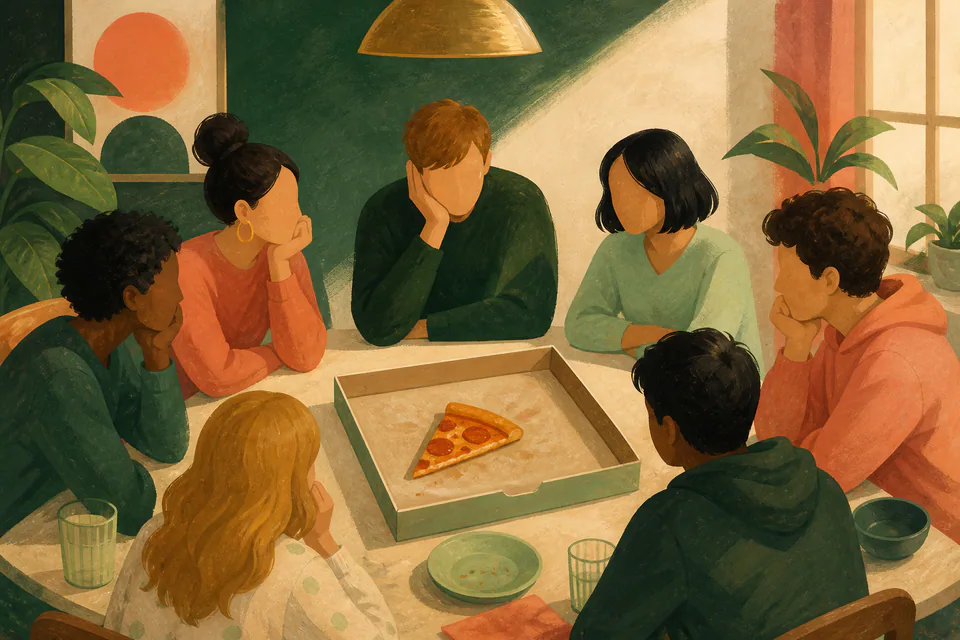
One slice of pizza remains and everyone is pretending not to want it. Can you take it?
Six friends have been circling the last slice of pizza for twenty minutes. Nobody claims it when you ask, yet two people keep glancing at the box. You are still hungry and paid the same share as everyone else.
Does politeness require leaving something that nobody will openly claim?