Listen through the publisher, then discuss the episode here or arrange an in-person Roundtable. Your city determines where to meet.
Roundtables are designed for groups of four, with a shared subject and room for everyone to speak. Come for discussion, with no dating expectation.
Have you ever noticed that once you learn how to read, you completely lose the ability to turn it off? In 1935, an American psychologist named John Ridley Stroop discovered a fascinating brain glitch! Imagine looking at the word "RED" but it is printed in bright blue ink. Your mission is to name the ink color out loud as fast as you can without reading the word. It sounds incredibly easy, right? Think again! Your super-fast reading brain will automatically try to shout "RED!" before you can even think about the color blue! This hilarious brain jam is called the Stroop Effect, and it proves that your brain has two different systems fighting for control. Did you know this exact mind-bending test was supposedly used by intelligence officers during the Cold War to catch secret spies? Join Mira and Finn as they explore how your bossy, automatic brain works, and learn how you can use a few simple felt-tip pens to trick your family at home. Get ready for the ultimate brain battle!
Episode information is provided by the publisher. Listening takes place on the publisher’s service.
Have you ever told someone, "Thanks a million!" or claimed you have "a million toys to clean up"? We use the word "million" all the time to mean "a whole lot," but have you ever stopped to wonder just how big a real million actually is? Join Mira and Finn on a mind-blowing math adventure as they discover the quiet power of giant numbers! Imagine counting one number every single second without ever stopping to eat or sleep. It wouldn't take a few hours or a long weekend—it would take you about eleven and a half days just to reach one million! And what about its giant neighbor, the billion? Counting to a billion the exact same way would take a whopping thirty-two years. That's a grown-up's whole life so far! In this amazing episode, we won't just look at numbers on a page; we’ll learn to feel their true size. Find out how much space a million grains of rice would take up, and discover exactly how far a million footsteps would carry you. Get ready to stretch your brain and learn why being
Have you ever seen pictures of giant stone heads sitting in the grass and wondered how they got there? Get ready for a mind-blowing adventure to one of the most remote places on Earth: Rapa Nui, also known as Easter Island! About 800 years ago, expert Polynesian sailors found this tiny island in the middle of the Pacific Ocean using only the stars and ocean currents to guide them. Once there, they carved nearly a thousand massive stone statues called moai! But here is the biggest surprise: these statues aren't just heads—they have full bodies buried underground! Some weigh as much as 40 cars, and the islanders moved them without wheels, cranes, or metal tools. How did they do it? The local legends say the statues literally walked to their places, waddling side to side with the help of ropes and incredibly smart human engineering! Join Mira and Finn as they uncover the secrets of the moai, find out how the island got its English name from a Dutch captain, and learn all about the giganti
Did you know your mouth is a nonstop biological water park?! Every single day, your body makes enough saliva to fill up to four whole water bottles! But spit isn't just warm water—it's a magical biological potion packed with incredible superpowers. Join Mira and Finn as they explore the wild world of saliva! Discover how a microscopic machine called amylase starts digesting your favorite foods the exact millisecond you take a bite. Find out how spit turns sharp, crunchy chips into soft, squishy balls to protect your throat! Plus, did you know saliva actually builds invisible armor for your teeth by filling in holes with special minerals like calcium and phosphate? It even works as a magical liquid key to unlock flavors—without saliva, chocolate and pizza would taste like absolute cardboard! From amazing spit factories hiding inside your cheeks to real-life birds that build entire nests out of spit, get ready for a mind-blowing biological adventure! Tune in to find out why your mouth is
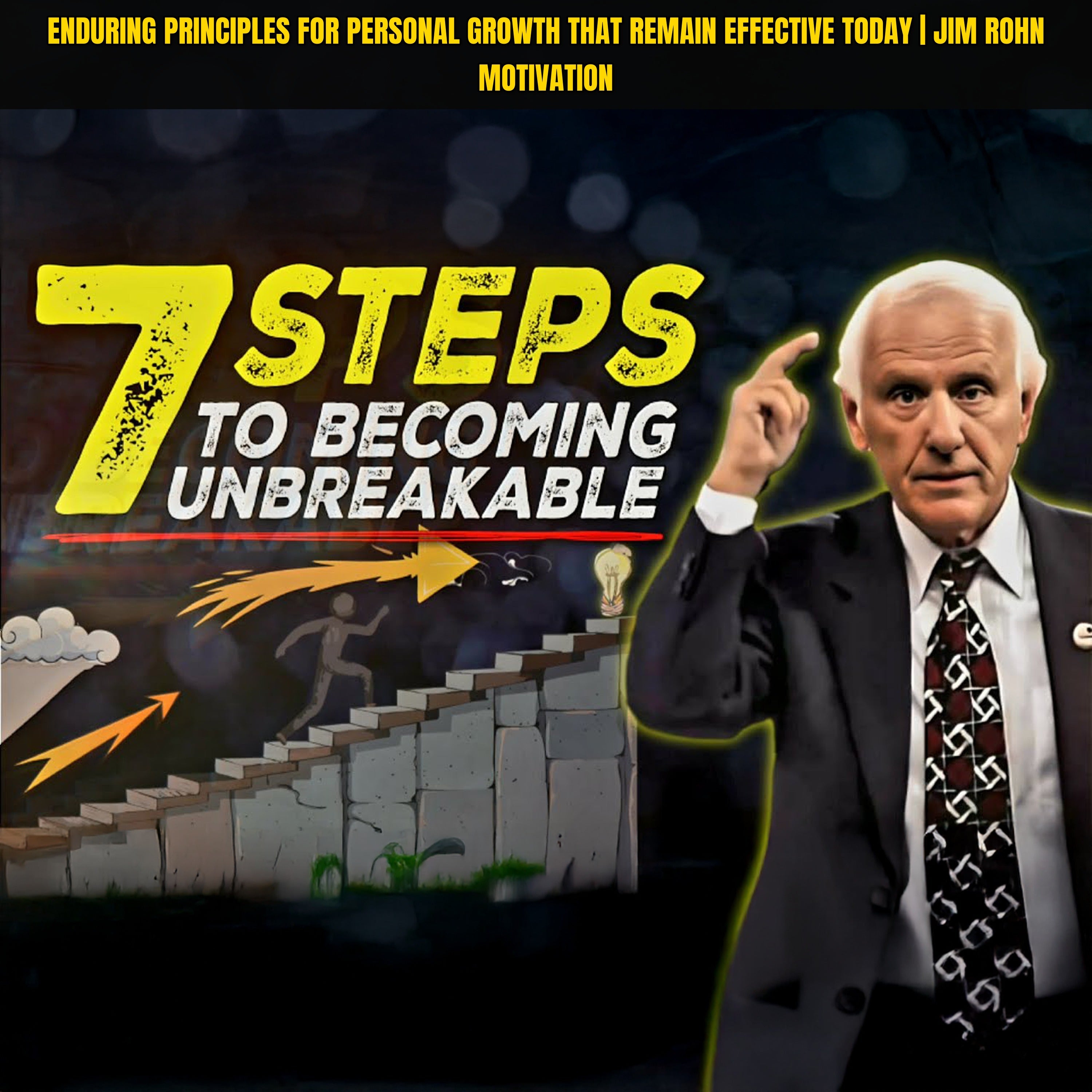
In this Jim Rohn Motivation speech, we explore 10 timeless principles for personal growth—truths that outlast hype, resist burnout, and build a life rooted in purpose. From personal responsibility to emotional resilience, Jim Rohn lays down the foundation for a growth journey that endures. Key Topics From This Motivational speech: Personal Responsibility: Owning your results, energy, and direction Discipline Over Motivation: Showing up when emotions fade The Compound Effect: Small consistent actions that stack into success Self-Awareness and Emotional Resilience: Building clarity and strength Service, Alignment, and Humility: Growth that multiplies and sustains This Jim Rohn message strips away the trends and noise and brings us back to what truly works. Growth doesn’t come from gimmicks. It comes from grounded, principle-driven living. When you build on discipline, reflection, and service, your growth becomes sustainable—and your life starts aligning from the inside out. This Jim Rohn
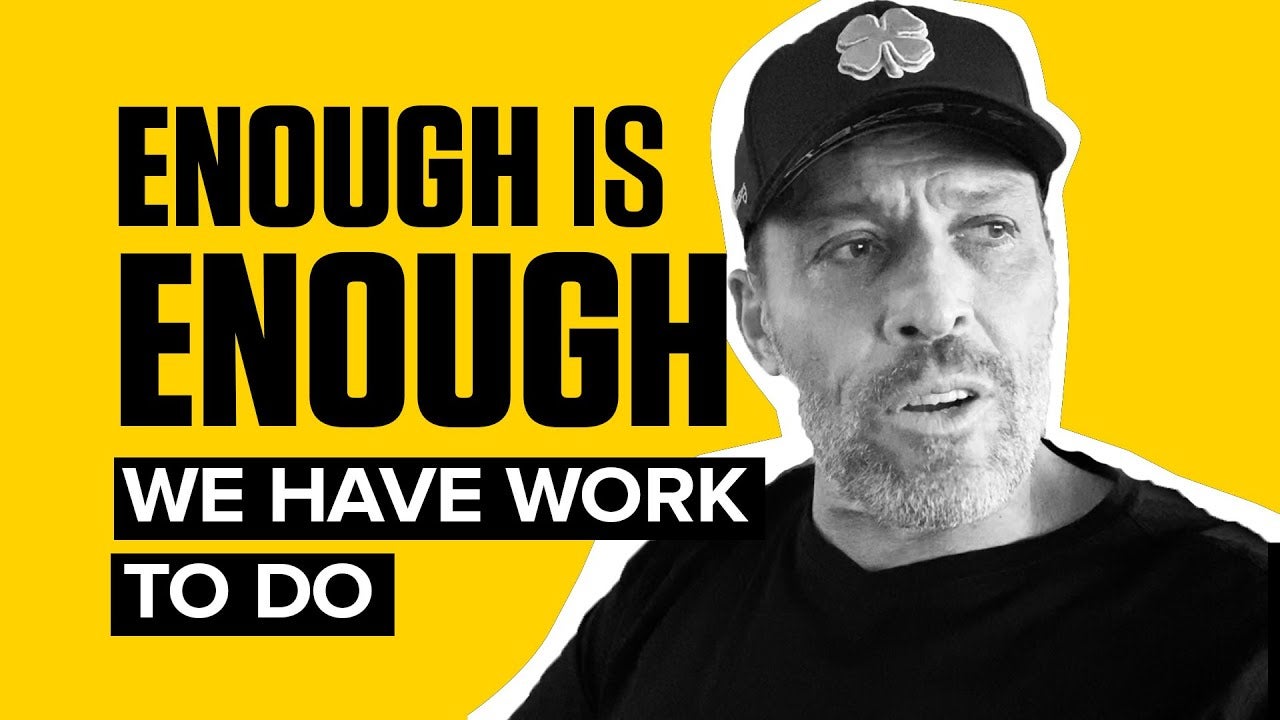
ENOUGH IS ENOUGH. WE HAVE WORK TO DO. Uploaded 04-06-20 Throughout my 40+ year career, I’ve been obsessed with helping people transform their quality of life. This can only be done when we realize: THINGS ONLY GET BETTER WHEN WE GET BETTER. Things only change when WE change. My call has ALWAYS been to RISE to the challenge that life brings to us. To find a way to do better, not only for ourselves and our own family, but for our communities, and the greatest good of our brothers and sisters on the planet. The unconscionable murder of George Floyd and countless others before him are an urgent call to ALL OF US in this country and all over the globe. I AM COMMITTED to doing all I can to be a part of the solution, and to help begin to put a STOP to racial injustice and violence, and the tragic loss of innocent life. If you’re reading this and are anything like me, you know the power of a TRUE COMMITMENT. ️ Join me now in this commitment to JUSTICE, HARMONY, COMPASSION, HIGHER TRUTH, LOVE,
🇺🇸 TWO NAVY SEALS. TWO INCREDIBLE JOURNEYS. ONE POWERFUL MISSION TO TRANSFORM YOUR FINANCIAL FUTURE! Michael Jaco welcomes fellow former Navy SEAL Larry Yatch, founder of TruPath Mastery, for an eye-opening conversation about success, leadership, financial trauma, and the hidden subconscious patterns that can keep even the most accomplished people from reaching their full potential. With 24 years as a Navy SEAL and 11 years as a CIA security operative, Michael shares the powerful lessons of mental discipline, intuition, and personal transformation that shaped his extraordinary journey. Larry brings 10 years of Navy SEAL service and an impressive career advising Fortune 50 executives. But despite achieving tremendous professional success, he discovered that the survival patterns that once made him successful were also keeping him trapped in his own business. THE BIG REVELATION: YOUR MONEY HABITS MAY HAVE VERY LITTLE TO DO WITH MONEY! From childhood programming and fear of scarcity to
Have you ever noticed how quiet grown-ups are on a crowded bus or train? It's like everyone has an invisible forcefield around them! People just stare at their shoes, read a book, or scroll on their phones in total silence. But why do we ignore each other? In 2014, scientists Nicholas Epley and Juliana Schroeder at the University of Chicago decided to find out! They set up an amazing experiment on a morning commuter train. They asked one group of tired people to sit in quiet solitude, and another group to actually strike up a conversation with a total stranger! The results were shocking. Even though people predicted that talking to a stranger would be super awkward and annoying, the group who said "hello" ended up having a much happier trip! It turns out, humans are naturally built to connect. Ancient Greek philosophers like Aristotle called us "social animals," and the Stoics believed we are all part of one big human family. Join Mira and Finn as they explore why a simple, safe "hello
Have you ever been told to do something just "because I said so"? It can feel super unfair! But did you know that just by being a kid, you have actual, real-life rights? In this thought-provoking episode of Philosophy is Not Boring, Mira and Finn dive into the incredible true story of Janusz Korczak! He was a brilliant doctor in Poland who strongly believed children are "people of today," not just adults-in-training. Imagine living in a place where kids actually get to make the rules! Dr. Korczak ran a famous orphanage where children had their very own court of law, and they could even put grown-ups (including Dr. Korczak himself!) on trial for being unfair! He completely changed how the world treats kids. His groundbreaking ideas even inspired the United Nations to create the Convention on the Rights of the Child—a giant global rulebook that says every kid has the right to be safe, to be heard, and even the right to play! Tune in to discover mind-bending facts about this hero of child
Did you know that over half the people on planet Earth share the exact same great-great-great-great grandfather in their faith? It is true! Join Mira and Finn as they explore the amazing ancient story of Abraham! Thousands of years ago in the ancient city of Ur, Abraham made a massive, brave decision. He packed up his entire family and walked right into the unknown desert! Why? Because he believed in one God who promised him his family would become as huge and uncountable as the stars in the night sky! Today, nearly four billion people trace their family tree of beliefs back to him! Discover why Jewish people call him their very first ancestor, why Christians see him as the ultimate hero of faith, and why Muslims honor him as the mighty prophet Ibrahim who helped build the Kaaba in Mecca! Three huge world religions, billions of people, and one incredible family story! Tune in to find out how people all over the world are so much more connected than we ever imagined. Get ready for a min
New competition formats should improve the experience for players as well as audiences.
Share your view, then see how readers voted. No sign-in required. This poll is shared across stories.
Do you agree or disagree?
Common Quandary
A Common Quandary to discuss
Another conversation to explore, separate from this news story.
Your adorable child could pay for college by becoming an influencer. Do you start filming?
Parents post cheerful videos of their young child and earn enough to fund the child's education. The child enjoys filming now but cannot understand what it means for strangers to watch those moments years later.
Can parents consent to a permanent public identity on a child's behalf?