Listen through the publisher, then discuss the episode here or arrange an in-person Roundtable. Your city determines where to meet.
Roundtables are designed for groups of four, with a shared subject and room for everyone to speak. Come for discussion, with no dating expectation.
If there's something you've been wanting to start but keep putting off, Dora has a question that might help: What's my role here? Rather than running through every task, obstacle, and possible outcome, try getting specific about the part that's actually yours. Dora found that once she understood her role in creating a mindfulness teacher training, the first step became obvious. You don't need a plan for the entire mountain today. You just need to know where to put your foot next.
Episode information is provided by the publisher. Listening takes place on the publisher’s service.
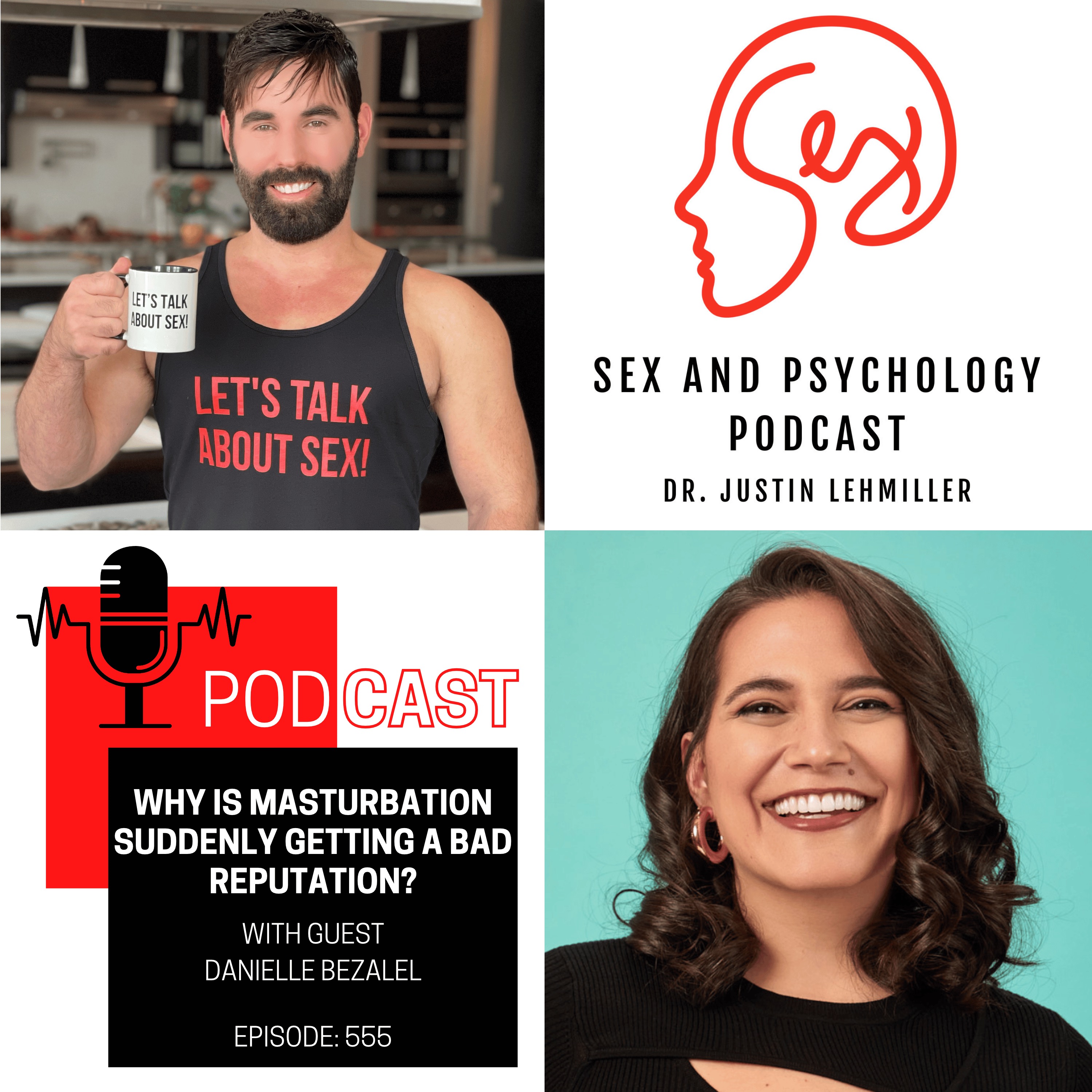
For centuries, people have been warned that masturbation could cause everything from hairy palms to blindness to insanity. Although these claims have been thoroughly debunked, anti-masturbation messages are making a comeback. But is there any science behind these claims? In this episode, we're going to separate fact from fiction when it comes to the supposed harms of masturbation and explore why so many people are convinced that something pleasurable might actually be bad for them. I am joined once again by Danielle Bezalel (https://www.sexedwithdb.com/), aka DB. Danielle earned a Master of Public Health with a focus on sexuality and reproductive health from Columbia University, and she is the Creator, Executive Producer, and Host of Sex Ed with DB (https://www.sexedwithdb.com/podcast). She is also the host of Pleasure People (https://pod.link/6819871177/episode/ZjcyZDA2ZGItMmYzMC00MzZlLWEwY2ItMDUwY2ZkMWJkYzAz), a new 6-part limited audio series exploring what happens when we treat ple
Ever meet someone new and spend the entire conversation trying to think of something interesting to say? The harder you try to be charming, the easier it is to miss the very thing that creates connection: what the other person is telling you. In this Social Intelligence Briefing from The Art of Charm, AJ Harbinger and Johnny Dzubak explain how to be more charming and charismatic by asking better questions, practicing active listening, and shifting your attention away from trying to impress people. Using a relatable conversation at a party, they reveal why common small-talk questions often lead nowhere, how to move beyond surface-level facts, and why genuine curiosity makes you someone people enjoy talking to. You'll also discover research on self-disclosure, follow-up questions, and meaningful conversations—and learn a simple technique you can practice immediately. What you'll learn: How to be charming naturally: Why trying to impress people can prevent you from building genuine connec
Happy Pot Luck Saturday! We talk Cary Grant, David Niven, Loretta Young, an angel with questionable intentions, and a Christmas movie that takes four nights to finish. We cover the 1947 classic The Bishop’s Wife and try to figure out how a film with five Oscar nominations earns only one and a half candy canes. We talk Cary Grant’s charm, David Niven’s stiff bishop, a wealthy widow who just wants to build a cathedral, and an angel who seems more interested in the bishop’s wife than saving Christmas. We talk Hollywood casting mistakes, Billy Wilder’s rewrites, and on-set tensions. We talk endless ice skating, glowing cathedrals, magically refilling bottles, self-decorating Christmas trees, and familiar faces from It’s a Wonderful Life. We talk Siskel and Ebert, critics who loved the wrong movies, and Kev rewriting the entire story into something we might actually want to watch. Plus, Whitney Houston and Denzel Washington in The Preacher’s Wife, Alastair Sim versus George C. Scott as Scro
If you're training hard but feeling wiped, eating a restricted diet for your gut, or just never hungry after a tough workout, you might not be getting the protein you need. This episode breaks down how much you really need and how to get it without upsetting your gut. YOU'LL TAKEAWAY: Macronutrients and calories 101, and how restrictive diets throw off your balance How your body digests protein, and why it matters before workouts The many roles of protein, from enzymes and iron storage to post-workout appetite How much protein you need, plus 3 easy low FODMAP ways to boost it — RESOURCES & LINKS MENTIONED: ⤵️ Want high touch coaching support for IBS & fuelling performance? Apply for coaching. (http://gutfitnutrition.com/apply) Free Training: How to Control IBS So You Can Fuel Your Training Without a Lifelong Low FODMAP Diet (https://gutfitnutrition.com/heal-ibs-training-live) Supporting your immune system when you're sick (Ep. 70) (https://open.spotify.com/episode/5bCto0jWLcbC5hQW4hrH6
What if the scale isn't telling you the whole story? Have you ever been consistent with your workouts, making better food choices, and really trying to take care of yourself, only to step on the scale and see absolutely no change? And just like that, your motivation takes a hit. You start questioning whether your workouts are working, whether you're doing enough, or whether you need to change something. But here's what I want you to understand: The scale is only measuring one small piece of your health and fitness journey. It doesn't measure how much stronger you've become, how much better your endurance is, how much energy you have, or how much easier it is to do things that used to feel difficult. And if you're only using the scale to determine whether you're making progress, you could be missing some pretty amazing changes happening in your body. Today, we're talking about five ways to measure your fitness progress beyond the scale so you can start recognizing the changes that actua
Dr. Shannon Sirois (https://prism.miami/) was focused on being as healthy and strong as possible but was plagued by a myriad of health problems despite a rigorous workout routine and what at the time was thought to be a "healthy" diet. By mainstream standards, she should have been at the top of her game, but instead she was exhausted, losing hair and in constant pain. Even with access to team doctors, several diagnostic tests, etc., none of the professionals could figure out what was wrong with her, and she never felt optimal during her collegiate athletic career. Determined to figure out why she wasn't feeling healthy and to be able to prevent others from going through what she went through, Shannon went on to get her doctorate in physical therapy with the intention of becoming an expert in human performance. When she graduated and entered the medical system, it became clear to her early on that nothing the system was doing was meant to solve a problem, it was merely treating symptoms
Have you ever been somewhere physically, but mentally you've already checked out? Rosie felt that way during her first cruise. Between the work she needed to do and the uncomfortable realization that she couldn't simply leave, she spent much of the trip disconnected from her surroundings. But when she finally stopped resisting the experience, she found a sense of ease she hadn't expected. Sometimes the hardest part of being present is letting go of the wish to be somewhere else.
We tend to think that great performers are simply born with the ability to handle pressure. But what if performing well under pressure is a skill we can actually develop? Dora sits down with Juilliard's Noa Kageyama and John-Morgan Bush to explore the psychology behind performance anxiety. They discuss how to practice in uncomfortable situations, create pre-performance routines, and build confidence through small wins. Whether you're giving a presentation, competing in a race, or stepping onto a stage, you can learn to show up more like yourself when it counts.
We're so used to thinking about where we're going that we rarely appreciate the time it takes to get there. But Rosie has a soft spot for the long, dusty highways of Central California, where the scenery repeats and the road seems to stretch forever. Those drives have become a place for memories, unexpected ideas, and moments of quiet reflection. What if the time we spend getting somewhere isn't something to get through, but something worth experiencing in its own right?
A workable temporary compromise is often better than delaying all action.
Share your view, then see how readers voted. No sign-in required. This poll is shared across stories.
Do you agree or disagree?
Common Quandary
A Common Quandary to discuss
Another conversation to explore, separate from this news story.
The stadium can ban violent fans by scanning every face at the gate. Would you walk in?
A stadium can use facial recognition to identify people banned for violence and shorten security lines. Every visitor would be scanned, error rates are not zero, and the resulting biometric data could become useful to police or advertisers.
How much privacy may a crowd be asked to trade for collective safety?