Listen through the publisher, then discuss the episode here or arrange an in-person Roundtable. Your city determines where to meet.
Roundtables are designed for groups of four, with a shared subject and room for everyone to speak. Come for discussion, with no dating expectation.
Time travel back to the Ice Age to meet some of the biggest and wildest creatures to ever walk the Earth! Imagine a world where a wombat was the size of a rhinoceros and a kangaroo was taller than a grown man! Welcome to Ice Age Australia, home of the magnificent megafauna. In this exciting episode, Mira and Finn uncover the jaw-dropping truth about these giant prehistoric animals. You'll meet Diprotodon, the massive 2,800-kilogram wombat with a backward-facing pouch, and Procoptodon, a giant kangaroo that was so heavy it had to walk on two legs instead of hopping! But watch out—there were scary predators lurking in the shadows too! Discover the terrifying "marsupial lion" called Thylacoleo, which dropped from trees using its opposable thumbs and sliced food with bolt-cutter teeth. Plus, brace yourself for Megalania, a venomous monster lizard longer than a great white shark! How did scientists find their massive bones hidden deep inside caves? And what caused these incredible creatures to disappear 40,000 years ago? Join the adventure and test your megafauna knowledge in our trivia quiz!
Episode information is provided by the publisher. Listening takes place on the publisher’s service.
Have you ever told someone, "Thanks a million!" or claimed you have "a million toys to clean up"? We use the word "million" all the time to mean "a whole lot," but have you ever stopped to wonder just how big a real million actually is? Join Mira and Finn on a mind-blowing math adventure as they discover the quiet power of giant numbers! Imagine counting one number every single second without ever stopping to eat or sleep. It wouldn't take a few hours or a long weekend—it would take you about eleven and a half days just to reach one million! And what about its giant neighbor, the billion? Counting to a billion the exact same way would take a whopping thirty-two years. That's a grown-up's whole life so far! In this amazing episode, we won't just look at numbers on a page; we’ll learn to feel their true size. Find out how much space a million grains of rice would take up, and discover exactly how far a million footsteps would carry you. Get ready to stretch your brain and learn why being
Did you know your mouth is a nonstop biological water park?! Every single day, your body makes enough saliva to fill up to four whole water bottles! But spit isn't just warm water—it's a magical biological potion packed with incredible superpowers. Join Mira and Finn as they explore the wild world of saliva! Discover how a microscopic machine called amylase starts digesting your favorite foods the exact millisecond you take a bite. Find out how spit turns sharp, crunchy chips into soft, squishy balls to protect your throat! Plus, did you know saliva actually builds invisible armor for your teeth by filling in holes with special minerals like calcium and phosphate? It even works as a magical liquid key to unlock flavors—without saliva, chocolate and pizza would taste like absolute cardboard! From amazing spit factories hiding inside your cheeks to real-life birds that build entire nests out of spit, get ready for a mind-blowing biological adventure! Tune in to find out why your mouth is
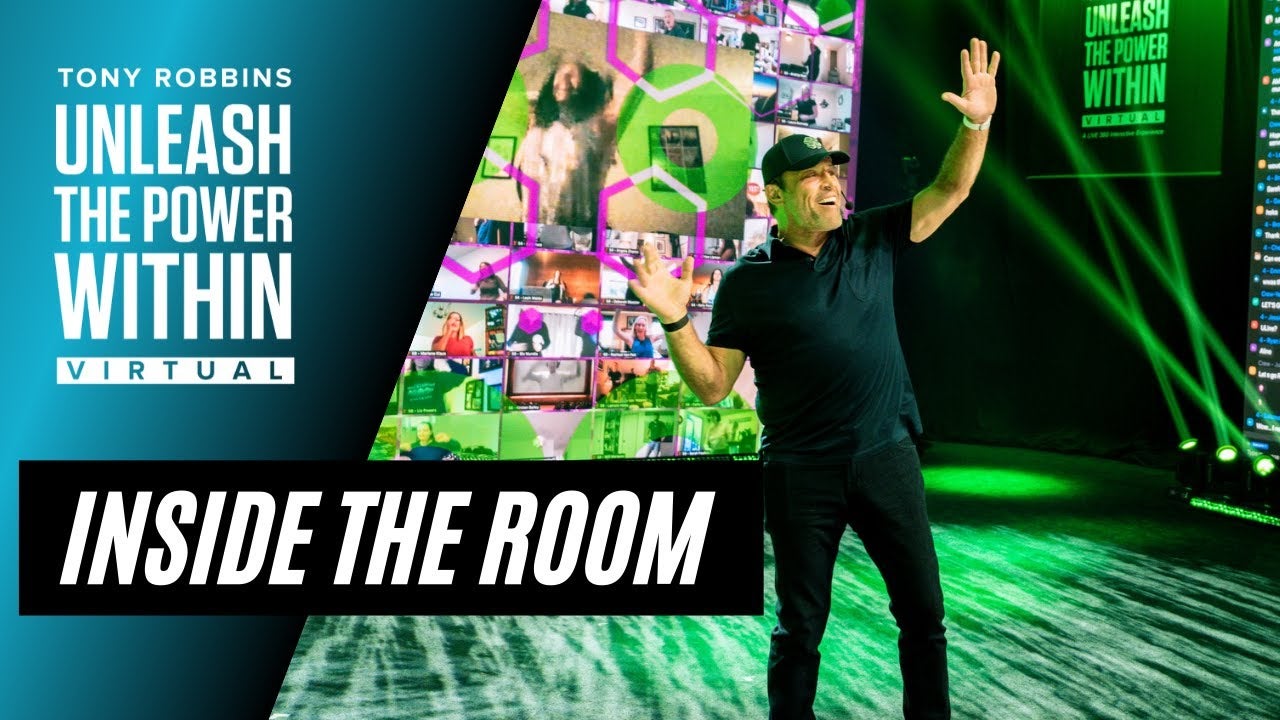
The FIRST Unleash the Power Within of 2022 just wrapped and we had 26,000 households from 151 countries around the world STEP UP and JOIN TOGETHER for one of our largest events in history! Uploaded 23-03-22 Here are some highlights from the week. Enjoy this video for a peek inside our virtual stadium It’s such a privilege to spend time with such DRIVEN, COMMITTED, LOVING SOULS all coming here with a hunger to GROW. For me, getting to hear your goals and witness each of you creating a unique life for yourselves, your loved ones, and your communities is deeply moving. We grow so we have MORE to GIVE, and the truth is, the world is a better, more beautiful and kind place because of people like YOU. If you’ve never experienced an Unleash the Power Within, it can be hard to imagine the HUMAN POTENTIAL and the RAW ENERGY⚡️ that converge over these four days and nights. It's electrifying to feel people from every walk of life, every background, every stage of life UNITE to find a deeper meani
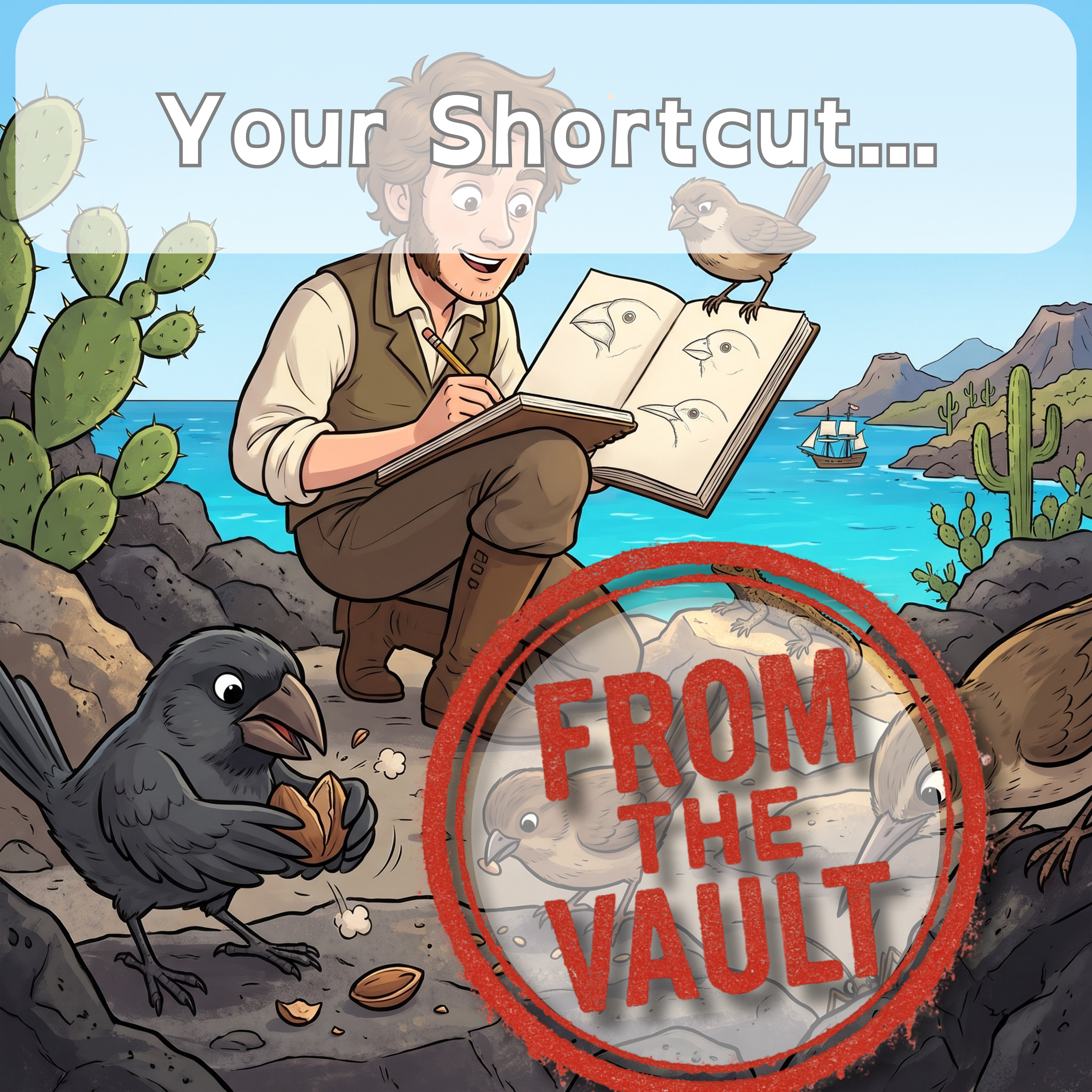
Tuesday 24 November marks the anniversary of the publication of Charles Darwin’s On the Origin of Species in 1859. So this week, we’re dusting off our Shortcut to Evolution to find out how living things change over generations and how all life on Earth is connected. Join Christie and Bryce as they travel back in time in the Squiz Kids Time Machine, dig into the clues fossils leave behind and meet two scientists who came up with the idea of natural selection independently, Charles Darwin and Alfred Russel Wallace. Along the way, find out what bird beaks can tell us about survival and how tiny changes in DNA can help shape life over generations. Listen carefully … there’s a S’Quiz at the end!
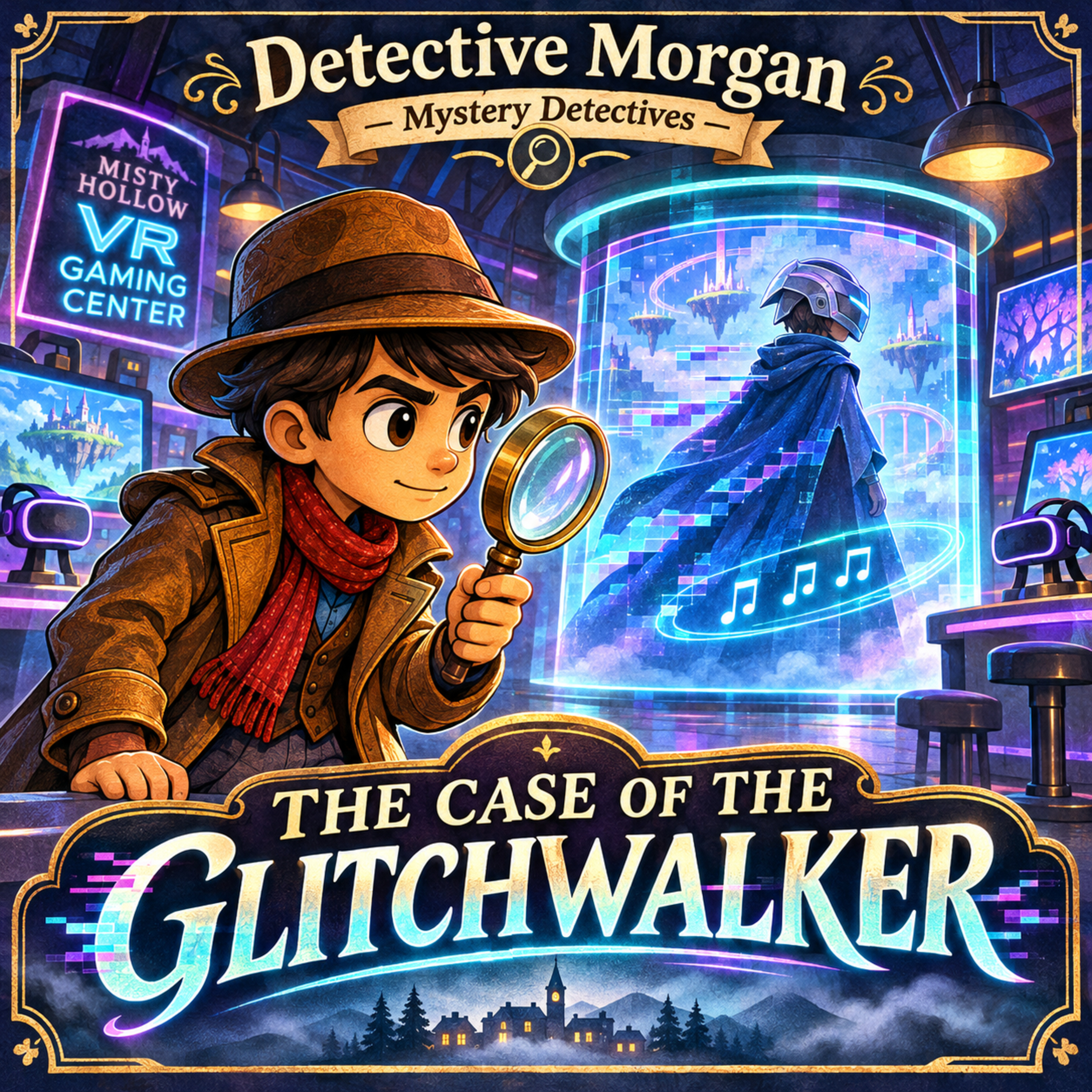
Something strange is happening at Misty Hollow's brand-new VR gaming center! Players are reporting a mysterious figure appearing inside their games. Wearing a silver helmet and a flowing blue cape, the stranger stands perfectly still... until someone approaches. Then, three strange electronic notes play, and the figure vanishes! Some say it's the Glitchwalker, a forgotten video game character wandering between virtual worlds, searching for a place to call home. But is it really a ghost in the game, a secret player, or something else entirely? Join Detective Morgan and his new friend Axel as they explore incredible virtual worlds, uncover three puzzling clues, and discover what's really happening behind the screen. Grab your detective notebook. Every mystery has a solution! A fun, interactive mystery adventure for curious kids and families.
Instant Access to your FREE training course: https://nci.university (https://nci.university/) Uploaded 27-07-25 This is the simulation you already live inside of—and you’ve been breathing it like oxygen since the day you were born. In this video, we expose the invisible machinery beneath modern life—how symbols have replaced truth, how marketing has replaced meaning, and how our desires are manufactured by the very system that feeds on them. Drawing from the work of Jean Baudrillard and the hidden mechanisms of simulacra, we walk you through 10 real-life “glitches” that reveal the truth: • Why your food is rendered, not real • How social media replaced memory • Why you take photos of things you never actually see • And why even your “rebellion” is likely pre-approved This isn’t a conspiracy. It’s a mirror. And once you see it, you can’t unsee it. simulation theory, simulated reality, Baudrillard simulation, are we in a simulation, hyperreality explained, social media illusion, digital
Have you ever seen pictures of giant stone heads sitting in the grass and wondered how they got there? Get ready for a mind-blowing adventure to one of the most remote places on Earth: Rapa Nui, also known as Easter Island! About 800 years ago, expert Polynesian sailors found this tiny island in the middle of the Pacific Ocean using only the stars and ocean currents to guide them. Once there, they carved nearly a thousand massive stone statues called moai! But here is the biggest surprise: these statues aren't just heads—they have full bodies buried underground! Some weigh as much as 40 cars, and the islanders moved them without wheels, cranes, or metal tools. How did they do it? The local legends say the statues literally walked to their places, waddling side to side with the help of ropes and incredibly smart human engineering! Join Mira and Finn as they uncover the secrets of the moai, find out how the island got its English name from a Dutch captain, and learn all about the giganti
Did you know your favorite morning breakfast used to be a super-serious health food that could literally break your teeth? In the 1890s, Americans were eating huge, greasy breakfasts like half-pound steaks and heavy potatoes. People were getting terrible stomach aches! To fix this, doctors started creating healthy, meat-free alternatives. Enter the very first breakfast cereal: Granula! It was a food so rock-hard that you had to soak it overnight just to chew it! But the real magic happened in Battle Creek, Michigan, at a massive health spa. Dr. John Harvey Kellogg and his brother Will were trying to make plain health bread for their patients. One day, Will accidentally left a pot of boiled wheat out for hours. Instead of throwing it away, they rolled it out, and it magically formed hundreds of crispy flakes! The patients went wild! But Will and John had a massive fight over adding sugar, leading to a giant cereal war with rival inventors like C.W. Post! Join Mira and Finn as they crunc
Imagine running an empire of ten million people without ever writing down a single word! Welcome to Tawantinsuyu, the massive Inca Empire hidden high up in the towering Andes Mountains! In 1438, a brilliant ruler named Pachacuti transformed the mountain town of Cusco into a glittering capital city shaped exactly like a giant puma. But how did they keep track of everything without pencils or paper? They used a genius math system made of colorful knotted strings called a quipu! To send important messages, they didn't use horses or wheels. Instead, they relied on superhuman relay runners called chasqui, who sprinted across scary woven grass suspension bridges and could travel 150 miles in a single day! They even built giant green staircase farms right into the steep mountainsides to grow huge amounts of freeze-dried potatoes. And guess what? They kept a very fluffy, squeaky pet in their kitchens for dinner—guinea pigs! Although the Spanish explorer Francisco Pizarro eventually brought dow
Reporting on court cases should protect personal privacy when details add little public value.
Share your view, then see how readers voted. No sign-in required. This poll is shared across stories.
Do you agree or disagree?
Common Quandary
A Common Quandary to discuss
Another conversation to explore, separate from this news story.
A donor's family wants to hear their loved one's heart beating in you. Do you meet them?
A transplant recipient receives a letter from the donor's family asking to meet. The recipient feels profound gratitude but also discomfort and wants their recovery to remain private and separate from another family's grief.
Can receiving an extraordinary gift create a personal obligation to strangers?