What You Need To Understand About Jensen Huang's Drama
81 min
Listen through the publisher, then discuss the episode here or arrange an in-person Roundtable. Your city determines where to meet.
Roundtables are designed for groups of four, with a shared subject and room for everyone to speak. Come for discussion, with no dating expectation.
Jensen Huang is out at NVIDIA and the stock is down 26%, so Eric and Neil look at it through an entrepreneur's lens. Neil explains why the company's quiet PR response let memes write the story and cost roughly a trillion dollars in market cap, and what a founder CEO is really worth. Then: HubSpot's founder returns for Day 1, why one-star Glassdoor reviews can help you hire, Mandarin Oriental vs Motel 6 companies, takeaways from the YPO Global AI Summit, the Turkish rug funnel, and what they changed their minds on over the last 12 months. Nothing here is financial advice. A grounded episode on owning your narrative before someone else does. Key takeaways ◾If you don't control your narrative, the internet fills the space ◾Honest negative reviews can attract the right hires ◾Marketing compounds when you skip the shortcuts Chapters 00:00 Jensen is out and NVIDIA is down 26% 01:42 Neil's trade after the news broke 04:27 The marketing lesson: sell the news 05:21 The PR response that cost $1 trillion 07:12 Memes filled the silence 08:55 Should the board have ousted him? 10:13 Why founder CEOs are a different breed 11:34 HubSpot's founder is back: Day 1 13:51 When one-star Glassdoor reviews help hiring 16:12 Reading the reviews out loud 17:28 Mandarin Oriental vs Motel 6 companies 19:24 How Neil picks a hotel 22:44 Inside the YPO Global AI Summit 23:32 The team that got 80x faster 25:39 Speed vs quality is a false trade-off 25:52 Technical debt as good debt 26:58 Selling a cheaper fix for technical debt 28:23 AI hustles: data brokers 30:25 AI transformation theatre 31:38 Why marketing shortcuts backfire 33:13 Nine years to enterprise clients 35:24 Compounding and the horse meme 36:22 The horse riding upsell 39:53 The Turkish rug funnel 42:47 The gas station loss leader 46:25 What we changed our minds on 48:50 When travel is worth it 51:36 Retraining vs hiring AI-native people 53:47 Content we stopped making 56:18 Engagement that never becomes revenue 59:40 How GaryVee stays in his lane 1:02:05 What we held steady on 1:03:22 Elon: the general at the front lines 1:05:31 Neil's M&A negotiation 1:09:25 The agency deal that was too good to be true 1:12:08 Buying the incumbents 1:13:33 Agencies: a leads problem or a delivery problem? 1:15:31 Cracked marketers vs cracked engineers
Episode information is provided by the publisher. Listening takes place on the publisher’s service.
This episode is brought to you by Sarmaya Partners. Learn more about Sarmaya’s LENS ETF, their full data and comparison, including performance here: https://sarmayaetf.com/ In this episode of Other People's Money, Max Wiethe sits down with Muddy Waters Capital founder Carson Block to discuss his firm's explosive new short thesis on Nvidia. Block breaks down the alarming connections between a former Nvidia executive and a former SMCI executive recently implicated in a major chip smuggling scandal. The conversation dives deep into the national security implications of dual-use technology and how the ongoing geopolitical tug-of-war between the US and China is reshaping the semiconductor sector. Tune in to hear why Block believes this scandal goes far beyond CEO indiscretions and could trigger a massive regulatory reckoning for Silicon Valley's biggest players. Follow Muddy Waters on X: https://x.com/muddywatersre Follow Max on X: https://x.com/maxwiethe Follow Other People’s Money on: App
You've gotten very good at pretending you don't feel it. Uploaded 21-08-26 Maybe it's a conversation with someone you love. Someone you work for. A partner, a parent, a friend who's been quietly taking more than they give. Or the hardest one of all — a conversation with yourself, the one where you finally admit something you've refused to say out loud for years. You know exactly which one I'm talking about. You felt it the moment I said the word. A name came up, or a face, and your stomach did something small and unpleasant, and you pushed it back down where it's been living. That flinch is the most honest thing that's happened to you all day. Here is the truth: the life you say you want — the freedom, the peace, the relationship, the income, the respect — there's a very good chance it's on the other side of one conversation you keep refusing to have. Not ten. One. This seminar unpacks the single mechanic behind a stuck life: the necessary conversation you keep treating like a locked d
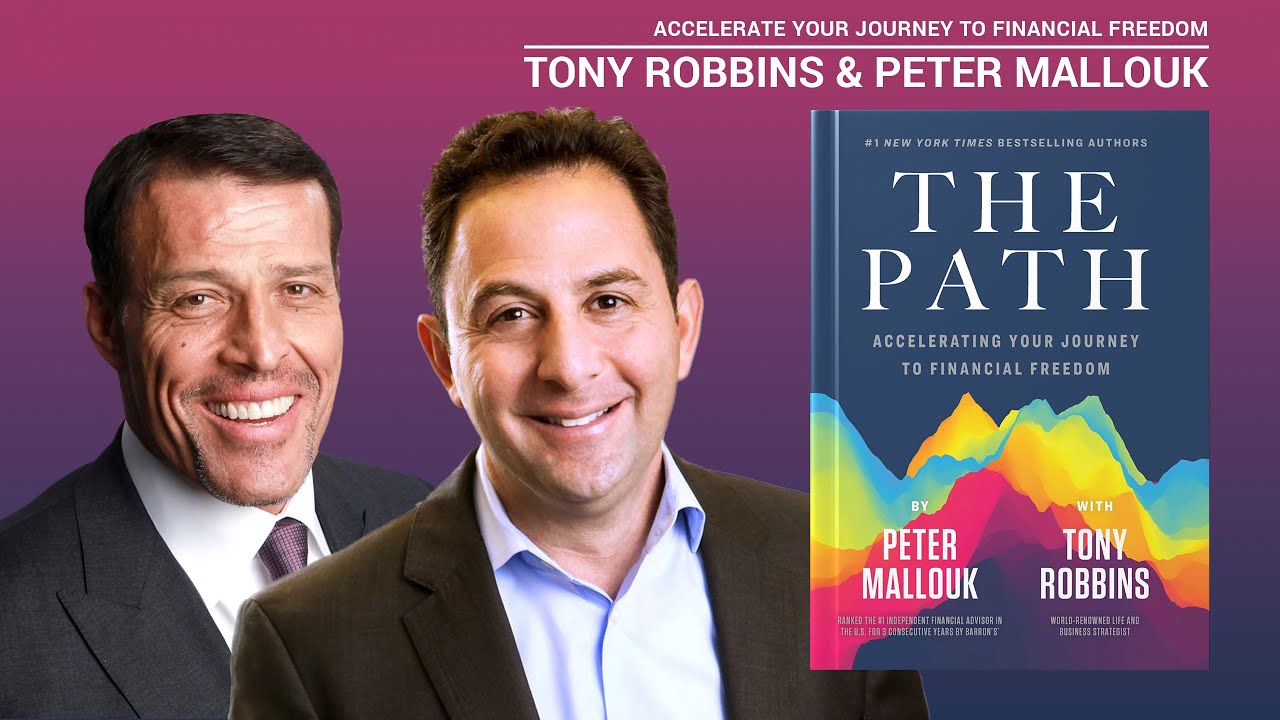
This interview with Peter Mallouk, global finance expert and co-author of The Path, pulls the curtain back on what’s really happening in today’s marketplace – and shows you how to leverage it to build true financial independence. It’s a sneak peek of what’s in the book, packed with valuable advice from one of the greatest minds in finance: Mallouk has been ranked the #1 financial advisor by Barron’s and grew his wealth management firm, Creative Planning, from managing $30 million in assets to more than $50 billion. Uploaded 18-10-20 From financial principles like inflation, bear markets and taxes to the psychology of success, in this video Mallouk shares a few of the most essential concepts from the book. He’ll go over the importance of getting laser-focused on your goals, an idea that Tony Robbins himself also champions. As Peter explains, superstar athletes didn’t just wake up one day and start working out. They know their sport and they know what they have to do to win. This applies
Car loans, ATO debt, and rising mortgage costs are eating into investors' cash flow, with one couple saving $30,000 a year in repayments by restructuring their loans. Brokers explain when consolidating loans can work and when it can backfire. On Which Mortgage, Alex Whitlock speaks with Finni brokers Eva Loisance and Costa Arvanitopoulos about how debt consolidation can help property investors manage rising repayments, reduce interest costs, and regain control of their cash flow. The brokers share the case of a business-owning couple paying more than $13,000 a month across their home loan, car and truck finance, personal loan, and ATO debt. By refinancing against the equity in their investment property, they reduced monthly repayments by up to $3,000 and freed up cash flow without rushing into another purchase. The discussion explores when consolidation makes financial sense, the danger of rolling unsecured debts into a mortgage and why borrowers need to maintain their old repayment ha
Get the 200+ Page Optimal Living Daily Workbook (PDF) - Free. Want to turn today's episode into an actionable plan? Episode 3779: Joshua Fields Millburn and Ryan Nicodemus of The Minimalists explain the first steps they took to regain control of their money after years of six-figure debt. It starts with a written monthly budget that sorts every expense into essentials, nonessentials and junk, plus a small safety net for emergencies, and then reframes investing as simply paying your future self, automated so you never miss the money. Read along with the original article(s) here: https://www.theminimalists.com/freedom/ Quotes to ponder: "Most of us have no idea where our money is going. We think we know, but we don't really know." "The stricter you are, the sooner you'll be free." "Right now is the best time to start planning for your future." Airwallex is a financial technology company, not a bank. Services in the US are provided by Airwallex US, LLC, a licensed money transmitter (NMLS
Everyone is saying the same thing: higher rates are depressing the usual AI buy-the-dip mentality. Investors supposedly became less enthusiastic because the Federal Reserve is, in its view, tightening, bond yields are or were rising, and so the discount rate applied to future profits is becoming more painful. Or something. That explanation isn’t just incomplete, it’s dead wrong. Eurodollar University's Money & Macro Analysis ---------------------------------------------------------------------------------- That’s exactly what Monetary Metals does. No selling. No trading. Just more gold every month. Check it out here: https://monetary-metals.com/snider ---------------------------------------------------------------------------------- We need to confront our biggest challenge, but hardly anyone knows what it truly is or how to do it. Eurodollar University Live in February 2027 will change all that. Join us and fight for America's future. Start with the next generation. ------------------
Growth Newsletter: https://levelingup.beehiiv.com/subscribe Need marketing help? Visit: https://www.singlegrain.com/ and https://npdigital.com/ Want to recruit great marketers? Find them here: https://marketingschool.io/hire Jensen Huang has resigned as NVIDIA CEO, and Eric is in Taiwan this week asking the chip executives who supply NVIDIA what happens next. Their answer: he needs to come back, because deals like the one with TSMC were done on a handshake. Eric and Neil look at the New York Times report on Taiwan's reaction, the employee posts with millions of views, Polymarket's odds and a $255 million lawsuit over a social media post. Then Eric takes you inside Foxconn, which makes 46% of the world's electronics, and the YPO India members on the trip. Neil explains how to get picked by AI agents and a simple test that shows what your ads really drive, and they finish with cultural hacking for YouTube thumbnails and charts from TSMC. Nothing here is financial advice. A grounded look
Growth Newsletter: https://levelingup.beehiiv.com/subscribe Need marketing help? Visit: https://www.singlegrain.com/ and https://npdigital.com/ Want to recruit great marketers? Find them here: https://marketingschool.io/hire Eric hosted the YPO Global AI Summit and brings back what he learned, starting with a team whose engineers got 80 times faster and why speed versus quality is now a false trade-off. Eric and Neil get into when technical debt is good debt, the AI hustles showing up around company data, and why a lot of AI transformation work is theatre. Neil explains why marketing shortcuts backfire and why the campaigns worth running are the ones that compound. Then three funnels worth studying: the horse riding upsell, the Turkish rug shop and the gas station loss leader. A useful episode on building marketing that keeps paying off. Key takeaways ◾Speed and quality are no longer a clear trade-off ◾Marketing compounds when you skip the shortcuts ◾A loss leader works when the margin
Growth Newsletter: https://levelingup.beehiiv.com/subscribe Need marketing help? Visit: https://www.singlegrain.com/ and https://npdigital.com/ Want to recruit great marketers? Find them here: https://marketingschool.io/hire Eric ran an analysis of the last 12 months of Marketing School to find what he and Neil changed their minds on. They cover when travel and speaking are worth it, why broad retraining gave way to hiring AI-native people, the content formats they stopped making, and why engagement that never becomes revenue is a trap. Then what held steady, Elon Musk's line about the general at the front lines, lessons from Neil's M&A negotiations, an agency deal that looked too good to be true, and whether cracked marketers are now more in demand than cracked engineers. A candid episode on updating your beliefs as the market moves. Key takeaways ◾Judge content by revenue, not engagement ◾Ask sales which problem started the conversation ◾Case studies bring better leads than download
Preserving historic places can justify limiting redevelopment.
Share your view, then see how readers voted. No sign-in required. This poll is shared across stories.
Do you agree or disagree?
Common Quandary
A Common Quandary to discuss
Another conversation to explore, separate from this news story.
You find a rare library book your father kept for forty years. Do you return it anonymously?
While clearing your father's attic, you find a rare book stamped by the local library and due in 1986. The library would be thrilled to recover it, but returning it openly would expose a secret he apparently kept for decades—and might produce a spectacular overdue fine.
Does making an old wrong right require admitting who did it?