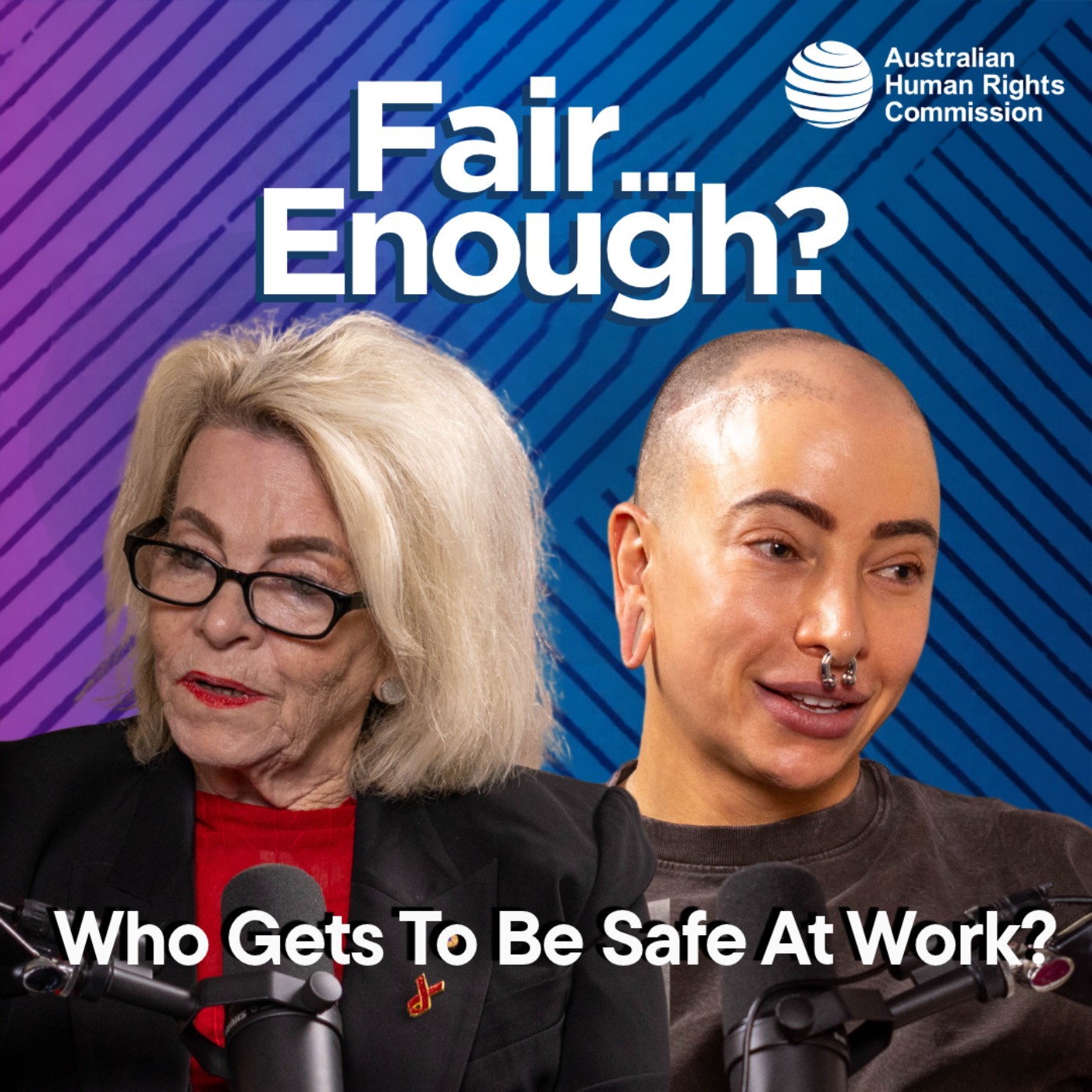
Who Gets to be Safe at Work? with Julie Bates and Mish Pony
31 min
Listen through the publisher, then discuss the episode here or arrange an in-person Roundtable. Your city determines where to meet.
Roundtables are designed for groups of four, with a shared subject and room for everyone to speak. Come for discussion, with no dating expectation.
We often talk about workplace safety as a universal right. So why do some workers find it harder than others to access the protections many of us take for granted? In this episode, host Dr Anna Cody explores how recognition, stigma and social attitudes influence who gets protected, who gets heard, and whose safety concerns are taken seriously. Dr Cody speaks to sex worker and rights advocate Julie Bates AO and Mish Pony, former CEO of Scarlet Alliance. The episode asks a simple question: if everyone deserves safety at work, what happens when recognition becomes a condition of protection? Guests: Julie Bates AO and Mish Pony Host: Dr Anna Cody Produced: Jay Gasser & SoSo Media Editors Note: This episode was recorded while Mish Pony was still in the role of Scarlet Alliance CEO. Hosted on Acast.
Episode information is provided by the publisher. Listening takes place on the publisher’s service.
In this video, Disability Attorney Walter Hnot of the Disability Resolution Law Firm goes over the rental home that will replace the lost retirement benefits I will likely face one day. Like the content? Review us here: https://g.page/r/CcwyektC7nCPEAg/review . If the link does not work, Google: Disability Resolution, P.A. Welcome to the largest Social Security Disability Tutorial Video Library On Earth. PRIVATE ONE HOUR PHONE CALL THIS IS HOW YOU CAN GIVE BACK TO HELP GROW THE CAUSE: Option 1: Leave 5 |==================5 STAR REVIEWS==================| Google (Search Disability Resolution Orlando, FL)- https://www.google.com/search?authuse... (https://www.google.com/search?authuse...=) AVVO (Search Walter Hnot) - https://www.avvo.com/attorneys/32817-... BBB (Search Disability Resolution Orlando, FL)- https://www.bbb.org/us/fl/orlando/pro... MARTINDALE (Search Walter Hnot Orlando, FL) - https://www.martindale.com/attorney/w... Option 2: Donate Student Loans : https://www.gofundme.com/
In this conversation I’m speaking to Rebecca Olive. Rebecca is a feminist cultural studies researcher whose work explores how everyday sport and leisure are shaped by cultural politics, relationships between humans and non-humans, environmental wellbeing, and social media. My understanding of her research is she looks very closely at why people do things that make up a culture, and the meaning of everyday practices in people’s lives. We chatted about why people are drawn to the ocean in the first place and what keeps us coming back. How swimming and surfing becomes more than recreation, and into an emotional relationship that shapes how we understand risk, shark risk, and our place in it. She also discusses how storytelling, social media and drone footage may influence our perception of danger and coexistence. Apologies, I’m a Bit under the weather in this one and in the opening couple of minutes, probably would have been a good idea to have the microphone turned on. Recorded at 3pm on
Master the skills that change lives — enroll in your free human behavior course today: https://nci.university/learn Uploaded 21-03-26 The Behavior Operations Manual: https://a.co/d/0fW16gWU Six Minute X-Ray Book: https://a.co/d/0gzrKcBF You didn't choose what you believe. You think you did. But the mechanism that put those beliefs inside you is the same one running through every cult, every viral movement, every argument where facts bounced off like they were irrelevant. It has a name. And once you see it, you'll never not see it. ───────────────────────── This video breaks down the Cognitive Viral Loop — a five-stage replication cycle that operates inside every human mind on earth. Including yours. Right now. Here's what we cover — and why the order matters: Stage 1 — Attachment (0:00) Ideas don't enter through logic. They enter through something already active inside you. Fear. Belonging. Moral certainty. If you don't know what your active receptors are, you're an open door. This sec
Alan Milburn wants to scrap Pip for under-25s and replace the Universal Credit health element with a new youth allowance. He says the plan could get 440,000 young people into work within a decade and eventually save £3.6 billion a year. With 981,000 young people not in education, employment or training, nobody disputes the scale of the problem. They disagree about its cause. Milburn insists this is not a generation lacking resilience. Yet his own report finds that benefit claims have outpaced any rise in ill health, and it warns of overdiagnosis of ADHD and autism. Michael Simmons puts that contradiction to Milburn directly. He also asks whether the National Insurance and minimum wage rises are pricing young people out of the jobs they need most. Can welfare reform get a generation back to work – or is the deeper problem a loss of resilience that no policy can fix? This episode is brought to you by Raymond James. Combining deep insights into who you are with our financial expertise, th
Jensen Huang stepped down as Nvidia CEO on November 12, 2026, after reports about an extramarital relationship with Alice Huang, a former senior executive at Megaspeed. U.S. intelligence reportedly viewed her as an asset working for Beijing. That allegation is not a conviction, and it is not the same thing as proof Nvidia secrets changed hands. Tony Brueski brings in retired FBI Special Agent Robin Dreeke, former leader of the bureau’s Counterintelligence Behavioral Analysis Program, for the question behind the headlines: how does somebody who helped build one of the world’s most important technology companies fail to recognize a possible intelligence threat in his personal life? Huang apologized to his family and Nvidia employees for infidelity. The board announced an outside investigation, while saying it knew of no reason to believe national security or proprietary information was compromised. Reuters subsequently reported that Huang had previously told Nvidia leaders his encounters
This week on The Necessary Conversation, it's Chad, Haley, and Mary Lou. Bob is still recovering but sent in a video message about Trump calling Putin his friend that we watch together. 🇷🇺 Trump held the first-ever three-way talks with Putin and Xi, called it a "12 out of 10," and produced nothing. Then at a press conference he called Putin his friend — and when asked if Putin is a friend to America, the president of the United States said, "I can't speak to America." That same day, Trump's friend Putin launched massive strikes into Ukraine, hit Poland with two missiles — an act of war against a NATO ally — then struck near a Ukrainian restaurant and drone-bombed the first responders, killing a 7-year-old child and a 20-year-old paramedic. We watch Bob's video and ask Mary Lou: is Russia our friend? 🇨🇳 The House Foreign Affairs Committee revealed Trump's Commerce Department approved nearly 880,000 advanced AI chips for Chinese military-linked companies including Alibaba, Tencent, a
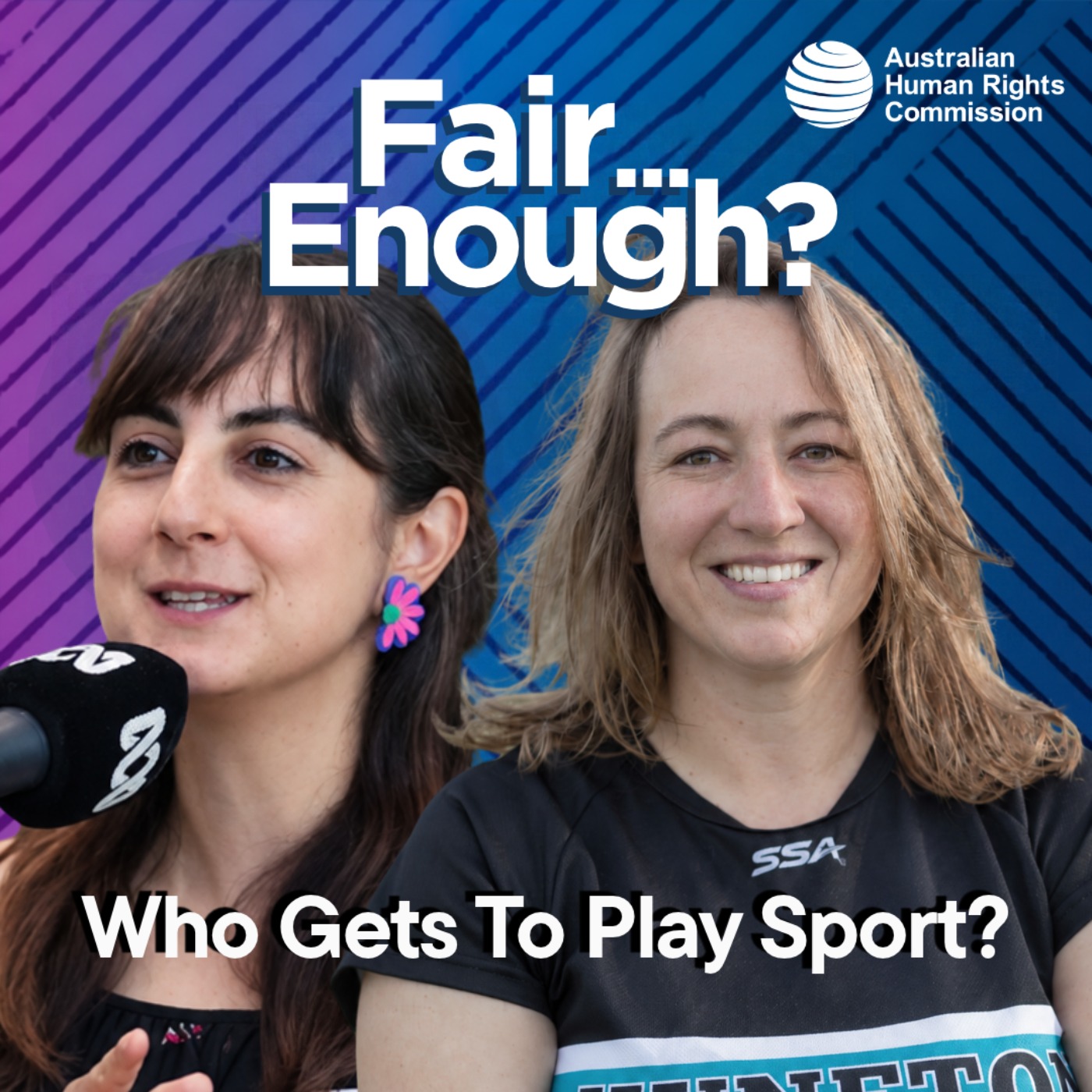
We like to think that sport is one of the fairest parts of society. The fastest runner wins. The best team succeeds. Talent rises to the top. But what if success in sport is shaped long before the game begins? In this episode, Dr Anna Cody speaks with ABC Sport Deputy Editor Amanda Shalala and community sport advocate Natalie Korinfsky about the systems that influence who participates in sport, whose achievements are celebrated and who gets access to opportunities. Together, they explore how media coverage, investment, facilities, leadership and cultural expectations help shape sporting pathways from grassroots participation to elite competition. They also examine why gender inequalities continue to persist, even in environments that pride themselves on being merit-based. This is a conversation about how ideas of fairness are created, and why equal opportunity often begins long before kick-off. Guests: Amanda Shalala and Natalie Korinfsky Host: Dr Anna Cody Produced: Jay Gasser & SoSo
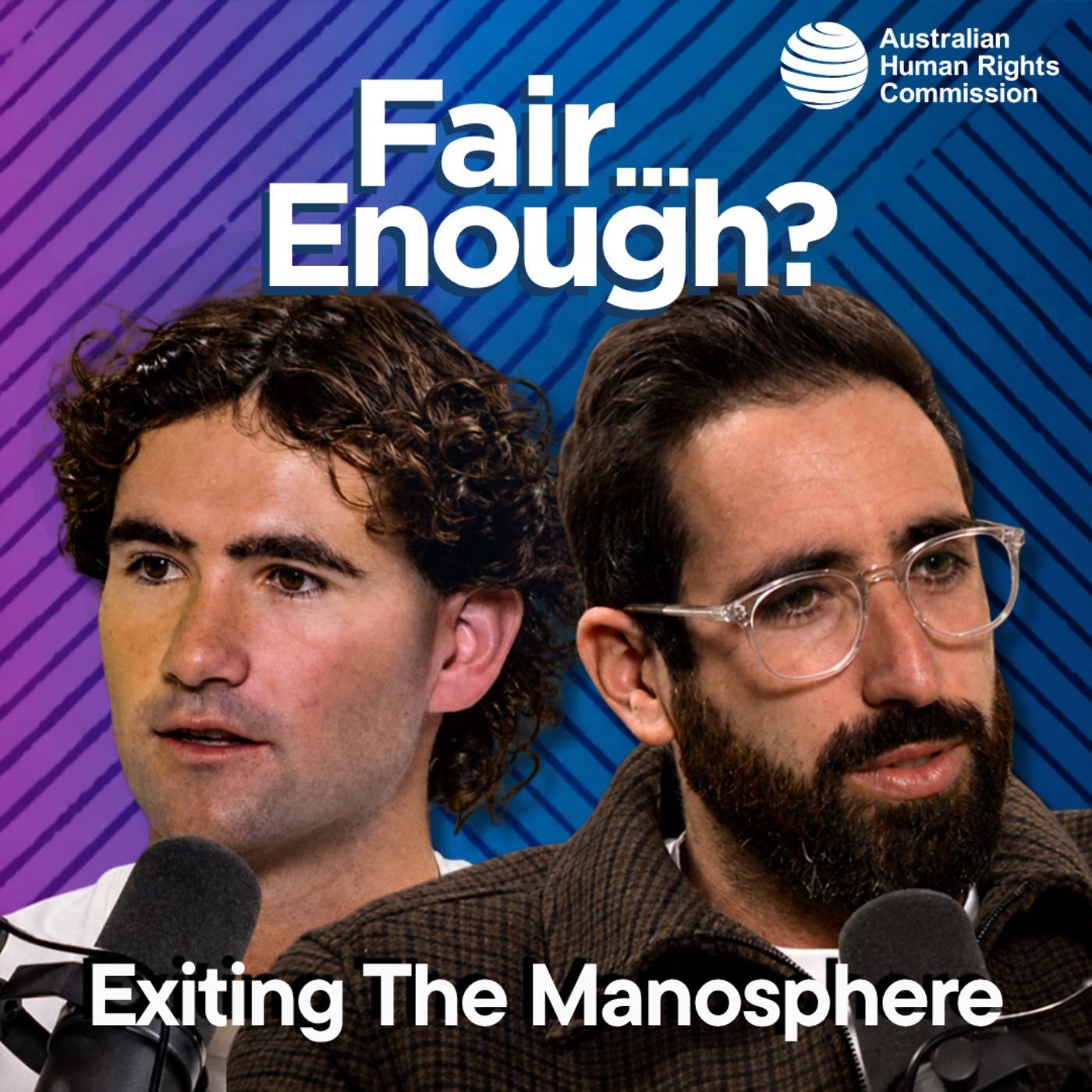
A young man searching for confidence, purpose and belonging finds himself pulled into the manosphere. Flynn Martin shares how algorithms and online culture drew him in, and what ultimately led him to breaking away. Hosted by Sex Discrimination Commissioner Dr Anna Cody, the episode also features Dr Zac Seidler, Global Director of Men's Health Research at Movember, who explores why these spaces resonate with so many young men in the first place. Most importantly, they examine what it takes to leave. Because if these spaces are filling a gap, the real question isn't simply why young men are being drawn in. It's what they're looking for in the first place. Guests: Flynn Martin and Dr Zac Seidler from Movember Host: Dr Anna Cody Produced: Jay Gasser & SoSo Media. Hosted on Acast.
Athletes should have more influence over schedules affecting their health.
Share your view, then see how readers voted. No sign-in required. This poll is shared across stories.
Do you agree or disagree?
Common Quandary
A Common Quandary to discuss
Another conversation to explore, separate from this news story.
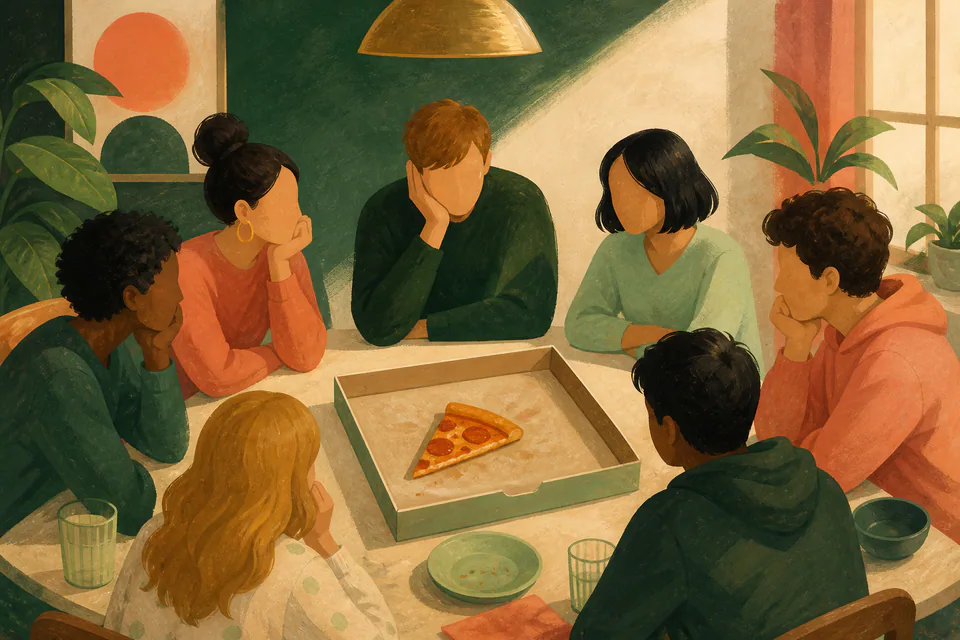
One slice of pizza remains and everyone is pretending not to want it. Can you take it?
Six friends have been circling the last slice of pizza for twenty minutes. Nobody claims it when you ask, yet two people keep glancing at the box. You are still hungry and paid the same share as everyone else.
Does politeness require leaving something that nobody will openly claim?