Why Do I Overeat Even When I'm Full? Use the Hunger Fullness Scale to Notice What's Driving It and Learn When to Comfortably Stop Eating / Ep #214
24 min
Listen through the publisher, then discuss the episode here or arrange an in-person Roundtable. Your city determines where to meet.
Roundtables are designed for groups of four, with a shared subject and room for everyone to speak. Come for discussion, with no dating expectation.
Have you ever kept eating after you knew you were full, with no idea why you didn’t stop? Do you beat yourself up afterward for knowing better and doing it anyway? In this episode, Elizabeth shares her answers to a question you’ve probably asked yourself: Why do I overeat when I’m already full? We get into the difference between fullness and satisfaction, the most common reasons for eating past fullness, and how to respond without piling on food guilt. You’ll learn: The intuitive eating concept Elizabeth teaches for when the food is too good to leave on the plate How to stop eating when full by recognizing what’s happening first, then deciding on purpose The four responses Elizabeth offers once you spot it, and why eating it anyway made the list Why being full but not satisfied sends you back to the kitchen after dinner What the satisfaction principle is, and why it sits at the center of intuitive eating How arriving at a 1 or 2 on the hunger fullness scale changes how fast you eat A common source of mindless eating Tara sees in the moms she works with The signs that eating past fullness is a pattern to explore, and when to let it go If you’ve ever finished a meal asking how do I stop overeating, this conversation offers a kinder place to start than another food rule. Let’s rebrand wellness together! Elizabeth, Tara & Maria Take a well-deserved break and recharge your mind and body! Join us for an hour of guided relaxation for just $20. Connect with us! Elizabeth Harris, MS, RDN, LDN 5 Mistakes that Keep You Stuck Thinking About Food 24/7 (https://elizabethharrisnutrition.com/reclaim-your-brainspace-from-food) Tara De Leon, Master Personal Trainer Email: [email protected] Maria Winters, LCPC, NCC
Episode information is provided by the publisher. Listening takes place on the publisher’s service.
Happy Sunday! Welcome to Heal Squad’s The Sunday Set Up. Life lessons to help you start the week. How much of success comes down to simply showing up? This week, we talk keeping an open mind, taking chances, and recognizing the doors that open along the way. From Olympic athletes appearing on national television alongside Mercedes Moné to performers who keep showing up week after week hoping for their big break, we explore why success isn't always about talent or luck. Sometimes it's about making connections, putting in the effort, and being willing to try without knowing what we'll get in return. We talk knowing when to stop investing time in people who aren't willing to help themselves, and why even experiences that don't work out can teach us something valuable. The takeaway: don't wait for the perfect moment or expect someone else to make things happen. Be willing to take a chance, walk through the doors that open, and remember that half of life is just showing up. Plus, a little b
Today, Mel is doing something she's never done before on The Mel Robbins Podcast. She's bringing members of her team into the studio for live coaching with world-renowned communications expert Vinh Giang. Vinh is known for teaching millions of people online how to stop sounding insecure, speak more clearly, and get people to listen when you talk. And when you hear him coaching today, it will be like he’s coaching you. One person freezes when they're put on the spot. Another can't stop interrupting people. Someone else has great ideas but stays quiet because they're afraid of being judged. Does any of that sound familiar? And Vinh isn't just giving advice. He's coaching real people through practical exercises, right there in the studio, so you can hear the difference and start making those same changes in your own life. As Mel says, put yourself in their shoes. As Vinh works with each person, you'll recognize things you struggle with, too. You'll learn: -What to do when your mind goes b
Is your body weight stable, but you're still not eating enough to properly fuel your training, recovery, and overall health? Introducing Why Stable Weight Doesn't Always Mean You're Eating Enough from Jeff Hoehn of the Mind Muscle Connection Podcast (https://www.buzzsprout.com/1508401). Just because your weight isn't changing doesn't necessarily mean you're adequately fueled. In this episode, Jeff breaks down why maintaining a stable body weight doesn't always mean you're meeting your body's energy needs, especially if you're training hard, staying lean, or spending long periods dieting. You'll learn: Why stable body weight doesn't automatically mean adequate energy availability Who is most at risk of underfueling, even when their weight isn't changing How high training output, staying too lean, and chronic dieting can contribute to low energy availability The potential signs of underfueling, including changes in performance, recovery, hormones, and menstrual health Why spending too lo
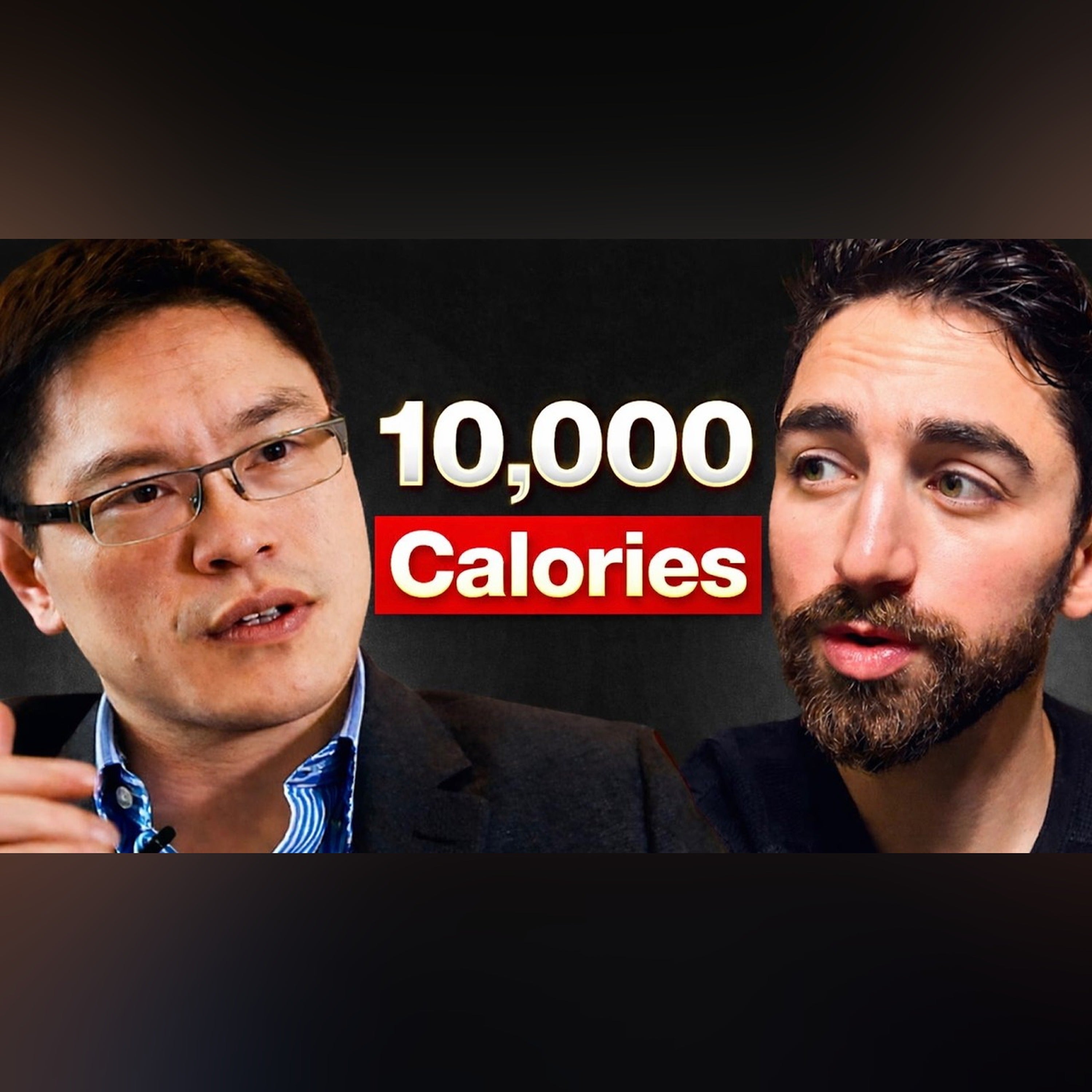
The Hunger Code Book: https://www.amazon.com/Hunger-Code-Resetting-Thermostat-Ultra-Processed/dp/1778401562 Weighted Vest Letter: https://staycuriousmetabolism.substack.com/p/how-weighted-vests-trick-your-body?r=40ekz2 Brain Insulin Resistance Letter: https://staycuriousmetabolism.substack.com/p/this-study-changed-how-i-see-junk?r=40ekz2 “Calories don’t cause obesity” is a provocative phrase—but it’s biologically accurate. It challenges a deeply entrenched misconception: that overeating causes obesity, rather than obesity driving overeating. If that sounds confusing, you’re not alone. Most people have been taught to think about it the other way around. In this discussion, Dr. Jason Fung and I work to untangle that misunderstanding. We explore how energy imbalance—so-called “overeating” and "excess calories"—is more often a consequence of obesity, not its root cause. What truly drives obesity is a complex interplay of social and hormonal factors that increase hunger and/or reduce energy
For the days you got through and nobody saw what it took. A quiet place this evening where it counts. About 12 minutes with Steven Webb's calm voice and music underneath. Perfect for the evening. We let the body soften, from the jaw and the eyes down to the belly, because it's been on alert all day. Then we look at what today really cost. Getting up when your body said no. Being kind to someone while you were falling apart inside. Saying "yeah, fine" because where would you even start? There's an old Zen idea I keep coming back to: a thing doesn't need to be seen to be real. The rain falls on an empty field, nobody watches, and it still soaks in. We put the day down for a minute, not away, just down, and finish with three gentle wishes. May the hard days I got through be counted. I've been paralysed a long time, and I know what it can take just to get through the day. You're not doing this on your own. Treat me to a coffee, keep the podcast free, and get my Weekly Calm every Sunday. It
Big News! Clicking Here (https://meditationsounds.supercast.com/) Email List (https://bit.ly/3T010m4) Experience deep relaxation with this powerful blend of 432 Hz healing frequency and Brown Noise, designed to calm strong anxiety, stop racing thoughts, and reset your nervous system. This sound mix helps reduce inner pressure in the chest, quiet mental overwhelm, and bring your mind back to a peaceful state. 432 Hz promotes mental clarity, emotional balance, and a sense of inner harmony, while Brown Noise lowers hyperactivity in the brain, creating a grounding and stabilizing effect. Together, they offer a natural, effective therapy for anxiety attacks, stress relief, insomnia, and emotional overload. Put on your headphones, close your eyes, and allow this frequency combination to guide you into deep calm and inner peace. Perfect for meditation, sleep, studying, relaxation, and anxiety recovery. #432Hz #BrownNoise #AnxietyRelief #CalmingSounds #DeepRelaxation #StopOverthinking #Healing
Are you saving joy for the next vacation, the next weekend away, or the next big win? Does your brain hold on to every bad thing in your day while the good parts slip right past you? In this episode, we’re talking about glimmers, the small bits of joy, safety, and connection that sit on the opposite side of triggers. We get into why finding joy in the little things adds up to more than waiting for the big stuff, and how midlife women can train their attention toward it. Elizabeth explains how glimmers support nervous system regulation and why noticing them works like a gratitude practice. Maria shares how she added joy back into her own life, and why self care for women doesn’t need a productive reason behind it. In this episode, you’ll learn: What glimmers are, and how they work as the opposite of triggers Why small daily triggers take a bigger toll than one big one, and what that tells you about joy The emotional piggy bank, and why small deposits beat waiting for one big payoff How
Has a GLP-1 dulled your hunger so much that you’re no longer sure how much to eat? Are people commenting on your body while you’re still deciding what you think of it? In this episode, we’re talking about GLP-1 nutrition, movement, and what to do when your hunger cues no longer tell you much. Whether you take one is your choice, and there’s no judgment here either way. We also get into how a culture obsessed with weight makes it hard to have any body shape, and where body neutrality comes in when the people around you won’t stop talking about yours. You’ll learn: The research finding that stopped Elizabeth in her tracks, and why she wants every GLP-1 user to hear it Why not eating enough goes unnoticed when the medication dulls your appetite What to know about GLP-1 protein intake, and the nutrients that get left out of that conversation How to prevent muscle loss on GLP-1 medications with the training that comes first What Tara wants you to know about GLP-1 bone density and lifting Wh
Lawmakers should review laws when their real effects differ from the original promises.
Share your view, then see how readers voted. No sign-in required. This poll is shared across stories.
Do you agree or disagree?
Common Quandary
A Common Quandary to discuss
Another conversation to explore, separate from this news story.
The prettiest trees on your street are ecological troublemakers. Do they come down?
A row of mature flowering trees defines a neighborhood and provides valuable shade. Ecologists identify them as invasive and recommend replacing them with native saplings that will take decades to grow.
How should visible community value be weighed against gradual ecological harm?