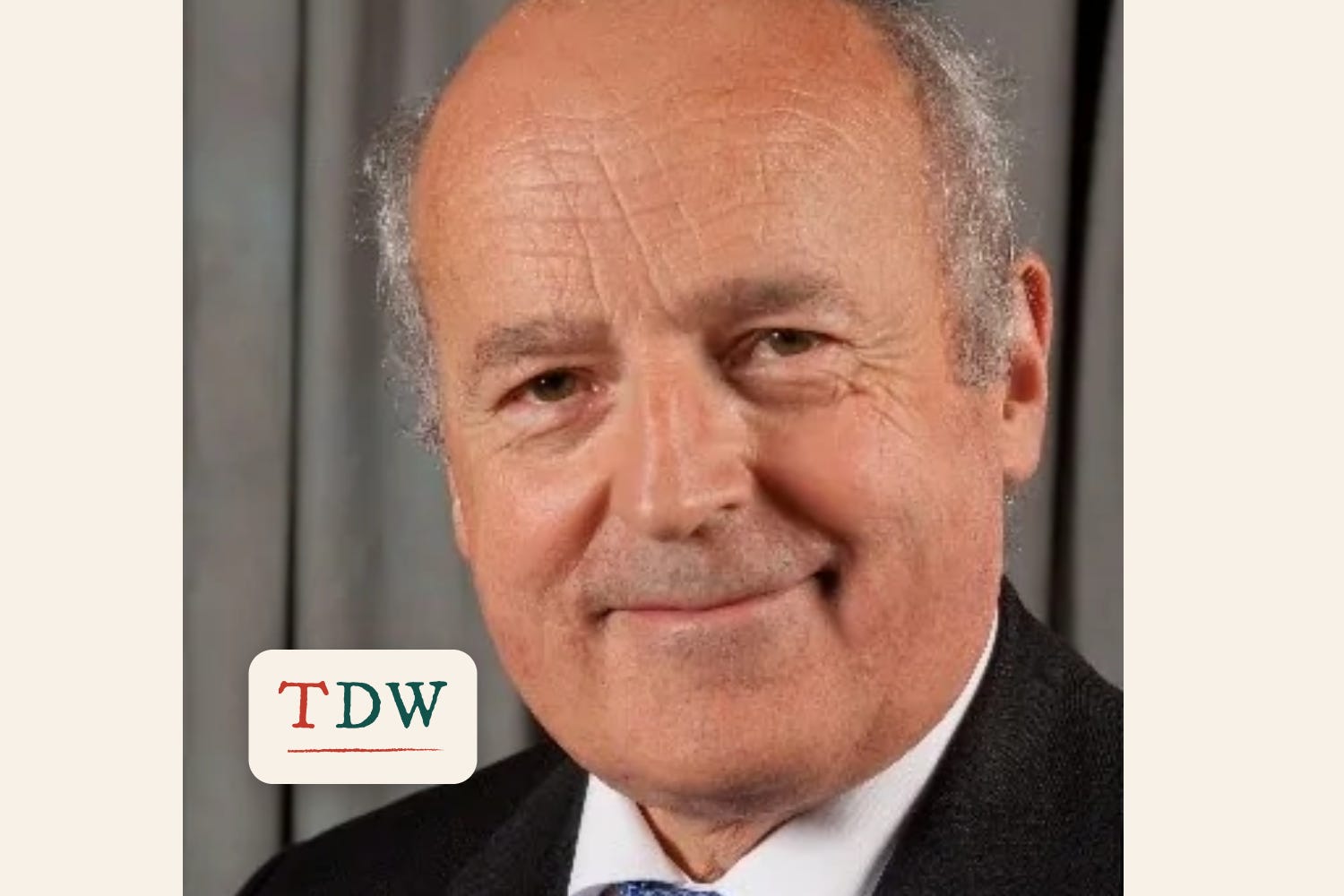
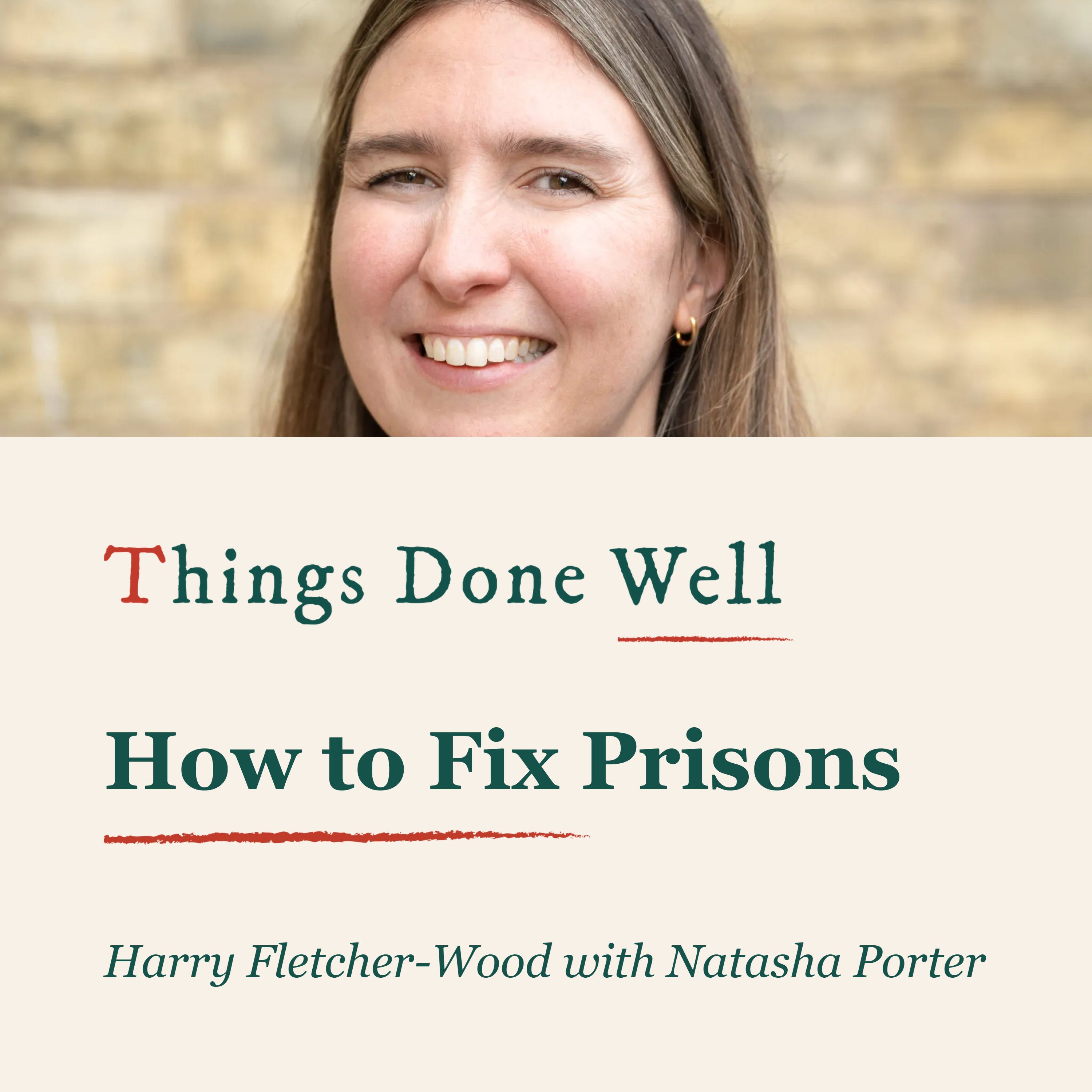
Why school reform in England worked - with Mark Lehain
Listen through the publisher, then discuss the episode here or arrange an in-person Roundtable. Your city determines where to meet.
Roundtables are designed for groups of four, with a shared subject and room for everyone to speak. Come for discussion, with no dating expectation.
The results of PISA international tests, published in September, placed England as one of only two countries outside East Asia in the top ten in maths, reading and science. Originally a maths teacher, Mark Lehain (https://www.linkedin.com/in/mark-lehain-9437b324?originalSubdomain=uk) has seen things improve first-hand: * Founding Bedford Free School in 2012, * Campaigning for education reform at Parents and Teachers for Excellence, the Centre for Policy Studies, and the New Schools Network, * As a special adviser at the Department for Education, * And as a parent. He’s now executive headteacher of Wootton Academy Trust. In this episode, we discussed what’s improved and why, how to open and improve a free school, how policy gets made at the Department for Education, and what has to stay in place in England to avoid following Finland’s decline. I got a new perspective on: * What to do, and what not to do, as a special adviser trying to get things done in government. He explained the importance of being perfectly aligned to what your minister wants done - “the moment people think you’re going off brief, you lose all credibility.” * The three purposes of the free school programme to create school places fast, to do it at lower cost, and to promote innovation - and its success in achieving all three. * The importance and rarity of ministerial continuity - and the very special role played by Nick Gibb. We also discussed how a question from Gibb changed Mark’s mind about what mattered in education, what other countries can learn from school reforms in England, and why school culture is the key thing Mark hopes will survive whatever the political weather. If you’re interested in learning more about school improvement in England over the last twenty years, I’ve interviewed many of the key figures, including Michael Gove (https://improvingteaching.co.uk/2026/04/12/chalk-change-5-michael-gove-being-as-demanding-as-possible/), Nick Gibb (https://improvingteaching.co.uk/2025/11/09/chalk-change-2-nick-gibb-the-minister-as-expert/), researcher Tim Oates (https://improvingteaching.co.uk/2026/03/15/chalk-change-5-tim-oates-making-things-line-up/), and multi-academy trust leader Dan Moynihan (https://improvingteaching.co.uk/2026/05/17/chalk-change-7-dan-moynihan-getting-qualifications-in-kids-hands/). You still teach regularly. How does your teaching look different now from when you began? I did my teacher training in 2002–03, at the peak of student-centred, student-directed learning and gimmickry. For my first years, I was very big on diamond nines, matching pairs, and games and puzzles for kids. You might have seen tables arranged in islands, where kids often have their faces looking away from the board. Like a lot of people, I discovered that didn’t work so well. After three or four years I was a very big fan of rows. I’m all about the kids being able to see the board, and about trying to make my handwriting on the board as neat as possible. I still struggle to lay out my workings in a coherent fashion, so that hasn’t changed. I was a headteacher until 2017, then spent seven years in and around Westminster in different guises, and came back to this job at Wootton Academy Trust (https://woottonacademytrust.co.uk/) in the summer of 2024. One thing that hasn’t changed is the teenagers. They are as hilarious, frustrating, funny, and outrageous now as they were then. It’s nearly 25 years since I started teaching, and I don’t think the kids have changed that much – they probably haven’t changed that much since I was a youngster either. What’s interesting is the bits around them that have and haven’t changed. You had a specific conversion moment, from a student-centred classroom to something more structured. Tell us about Nick Gibb (https://improvingteaching.co.uk/2025/11/09/chalk-change-2-nick-gibb-the-minister-as-expert/)’s visit to Bedford Free School (https://www.bedfordfreeschool.co.uk/). There was a sliding-doors moment that changed the direction of my work and how I see things. The best thing about it is that a photo was taken just before that moment happened. In 2014, Nick Gibb came to visit Bedford Free School. It was one of the brief periods in the last 15–20 years when he wasn’t the schools minister, but he still visited schools in his spare time. [I have interviewed Nick Gibb (https://improvingteaching.co.uk/2025/11/09/chalk-change-2-nick-gibb-the-minister-as-expert/) about his work as schools minister.] We were in our second year of operation. I’d shown him around, and he had just watched a geography lesson where some Year 10 kids were rapping about fair trade coffee. For those who know Nick Gibb, he’s not a massive fan of rapping lessons, although he probably doesn’t mind a fair trade coffee. As we left the classroom, he stopped in the corridor, turned to me and said, “That was all very nice, but if I’d asked them what the capital of Sudan was, would they have been able to tell me?” I paused - I had to think - and gave some kind of fumbled answer. That evening, as I reflected on it, I realised I didn’t know two things: whether they would know what the capital of Sudan was, and whether they were meant to know. I didn’t know much about what my brilliant teachers at Bedford Free School were teaching – what was in the curriculum, or what order it was in. I spent the next few days getting my subject leads to send me their programmes of study. They were brilliant living documents; they had put loads of effort into them. But they were overwhelmingly focused on how the kids were going to learn and what activities they were going to do. There wasn’t so much focus on what they were going to be learning – the actual substance. Nick followed it up with me not long afterwards. Like all the best evangelists, he gently nudged me towards some of the more accessible work. Before I knew it, I was reading E.D. Hirsch (https://en.wikipedia.org/wiki/E._D._Hirsch) and Dan Willingham (https://www.danielwillingham.com/), and when Daisy Christodoulou (https://daisychristodoulou.com/)’s Seven Myths about Education (https://improvingteaching.co.uk/2025/11/09/chalk-change-2-nick-gibb-the-minister-as-expert/) came out, I picked it up. He started pushing me down the knowledge-rich route, and I’m grateful for that, because it completely changed my views. He made me realise I didn’t understand what the substance of education was. It wasn’t quite a Damascene moment of blinding light, but he set me off on that journey. In 2010 the Coalition (https://en.wikipedia.org/wiki/Cameron%E2%80%93Clegg_coalition) created the legal structure for new free schools; Bedford Free School was among the first proposals approved, and opened in September 2012. Why did you want to set up a free school? So much of what I’ve been able to do was down to luck. The second person I met at university in 1997 dated someone who ended up working for some up-and-coming politicians, including Theresa May (https://en.wikipedia.org/wiki/Theresa_May) and Boris Johnson (https://en.wikipedia.org/wiki/Boris_Johnson) – but, most pertinently, Michael Gove (https://improvingteaching.co.uk/2026/04/12/chalk-change-5-michael-gove-being-as-demanding-as-possible/), when he was Shadow Education Secretary. They introduced me to Rachel Wolf (https://www.linkedin.com/in/rachel-wolf-20264923?originalSubdomain=uk), who was just leaving Michael Gove’s team to set up the New Schools Network (https://www.newschoolsnetwork.org/). I remember meeting Rachel in the May half term of 2009, running across London late for this meeting with a double buggy, because I had my older two girls with me. She introduced me to the idea of free schools (https://en.wikipedia.org/wiki/Free_school_(England)). “In America,” she said, “there are schools that people open, and lots of them are opened by groups of teachers.” A light bulb went on in my head. The idea was really cool. When I was explaining it to other people, I said, “Lawyers set up legal practices and accountants set up accountancy firms, so why wouldn’t teachers set up schools?” Again, I was lucky. I had a bunch of mates in the local area who, like me, were ambitious to see what we could do differently, because Bedford back then – and sadly it’s still similar now – had very low outcomes for its kids. We thought: what if we tried something different to raise standards locally? The other thing going on was that Bedfordshire still had a lot of lower, middle and upper schools – a three-tier (https://en.wikipedia.org/wiki/Three-tier_education) system rather than the typical primary and secondary – and there had been a campaign by parents to save the middle schools. I’d been to some of those meetings, and I realised it wasn’t that parents were passionate about the Year 5 to Year 8 middle-school model. What they liked was the smaller, more human-scale school, before the kids went off to massive upper schools. That planted the idea: why don’t we try a new, smaller secondary school in the area where standards are low? It was as simple as that, and I was lucky to meet people who could guide and advise me on how to do it. In 2013 you wrote (https://conservativehome.com/2013/09/06/mark-lehain/) that you faced an “extremely hostile local political backdrop and a planning permission dispute that dragged on and on.” What was the single biggest barrier to turning the idea into reality? One of the reasons I hadn’t got round to knowing whether the kids would know the capital of Sudan was that we had spent two … This is a public episode.
Episode information is provided by the publisher. Listening takes place on the publisher’s service.
Listen at the source ↗