Why thinking about death helps you live a better life | Alua Arthur (re-release)
21 min
Listen through the publisher, then discuss the episode here or arrange an in-person Roundtable. Your city determines where to meet.
Roundtables are designed for groups of four, with a shared subject and room for everyone to speak. Come for discussion, with no dating expectation.
As a death doula, or someone who supports dying people and their loved ones, Alua Arthur spends a lot of time thinking about the end of life. In a profound talk that examines our brief, perfectly human time on this planet, she asks us to look at our lives through the lens of our deaths in seeking to answer the question: "What must I do to be at peace with myself so that I may live presently and die gracefully?" Hosted on Acast.
Episode information is provided by the publisher. Listening takes place on the publisher’s service.
This is our unabridged interview with Robert Waldinger and Marc Schulz. For all our modern so-called progress, global happiness levels have been consistently going down, especially in the richest and most developed countries. So what does it really take to be happy? Since 1938, Harvard scientists have been closely studying the lives of over 700 individuals to answer that very question. In this episode, two of those scientists - Robert Waldinger and Marc Schulz - discuss the surprising results of what is known as the “World’s Longest Study of Happiness,” and why they are consistently finding that meaningful relationships are the key to living a long, happy, flourishing life. Show Notes, Resources, and Transcript for the abridged Holiday Gratitude Special (https://nosmallendeavor.com/holiday-gratitude-special-2026) Thank you to our sponsors: The Wonder Project: Subscriber support makes more great content like I Gotta Ask with Annie F. Downs possible. The Wonder Project subscription on Pr
On this week’s edition of “Happy Hour,” Emily Jashinsky examines America’s affordability crisis, the growing divide between generations, and whether the constant barrage of bad news is discouraging young Americans from having children. She weighs in on the Wes Huff plagiarism controversy, the media’s responsibility when reporting damaging allegations, and where people can turn to reclaim their reputations. Emily also addresses a listener’s question about her own potential conflicts of interest, President Trump’s investments in Nvidia, the debate over American sovereignty and Israel, and Hakeem Jeffries’ leadership. Plus, why Hugh Hewitt’s proposal for partial amnesty alarms her, concerns surrounding the lead detonation in Iowa, and her response to criticism of her “Grand Theft Auto VI” commentary. Emily discusses Breaking Points’ skepticism of artificial intelligence insiders, the challenges facing workers in the tech age, the possibility of journalists being debanked, and whose electi
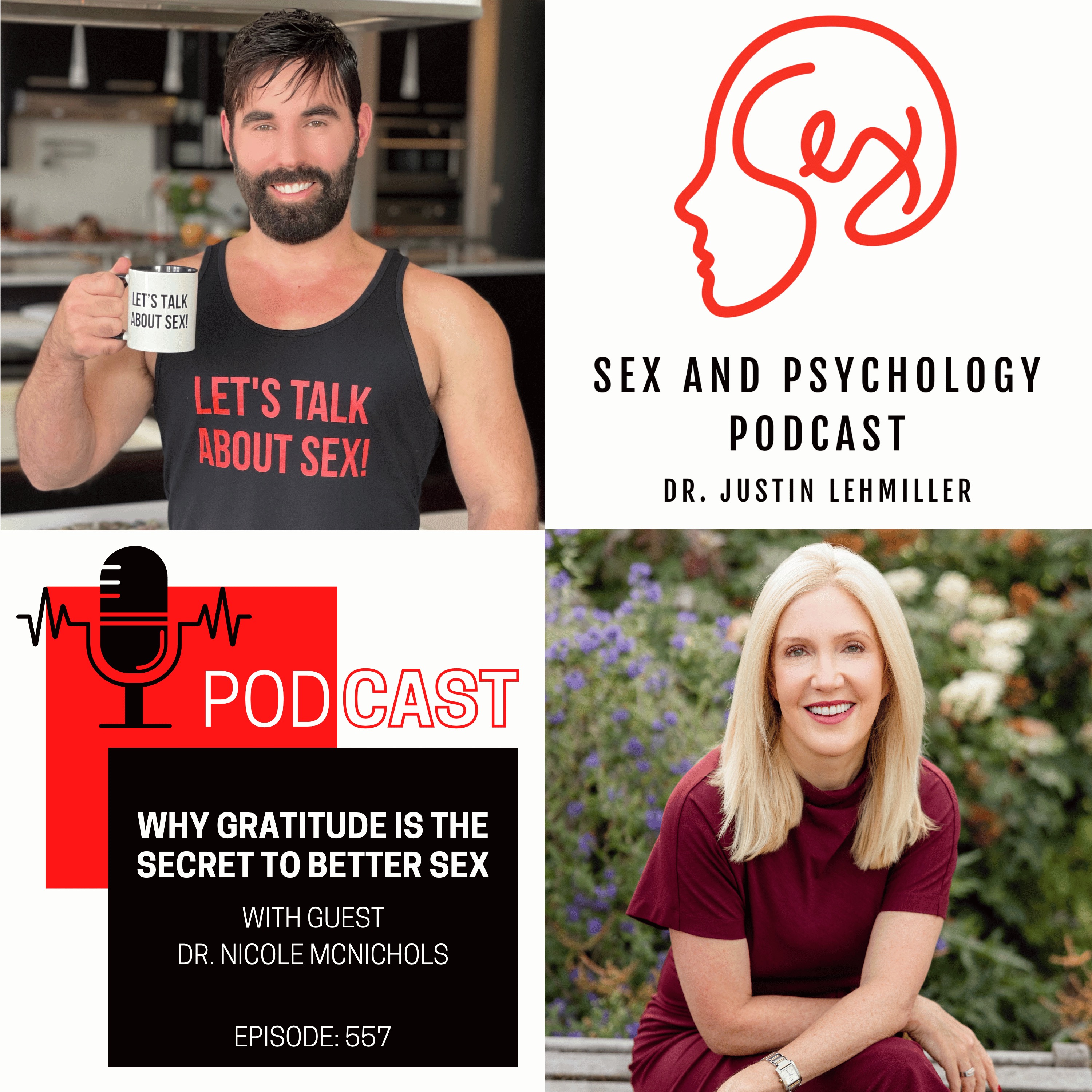
Thanksgiving is a time to reflect on the things we're grateful for, but when was the last time you stopped to appreciate your sex life? In this episode, we're exploring the surprising connection between gratitude and sexual desire. We'll discuss how feeling appreciated can strengthen intimacy, why gratitude can motivate us to be more attentive to our partners' needs, and simple ways to bring more appreciation into our sex lives without turning it into another obligation. I am joined once again by Dr. Nicole McNichols (https://nicolethesexprofessor.com/about-nicole/), an Associate Teaching Professor in the Department of Psychology at the University of Washington. Nicole's course, "The Diversity of Human Sexuality," is the largest and most popular course in the university's history with four thousand enrolled students each year. Nicole is author of the book You Could Be Having Better Sex. (https://link.amazon/B0iYWx0Q4) Some of the specific topics we cover include: What does it mean to p
Instant Access to the NCI Masterclass: https://nci.university/opt-in-page-808244 Uploaded 26-11-25 IN TIME FOR THE HOLIDAYS: Grab your copy of Chase’s new book, Tongue: A Cognitive Hazard https://a.co/d/5J14Grw You’ve carried more than just your own experiences into this life. Our behaviors, fears, and impulses often come from people we never met. Understanding this crazy inheritance changes how we see “US” forever. Ancient memories, childhood patterns, and generational instincts all shape us. Recognizing these influences helps us break cycles and reclaim our lives. Every one of us is shaped by stories older than our own. Genetic memory is a protective mechanim. Once you see the invisible forces that guide you, you start choosing/acting differently. Deep down, you’re more powerful than the ghosts that run your show. Snatch your copy of Chase’s new book, Tongue: A Cognitive Hazard https://a.co/d/5J14Grw
Sometimes the most thoughtful gifts are the ones you know will be used—especially if they actually fit the needs and desires of the person receiving them. Mari Uyehara from Wirecutter’s gifting team explains how to find the sweet spot between useful and delightful, with ideas for all kinds of people, budgets, and situations. From food and drinks that won't clutter a small apartment to clever gifts for tech lovers and frequent travelers, Mari shares how to give people things they'll genuinely appreciate. She also makes a compelling case for cash, repeat gifts, and how a bidet can make a life-changing gift for the right person. This episode covers: How to find the gaps in someone's everyday life. The best practical gifts come from knowing someone well enough to identify something that would make their routine easier or better. Why it's okay to give someone the same gift every year. If a person loves a particular kind of sock, bourbon, maple syrup, or chocolate, gifting them these items c
After spending the night caring for a seriously ill man, a caregiver lay down to rest in a guest bed beside him. As she began drifting off, she felt someone climb into bed next to her. She saw a pale blonde woman who disappeared almost immediately, but left behind two very specific memories involving painting and birthday dinners. When she described the encounter to her patient, he became emotional. His wife had been dead for twenty years, and the details matched things only someone familiar with her life would have known. His daughter was equally stunned when the caregiver described the woman's appearance. But with the man facing another hospital stay, the family had a troubling question. Was his late wife appearing because he was nearing death—or had she come with an entirely different message? #RealGhostStoriesOnline #AfterDeathCommunication #SpiritVisitation #SignsFromLovedOnes #Mediumship #ParanormalEncounters #LifeAfterDeath #MessagesFromBeyond #GhostlyVisitations #TrueGhostStori
The one thing all humans have in common is that each of us wants to be happy, says Brother David Steindl-Rast, a monk and interfaith scholar. And happiness, he suggests, is born from gratitude. An inspiring lesson in slowing down, looking where you're going, and above all, being grateful. Hosted on Acast.
When a psychologist who studies well-being ends up with a brain tumor, what happens when she puts her own research into practice? Christina Costa goes beyond the "fight" narrative of cancer — or any formidable personal journey — to highlight the brain benefits of an empowering alternative to fostering resilience in the face of unexpected challenges: gratitude. Hosted on Acast.
"We underestimate the power of our own generous actions," says Asha Curran, CEO of the global generosity movement GivingTuesday. Sharing stories of people making a difference through simple acts of kindness, she shows how generosity, even in its simplest forms, can be a transformative force — and explains why we all benefit from a world grounded in giving. Hosted on Acast.
Customers should receive compensation for prolonged failure of essential paid online services.
Share your view, then see how readers voted. No sign-in required. This poll is shared across stories.
Do you agree or disagree?
Common Quandary
A Common Quandary to discuss
Another conversation to explore, separate from this news story.
You are training the software that may replace your team. Do you warn them?
A manager is asked to help test software that could eliminate several jobs on their team. Leadership insists the project is uncertain and confidential, while employees are making major financial decisions.
When does loyalty to colleagues override professional confidentiality?