Why THIS Rejection Hits Dismissive Avoidants So Deeply
8 min
Listen through the publisher, then discuss the episode here or arrange an in-person Roundtable. Your city determines where to meet.
Roundtables are designed for groups of four, with a shared subject and room for everyone to speak. Come for discussion, with no dating expectation.
https://offer.personaldevelopmentschool.com/self-esteem?utm_source=podcast&utm_campaign=self-esteem&utm_medium=organic&utm_content=pod-11-18-26&el=podcast (https://offer.personaldevelopmentschool.com/self-esteem?el=podcast) Why can someone with a Dismissive Avoidant Attachment Style move past rejection early in dating, yet struggle to get over it once they’ve let someone in? In this episode, Thais Gibson explains why rejection can linger after someone who’s used to relying on themselves starts trusting another person with their needs. She explores how the meaning we give rejection can bring up shame, why losing a trusted connection can stir up fears of abandonment, and how you can begin working through those feelings. In This Video, You’ll Learn Why rejection can feel different early in dating and after trust has formed How rejection can bring up the belief that something is wrong with you Why it can be so hard to lose a connection where you felt safe asking for what you needed How recognizing the beliefs that rejection brings up can help you begin to heal Chapters 00:00 Why This Rejection Hits Dismissive Avoidants So Deeply 00:25 How Vulnerability Changes the Impact of Rejection 01:43 Why Early Rejection Can Feel Different 03:19 The Link Between Rejection and Shame 03:53 The 7-Day Free Trial 04:48 What Happens When a Dismissive Avoidant Lets Someone In 05:45 How Rejection Can Stir Up a Fear of Abandonment 06:49 How to Begin Working Through Rejection Meet Thais IAT works across six pillars: Rewire Your Attachment Core Wounds Learn Your Attachment Needs Regulate Your Nervous System Somatically Learn Healthy Boundaries Improve Communication Rewire Your Unhealthy Protest Behaviors Helpful Resources: Take the Free Attachment Style Quiz Become an IAT Relationship Coach Read the New Attachment Theory Book Discover Podcast Episodes Read the PDS Blog Let’s Connect on Socials: TikTok: https://www.tiktok.com/@thaisgibson
Episode information is provided by the publisher. Listening takes place on the publisher’s service.
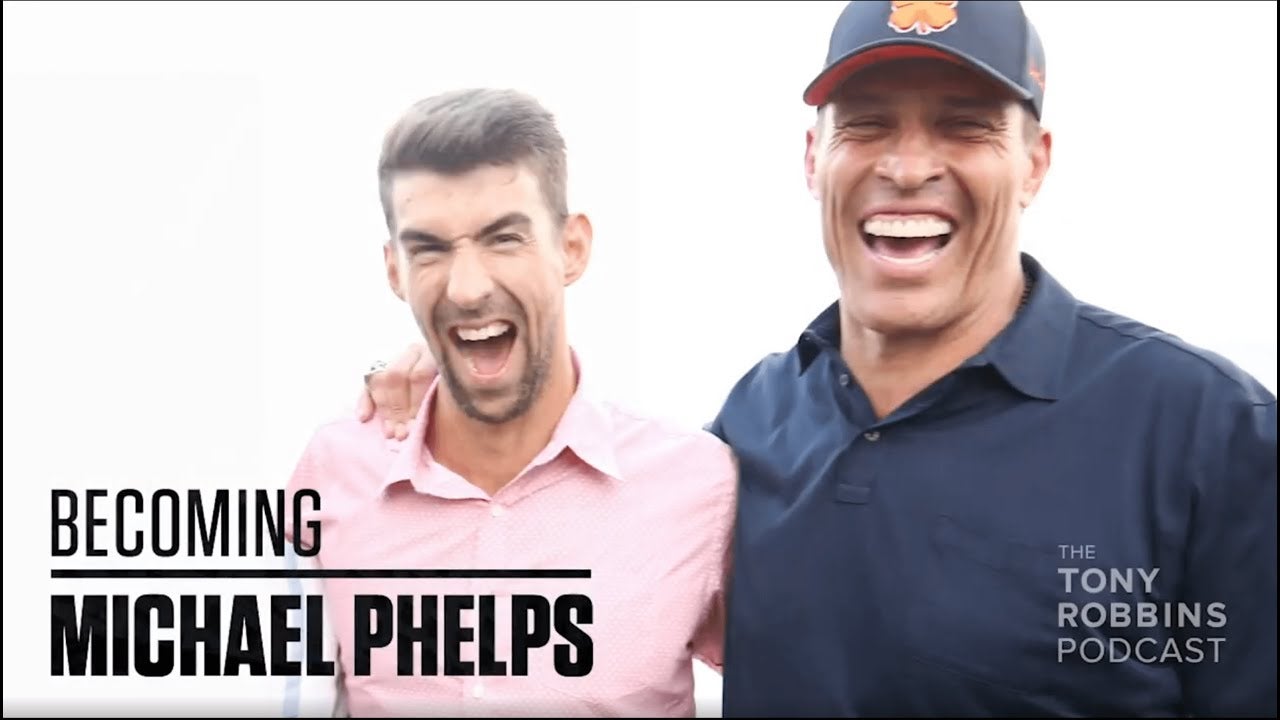
American swimmer Michael Phelps knows about paving the road to greatness. As the most decorated Olympian of all time, Phelps holds 28 medals. Additionally, he holds all-time records for Olympic gold medals, Olympic gold medals in individual events and Olympic medals in individual events. Uploaded 28-06-20 But getting to the top, and staying there, wasn’t easy. In this episode, Phelps sits down with Tony Robbins to discuss becoming one of the most successful athletes of all time. They talk about his training schedule, the highs of being an Olympic athlete and the let down that happens after the Olympics are over. Phelps also discusses the depressive states he would fall into because he wasn’t sure who he was outside of swimming. Raised mostly by his mother after his parents’ divorce, he had a lot of unresolved anger toward his father. These feelings of hurt and rejection played a big role in his decision to ask for help for his mental health struggles in 2012. During in-patient treatmen
What if success isn't something you chase, but something you attract through the person you become? Real success begins with personal growth, self discipline, and the value you bring to the world. Instead of constantly searching for shortcuts or waiting for opportunities, focus on developing the skills, mindset, and character that make meaningful achievements possible. This powerful motivational speech explores timeless principles of success, wealth creation, personal development, and the importance of becoming more valuable to others. Discover why your personal growth influences your results, how daily discipline shapes your future, and why helping others achieve their goals can become one of the most powerful foundations for your own success. In this motivational journey, you'll explore: • The Attraction Principle: Why success is connected to the person you become rather than simply what you pursue. • The Marketplace Rule: How developing valuable skills and contributing to others can
🇺🇸 TWO NAVY SEALS. TWO INCREDIBLE JOURNEYS. ONE POWERFUL MISSION TO TRANSFORM YOUR FINANCIAL FUTURE! Michael Jaco welcomes fellow former Navy SEAL Larry Yatch, founder of TruPath Mastery, for an eye-opening conversation about success, leadership, financial trauma, and the hidden subconscious patterns that can keep even the most accomplished people from reaching their full potential. With 24 years as a Navy SEAL and 11 years as a CIA security operative, Michael shares the powerful lessons of mental discipline, intuition, and personal transformation that shaped his extraordinary journey. Larry brings 10 years of Navy SEAL service and an impressive career advising Fortune 50 executives. But despite achieving tremendous professional success, he discovered that the survival patterns that once made him successful were also keeping him trapped in his own business. THE BIG REVELATION: YOUR MONEY HABITS MAY HAVE VERY LITTLE TO DO WITH MONEY! From childhood programming and fear of scarcity to
What if the change you've been asking for is already knocking? In this best-of compilation from The Positive Mindset Podcast, Henry Lawrence pulls together his best moments on letting go and being restored to who God made you to be, from six episodes: the stirring you feel when it's time to change; an opening prayer for anyone who feels alone right now; why your higher self is the true you, the one designed by God, not a more productive version of you; the cast on a broken arm that protected you and now limits you; the old painted-over furniture that gets restored, not rebuilt; why so much of our tiredness comes from holding too tight; how God moves what you couldn't; why everything is borrowed; and choosing to keep believing when it feels like a war broke out around you. It includes a prayer near the start and closes with the rising tide, a blessing and a thank-you. In this episode: • "That stirring is the truth knocking on a door that you've been leaning on with your whole weight." •
Access the masterclass instantly for free: https://nci.university/learn Uploaded 10-01-26 Your goals don’t fail because you lack discipline — they fail because they were aimed at the wrong system. Optimizing behavior without fixing brain chemistry is like issuing commands to a damaged machine. Until the chemical environment is right, effort just increases friction and burnout. All goals live in the conscious mind — but control does not. Real behavior is governed by the mammalian brain, the ancient systems that decide safety, threat, and energy allocation. Every resolution collapses when those lower systems detect risk, even if you consciously “want” the outcome. Goal-setting ignores this hierarchy — and that’s why it keeps failing. Once you target the parts of the brain actually in charge, change stops feeling like force. Discipline becomes unnecessary when the system itself is aligned. Please note that the content provided in this broadcast is for informational and educational purpose
#JimRohnMotivation #JimRohn #JimRohnSpeech In this Jim Rohn Motivation video, discover the 10 timeless life skills that separate those who thrive from those who stay stuck. These aren’t shortcuts or gimmicks—they’re real, buildable disciplines that strengthen your character, sharpen your focus, and help you lead your life with intention. Key Topics From This Motivational Video: Why emotional control is more powerful than raw talent How daily focus compounds into massive results The secret edge of people who delay gratification Why adaptability is more valuable than rigid plans How self-awareness and discipline shape your entire destiny This Jim Rohn-style motivational video breaks down what it truly takes to lead a strong, resilient, purpose-driven life. You’ll learn how to sharpen skills like focus, emotional regulation, adaptability, and decision-making—so you stop chasing the next hack and start becoming the kind of person success finds. These life skills are simple, transferable, a
https://offer.personaldevelopmentschool.com/self-esteem?utm_source=podcast&utm_campaign=self-esteem&utm_medium=organic&utm_content=pod-11-16-26&el=podcast (https://offer.personaldevelopmentschool.com/self-esteem?el=podcast) When a partner suddenly texts less, stops making plans, or seems distracted when you’re together, it’s easy to wonder if someone else is in the picture. How do you make sense of what’s changed without getting stuck analyzing every interaction? In this episode, Thais Gibson explains what “monkey branching” means and walks through five changes you might notice when a partner with a Dismissive Avoidant Attachment Style starts investing in someone else while still in the relationship. She explains why it matters to look at what’s changed from your partner’s usual behavior and how to start a conversation about what you’ve noticed. These shifts can have several causes, and a direct conversation gives you a chance to talk about what each of you needs. In This Video, You’ll
https://offer.personaldevelopmentschool.com/self-esteem?utm_source=podcast&utm_campaign=self-esteem&utm_medium=organic&utm_content=pod-11-13-26&el=podcast (https://offer.personaldevelopmentschool.com/self-esteem?el=podcast) Blocked out of nowhere by a Dismissive Avoidant? When someone suddenly cuts off contact, it’s easy to wonder whether you ever mattered—or what you did wrong. In this episode, Thais Gibson explores why a Dismissive Avoidant may block someone after a breakup, including emotional pain, shame, and a desire to avoid reminders of the relationship. She also discusses other possible reasons, such as feeling overwhelmed by repeated contact or reacting after a conflict. Blocking alone doesn’t tell you exactly what someone feels or whether they’ll return. This video invites you to examine the meaning you’re giving their behavior, question beliefs about being “not good enough,” and begin separating your self-worth from someone else’s response. In this video, you’ll learn: • Why
https://offer.personaldevelopmentschool.com/self-esteem?utm_source=podcast&utm_campaign=self-esteem&utm_medium=organic&utm_content=pod-11-11-26&el=podcast (https://offer.personaldevelopmentschool.com/self-esteem?el=podcast) A Dismissive Avoidant may look unbothered by rejection—but their silence doesn’t always tell you how much they’re hurting. What happens when someone they’ve finally learned to trust walks away? In this episode, Thais Gibson explores three forms of rejection that can feel especially painful for a Dismissive Avoidant, from criticism to having their vulnerability dismissed. She also explains why losing an established relationship can bring grief that isn’t immediately visible. Through the lens of Integrated Attachment Theory™, you’ll learn how core wounds around shame, defectiveness, and perceived weakness can influence emotional withdrawal—and why building a healthier relationship with yourself matters. In this episode, you’ll learn: • Why a Dismissive Avoidant can fe
Interest-rate decisions should explicitly consider both borrowers and savers.
Share your view, then see how readers voted. No sign-in required. This poll is shared across stories.
Do you agree or disagree?
Common Quandary
A Common Quandary to discuss
Another conversation to explore, separate from this news story.
Your host demands shoes off, but their floor is filthy. Must you obey?
A host has a strict shoes-off rule and points to a neat row by the door. Inside, the floor is visibly sticky and covered with pet hair. You are wearing clean shoes, no socks, and would rather not spend the evening barefoot.
When does respect for a host's home yield to a guest's comfort?