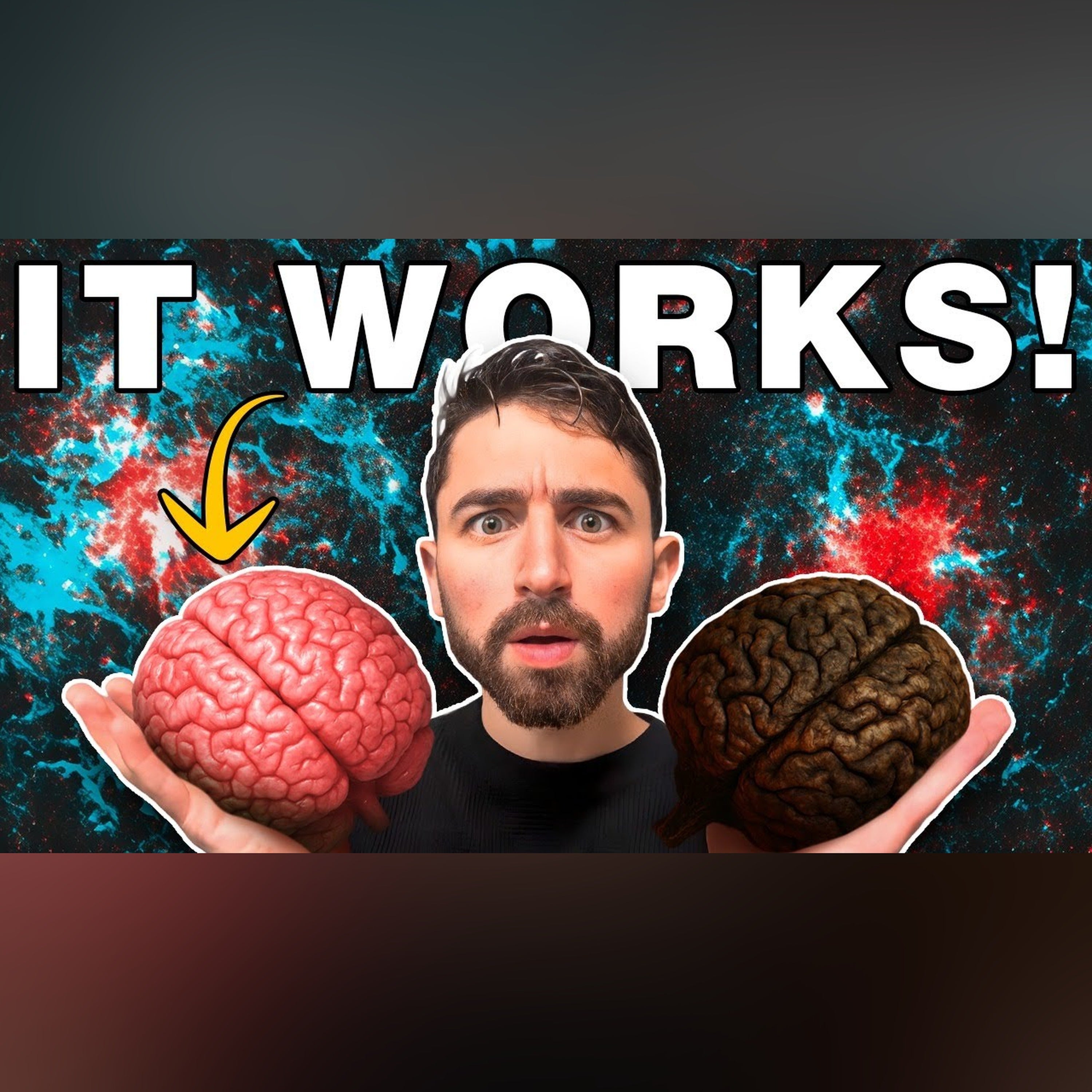
For references and a written breakdown, see the associated Stay Curious Metabolism Newsletter: https://staycuriousmetabolism.substack.com/p/new-hope-for-alzheimers-can-apoe2?r=40ekz2 Lithium for Brain Health: https://staycuriousmetabolism.substack.com/p/lithium-and-alzheimers-the-harvard?r=40ekz2 Ketone Cleans the Brain, Video: https://youtu.be/oRaNzfHF_do Chapter *Call our service line at 815-STAY-CUR (815-782-9287) *Learn more about the data, here: https://staycuriousmetabolism.substack.com/p/life-or-death-in-the-fine-print-the?r=40ekz2 I carry two copies of APOE4 — the gene variant that increases Alzheimer’s risk 10–15-fold. For years, that terrified me. But emerging research provides hope. The study we will review suggests that adding APOE2 might quiet brain inflammation, reduce plaques, and help save neurons. In today’s video, I break down the research in simple terms and what this could mean for the future of Alzheimer’s therapy. Then I’ll share the evidence-based strategies that
Ever meet someone new and spend the entire conversation trying to think of something interesting to say? The harder you try to be charming, the easier it is to miss the very thing that creates connection: what the other person is telling you. In this Social Intelligence Briefing from The Art of Charm, AJ Harbinger and Johnny Dzubak explain how to be more charming and charismatic by asking better questions, practicing active listening, and shifting your attention away from trying to impress people. Using a relatable conversation at a party, they reveal why common small-talk questions often lead nowhere, how to move beyond surface-level facts, and why genuine curiosity makes you someone people enjoy talking to. You'll also discover research on self-disclosure, follow-up questions, and meaningful conversations—and learn a simple technique you can practice immediately. What you'll learn: How to be charming naturally: Why trying to impress people can prevent you from building genuine connec
This one is not a new concept, we actually talked about it years ago, but it showed up in such a stark contrast across the roster recently that it was worth coming back to. The short version is that the more you move, the more you can eat, and the less miserable a fat loss phase tends to be. What brought it back up was seeing it at both ends with different clients. The first was the client Aaron flew to Italy to peak. She eats more food relative to her size than anyone he has coached, and after being in the same house with her for a couple of hours, the reason was pretty obvious. The other client is one Aaron has worked with for years and had a lot of success with, and this summer the diet went poorly. The thing that changed was movement. Even with food lower than past diets, it was slower and more of a grind than anything we had done together. That contrast is really the whole episode. When movement is low, calories may have to go so low to keep losing fat that it gets significantly h
We're bringing back one of our most fascinating conversations about happiness, human behavior, and the evolutionary forces that shape nearly every decision you make. This episode was too good not to share again! Today you'll meet Gad Saad, PhD, evolutionary behavioral scientist, professor of marketing at Concordia University's John Molson School of Business, and author of The Saad Truth About Happiness: Eight Secrets for Leading the Good Life. What if the reason you're unhappy has less to do with your circumstances and more to do with the ancient biological programming running your brain? Dr. Saad studies how evolution influences human behavior, from the partners we choose and the careers we pursue to our desire for status, pleasure, and social connection. His research offers a fascinating explanation for why modern life can leave us feeling unfulfilled, even when we have more comfort, convenience, and opportunity than ever before. In this conversation, Dave and Gad explore the evoluti
Today, Mel is doing something she's never done before on The Mel Robbins Podcast. She's bringing members of her team into the studio for live coaching with world-renowned communications expert Vinh Giang. Vinh is known for teaching millions of people online how to stop sounding insecure, speak more clearly, and get people to listen when you talk. And when you hear him coaching today, it will be like he’s coaching you. One person freezes when they're put on the spot. Another can't stop interrupting people. Someone else has great ideas but stays quiet because they're afraid of being judged. Does any of that sound familiar? And Vinh isn't just giving advice. He's coaching real people through practical exercises, right there in the studio, so you can hear the difference and start making those same changes in your own life. As Mel says, put yourself in their shoes. As Vinh works with each person, you'll recognize things you struggle with, too. You'll learn: -What to do when your mind goes b
So many of us have learned to be strong by pushing through difficult things, ignoring our needs, and holding everything together, even when we're struggling inside. And while these strategies may have helped us through difficult times, they can also leave us feeling disconnected from ourselves. But our authentic inner strength feels very different. It's rooted in our ability to stay connected to ourselves, trust our inner knowing, and make choices that reflect our deepest values and needs. And it can help us feel more empowered to shape our lives in ways that feel meaningful and aligned. The beautiful thing is that this strength is already within us, even if we learned to disconnect from it somewhere along the way. In this episode of Somatic Healing Meditations (https://helloinnerlight.com/podcast), I'll guide you on a soothing journey inward to reconnect with the depth and breadth of the true strength you carry within. Together, we'll explore some of the beautiful and powerful qualiti
We can feel deeply connected to celebrities, fictional characters, and even AI chatbots, even though we've never met them in real life. But when do these one-sided relationships start interfering with our happiness? In this episode of Office Hours, I explore the science of parasocial relationships, how our attachment styles influence them, and the potential consequences of turning to AI for companionship. I also share three ways to manage unhealthy attachments and make more room for the real-life relationships we need. *** Are you interested in helping others through the science of happiness? I have a new three-day program—learn more here (https://www.arthurbrooks.com/happiness-scale-certification). — Brought to you by: • LMNT (http://drinklmnt.com/Arthur)—A science-backed electrolyte drink mix that helps you feel and perform your best, without sugar, artificial ingredients, or gimmicks. Get a free sample pack at DrinkLMNT.com/Arthur (http://drinklmnt.com/Arthur). • Helix Sleep (https:
Public-health protections can justify some limits on individual choice.
Share your view, then see how readers voted. No sign-in required. This poll is shared across stories.
Do you agree or disagree?
Common Quandary
A Common Quandary to discuss
Another conversation to explore, separate from this news story.
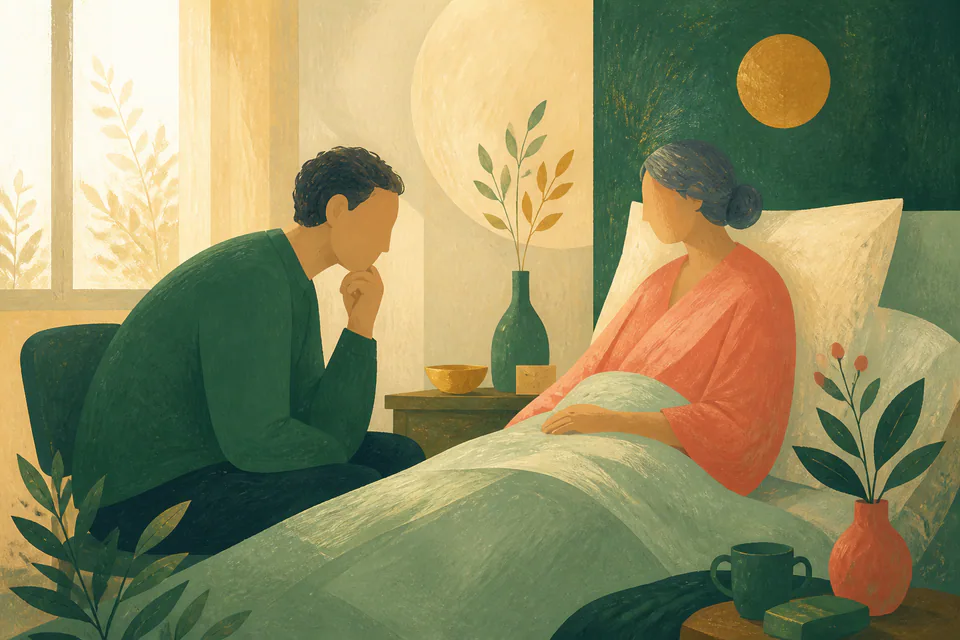
Someone you love asks, “Do you think I’ll be okay?” What if you do not?
A relative with a poor prognosis asks whether you think they will recover. They seem to need reassurance, but you believe the odds are very low and do not want to spend the remaining time pretending.
Can preserving hope justify saying more than you believe?