Listen through the publisher, then discuss the episode here or arrange an in-person Roundtable. Your city determines where to meet.
Roundtables are designed for groups of four, with a shared subject and room for everyone to speak. Come for discussion, with no dating expectation.
In this episode, Dr. K explains why hard work alone rarely guarantees recognition, revealing that credit is not an automatic entitlement for effort but a perception assigned by an audience based on optics and narrative. He breaks down how ambiguity in team projects allows others to steal credit, making it essential to clearly delineate individual roles and maintain a documented track record from the start. Because the first person to frame a project controls the narrative, trying to reclaim credit reactively with anger or fear of looking petty often backfires and damages your reputation. Instead, Dr. K shows how understanding cognitive biases—like how people naturally overestimate their own contributions—helps lower emotional reactivity, while actively giving public credit to teammates triggers positive reciprocity and ensures your contributions are recognized. Mental health resources designed by Dr. K and made with love: https://bit.ly/3ZOopgQ Talk to a HG Coach 1-on-1: https://bit.ly/46bIkdo Dr. Dr. K's Guide to Mental Health: https://bit.ly/44z3Szt HG Memberships : https://bit.ly/3TNoMVf Products & Services : https://bit.ly/44kz7x0
Episode information is provided by the publisher. Listening takes place on the publisher’s service.
For the days you got through and nobody saw what it took. A quiet place this evening where it counts. About 12 minutes with Steven Webb's calm voice and music underneath. Perfect for the evening. We let the body soften, from the jaw and the eyes down to the belly, because it's been on alert all day. Then we look at what today really cost. Getting up when your body said no. Being kind to someone while you were falling apart inside. Saying "yeah, fine" because where would you even start? There's an old Zen idea I keep coming back to: a thing doesn't need to be seen to be real. The rain falls on an empty field, nobody watches, and it still soaks in. We put the day down for a minute, not away, just down, and finish with three gentle wishes. May the hard days I got through be counted. I've been paralysed a long time, and I know what it can take just to get through the day. You're not doing this on your own. Treat me to a coffee, keep the podcast free, and get my Weekly Calm every Sunday. It
Trauma and PTSD Expert Arielle Schwartz discusses how journaling and writing practices can help individuals work through trauma and facilitate healing, even without a therapist. She shares practical tips, mental models, and personal insights on trauma, shame, and post-traumatic growth. Sign up for my free Panic Attacks course https://courses.therapyinanutshell.com/ending-panic-attacks-and-anxiety-attacks Can trauma journaling help with healing trauma? In this conversation, Dr. Arielle Schwartz joins me to explore how writing and narrative therapy can support processing and integrating trauma, building self-compassion, and finding greater connection with yourself and others. Whether you’re navigating PTSD, complex PTSD, or painful experiences from your past, approaching your story can feel overwhelming. We discuss how to begin gently, build a foundation of safety, and recognize when it’s time to pause and reach for support. https://drarielleschwartz.com (https://drarielleschwartz.com/)
If you're training hard but feeling wiped, eating a restricted diet for your gut, or just never hungry after a tough workout, you might not be getting the protein you need. This episode breaks down how much you really need and how to get it without upsetting your gut. YOU'LL TAKEAWAY: Macronutrients and calories 101, and how restrictive diets throw off your balance How your body digests protein, and why it matters before workouts The many roles of protein, from enzymes and iron storage to post-workout appetite How much protein you need, plus 3 easy low FODMAP ways to boost it — RESOURCES & LINKS MENTIONED: ⤵️ Want high touch coaching support for IBS & fuelling performance? Apply for coaching. (http://gutfitnutrition.com/apply) Free Training: How to Control IBS So You Can Fuel Your Training Without a Lifelong Low FODMAP Diet (https://gutfitnutrition.com/heal-ibs-training-live) Supporting your immune system when you're sick (Ep. 70) (https://open.spotify.com/episode/5bCto0jWLcbC5hQW4hrH6
Today, Mel is doing something she's never done before on The Mel Robbins Podcast. She's bringing members of her team into the studio for live coaching with world-renowned communications expert Vinh Giang. Vinh is known for teaching millions of people online how to stop sounding insecure, speak more clearly, and get people to listen when you talk. And when you hear him coaching today, it will be like he’s coaching you. One person freezes when they're put on the spot. Another can't stop interrupting people. Someone else has great ideas but stays quiet because they're afraid of being judged. Does any of that sound familiar? And Vinh isn't just giving advice. He's coaching real people through practical exercises, right there in the studio, so you can hear the difference and start making those same changes in your own life. As Mel says, put yourself in their shoes. As Vinh works with each person, you'll recognize things you struggle with, too. You'll learn: -What to do when your mind goes b
Master the skills that change lives — enroll in your free human behavior course today: https://nci.university/learn Uploaded 10-04-26 The Cheat Code for Controlling Conflict Every argument, meltdown, or power struggle follows a pattern. Most people miss it—and that’s why they lose control in the moment. This video breaks down the exact psychological system behind conflict escalation, including why people suddenly become defensive, aggressive, manipulative, or unpredictable. Once you see it, you’ll recognize the moment before things spiral—and you’ll know how to respond without escalating, backing down, or losing your frame. This isn’t about winning arguments. It’s about understanding what actually triggers human behavior under pressure. Inside this breakdown: • Why people suddenly “flip” in conversations • The hidden triggers behind anger, defensiveness, and power plays • How ego threat drives conflict escalation • Why logic fails when emotions take over • How to read the exact moment
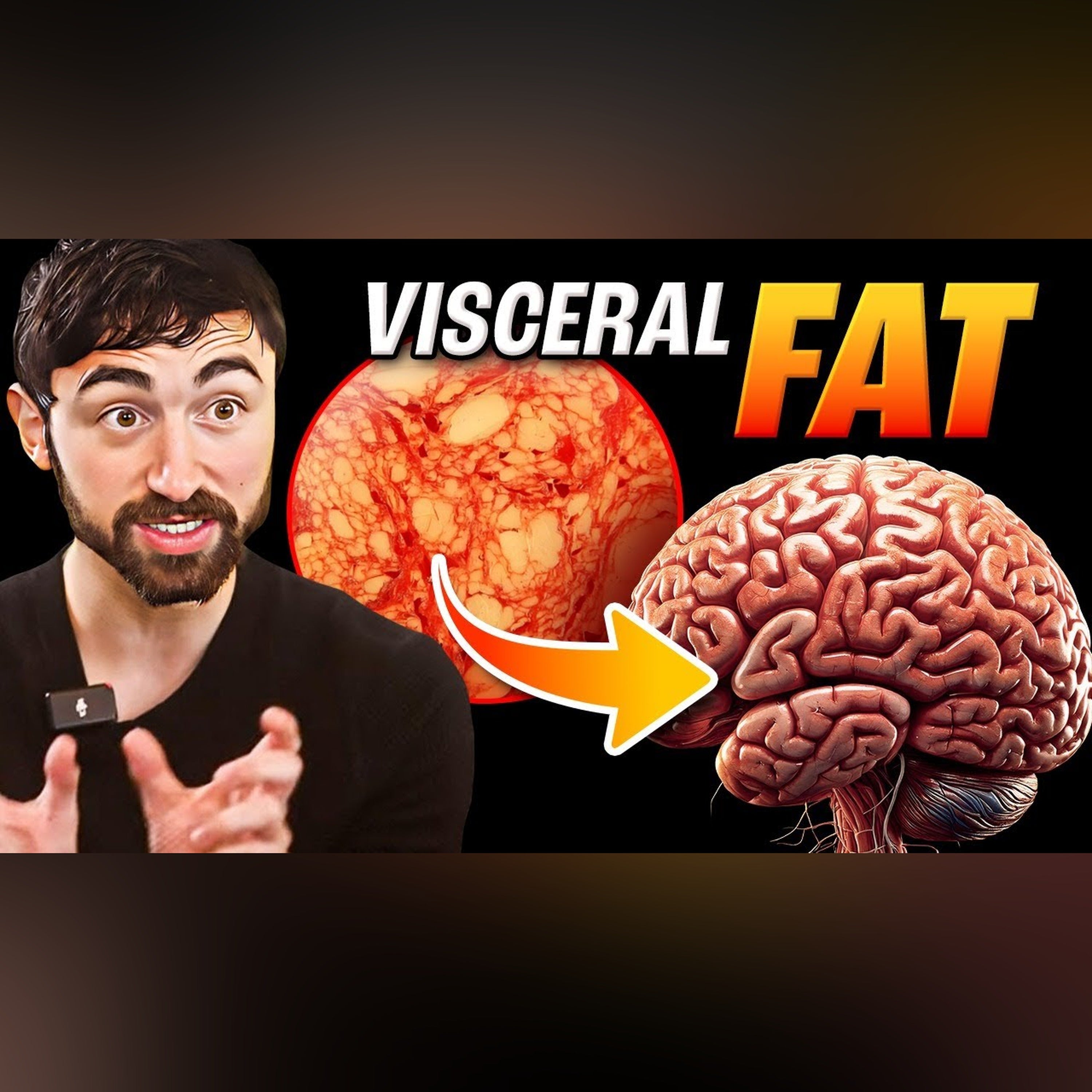
For all references and even deeper nuances, check out the StayCurious Metabolism letter: https://staycuriousmetabolism.substack.com/p/can-visceral-fat-cause-depression?r=40ekz2 Chapter *Call our service line at 815-STAY-CUR (815-782-9287) *Learn more about the data, here: https://staycuriousmetabolism.substack.com/p/life-or-death-in-the-fine-print-the?r=40ekz2 Visceral Fat Randomized Controlled Trial Video: https://youtu.be/lDeegZ1wtAI Description: Most people think of fat as extra weight—something cosmetic or something to “burn off.” But new science is showing something far more profound: visceral fat is an endocrine organ that sends biochemical messages across the entire body, including directly into the brain. And those messages can change mood, increase stress sensitivity, and even promote depression. In this video, we break down a brand-new study revealing how visceral fat releases tiny molecular packages called extracellular vesicles. Inside those vesicles is a specific microRNA—
In this episode, Dr. K analyzes candid feedback from over a hundred software engineers facing burnout, loss of joy in coding, and existential dread in an AI-driven tech landscape. He breaks down the friction between developer reality and executive expectations, where corporate pressure to rapidly increase output with AI tools often results in code instability, production incidents, and tedious code-review assembly lines. Drawing on engineering benchmarks like the DORA report, Dr. K outlines tactical communication strategies for developers to manage upward by matching leadership enthusiasm while proactively documenting technical risks. Ultimately, he emphasizes that cultivating emotional resilience, social proficiency, and clear communication provides engineers with their strongest competitive edge during periods of industry disruption. Mental health resources designed by Dr. K and made with love: https://bit.ly/3ZOopgQ Talk to a HG Coach 1-on-1: https://bit.ly/46bIkdo Dr. Dr. K's Guide
In this episode, Dr. K reacts to stand-up comedy crowd work clips to unpack the psychiatric realities behind humor surrounding depression, ADHD, and modern relationships. He explains how struggling with household chores can be a legitimate clinical symptom of a depressive episode, while exploring how the subconscious can also learn to manufacture complaints to avoid unwanted responsibilities. Dr. K also breaks down the emotional dynamics of dating someone with bipolar disorder and examines how social media fuels widespread misunderstanding around ADHD. Finally, he highlights biological fundamentals like restorative sleep, nutrition, and gut health to demonstrate why physical habits often resolve distress far more effectively than over-pathologizing everyday sadness. Mental health resources designed by Dr. K and made with love: https://bit.ly/3ZOopgQ Talk to a HG Coach 1-on-1: https://bit.ly/46bIkdo Dr. Dr. K's Guide to Mental Health: https://bit.ly/44z3Szt HG Memberships : https://bit.
In this episode, Dr. K investigates the viral internet trend surrounding self-injected peptides for muscle recovery, injury repair, and anti-aging. Drawing on his background in complementary medicine and placebo research at Harvard, he argues that unproven compounds like BPC-157 function largely through a strong placebo response fueled by high prices, novelty, and social media hype. While GLP-1 agonists like semaglutide have clear clinical trial data for weight loss, Dr. K highlights the severe hidden risks of unregulated peptides—including potential cancer acceleration through angiogenesis and dangerous chemical contamination in online orders. Mental health resources designed by Dr. K and made with love: https://bit.ly/3ZOopgQ Talk to a HG Coach 1-on-1: https://bit.ly/46bIkdo Dr. Dr. K's Guide to Mental Health: https://bit.ly/44z3Szt HG Memberships : https://bit.ly/3TNoMVf Products & Services : https://bit.ly/44kz7x0
Local gatherings should prioritize relationships over attendance numbers.
Share your view, then see how readers voted. No sign-in required. This poll is shared across stories.
Do you agree or disagree?
Common Quandary
A Common Quandary to discuss
Another conversation to explore, separate from this news story.
A private joke from years ago goes public. How long should it follow the person who wrote it?
Someone shares a screenshot of a tasteless joke made years ago in a private friends' chat. The person who wrote it says they were performing for a small audience, have changed, and never agreed to have the message made public.
How private should speech remain when it reveals something troubling?