Yalta 2.0 or bargain of the century for Russia and China?
31 min
Listen through the publisher, then discuss the episode here or arrange an in-person Roundtable. Your city determines where to meet.
Roundtables are designed for groups of four, with a shared subject and room for everyone to speak. Come for discussion, with no dating expectation.
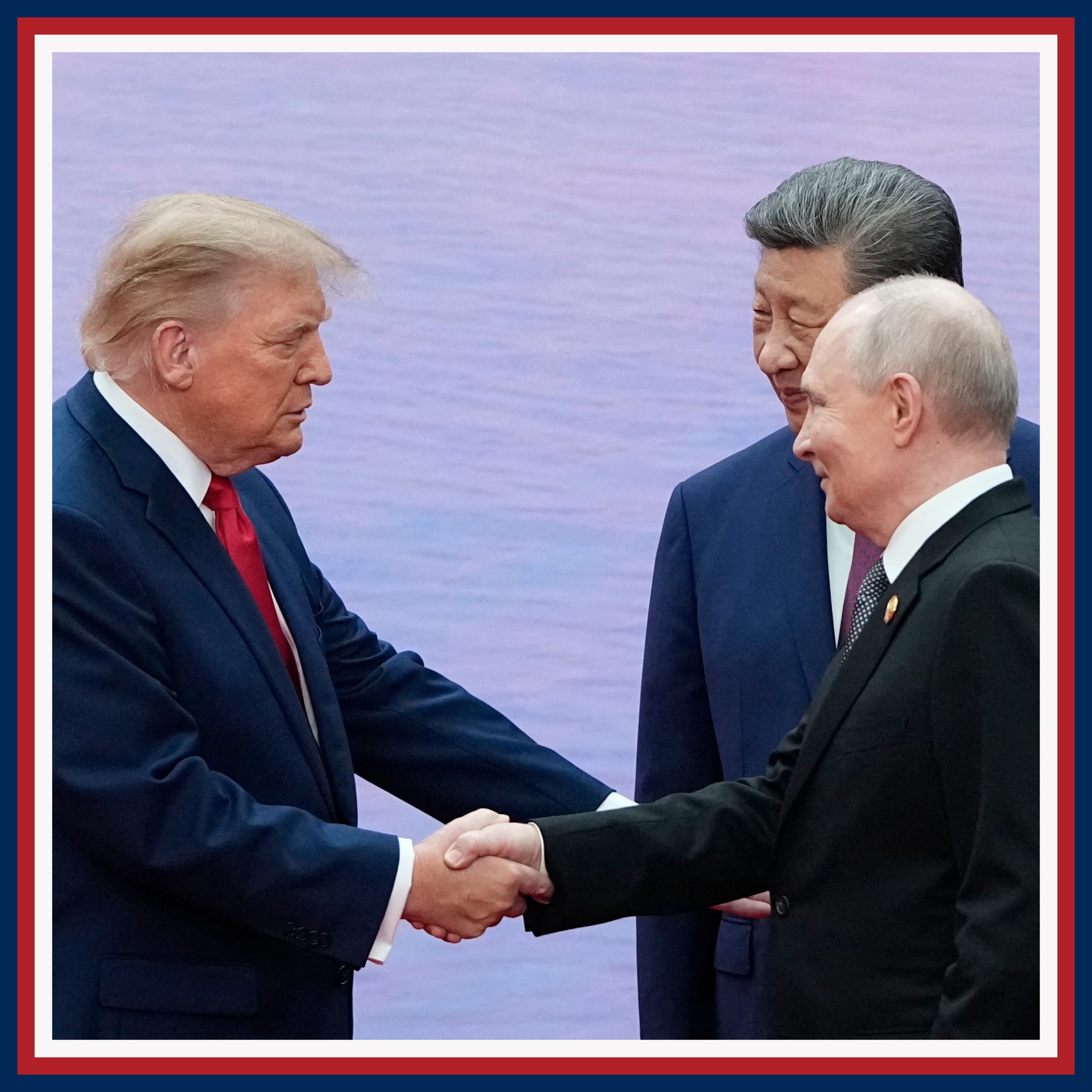
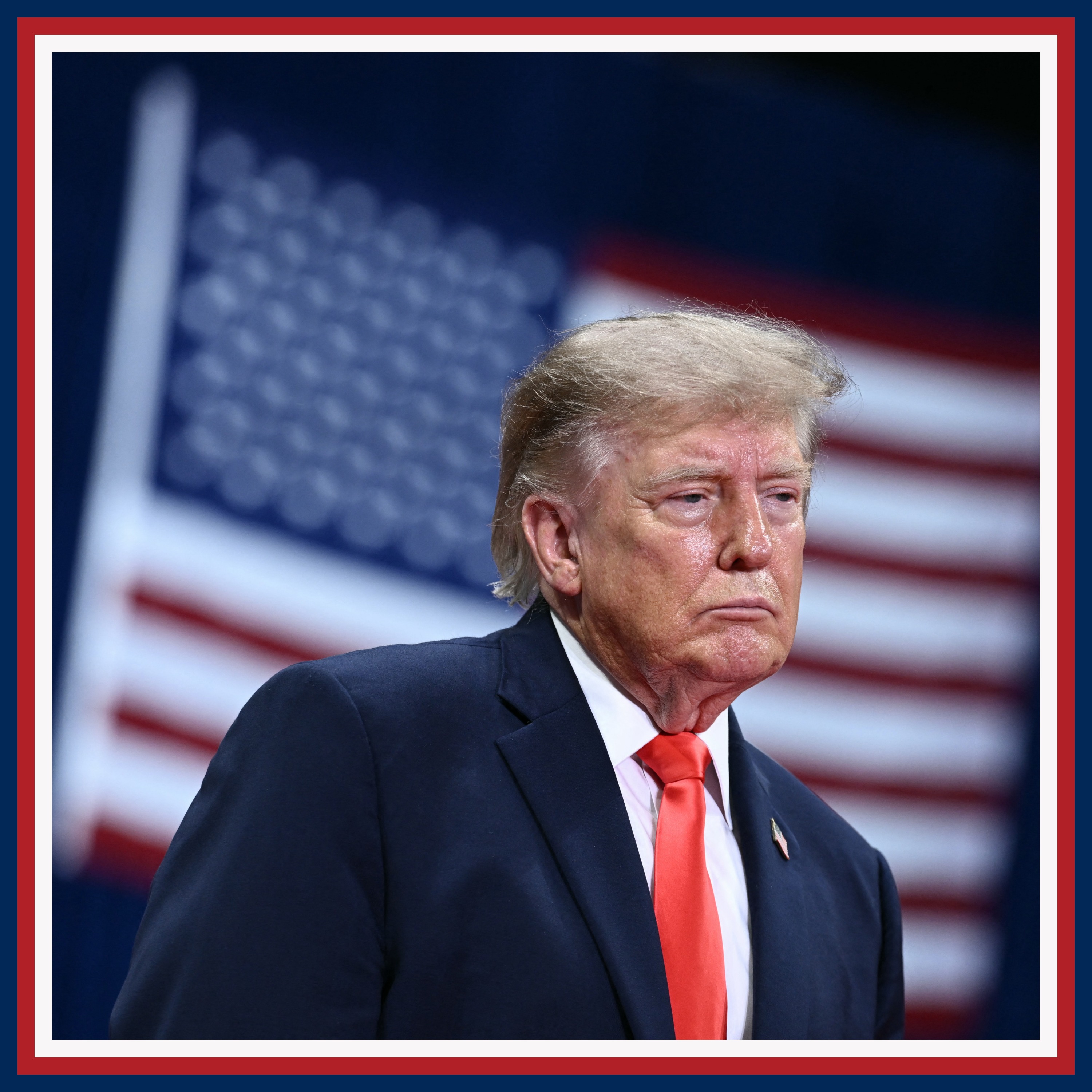
Donald Trump is in China for a high-stakes summit alongside Xi Jinping and Vladimir Putin. But he enters the talks in a far weaker political position than Franklin D Roosevelt held in 1945. Could this be the bargain of the century for Xi and Putin? The fallout continues from the Nvidia scandal. Amid deepening administration divisions over microchip exports to China, the commerce secretary, Howard Lutnick, faces growing scrutiny from Republicans and an incoming Democratic majority. Meanwhile, a wave of unexplained nationwide outages has grounded flights and disrupted major banks and tech systems. Is this the beginning of a broader breakdown in US cybersecurity? And finally, after claiming another Senate seat in Alaska, Democrats are preparing to wield sweeping majorities on Capitol Hill. What does the party's return to power mean for the next two years? Katy Balls, Washington editor and columnist at The Times and The Sunday Times Producers: Euan Dawtrey, Harry Kitson Executive producer: Molly Guinness Picture: Getty Images Audio: Fox News, Reuters Hosted on Acast.
Episode information is provided by the publisher. Listening takes place on the publisher’s service.
At the trilateral meeting of the leaders of the United States, Russia and China, in Shenzhen this week, Donald Trump was keen to emphasise that they were making history. While wars continue to roil Ukraine and the Middle East, the three leaders sat down to discuss nuclear weapons, boosting petroleum production, reform of the United Nations and their dislike of the International Criminal Court. So was this a Yalta 2.0 as some parts of the media have suggested, or will this meeting soon be forgotten as just another wild moment from final years of Trump's presidency? Guest: Margaret MacMillan, emeritus professor of international history at Oxford University and the University of Toronto
From August 18, 2025: On Aug. 18 at 3pm ET, Lawfare Editor in Chief Benjamin Wittes will sit down with Lawfare Ukraine Fellow Anastasiia Lapatina, Lawfare Contributing Editor Eric Ciaramella, and Lawfare Legal Fellow Mykhailo Soldatenko to discuss the meeting between President Trump and Russian President Putin in Alaska this past weekend, the White House meeting with Ukrainian President Volodymyr Zelensky alongside European leaders, and what this all means for ending the Russia-Ukraine War. Hosted on Acast.
From August 18, 2025: On Aug. 18 at 3pm ET, Lawfare Editor in Chief Benjamin Wittes sat down with Lawfare Ukraine Fellow Anastasiia Lapatina, Lawfare Contributing Editor Eric Ciaramella, and Lawfare Legal Fellow Mykhailo Soldatenko to discuss the meeting between President Trump and Russian President Putin in Alaska this past weekend, the White House meeting with Ukrainian President Volodymyr Zelensky alongside European leaders, and what this all means for ending the Russia-Ukraine War. Hosted on Acast.
This week on The Necessary Conversation, it's Chad, Haley, and Mary Lou. Bob is still recovering but sent in a video message about Trump calling Putin his friend that we watch together. 🇷🇺 Trump held the first-ever three-way talks with Putin and Xi, called it a "12 out of 10," and produced nothing. Then at a press conference he called Putin his friend — and when asked if Putin is a friend to America, the president of the United States said, "I can't speak to America." That same day, Trump's friend Putin launched massive strikes into Ukraine, hit Poland with two missiles — an act of war against a NATO ally — then struck near a Ukrainian restaurant and drone-bombed the first responders, killing a 7-year-old child and a 20-year-old paramedic. We watch Bob's video and ask Mary Lou: is Russia our friend? 🇨🇳 The House Foreign Affairs Committee revealed Trump's Commerce Department approved nearly 880,000 advanced AI chips for Chinese military-linked companies including Alibaba, Tencent, a
November 20, 2026 On November 19, Trump met with Xi Jinping and Vladimir Putin in Shenzhen, China, The fact that the president of the US would meet with leaders of China and Russia was bizarre since both China and Russia have been helping Iran in its current fight against the US, Trump appeared to want the fanfare and President Xi played that up, Putin wanted the meeting because it would suggest that Russia was a great power, although it is far from being so and Putin’s war on Ukraine is going poorly, The meeting’s purpose seemed to be to produce propaganda for each of the three leaders, Beyond the propaganda is the larger story of the destruction of the post-World War II rules-based international order, In its place is the idea of dividing the world into spheres of influence, The three leaders met for 90 minutes and issued only a vague "joint declaration toward peace," which vowed to reform the UN and weaken the International Criminal Court, where Putin is already under indictment for
November 21, 2026; 10am: The president’s coziness with tech oligarchs is muddying the waters of protecting America’s best interests. Congressman-elect Dan Koh expresses his concerns about the series of recent tech outages and how the administration is prioritizing beneficial relationships and cash over the safety of Americans and their cybersecurity; Lisa Rubin breaks down the obstacles ex-Nvidia CEO Jensen Huang can expect as legal inquiries come his way; Project 2025 may seem like a distant memory, but its policies are more present in this administration than you might think. David Graham outlines the consequences of the Heritage Foundation’s influence; Victor Fontanez is known on the internet as VicBlends, a viral haircutting sensation. But to many in the California prison system, he’s a mentor and hero, helping incarcerated men prepare for a career. Fontanez reflects on his impact. Hosted by Simplecast, an AdsWizz company.
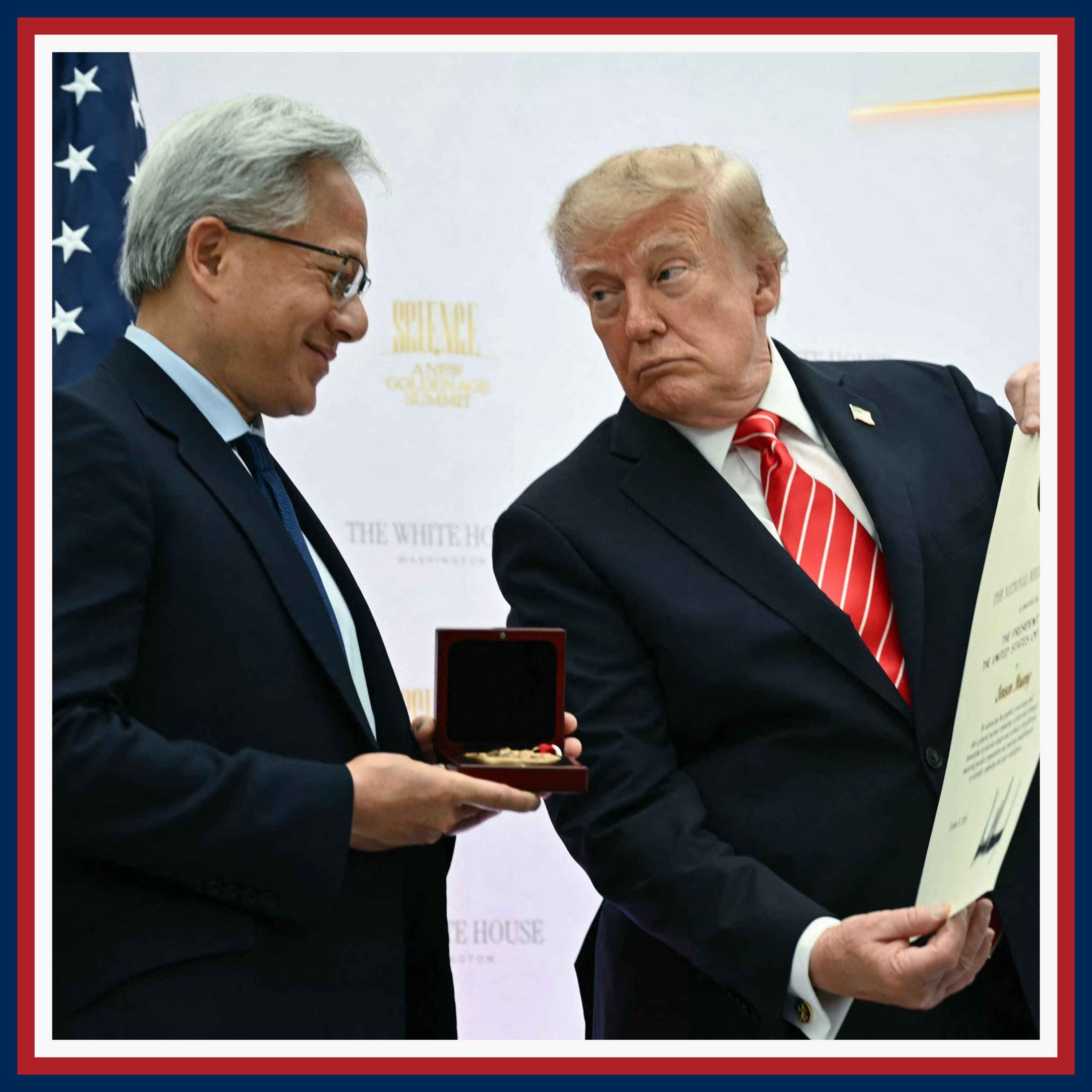
Jensen Huang has resigned as chief executive of Nvidia after admitting to one extramarital affair and facing allegations of a second. One of the women involved, Alice Huang, has been accused of being a Chinese spy. Nvidia has been leading the AI boom and so the damage to this one company has huge implications for the US economy, and beyond: Jensen Huang is a close ally of President Trump. Andrew Neil joins Gerard Baker to discuss the economic, political, geopolitical and technological implications. And the Republican losses in the midterms keep coming: Scott Colom has won his race, making him the first Democrat elected to the Senate from Mississippi since 1982. Where do the Republicans go from here, and what will the Democrats do next? Does either party really know what it stands for? Andrew Neil, presenter of The Andrew Neil Report (https://podfollow.com/1896865845/links) Producers: Euan Dawtrey, Harry Kitson Executive producer: Molly Guinness Picture: Getty Images Audio: Reuters Host
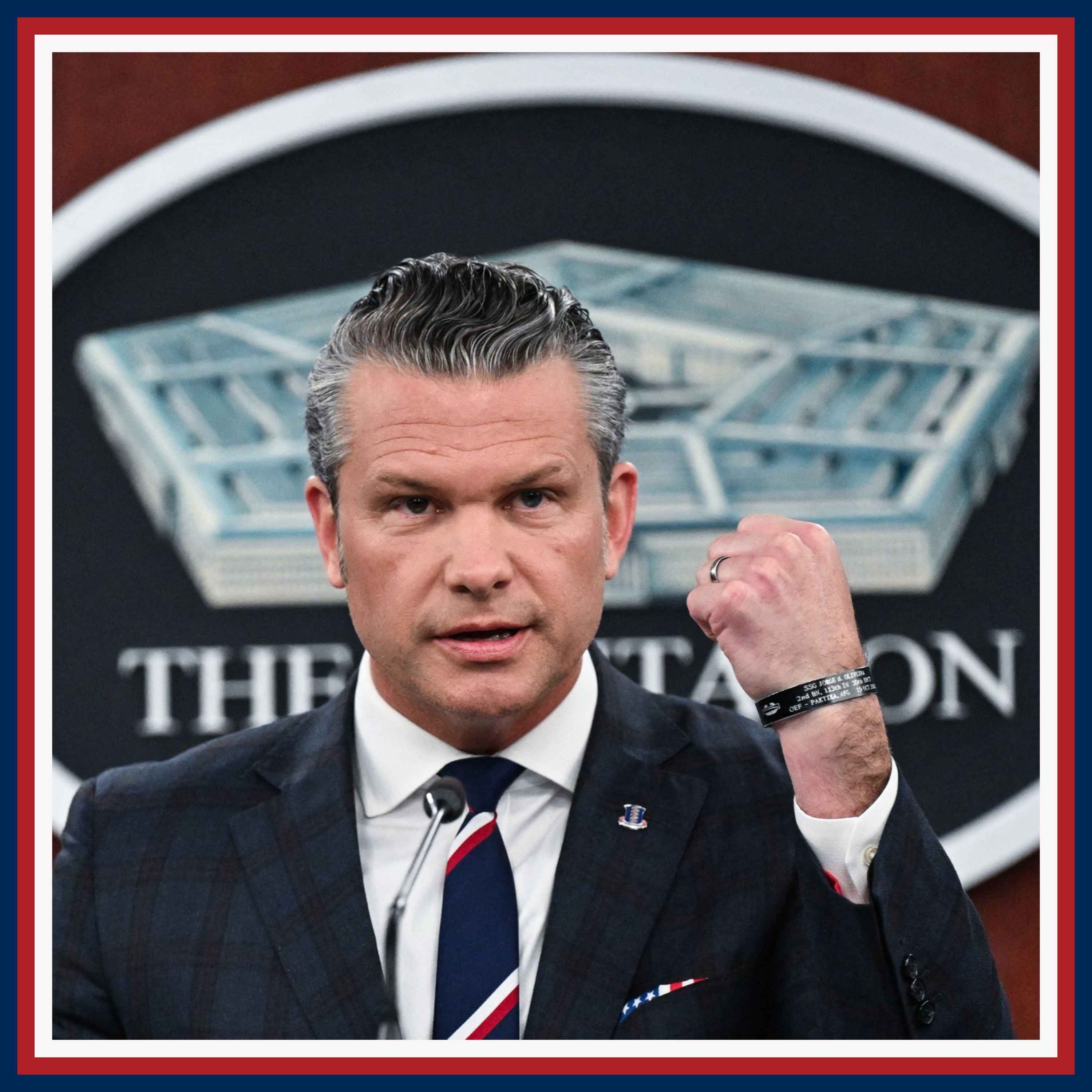
Pete Hegseth, Donald Trump's war secretary, has narrowly survived an attempt to impeach him. He was lucky that the Democratic political operation was chaotic. But how long will he be safe? Stephen Miller has taken over from Susie Wiles as President Trump's chief of staff. He is an expert at exerting the power of the executive as far as it will go. What's on his agenda? After their victories in the midterms, you might think the Democrats would be happy and united, but the battle is on for the soul of the party. Progressives want to challenge Chuck Schumer, their longstanding Senate leader. Could Alexandria Ocasio-Cortez be the Democratic candidate in 2028, and is a newly empowered left carving out an “America First” agenda of its own? Katy Balls, Washington editor and columnist, The Times and The Sunday Times Max Kendix, Washington correspondent, The Times Producers: Euan Dawtrey, Harry Kitson Executive producer: Molly Guinness Picture: Getty Images Audio: Reuters Hosted on Acast.
It’s been a long night for President Donald Trump in the US midterm elections. The Democrats have taken control of both the House and the Senate, inflicting defeat on the Republican Party. Despite him not being on the ballot, this was for many, a referendum on Trump and his record in office. The Iran war, rising gas prices, tariffs, aggressive immigration enforcement, allegations of corruption and scandal have all played a part. But perhaps most damagingly, the coalition that carried Trump to victory two years ago has fallen apart: Hispanic voters, young people and working-class Americans have all turned against him. So what does this mean for Trump’s final two years in office? And is it an end to MAGA as we know it? Katy Balls, Washington editor and columnist at The Times and The Sunday Times Producers: Euan Dawtrey, Harry Kitson Picture: Getty Images Hosted on Acast.
Allegations should not be treated as proven until a fair process establishes the facts.
Share your view, then see how readers voted. No sign-in required. This poll is shared across stories.
Do you agree or disagree?
Common Quandary
A Common Quandary to discuss
Another conversation to explore, separate from this news story.
An AI wrote the perfect condolence message for you. Is it still from the heart?
Your friend is grieving. You want to reach out, but words fail you, so you ask an AI to draft a condolence message. It expresses exactly what you feel. You revise it and send it without mentioning the help.