[Recorded October 30th at NOIC] Chris Temple, Editor and Publisher of the National Investor, joins us for a wide-ranging discussion at the New Orleans Investment Conference to review the macroeconomic trends creating extremely volatile markets, and his outlook on coming Fed policy, inflation trends, US treasuries and interest rates, potential ramifications of US mid-term elections, policies and trends around critical minerals, gold, silver, copper, uranium, and oil. Key discussion points: Recent market volatility has investors selling many sectors, including AI related tech leadership, to pile into defensive sectors, cash, and US treasuries. Higher persistent inflation has Chris of the mindset that the Fed should have already hiked rates more than they have; but yet, Kevin Warsh is just “talking us to death.” Chris concurred with Jeffery Gundlach’s latest jab at the US central bank after the last FOMC meeting accusing them of having a “Ready… Aim… Aim… Aim… (but no Fire)” US treasuries
In this episode of Loud & Unfiltered, we sit down with Wyan Schreiber, Marketing Manager at Chinois Ibiza and former Tour Manager for Loco Dice, to explore the island’s unique culture, the evolution of its nightlife and what it really takes to work in the electronic music industry. Wyan reflects on growing up in Ibiza, surrounded by the island’s countercultural roots and the hippie movement that helped shape its identity. With his parents part of that world, he shares how experiencing Ibiza from childhood gave him a unique perspective on the island, its people and the culture that continues to define it today. We go behind the scenes of life on the road with Loco Dice, as Wyan looks back on three years touring with one of electronic music’s biggest names. From the realities of constant travel to the responsibilities that come with managing an artist on tour, we break down what a Tour Manager actually does and the work that goes on behind the scenes to keep everything running. As Market
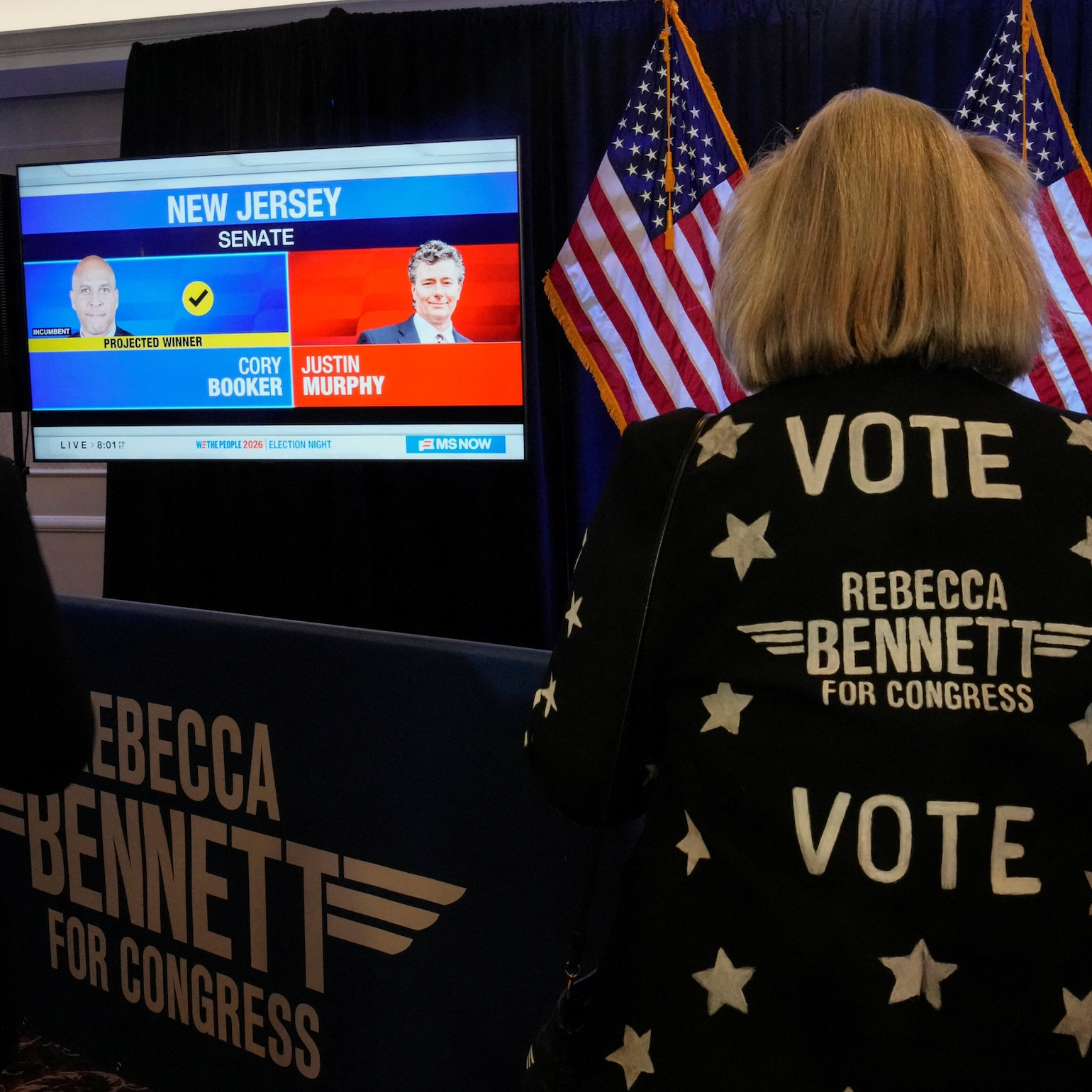
Today, a last minute look at the odds shift in the US mid-term elections and whether we are facing a blue wave or even a "blue tsunami" in favour of the Democrats. We also put the magnifying class to the notion that the US mid-term elections are a good time to put money to work in the US stock market. Elsewhere, we dive into yesterday's wild market internals, the somewhat less wild macro and FX backdrop and much more. Today's pod is hosted by Saxo Global Head of Macro Strategy John J. Hardy. Links Lawrence Lepard on the Thoughtful Money podcast lays out the basic playbook for the next great intervention and the bullish case for precious metals (https://www.youtube.com/watch?v=1e_-_kpSQI4). Craig Tindale with his latest long form piece on a supposed US plan to revalue its gold holdings (https://ctindale.substack.com/p/warsh-and-bessent-are-building-a) and pass the value bump on to the treasury, a first step in a profound transformation to revalue the Treasury's debt. The FT on Donald Tr
Andy Stanley offers some piercing insights on the dangerous side of leadership: how leaders get off course, what happens when you develop a court or entourage that adores you but won't tell you the truth, why resisting being 'special' is so important, and how to leverage the gift of leadership well so you last in the long run. Show Notes (https://careynieuwhof.com/shownotes) Follow @careynieuwhof (https://instagram.com/careynieuwhof) Join for free: https://careynieuwhof.com/shownotes AI AND THE FUTURE CHURCH: A BARNA INTENSIVE On November 10th, I'm teaming up with Barna for a three-hour leadership intensive called AI and the Future Church, where you'll get never-before-seen research on how pastors and congregations are actually using AI, and leave with a one-page plan including the language for the AI policy your church needed yesterday. Register at barna.com/aiandthefuturechurch (https://barnaaisummit.com/) GENERIS I've partnered with Generis to bring Generosity360 to your church, a c
Andrew hosts solo this week — no Evan — with special guest Bruce McClary, Senior VP of Media Relations at the NFCC. Bruce has spent his career on both sides of the debt conversation, as a debt collector and now as a credit counselor, and he brings a behind-the-trenches look at the state of the economy: one group of Americans is doing fine, while a growing group is running monthly budget deficits, draining savings, and leaning on credit cards charging over 20% interest. The message of the episode is simple and urgent: time is not your friend when debt starts sliding, so reach out for help before you miss a payment — and the first step is a lot less scary than most people think. What You Will Learn The two-sided economy: who's doing fine, who's falling behind, and the numbers that show it. Why waiting for next month to get better is the worst strategy when you're already running a deficit. The first practical step: pick up the phone and talk to your creditor before you miss a payment. Ho
No team in Major League Baseball plays in a smaller market than the Milwaukee Brewers. So how did they build a franchise that draws 3 million fans a year and just won the World Series? In this episode, Wendy Selig-Prieb, former president of the Milwaukee Brewers, talks about the risks she took that set the Brew Crew on the path to becoming the best team in baseball. She also breaks down how she used her platform as the only female MLB president in the 1990s to expose gaps in diversity and inclusion in other industries. Plus: the value of media training and why she pivoted from sports leadership to fashion. In this episode, Sammy and Wendy discuss: (00:00) Introduction (03:46) When Your Career Outgrows Your Plan (09:15) The Reality of Being the Only Woman in the Room (18:19) The Promotion She Never Saw Coming (22:54) What High-Stakes Negotiations Teach You (31:08) Turning a 10-Year Battle Into a Legacy (37:29) Why Walking Away Was Her Hardest Decision (41:35) The Challenges of Being You
The Real Cost of Owning a Car & Can You Actually Retire on $500,000?Wes breaks down the cold, hard numbers on two major financial questions that could completely change your path to financial independence. First, Wes dives into "car math," looking past the monthly payment to reveal the true total cost of ownership — including depreciation, fuel, maintenance, and insurance — across popular vehicles. He breaks down the 20-year math behind buying new versus used, keeping cars for 10 years versus cycling every three to five, and even whether ridesharing is the better move for low-mileage drivers, illustrating how holding onto your ride for a decade can pocket you an extra $100,000 in compound growth. Next, Wes examines the Federal Reserve's latest net worth data and tackles a crucial retirement question: can the average American really retire on $500,000? While it is challenging, Wes maps out how the math genuinely works if you leverage three critical variables. Mentioned on the show: What
In this episode, Lawfare’s Ukraine Fellow Anastasiia Lapatina sits down with with Anton Antonenko, the vice president of a Ukrainian energy think tank, DiXi Group, to discuss the energy infrastructure in Kyiv, and why the upcoming winter may be the toughest yet for the Ukrainian capital. Hosted on Acast.
One billion pieces of content are posted every day across social media platforms. However, even with changes to the algorithms, rapidly changing trends, and more paid advertising than ever before, there is still one single strategy that all viral content shares. Today’s guest reveals what that strategy is and his step-by-step playbook on how he’s used that strategy to generate over 60 billion views on social media. In this episode, social media veteran and viral content expert Brendan Kane joins Natalie to reveal the biggest myths about social media, going viral, and content creation. He reveals the one strategy that makes high-performing content break through the noise, as well as his process for studying, analyzing, and replicating viral content in any industry. Brendan and Natalie also explore a controversial question: should everyone build a personal brand on social media? In this episode, Natalie and Brendan discuss: (01:53) The #1 Evergreen Social Media Hack (09:30) Turn Your Doo
Can artificial intelligence destroy human creativity, and are the billionaires behind it putting profits ahead of our future? This week on Open Book, I'm joined by Lessons in Chemistry bestselling author Bonnie Garmus to discuss her new novel Peck & Peck, her extraordinary journey to success, and why she believes AI threatens our ability to think, create, and remain truly human. Bonnie Garmus is a coffee-dependent American novelist. Her debut novel, Lessons in Chemistry, was a Good Morning America Book Club Pick, a Goodreads Choice Best Book of the Year, spent nearly two years on the New York Times bestseller list and was named by Times readers as one of the top 100 books of the 21st century, sold 10 million copies, and was translated into over forty languages. Lessons in Chemistry earned sixteen international literary awards and was adapted into an Apple TV limited series. Get a copy of her spectacular new book, Peck & Peck: A Novel (https://link.amazon/B0evWjFSL) Books mentioned in t
Dan Nathan hosts Dan Ives to discuss a sharp Nasdaq and semiconductor selloff, shifting AI leadership, and how investors should navigate violent drawdowns. Ives explains his move from Wedbush to the new Yorkville Ives “modern merchant bank,” continued involvement with the Ives ETF, and the launch of a $200 million IPO vehicle investing in private AI companies. They debate AI as an 8–12 year buildout versus dot-com, emphasizing the gap between massive CapEx and monetization, energy constraints, and leverage risks at firms like Oracle and neo-clouds. The conversation contrasts Microsoft’s enterprise-driven AI upside with Alphabet’s ad/search cannibalization fears, highlights stock-picking across chips, hyperscalers, software, and cybersecurity, and examines bear arguments on GPU depreciation, token economics, and political risks from potential data-center restrictions after midterms. — Twitter: @RiskReversal (https://x.com/RiskReversal)
Anthropic has filed to go public, and its S-1 lays out a future of "virtual collaborators," $40 trillion in knowledge work, and a valuation that could top Meta's. Paul Roetzer and Mike Kaput break down the filing. They debate whether Fortune 500 companies can really become "self-driving" by 2030, and dig into Google DeepMind's new research on AGI, wages, and the meaning of work. In rapid fire: Gemini 4 Carbon, Genie 4, and GPT-6.1 Terra; earnings from Google, Microsoft, and Amazon; Microsoft's 60,000-employee buyout offer; Amazon's anti-tokenmaxxing memo; and a new wave of AI security incidents. Show Notes: Access the show notes and show links here (https://podcast.smarterx.ai/shownotes/249) Timestamps: 00:00:00 — Intro 00:06:57 — Anthropic’s IPO Filing 00:27:42 — The Rise of the Self-Driving Company? 00:41:35 — Google DeepMind & OpenAI Say AI Could Transform the Meaning of Work 00:56:12 — Google Unveils Gemini 4 Carbon and Genie 4 as OpenAI Releases GPT-6.1 Terra 01:01:44 — Google, Mi
Vinod Khosla is one of the most successful and contrarian investors alive, first at Kleiner Perkins and then at Khosla Ventures, where he wrote the first institutional check into OpenAI. Forbes ranked him #1 on its 2026 Midas List. Vinod previously co-founded Sun Microsystems and took it from zero to a billion dollars in sales in five years. In this episode of Summation, Vinod and Auren discuss: Why 40 years of radical innovation has come from startups, not big companies Why he has never once calculated an IRR, including on OpenAI Why 70-80% of VCs add negative value, and what "brutal honesty over hypocritical politeness" looks like in a board meeting AI capable of doing 80% of jobs, and how to protect the people instead of the jobs Why he changed his mind on open source AI, and why "follow your passion" is finally good advice You can find Auren Hoffman on X at @auren and Vinod Khosla on X at @vkhosla (https://x.com/vkhosla)
Save your seat in this 2-part workshop series that turns your “I wish I could quit my job” into a specific, actionable plan to get you out of your job in 90 days or less. Get access here: https://herfirst100k.com/ffpod. Today I'm sitting down with Natalie Ellis, mom, CEO, and founder of Boss Babe, and author of the New York Times bestseller The Freedom-Based Business Method. Natalie built a multimillion-dollar company and then realized she'd been running it on an aggressive growth playbook for a business she never planned to sell. We get into why burnout isn't a badge of honor, why the median follower count in Natalie's survey of six-figure-plus business owners will shock you, and the three boring things that actually make a business work. If you run a business, want to start one, or just keep buying courses hoping the next one fixes it, this is your episode. Natalie’s Links: Websites: https://www.bossbabe.com/ ; https://www.natalie-ellis.com/ Book: https://bookshop.org/a/90037/9781401
A decade ago, Bob Safian wrote about Generation Flux, the people built to thrive amid constant change. Today, he says, we all belong to it, whether we want to or not. In this live segment from Masters of Scale Summit 2026, Safian gathers leaders from across business, tech, and media to work out what that takes, in real time. Former U.S. Chief Data Scientist DJ Patil opens with a double pendulum and a lesson in chaos theory. Raina Kumra, who now manages a team of 12 AI agents, explains why there is no keeping up, only keeping calm. Upwork’s Hayden Brown makes the case for leading like a pioneer, Baratunde Thurston tries not to become a machine, and Watch Duty’s John Mills explains why speed and haste are not the same thing. Then Autodesk’s Dara Treseder and her husband William, a Marine Reservist and co-founder of Arkenstone Defense, share how they juggle glass balls and rubber balls across career, marriage, and family, and keep score with a family NPS. Candid, surprising, and brimming
Join Multi-Agent Orchestration Course to learn how to design sophisticated AI workflows and automated business processes. What if your next accounting mistake could be caught by AI before it ever reaches your financial reports? From messy general ledgers to time-consuming reconciliations, accounting can drain valuable resources. But Claude AI is changing what's possible, helping businesses turn raw financial data into structured reports, identify discrepancies, and automate repetitive work. In this episode of Leveraging AI, host Isar Meitis sits down with Maksims Sičs, co-founder of the Microsoft Excel World Championship and founder of Flowbyte AI, for a practical demonstration of AI-powered accounting automation. Watch how Claude transforms months of general ledger data into Excel-based profit and loss statements and balance sheets, while flagging errors that might otherwise go unnoticed. In this session, you'll discover: How to use Claude AI to automate accounting workflows without c
Americans head to the polls today in midterm elections that could shape the final two years of President Trump's agenda. Oil prices swing after US strikes on Iran complicate hopes for diplomacy. And Apple shares fall despite an earnings beat as investors focus on margin pressure and rising chips costs. Podcasts, breaking news, and video analysis from the source. Today's recommended read: Fridge hacks and finance attacks flag AI insecurity (https://www.reuters.com/commentary/reuters-open-interest/fridge-hacks-finance-attacks-flag-ai-insecurity-mike-dolan-2026-11-03/) by Mike Dolan Produced by Abisoye Osundairo. Sound engineering and music by Sebastian and Josh Sommer.
This episode breaks down the exact frameworks that separate people who set goals from people who actually achieve them, why most people are scared of growth and how to name those fears out loud, and the specific systems that will help you lock in, focus, and finish the year strong. From the four numbers you should track in business to why mental masturbation is the single reason most people don't win, you'll learn how to look at what you built, visualize what you want, and execute like your life depends on it. In this episode, you'll learn: Why you don't need more time, you just need focus Kat Cole’s “hotshot” rule Why thinking about your goals is not the same as doing the work The Disney flywheel principle Why most people are scared of growth ___________ (00:00:00) Introduction: 59 Days to Dominate 2027 (00:00:31) The Timeline Truth: You Need a Deadline, Not More Time (00:01:32) The 2027 Strategy: Look at What You Built (00:02:22) Small and Consistent Beats Sporadic: Track Your Progre
Ed Elson is joined by John Foley to break down Anthropic’s amended S-1 and whether investors should be paying attention to the company’s potential credit rating. Then Deirdre Bosa returns to explain why the Nasdaq just entered correction territory and what the sentiment is like in San Francisco. Finally, Mark Zandi joins to assess the state of the economy ahead of the midterms. John Foley is the Head of the Lex column at the Financial Times. Deirdre Bosa is the Founder & Host of Deirdre Bosa Live. Mark Zandi is the Chief Economist at Moody's Analytics. Follow Prof G Markets here: X:x.com/ProfGMarkets (http://x.com/ProfGMarkets) TikTok:tiktok.com/@profgmarkets (http://tiktok.com/@profgmarkets)
Dr. Anna Lembke, Stanford psychiatrist and bestselling author of Dopamine Nation, joins Scott Galloway to discuss our dependence on validation – and why achievement doesn’t always make us feel better about ourselves. Drawing on her new book, Radical Surrender, she explains how to recognize addictive behavior, when parenting becomes enabling, and why letting go of control can help us build more meaningful lives. Plus, Scott opens up about the personal cost of trying to impress strangers. Order Dr. Lembke’s new book: Radical Surrender: Letting Go in a World Addicted to Control (https://www.amazon.com/dp/B0GMVBJVKG?adgrpid=197419381813&channelId=500&hvadid=812933685487&hvcampaign=23946702628&hvdev=c&hvdvcmdl=&hvexpln=0&hvext=372668702092&hvlocint=&hvlocphy=9031970&hvnetw=g&hvocijid=15981287562230317769--&hvpone=&hvpos=&hvptwo=&hvqmt=a&hvrand=15981287562230317769&hvtargid=kwl-2484167636399&hydadcr=17366_13842318_2502594&language=en_US&lv=shuf&mcid=&plpRedirect=mhFallback&ref_=&tag=smgglusd
Having kids hasn’t been cheap for a long time. But with the cost of living so high, is starting a family becoming something only well-off Canadians can afford? New research from Statistics Canada suggests that income is playing a bigger role in who becomes a parent. In this episode, we hear from two mothers who want another child but are struggling with the financial realities of growing their families. We also speak with chartered professional accountant Janine Rogan about why job security plays a big role in that decision, the hidden costs of parenthood, and how to know when you’re financially ready for a baby. Hosted by Simplecast, an AdsWizz company.
What happens when you go from spending 120% of your income to saving 80%-90% of it and eventually reach financial independence in your 40s? Justin David Carl knows firsthand that making a high-income doesn't necessarily mean building wealth. After racking up $80,000 in debt during his Hollywood nightlife career and falling six years behind on taxes, he had to completely rethink his relationship with money. But once he discovered the Financial Independence (FIRE) movement, he turned things around in a big way. Welcome back to the BiggerPockets Money podcast! Justin joins Mindy Jensen and Scott Trench to share how he went from nightclub VIP hosting to earning as much as $888,000 a year in tech sales, paying off debt, and building wealth through an aggressive savings and investing strategy. But reaching financial independence brought an unexpected challenge: figuring out what to do next. Now, instead of chasing the highest possible net worth, Justin is focused on maximizing his "net life"
What's up, guys? Today, we're diving straight into the truth about the Gen Z job market — and trust me, this is a conversation we all need to hear. In this episode, we're reacting to what's really going down in the hunt for meaningful work: from ghost job postings to the brutal new standards set by AI, from degrees that just aren't cutting it anymore to the mindset shifts necessary to actually get hired. We're sorting through what Gen Z is facing right now, and why it's never been more important to develop real, marketable skills — not just rack up credentials. We're breaking down how you can navigate barriers, go beyond the numbers game, and actually stand out in one of the toughest hiring landscapes we've ever seen. If you want to know how to play the game and win, what it actually takes to get noticed, and how to take control in a market that feels completely stacked against you, this is the episode you can't afford to miss. My mission is for you to walk away with strategies you can