Vinod Khosla: freeing humanity from “servitude to survival”
59 min
Listen through the publisher, then discuss the episode here or arrange an in-person Roundtable. Your city determines where to meet.
Roundtables are designed for groups of four, with a shared subject and room for everyone to speak. Come for discussion, with no dating expectation.
Vinod Khosla is one of the most successful and contrarian investors alive, first at Kleiner Perkins and then at Khosla Ventures, where he wrote the first institutional check into OpenAI. Forbes ranked him #1 on its 2026 Midas List. Vinod previously co-founded Sun Microsystems and took it from zero to a billion dollars in sales in five years. In this episode of Summation, Vinod and Auren discuss: Why 40 years of radical innovation has come from startups, not big companies Why he has never once calculated an IRR, including on OpenAI Why 70-80% of VCs add negative value, and what "brutal honesty over hypocritical politeness" looks like in a board meeting AI capable of doing 80% of jobs, and how to protect the people instead of the jobs Why he changed his mind on open source AI, and why "follow your passion" is finally good advice You can find Auren Hoffman on X at @auren and Vinod Khosla on X at @vkhosla (https://x.com/vkhosla)
Episode information is provided by the publisher. Listening takes place on the publisher’s service.
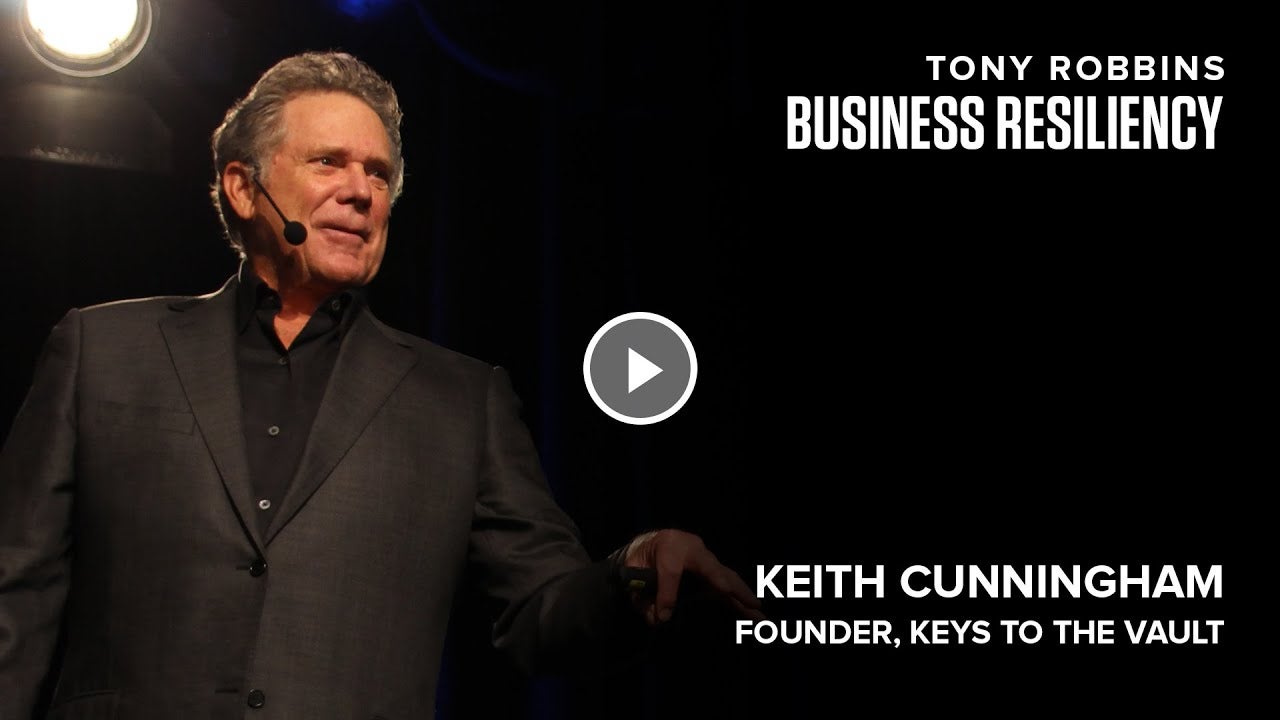
Keith Cunningham – renowned business expert, entrepreneur and speaker – highlights the critical crisis management questions that you must ask yourself to maximize periods of “thinking time.” Uploaded 28-04-20 What’s “thinking time”? Some business owners might call it an economic downturn. Tony Robbins calls it economic winter. But the most successful people call it an opportunity. They’re able to see that with the right mindset, a crisis can create breakthroughs, instead of breaking you. Hear what Tony had to say about creating breakthroughs on his podcast at https://www.tonyrobbins.com/podcasts/3-steps-breakthrough and get started creating yours today. Keith says in the video, “Cursing the wind doesn’t stop the hurricane.” In times of hardship, we have no choice but to play the hand we’ve been dealt. And as the saying goes, it’s not the hand you’ve been dealt, but how you play the hand that determines whether you win the game. How can you ensure you’re playing your hand in the best po
You went back. Maybe not to the same person, but to the idea of them. You rehearsed the conversation again in your mind. You thought of better words, sharper examples, a clearer way to say the thing you'd already said. You kept trying to win an argument that was already over, with a person who had already walked away. Uploaded 13-10-26 That hunger to be understood is one of the most natural things in the world. And it is also one of the quietest thieves of a person's peace that I know of. You explain yourself to one person, feel relief for a day, and then someone else shakes their head, and you're back building the case for your own life all over again. Here is the truth: it is not another person's job to understand you. It is your job to understand yourself. And once you've done that interior work, the opinions of people who don't understand you go from feeling like a verdict to feeling like weather. This seminar unpacks the single mechanic behind why you keep over-explaining your lif
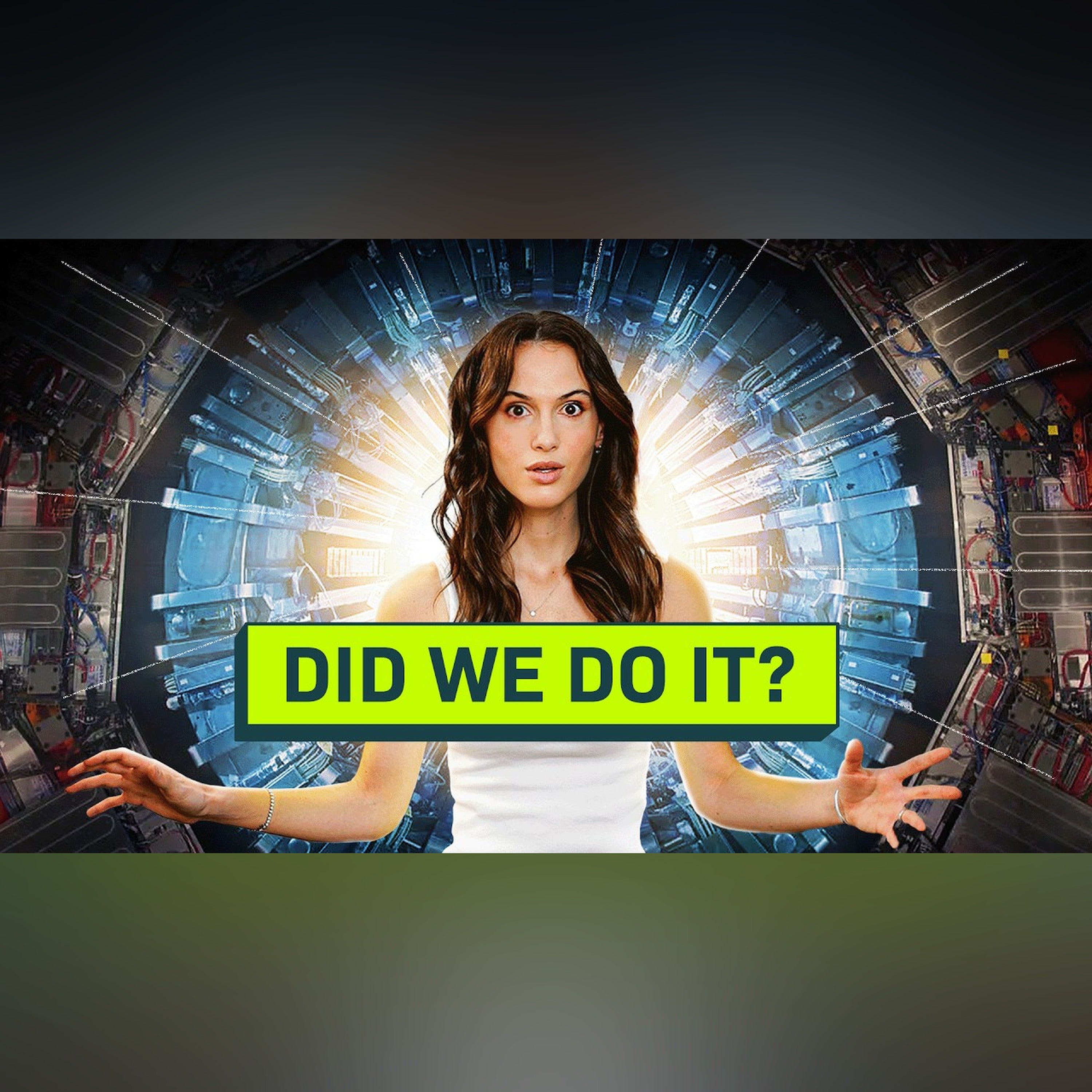
The world’s most astonishing science experiment, simply explained. On the border between France and Switzerland is the biggest science experiment humanity has ever built. Over a 100 meters underground, there’s a tunnel 27 kilometers long in a big loop under nearby homes, businesses, and farms. Inside that tunnel, scientists built a blue tube big enough to crawl through, and inside that tube, they put two pipes that they keep colder and emptier than outer space. Down those pipes, they fire particles smaller than atoms in opposite directions…. and push them faster and faster… until when they’re almost at the speed of light… they SMASH TOGETHER. This underground particle-smasher is also known as the Large Hadron Collider at CERN. It took thousands of scientists from over nearly 100 different countries $5 billion dollars and 30 years to plan and build. My question is: Why? Why did they do that??? Why spend so much money and time to smash particles underground? And now… why do so many scien
Bitwise Head of Research Ryan Rasmussen joins The Rollup at Solana Breakpoint to break down how investors should value SOL, from Solana's 40% share of tokenized stock volume to why tokens without strong tokenomics are set to underperform. We also cover the sharpest stablecoin drawdown Ryan has seen, the CFTC's perps ruling with Backpack, and why Bitwise views today as a buying opportunity. Stabled Up is presented by Frax. Ryan Rasmussen is the Head of Research at Bitwise. Live from the financial capital of the world. Timestamps: 00:00 Intro 00:45 Why Stablecoin AUM Is Falling 02:30 Climbing The Wall Of Worry 04:53 The Genius Act And Payment Stablecoins 05:42 Perps Come To The US Via Backpack 08:20 Tokenization Is Only 0.01% Of The Market 10:24 Who Wins The Tokenization Race 11:09 Do Tokenomics Matter? 13:21 A New Cohort Of Winners 14:57 Why Holding Periods Matter 16:09 Bitwise's Long-Term View On Solana Guest Socials Ryan Rasmussen X: https://x.com/RasterlyRock Bitwise X: https://x.com
Sign up for our newsletter and never miss an animation: http://bit.ly/TEDEdNewsletter Uploaded 10-01-19 View full lesson: https://ed.ted.com/lessons/can-you-solve-the-multiplying-rabbits-riddle-alex-gendler After years of experiments, you’ve finally created the pets of the future – nano-rabbits! They’re tiny, they’re fuzzy ... and they multiply faster than the eye can see. But a rival lab has sabotaged you, threatening the survival of your new friends. Can you figure out how to avert this hare-raising catastrophe? Alex Gendler shows how. Lesson by Alex Gendler, directed by Artrake Studio. Thank you so much to our patrons for your support! Without you this video would not be possible! Dan Paterniti, Jerome Froelich, Tyler Yoshizumi, Martin Stephen, Justin Carpani, Faiza Imtiaz, Khalifa Alhulail, Tejas Dc, Benjamin and Shannon Pinder, Srikote Naewchampa, Sage Curie, Exal Enrique Cisneros Tuch, Ana Maria, Vignan Velivela, Ahmad Hyari, eden sher, Travis Wehrman, Louisa Lee, Kiara Taylor, А
In this week's episode of The Wrap with Chris Whalen, Chris says Fed Chair Kevin Warsh has lost credibility with the markets. He compares Warsh to G. William Miller, Carter’s Fed chair, and argues that quarter-point hikes all year would have kept long-term yields in check. He also lays out what real leadership would look like: successive quarter-point hikes and a gap between the fed funds rate and the interest paid on reserves. Chris warns that rates are already at their upper bound. Long-term yields are up four and a half points since 2021, the bottom ten of the 38 mortgage companies he tracks are basically insolvent, and firms like Brookfield are walking away from commercial properties they can’t refinance. He explains why the Fed needs to think in spreads, not just rates, and why the push for centralized Treasury clearing could hurt demand right as Treasury needs to raise $800 billion in January, setting up a possible bond market breakdown. Plus: why central banks can’t fix war-driv
Will Marshall is the co-founder and CEO of Planet (NYSE: PL), which flies the largest fleet of Earth-imaging satellites in history and photographs the entire surface of the Earth every day. Before Planet, Will was a scientist at NASA working on missions to the moon. This is his second time on Summation. In this episode of Summation, Will and Auren discuss: Why satellites got 1,000x better in a decade while launch costs only improved 5x Large earth models: pairing daily satellite imagery with LLMs so anyone can "chat with the Earth" Why it's getting very hard to hide anything at scale, from pontoon bridges to drone launch sites Why the world looks static on a map but changes every single day A self-sustaining base on the moon, and the hardest open question about living there You can find Auren Hoffman on X at @auren and Will Marshall on X at @will4planet (https://x.com/Will4Planet?lang=en) Interact with the earth on Planet's new app: https://ai.planet.com/
Omer Ismail is the CEO of OnePay, the Walmart-backed fintech that has become one of the largest neobanks in the country, with millions of users, tens of billions of dollars in annualized payments, and a valuation of around $4 billion. Before OnePay, he spent nearly two decades at Goldman Sachs, where he built and ran Marcus, the firm's consumer bank. In this episode of Summation, Omer and Auren discuss: Why customers asked OnePay to hide their savings from them A teen bank account that hands kids a credit score on their 18th birthday Giving your AI agent its own bank account with spending limits Why experience is overrated, and the candidate who took a 10-hour overnight train to get hired You can find Auren Hoffman on X at @auren and Omer Ismail on Linkedin (http://linkedin.com/in/omer-ismail-b6400824)
Keeping food affordable should not require producers to work for an unsustainable income.
Share your view, then see how readers voted. No sign-in required. This poll is shared across stories.
Do you agree or disagree?
Common Quandary
A Common Quandary to discuss
Another conversation to explore, separate from this news story.
You find a family secret after a relative dies. Does the truth come out?
Sorting through a deceased relative's papers, you discover evidence of a serious betrayal that would change how the family remembers them. Revealing it could answer old questions—and cause fresh pain.