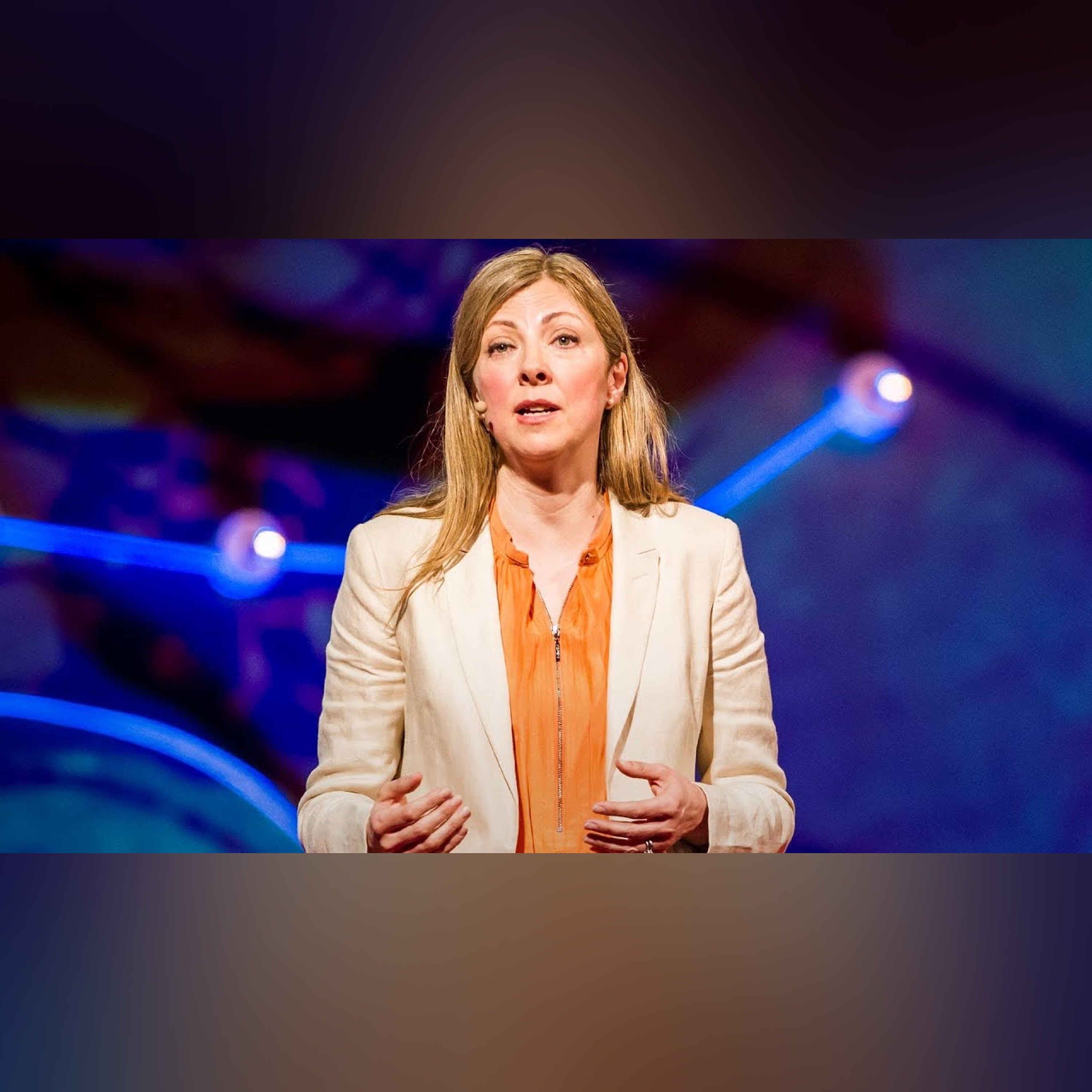
Damon Horowitz reviews the enormous new powers that technology gives us: to know more -- and more about each other -- than ever before. Drawing the audience into a philosophical discussion, Horowitz invites us to pay new attention to the basic philosophy -- the ethical principles -- behind the burst of invention remaking our world. Where's the moral operating system that allows us to make sense of it? (Filmed at TEDxSiliconValley.) Uploaded 08-08-13 Talk by Damon Horowitz.
View full lesson: http://ed.ted.com/lessons/how-to-defeat-a-dragon-with-math-garth-sundem Having trouble remembering the order of operations? Let's raise the stakes a little bit. What if the future of your (theoretical) kingdom depended on it? Garth Sundem creates a world in which PEMDAS is the hero but only heroic when in the proper order. Lesson by Garth Sundem, animation by Mark Phillips.
View full lesson: http://ed.ted.com/lessons/the-secret-lives-of-baby-fish-amy-mcdermott Uploaded 11-08-14 Coral reef fish, like the yellow tang surgeonfish, begin life in a fascinating and weird way – as tiny floating larvae! These babies are capable of drifting thousands of miles on ocean currents, far from the reefs where they were born. Amy McDermott describes how these tiny trekkers travel across vast oceans, searching for the far-flung reefs they will one day call home. Lesson by Amy McDermott, animation by Reflective Films.
Dive into the Greek myth of Helios and Phaethon, where the Sun God allows his mortal son to drive his chariot for a day. Uploaded 18-01-22 -- Every morning, Helios unleashed his golden chariot, and set out across the sky. As the Sun God transformed dawn into day, he thought of his son, Phaethon, below. To prove to Phaethon that he was truly his father, Helios decided to grant him anything he wanted. Unfortunately, what Phaethon wanted was to drive Helios’ chariot for a day. Iseult Gillespie shares the tragic myth of the charioteer. Lesson by Iseult Gillespie, directed by Raghav Arumugam and Jagriti Khirwar. Support Our Non-Profit Mission ---------------------------------------------- Support us on Patreon: http://bit.ly/TEDEdPatreon Check out our merch: http://bit.ly/TEDEDShop ---------------------------------------------- Connect With Us ---------------------------------------------- Sign up for our newsletter: http://bit.ly/TEDEdNewsletter Find us on Twitter: http://bit.ly/TEDEdTwitt
View full lesson: http://ed.ted.com/lessons/noreena-hertz-how-to-use-experts-and-when-not-to Uploaded 24-08-13 We make important decisions every day -- and we often rely on experts to help us decide. But, says economist Noreena Hertz, relying too much on experts can be limiting and even dangerous. She calls for us to start democratizing expertise -- to listen not only to "surgeons and CEOs, but also to shop staff." Talk by Noreena Hertz.
Investigate the theories surrounding cosmic dust bunnies and discover how the tiny particles could hold the key to the formation of life on Earth. Uploaded 05-09-19 -- Consider the spot where you’re sitting. Travel backwards in time and it might’ve been submerged at the bottom of a shallow sea, buried under miles of rock or floating through a molten landscape. But go back about 4.6 billion years, and you’d be in the middle of an enormous cloud of dust and gas orbiting a newborn star. What exactly is this cosmic dust? Lorin Matthews investigates. Lesson by Lorin Swint Matthews, directed by Frederic Siegel (Team Tumult). Sign up for our newsletter: http://bit.ly/TEDEdNewsletter Support us on Patreon: http://bit.ly/TEDEdPatreon Find us on Twitter: http://bit.ly/TEDEdTwitter Peep us on Instagram: http://bit.ly/TEDEdInstagram View full lesson: https://ed.ted.com/lessons/the-dust-bunnies-that-built-our-planet-lorin-swint-matthews Thank you so much to our patrons for your support! Without you
Discover how scientists developed atomic clocks, which use the vibrations of atoms to measure and maintain a globally consistent time. Uploaded 19-01-21 -- In 1967, researchers gathered to answer a long-running scientific question: just how long is a second? It might seem obvious at first. A second is the tick of a clock, the swing of a pendulum, the time it takes to count to one. But how precise are those measurements? And what is that length based on? John Kitching digs into how we scientifically define this fundamental unit of time. Lesson by John Kitching, directed by Tjoff Koong. Support Our Non-Profit Mission ---------------------------------------------- Support us on Patreon: http://bit.ly/TEDEdPatreon Check out our merch: http://bit.ly/TEDEDShop ---------------------------------------------- Connect With Us ---------------------------------------------- Sign up for our newsletter: http://bit.ly/TEDEdNewsletter Find us on Twitter: http://bit.ly/TEDEdTwitter Peep us on Instagram
When the son of the president of a desperately poor country starts buying mansions and sportscars on an official monthly salary of $7,000, Charmian Gooch suggests, corruption is probably somewhere in the picture. In a blistering, eye-opening talk (and through several specific examples), she details how global corruption trackers follow the money -- to some surprisingly familiar faces. Uploaded 23-08-13 Talk by Charmian Gooch.
View full lesson: http://ed.ted.com/lessons/inside-the-minds-of-animals-bryan-b-rasmussen Uploaded 14-07-15 Do animals think? It’s a question that has intrigued scientists for thousands of years, inspiring them to come up with different methods and criteria to measure the intelligence of animals. Bryan B Rasmussen navigates through this controversial question, showing how determining intelligence often says more about how humans think than about anything else. Lesson by Bryan B Rasmussen, animation by Mike Schell.
Learn the story of the WWII student resistance group, called the White Rose, fighting against Hitler in Nazi Germany. Uploaded 03-09-19 -- In 1943, Allied aircraft rained tens of thousands of leaflets on Nazi Germany below. The leaflets urged readers to renounce Hitler, to fight furiously for the future— and to never give up hope. Their call to action rippled through homes and businesses— and their message even reached concentration camps. They were signed: the White Rose. Iseult Gillespie details the story of the resistance group. Lesson by Iseult Gillespie, directed by WOW-HOW Studio. Sign up for our newsletter: http://bit.ly/TEDEdNewsletter Support us on Patreon: http://bit.ly/TEDEdPatreon Find us on Twitter: http://bit.ly/TEDEdTwitter Peep us on Instagram: http://bit.ly/TEDEdInstagram View full lesson: https://ed.ted.com/lessons/the-secret-student-resistance-to-hitler-iseult-gillespie Thank you so much to our patrons for your support! Without you this video would not be possible! L
View full lesson: http://ed.ted.com/lessons/jonathan-haidt-on-the-moral-roots-of-liberals-and-conversatives Psychologist Jonathan Haidt studies the five moral values that form the basis of our political choices, whether we're left, right, or center. In this eye-opening talk, he pinpoints the moral values that liberals and conservatives tend to honor most. Jonathan Haidt studies how -- and why -- we evolved to be moral. By understanding more about our moral roots, his hope is that we can learn to be civil and open-minded. Talk by Jonathan Haidt.
View full lesson: http://ed.ted.com/lessons/behind-the-great-firewall-of-china-michael-anti Uploaded 22-06-13 Michael Anti (aka Jing Zhao) has been blogging from China for 12 years. Despite the control the central government has over the Internet -- "All the servers are in Beijing" -- he says that hundreds of millions of microbloggers are in fact creating the first national public sphere in the country's history, and shifting the balance of power in unexpected ways. Talk by Michael Anti.
View full lesson: http://ed.ted.com/lessons/maajid-nawaz-a-global-culture-to-fight-extremism Why do transnational extremist organizations succeed where democratic movements have a harder time taking hold? Maajid Nawaz, a former Islamist extremist, asks for new grassroots stories and global social activism to spread democracy in the face of nationalism and xenophobia in this powerful Talk from TEDGlobal 2011. Talk by Maajid Nawaz.
Explore the science of the groundbreaking technology for editing genes, called CRISPR- Cas9, and how the tool could be used to cure diseases. Uploaded 24-01-19 -- From the smallest single-celled organism to the largest creatures on Earth, every living thing is defined by its genes. With recent advancements, scientists can change an organism’s fundamental features in record time using gene editing tools such as CRISPR. But where did this medical marvel come from and how does it work? Andrea M. Henle examines the science behind this new technology. Lesson by Andrea M. Henle, directed by Adam Wells. Sign up for our newsletter: http://bit.ly/TEDEdNewsletter Support us on Patreon: http://bit.ly/TEDEdPatreon Find us on Twitter: http://bit.ly/TEDEdTwitter Peep us on Instagram: http://bit.ly/TEDEdInstagram View full lesson: https://ed.ted.com/lessons/how-crispr-lets-you-edit-dna-andrea-m-henle Thank you so much to our patrons for your support! Without you this video would not be possible! Feli
View full lesson: http://ed.ted.com/lessons/the-coelacanth-a-living-fossil-of-a-fish-erin-eastwood Uploaded 29-07-14 The coelacanth, a prehistoric fish that was mistakenly thought to have gone extinct at the same time as the dinosaurs, has managed to stick around our seas for 360 million years. Erin Eastwood details the surprising "back from the dead" discovery of the coelacanth and explains how this fish's fins shed light on the evolutionary movement of vertebrates from water to land. Lesson by Erin Eastwood, animation by James Price for The Foreign Correspondents' Club.
Dive into the incredible diversity of animal pupils, and how the different shapes indicate the animal’s role in an ecosystem. Uploaded 13-01-22 -- Peering into the eyes of different animals, you’ll see some extraordinarily shaped pupils. House cats, for one, are twilight hunters with vertically elongated pupils. Many grazing animals, like goats, have rectangular pupils. Other animals have crescent- or heart-shaped pupils. So, what’s going on? Why are there so many different pupil shapes? Emma Bryce digs into the science of animal vision. Lesson by Emma Bryce, directed by Bálint Gelley, CUB Animation Ltd. Support Our Non-Profit Mission ---------------------------------------------- Support us on Patreon: http://bit.ly/TEDEdPatreon Check out our merch: http://bit.ly/TEDEDShop ---------------------------------------------- Connect With Us ---------------------------------------------- Sign up for our newsletter: http://bit.ly/TEDEdNewsletter Find us on Twitter: http://bit.ly/TEDEdTwitter
Travel into a computer chip to explore how these devices are manufactured and what can be done about their environmental impact. -- Globally, we produce more than a trillion computer chips every year. Which means about 20 trillion transistors are built every second— and this process is done in fewer than 500 fabrication plants. How do we build so many tiny, intricately-connected devices, so incredibly fast? George Zaidan and Sajan Saini explore how photolithography helps build these devices and its environmental impact. Lesson by George Zaidan and Sajan Saini, directed by Kozmonot Animation Studio. Support Our Non-Profit Mission ---------------------------------------------- Support us on Patreon: http://bit.ly/TEDEdPatreon Check out our merch: http://bit.ly/TEDEDShop ---------------------------------------------- Connect With Us ---------------------------------------------- Sign up for our newsletter: http://bit.ly/TEDEdNewsletter Find us on Twitter: http://bit.ly/TEDEdTwitter Peep u
Explore the incredible diversity of eyes and vision in the animal kingdom, and find out which creature has the best eyesight. Uploaded 25-01-22 -- The animal kingdom boasts an incredible diversity of eyes. Some rotate independently while others have squiggly-shaped pupils. Some have protective lids, others squirt blood. But which creature has the best sight? Which sees best in the darkness? Which sees the most detail? Which animal sees the most color? And finally, which detects motion the fastest? Thomas W. Cronin investigates. Lesson by Thomas W. Cronin, directed by Josefina Preumayr. Support Our Non-Profit Mission ---------------------------------------------- Support us on Patreon: http://bit.ly/TEDEdPatreon Check out our merch: http://bit.ly/TEDEDShop ---------------------------------------------- Connect With Us ---------------------------------------------- Sign up for our newsletter: http://bit.ly/TEDEdNewsletter Find us on Twitter: http://bit.ly/TEDEdTwitter Peep us on Instagra
What kind of data is your cell phone company collecting? Malte Spitz wasn't too worried when he asked his operator in Germany to share information stored about him. Multiple unanswered requests and a lawsuit later, Spitz received 35,830 lines of code -- a detailed, nearly minute-by-minute account of half a year of his life. Uploaded 21-06-13 Talk by Malte Spitz.
There is a corruption at the heart of American politics, caused by the dependence of Congressional candidates on funding from the tiniest percentage of citizens. That's the argument at the core of this blistering talk by legal scholar Lawrence Lessig. With rapid-fire visuals, he shows how the funding process weakens the Republic in the most fundamental way, and issues a rallying bipartisan cry that will resonate with many in the U.S. and beyond. Uploaded 23-08-13 Talk by Lawrence Lessig.
Trace the history of rats, from their emergence in Asia to how they became the most successful invasive species in the world. -- Today, rats are often regarded as the most successful invasive species in the world. The most common species of rat scurried onto the scene roughly 1 to 3 million years ago in Asia. There, they craftily survived Earth’s most recent ice age, and eventually, began living around and with humans— though often at the mercy of human priorities. Max G. Levy traces the entangled history of human and rat. Lesson by Max G. Levy, directed by Denys Spolitak. Support Our Non-Profit Mission ---------------------------------------------- Support us on Patreon: http://bit.ly/TEDEdPatreon Check out our merch: http://bit.ly/TEDEDShop ---------------------------------------------- Connect With Us ---------------------------------------------- Sign up for our newsletter: http://bit.ly/TEDEdNewsletter Find us on Twitter: http://bit.ly/TEDEdTwitter Peep us on Instagram: http://bit
Inspired by cell division, Michael Hansmeyer writes algorithms that design outrageously fascinating shapes and forms with millions of facets. No person could draft them by hand, but they're buildable -- and they could revolutionize the way we think of architectural form. Uploaded 21-06-13 Talk by Michael Hansmeyer.
Work-life balance, says Nigel Marsh, is too important to be left in the hands of your employer. Marsh lays out an ideal day balanced between family time, personal time and productivity -- and offers some stirring encouragement to make it happen. (Filmed at TEDxSydney.) Uploaded 08-08-13 Talk by Nigel Marsh.
View full lesson: http://ed.ted.com/lessons/how-to-build-a-fictional-world-kate-messner Uploaded 09-01-14 Why is J.R.R. Tolkien's Lord of the Rings trilogy so compelling? How about The Matrix or Harry Potter? What makes these disparate worlds come alive are clear, consistent rules for how people, societies -- and even the laws of physics -- function in these fictional universes. Author Kate Messner offers a few tricks for you, too, to create a world worth exploring in your own words. Lesson by Kate Messner, animation by Avi Ofer.