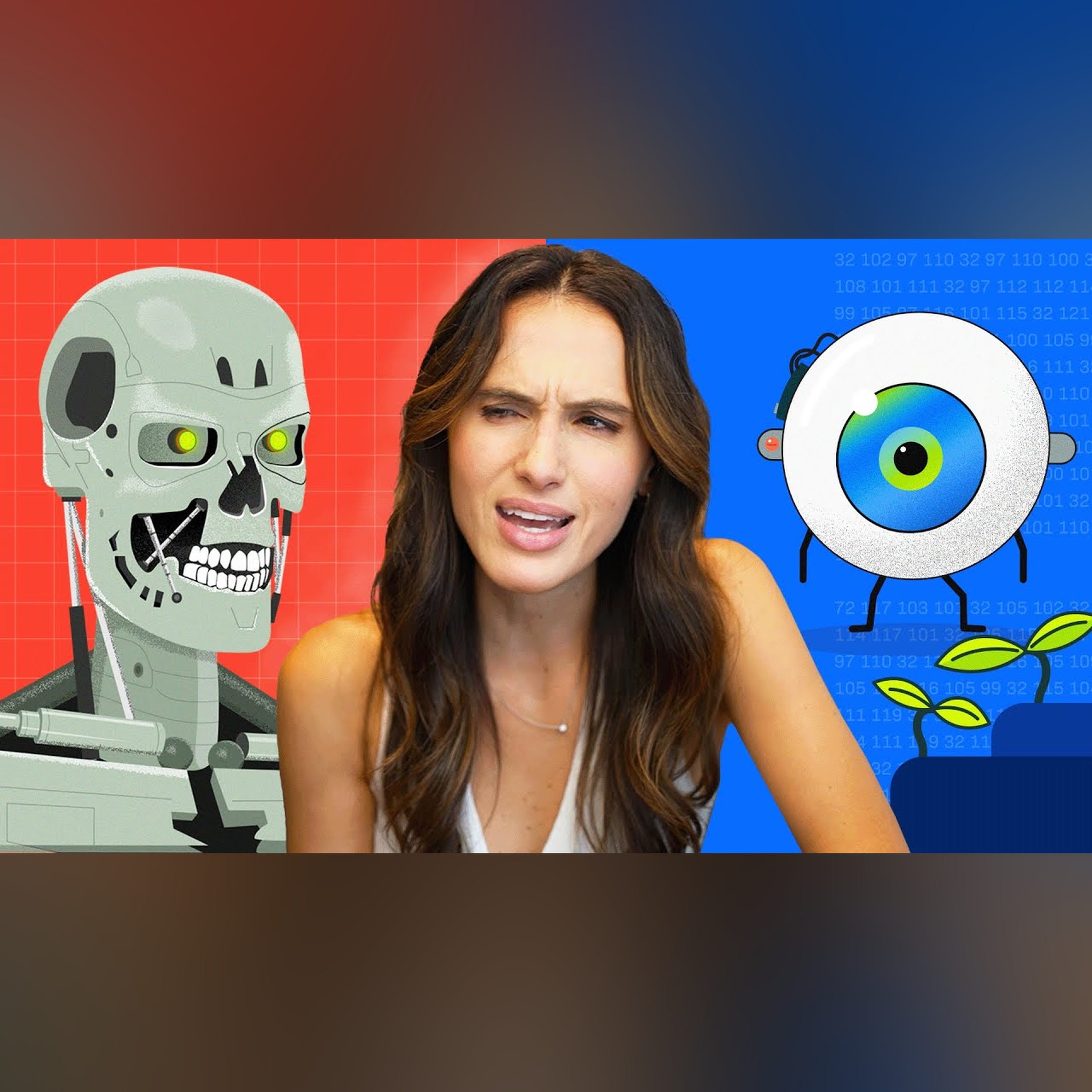
English-language podcasts

Cleo Abram

What's Really Happening At CERN

22 min

Listen through the publisher, then discuss the episode here or arrange an in-person Roundtable. Your city determines where to meet.

Roundtables are designed for groups of four, with a shared subject and room for everyone to speak. Come for discussion, with no dating expectation.

The world’s most astonishing science experiment, simply explained. On the border between France and Switzerland is the biggest science experiment humanity has ever built. Over a 100 meters underground, there’s a tunnel 27 kilometers long in a big loop under nearby homes, businesses, and farms. Inside that tunnel, scientists built a blue tube big enough to crawl through, and inside that tube, they put two pipes that they keep colder and emptier than outer space. Down those pipes, they fire particles smaller than atoms in opposite directions…. and push them faster and faster… until when they’re almost at the speed of light… they SMASH TOGETHER. This underground particle-smasher is also known as the Large Hadron Collider at CERN. It took thousands of scientists from over nearly 100 different countries $5 billion dollars and 30 years to plan and build. My question is: Why? Why did they do that??? Why spend so much money and time to smash particles underground? And now… why do so many scientists say what we really need to do is build… a BIGGER one? To answer those questions, we’re going on a journey all the way to Switzerland, to the particle smasher itself! And you’re never going to see yourself or the world around you the same way… Chapters: 0:00 What’s happening at CERN? 1:31 What is the Large Hadron Collider? 2:32 How did they build the Large Hadron Collider? 3:43 How small is a proton? 4:51 How do they get protons to hit each other?? 6:43 Why build this? 7:43 What happens when particles smash together? 8:47 What are elementary particles? 9:37 What is the Higgs Boson? 10:46 What did they find?? 11:33 Why does this matter? 12:52 Why build a bigger collider? 13:48 What is the Future Circular Collider? 14:56 What else could we build? 15:56 Who do we want to be? You can find me on Instagram here: https://www.instagram.com/cleoabram On TikTok here: https://www.tiktok.com/@cleoabram Or on Twitter here: https://twitter.com/cleoabram Bio: Before going independent, Cleo was a video producer for Vox. Additional reading and watching: - “Inside the World's Largest Science Experiment,” by Dianna Cowern, Physics Girl: https://youtu.be/nrXhK3Gh5EE?si=q_RO3o6kxRgZ5-rv - “The Higgs Boson, Part I,” by Minute Physics: https://youtu.be/9Uh5mTxRQcg?si=JmwGWKhQhRkTmOyN - “The Higgs boson at 10 years,” by Dr Clara Nellist (one of our wonderful experts in this video!): https://youtu.be/71aIQCeCW6c?si=MkxAAFQq_TdQlIpg - “The Large Hadron Collider beam pipe: everything you didn't know you wanted to know,” by Dr Clara Nellist: https://youtu.be/KoTdC3xfDwo?si=vxOWdSsnEsm_Ijfc - “The Higgs Discovery Explained - Ep. 1” by CERN: https://youtu.be/so2nCu2Jkbc?si=PQWjk699GzgtoLTM - “The Higgs Discovery Explained - Ep. 2” by CERN: https://youtu.be/pW4LTunlXS4?si=famTTom1oEls32aR - “The Higgs Discovery Explained - Ep. 3” by CERN: https://youtu.be/8-WFBGCvv-w?si=lpOOFj6bIcH4UYxg - “Seeing the Smallest Thing in the Universe,” by Dianna Cowern, Physics Girl: https://youtu.be/6IeeshkVATY?si=pWeDDCXBQyyE51i2 Vox: https://www.vox.com/authors/cleo-abram IMDb: https://www.imdb.com/name/nm10108242/ Gear I use: Camera: Sony A7SIII Lens: Sony 16–35 mm F2.8 GM Audio: Sennheiser SK AVX and Zoom H4N Pro Music: Musicbed, Tom Fox Follow along for more epi

Episode information is provided by the publisher. Listening takes place on the publisher’s service.

Listen at the source ↗

Featured places to meet in Palo Alto, CA

Explore these places and arrange a conversation through ThinkMatch.

City guide for Palo Alto, CA

More from Cleo Abram

Cleo Abram

How Do Sci-Fi Movies Look So Real? (feat. MKBHD)

20 min

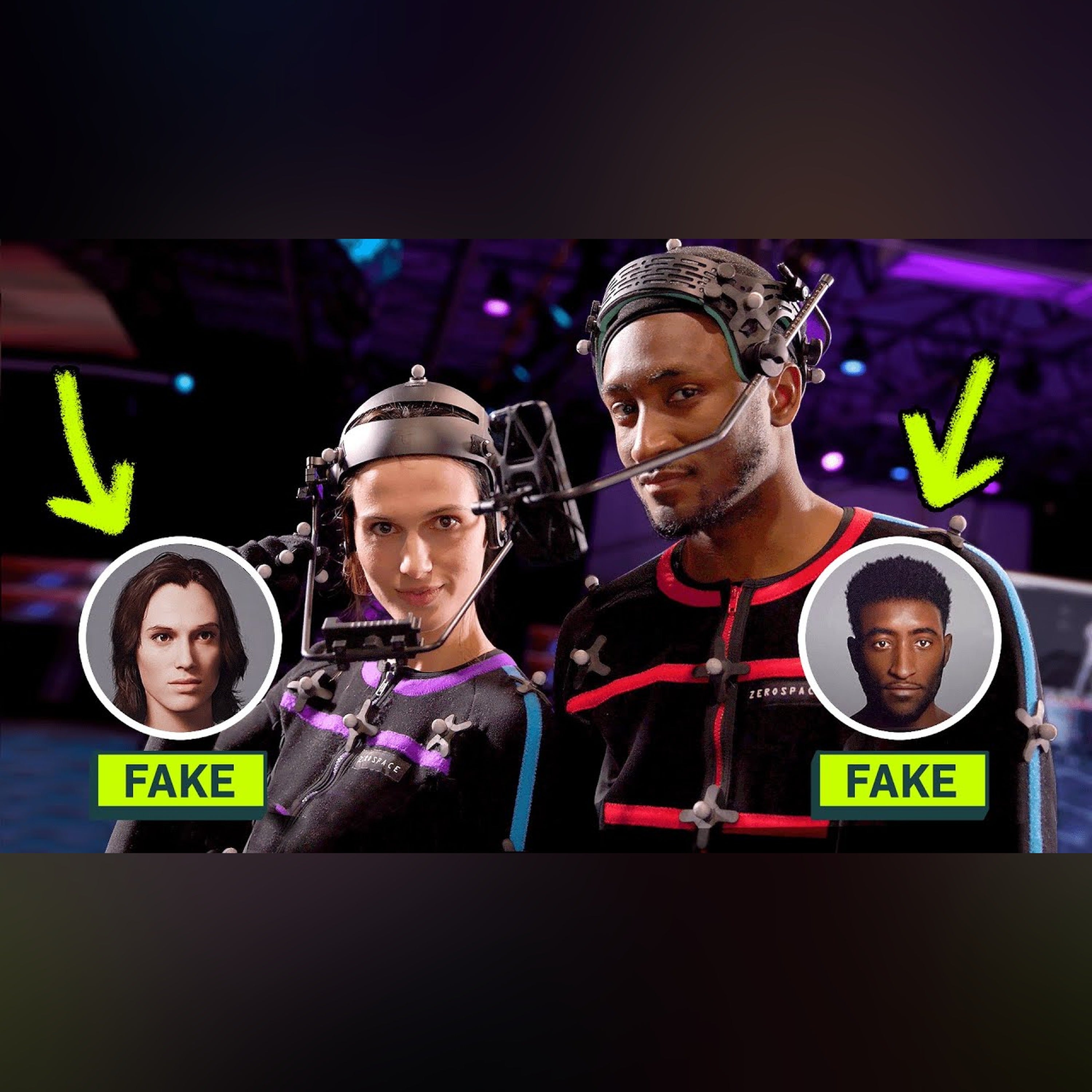
This new tech is changing how movies get made. So @mkbhd and I tested it out... Watch MKBHD's video: https://youtu.be/RM7SobH8ZO0 I’ve been obsessed with sci-fi movies since I was a kid. I love being transported to another world. But lately, I’ve been wondering: How do those worlds look so… REAL? The tech behind movies has exploded in complexity and realism, changing how stories come to life on screen. Luckily, at the same time, those tools are becoming more and more available to more people telling stories. It’s not just blockbusters like Avatar 2 or Avengers or Dune. It’s also smaller budget films like Everything Everywhere All at Once or even… YouTube creators? In this video, Marques Brownlee and I test out 3 movie-making tools that are changing how movies, shows, and maybe even YouTube videos (??) get made. We’re at ZeroSpace Studios in New York to show you how each of these crazy technologies work - and how you might be able to use them. Along the way, we hit big questions like: W

Discuss this episode

Cleo Abram

How Disney Built A Realistic Lightsaber

20 min

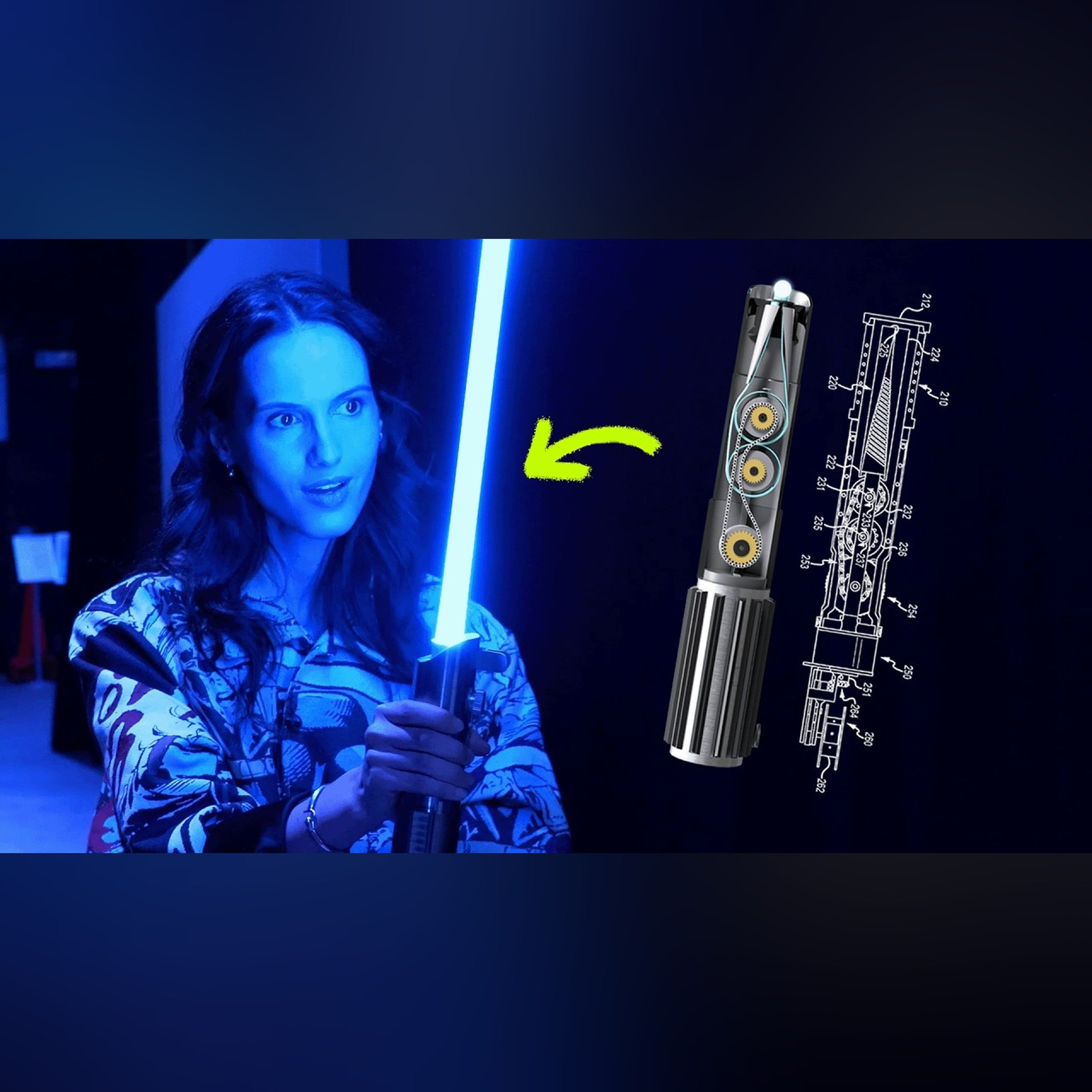
I tested Disney’s coolest new tech… Go to https://surfshark.com/cleo for 4 extra months of Surfshark Today I’ve been invited behind the scenes at Walt Disney Imagineering, the place where Disney brings their craziest ideas to life - from STUNT ROBOTS to a real life version of The Force, to adorable little droids! On this show Huge If True, we explore how tech can improve people’s lives - by living longer, going farther, doing more. But the reason I’ve loved Disney since I was a kid is they use tech to improve lives another way… by making people happy. And that means they end up pushing forward tech in some crazy, unexpected ways. So let me take you inside the magic, to show you the cutting edge tech they’re building… how it works… and what happens when we put it to the test! Chapters: 0:00 What is Disney building next? 1:11 What does Walt Disney Imagineering do? 1:52 What are Disney’s new droids really like? 2:47 How do Disney’s new droids work? 5:08 What’s the world’s most realistic l

Discuss this episode

Cleo Abram

What We Get Wrong About AI (feat. former Google CEO)

15 min

AI is here. Now what? Everyone’s talking about artificial intelligence and machine learning. There are lots of names thrown around - OpenAI’s ChatGPT and DALLE-2, Google’s Bard, Meta’s LLaMa 2, Midjourney, AlphaFold… Right now, we’re in this weird moment where lots of smart people agree we’re on the cusp of a truly world-changing technology. But some seem to be saying it's going to lead to human extinction while others are saying it’s “more profound than fire.” But it all feels so VAGUE. I want to know: How specifically would AI kill me? Or totally transform my life for the better? In this video, that’s what I’m going to try to learn. We dive into what the most extreme bad and good AI futures actually look like, so that you and I can get ready. And more importantly, so we can make sure that we get our real future RIGHT. Chapters: 00:00 Why is AI so confusing? 1:13 What is AI? 2:37 Why is everyone talking about AI now? 5:12 Why is AI dangerous? 6:22 How would AI kill me? 8:08 Should we

Discuss this episode

Community Poll

Preventing medical errors requires changing systems as well as holding individuals accountable.

Share your view, then see how readers voted. No sign-in required. This poll is shared across stories.

Do you agree or disagree?

Choose one answer

Common Quandary

A Common Quandary to discuss

Another conversation to explore, separate from this news story.

The company printer sits idle all day. Can you print two hundred wedding invitations?

Your office has a fast color printer that is rarely used, and supplies are ordered automatically. Printing your wedding invitations after hours would save substantial money. Personal use is technically prohibited but routinely ignored for small jobs.

When does an insignificant workplace perk become taking?

Explore this quandary