Full post: https://natesnewsletter.substack.com/p/zuckerberg-muse-lessons?utm_source=podcast&utm_medium=podcast&utm_campaign=zuckerberg-muse-lessons-launch&utm_content=show-notes (https://natesnewsletter.substack.com/p/zuckerberg-muse-lessons) What can the rest of us learn from Zuckerberg’s next big bet? The common story is that Meta’s resources explain Muse. But the useful lessons are about the people behind the product, the details that make an assistant feel dependable, and the willingness to try again after a very public failure. In this episode, I look at: Finding the right people and giving them room to build. Why the bathroom tells you more than the entrance about care. The status details that make an AI assistant easier to trust. How AI changes the cost of trying without eliminating embarrassment. Hosted on Acast. See acast.com/privacy for more information. Hosted on Acast.
Read Full Blog Here (https://prosolution.com.au/is-the-australian-share-market-uninvestable/?tl_form_type=0&tl_inbound=1&tl_period_days=0&tl_period_type=3&tl_target_all=1) I wouldn’t sell your Australian shares, but I’d put most new money into global shares. The ASX is concentrated, expensive, and slow-growing. The ASX 200 returned a solid 9.4% a year over the past decade, but that came mostly from banks and BHP, and the top 10 stocks now make up half the index. In this episode, I look at what’s likely to drive future returns: valuations, high dividend payout ratios, oligopolies, a 2% technology weighting, and weak per capita GDP and productivity growth. I also cover the case for keeping your existing Australian holdings, including franking credits, income, and population growth. 00:00 Introduction 00:40 Not anti-Australia, just an investment view 01:15 Past returns: the ASX vs global shares over 10 years 02:48 The real question: where should new capital go? 03:25 How concentrated the
In this Company Update, we sit down with Anthony Margarit, President and CEO of K2 Gold Corporation (TSX-V: KTO | OTCQB: KTGDF | FSE: 23K), recorded live from the floor of the New Orleans Investment Conference. Record-Breaking Drill Results at Dragonfly: The company recently intersected its widest and highest-grade gold interval of the 2026 program, highlighted by a hole that ended in some of its strongest mineralization before being cut short. System Continuity and Scale: Continued drilling demonstrates predictable, linear structural control across Dragonfly, pointing toward stacked parallel zones and significant strike extension. Imminent Assays from Newmont Target: With dozens of holes already at the assay lab from a key target area 3 km south, initial near-term newsflow could shed light on a potential mineral resource footprint. Multi-Rig Exploration and Target Pipeline: Plans are underway to bring in additional drills and unlock further targets along the East Side Gold Trend, incl
Anthropic just filed to go public, and it could be the biggest IPO in history. Vic breaks down what’s actually in the filing: wild revenue growth, a cash pile bigger than Apple’s and Nvidia’s combined, and an unusual share structure. She also has a big question about why Anthropic is listing now. We cover who can actually buy in, depending on where you live. Then, Mark Zuckerberg is creating a new class of Meta shares with no voting rights at all. Soph starts out on his side. She doesn’t stay there. Thanks so much to Generate for making The Curve Weekly possible. Generate has a really impressive 10-year track record, to find out more about their performance click here: generatekiwisaver.co.nz/performance. But remember, a great track record doesn’t guarantee future returns! If you’d like to speak to an advisor, to see if Generate is right for you, you can book time with someone here: https://www.generatewealth.co.nz/curve Thank you to our partner Lexus New Zealand for supporting The Cur
U.S. midterm elections (https://seekingalpha.com/news/4663472-sp500-nasdaq-composite-dow-jones-stock-market-news?source=wsb_podcast%3Amidterm_elections_earnings). Palantir beat expectations despite slowdown in commercial bookings, while Apple's strong sales were offset by concerns over memory costs and margins. AMD faces high expectations (https://seekingalpha.com/earnings/earnings-calendar?source=wsb_podcast%3Amidterm_elections_earnings); Shopify's AI-agent concerns and Pfizer's patent expirations weigh on investor sentiment. Episode transcripts: seekingalpha.com/wsb (https://seekingalpha.com/wsb?source=wsb_podcast%3Amidterm_elections_earnings) Sign up for our daily newsletter here (https://subscriptions.seekingalpha.com/newsletter_wsb/?source=wsb_podcast%3Amidterm_elections_earnings) and for full access to analyst ratings, stock quant scores, dividend grades, subscribe to Seeking Alpha Premium at seekingalpha.com/subscriptions (https://seekingalpha.com/subscriptions?source=wsb_podcas
Happy election day! Results from the midterms could impact CEOs (https://www.cnbc.com/2026/11/02/stock-market-after-midterm-elections-sp-500-history.html), dealmaking, and the regulatory landscape; CNBC’s Megan Cassella reports on the key races Wall Street is watching (https://www.cnbc.com/2026/11/02/the-midterms-are-here-how-jpmorgan-expects-the-market-to-react.html). Hedge funder Bill Ackman, with nearly $33 billion under management at Pershing Square, shares his perspective on the markets as the midterms begin (https://www.cnbc.com/2026/11/03/midterm-election-stock-market.html). While he’s personally invested in SpaceX, he views the company as too uncertain for inclusion in his hedge funds. Rahm Emanuel, former White House Chief of Staff for President Obama, former congressman, and former Chicago Mayor, discusses America’s political landscape heading into the midterms. He’s calling for the Democratic Party to shift back to the center, rather than further left. Plus, OpenAI hired for
OpenAI has reworked its Model Spec, the document that sets out how its models should think and act, around five new core values. Zvi works through the diff: a demoted rule on side effects, a new risk taxonomy, corrigibility, sycophancy, budgets treated as limits, honesty and lies of omission, and what the model should do when a user insists it pick a side. His main new critique is of the examples themselves: many have overdetermined answers that never show the model how to handle a genuinely hard case. Easy cases, he argues, make neither bad law nor good law. This has been an Askwho Casts audio conversion. Thanks for listening. * 00:00 - Introduction * 01:22 - Table of Contents * 02:05 - Five Values * 03:16 - Meet the New Spec * 04:19 - New Risk Taxonomy * 05:07 - The Letter and the Spirit * 05:48 - Your Funeral * 08:11 - Context Clues * 10:16 - Preserve User Control Over User Control * 11:04 - Sycophancy * 12:50 - Lies My User Told Me * 13:46 - Impact Function * 16:56 - Levels of Fric
We break down earnings reports from Apple and Palantir, which have both stocks falling today. Then, Morgan Stanley's Ariana Salvatore joins with what to expect from the midterm elections today and how they could impact AI policy. Plus, New York Angels Board Member Bob Peck discusses the AI trade and investing in the private markets. Squawk on the Street Disclaimer (https://urldefense.com/v3/__https:/www.cnbc.com/squawk-on-the-street-disclaimer/__;!!HqJSLGM!uCnRzL8sw0zDv24y-5sOIFUC0pgExA9JnNMmwWkZd5mUIQJQpFQRdlNhw1zMYFFYNdQOPGVM3L-r8djVB-JZ4_RPwpfewNor$) Hosted by Simplecast, an AdsWizz company.
Tocvan Ventures is approaching a pivotal moment at its Grand Pilar gold-silver project in Sonora, Mexico. CEO Christopher Gordon joins Ian Wagner to discuss wide, near-surface drill intercepts at the El Mesquite discovery and the potential for additional discoveries across the property. Gordon outlines a more aggressive drilling campaign for 2027 and explains why Tocvan has pushed its maiden resource estimate into the second half of next year. Meanwhile, construction of the pilot mine is nearing completion, with initial processing of 50,000 tonnes expected to begin in late November or early December—potentially generating revenue to support further exploration and growth.
You reached the goal you wanted. A few days later, all you can see is the next thing missing. Did the achievement have time to mean anything? In this episode of The Level Up Podcast, Paul Alex breaks down how to appreciate meaningful progress and choose a next goal that fits your life. Paul reflects on becoming his family’s first millionaire and retiring his parents. Later, marriage and fatherhood added new dimensions to his responsibilities and motivation. His ambitions now include being present for his wife and son alongside building businesses. The question is what your goal was supposed to make possible. Recognize the changes it created, and examine what still needs attention. A better way of running the business may matter more than a larger target. Choose what comes next with a clear understanding of the benefits and tradeoffs. In this episode, you’ll learn: • How to reconnect an achievement with the purpose behind it. • Why recognizing progress can coexist with continued ambitio
A $50 sports bet can cost more than the money you lose today. Don and Tom explore why treating gambling as an investment can put decades of potential growth at risk—and why patient, low-cost, diversified investing offers a very different proposition. They discuss the pull of betting apps, the power of compounding, and the habits that make saving automatic. Listener questions bring the conversation back to flexibility: How firmly should a retiree follow an investment policy statement during a market downturn? And can a family ease up on Roth contributions to buy a bigger home without derailing retirement? Plus, the hosts have a little fun with a supposedly groundbreaking retirement-withdrawal announcement. 01:19 The Financial Fysicist and 50 for 50 at 5 01:57 When sports betting becomes an investment strategy 06:30 The future cost of a $50 bet 09:32 Fees, automatic saving, and diversification 13:58 Retirement guardrails and market downturns 17:50 A bigger home versus Roth contributions
Most retirements in the U.S. aren’t voluntary. Layoffs, health problems or caring for a family member decide the date for most people, so real financial planning has very little to do with skipping lattes. Paula and former financial planner Joe Saul-Sehy answer three listener questions. The first is from an Air Force major with $2.5 million saved whose parents both have early-onset Alzheimer’s. The second is from a 58-year-old early retiree deciding whether to rent or buy her next home. The third is from a couple weighing whether to pay down a 6% mortgage. In this episode, we discuss: Why to buy disability and long-term care insurance before you take a genetic test How to plan for long-term care costs without draining the rest of your family Which estate documents to sign now, and the trust step most people skip Why the person raising your kids and the person managing their money shouldn’t be close friends How to use the price-to-rent ratio to decide whether to rent or buy Whether payi
Binance Co-CEO Richard Teng joins Squawk on the Street to discuss a recent crypto hack and growing concerns about digital wallet security. Plus, Shopify President Harley Finkelstein breaks down the company’s first revenue miss since 2022 and what it signals about the e-commerce outlook. And Wall Street reacts to Apple’s latest earnings as investors assess what’s next for iPhone maker. Squawk on the Street Disclaimer (https://urldefense.com/v3/__https:/www.cnbc.com/squawk-on-the-street-disclaimer/__;!!HqJSLGM!uCnRzL8sw0zDv24y-5sOIFUC0pgExA9JnNMmwWkZd5mUIQJQpFQRdlNhw1zMYFFYNdQOPGVM3L-r8djVB-JZ4_RPwpfewNor$) Hosted by Simplecast, an AdsWizz company.
Voting is underway in what is seen as a referendum on President Trump's 2nd term. The cost of living has been a major issue throughout the campaign, with high food and fuel prices weighing on households. We also hear from South Africa, as the US plans to suspend the country and Rwanda from the African Growth and Opportunity Act, or AGOA, which allows thousands of African products to enter America duty-free. And a ban on social media for under-16s in Australia is being challenged in the country's High Court. Presenter: Bisi Adebayo Producer: Matt Lines
Welcome to 3 November 2026. We're into November! Thank you very much if you've sent me a message about your cut flower journey or left a review on Apple Podcasts. I've just found some lovely reviews that actually made me cry a little bit (in a good way): I'm very touched that the podcast is resonating with you. Today I've got an update on my greenhouse seedlings. They're growing much faster than I thought they would, which is making me wonder whether they should go out on the field now, rather than in spring? I'm also now leaving the door open during the day to help with ventilation - thanks to a reel I saw on instagram from @rainesflowersuk which reminded me that I need to do this. News from the field includes all the plants I've either been digging up or transplanting over the weekend. This is the perfect time of year (if you're in the UK) to shift things around, remove what doesn't fit - or that doesn't sell well - and make space for new things which fit the brief for my target cust
Eva Alexandridis is the co-founder of 111SKIN, the luxury clinical skincare brand favoured by Lady Gaga, Margot Robbie, and Victoria Beckham, and stocked at Harrods, Selfridges, and Bergdorf Goodman. In this episode, Alexandridis joins Sir Richard Harpin to trace her journey from growing up behind the Iron Curtain in Bulgaria, to working at Silicon Valley startups during the dot-com boom, to co-founding 111SKIN, the doctor-driven skincare brand, with her husband plastic surgeon Dr. Yannis Alexandridis, in London. Alexandridis reveals why she refused to sell 111SKIN anywhere but her husband's Harley Street clinic for the first few years, and what changed her mind after years of resisting outside investment, leading her to agree to Estée Lauder taking a minority stake. She shares her advice for founders on patience, scaling, and avoiding the "fast beauty" trap and reflects on treating every failure as a learning opportunity. Alexandridis also explains why she deliberately avoided over-ex
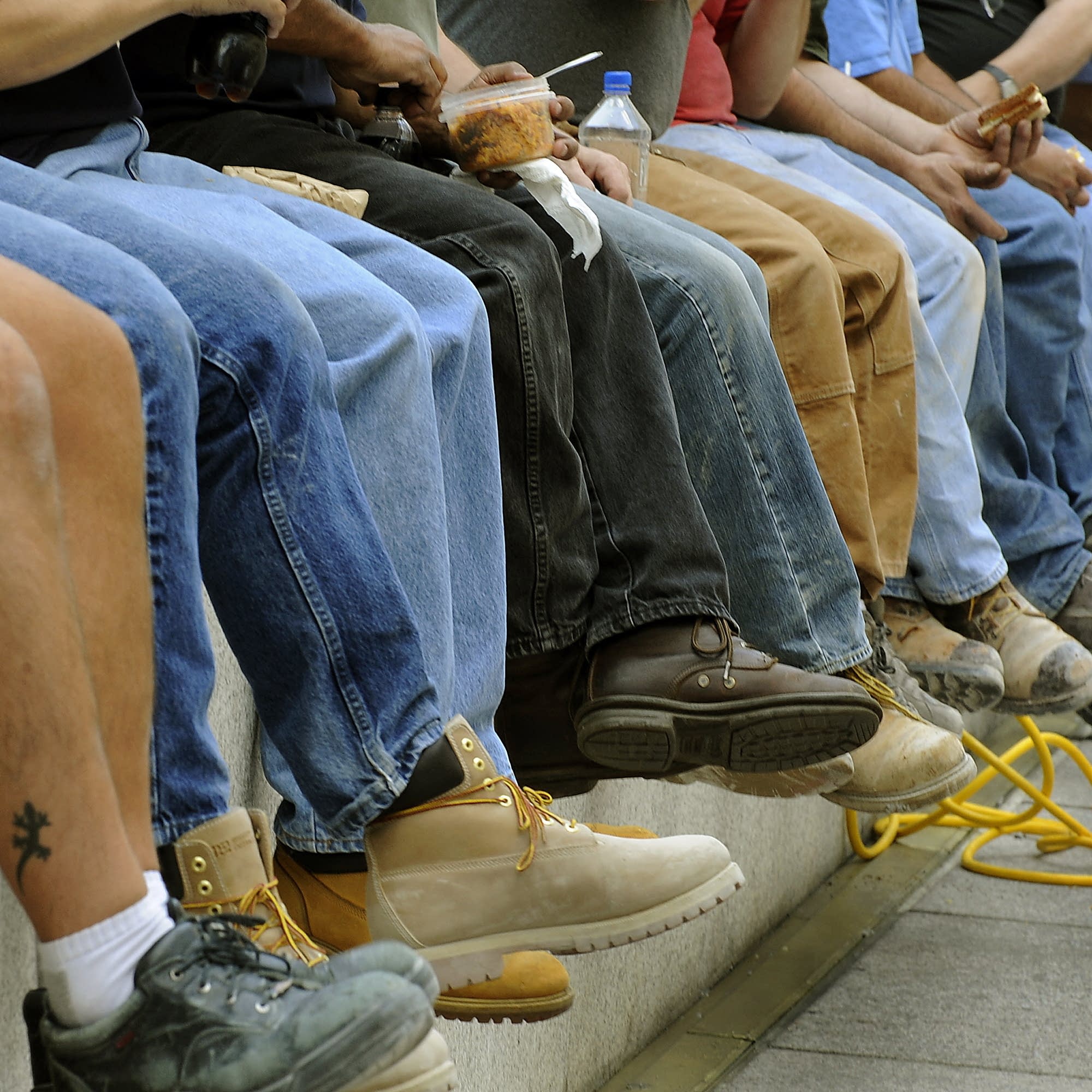
It’s a big week for labor market data, including data on wages, unemployment, and job turnover. But before the employment floodgates open, it’s worth looking at a group of workers who have stepped back from the labor force: Men ages 25 to 54 — who were almost all working half a century ago — are participating significantly less today. What gives? Also: a look at how the U.S. trade balance is holding up. Every story has an economic angle. Want some in your inbox? Marketplace Morning Report is more than a radio show. Stories in this episode: Why are so many men opting out of the labor force? (https://www.marketplace.org/story/2026/11/03/labor-force-participation-for-primeage-men-has-dropped)
The Contemporary Baseball Era Committee has announced eight finalists for the Hall of Fame. There are some huge names on the list, but not everyone will get in. How do you find a way to leave off Dusty Baker or Bruce Bochy or Joe Maddon or Ted Turner or Lou Piniella!? (17:00) Are the Knicks going to the White House? Now Spike Lee is talking about it. (26:08) NPPOD. (31:54) We have a trial on our hands! Do you remember Emmanuel Clase and Luis Ortiz? (42:10) Getting paid not to work. That’s the buyout market. No better job in sports than being a fired head coach with a buyout. Mike Norvell is getting $50 million to never coach at Florida State again.
It’s a big week for labor market data, including data on wages, unemployment, and job turnover. But before the employment floodgates open, it’s worth looking at a group of workers who have stepped back from the labor force: Men ages 25 to 54 — who were almost all working half a century ago — are participating significantly less today. What gives? Also: a look at how the U.S. trade balance is holding up. Every story has an economic angle. Want some in your inbox? Marketplace Morning Report is more than a radio show. Stories in this episode: Why are so many men opting out of the labor force? (https://www.marketplace.org/story/2026/11/03/labor-force-participation-for-primeage-men-has-dropped)
David Fairbairn is a Zambian-born Australian artist renowned for his powerful and psychologically charged portraits. Born in 1949, he studied at the West Surrey College of Art and Design and the Royal Academy Schools in London before moving to Australia in the early 1980s. Based in Wedderburn, southwest of Sydney, Fairbairn has established himself as one of Australia's most respected contemporary draughtsmen and portrait artists. Working across drawing, painting, printmaking and mixed media, Fairbairn is best known for his monumental portrait heads that explore memory, identity and human presence. His distinctive mark-making combines delicacy and intensity, creating works that are both intimate and commanding. Over a career spanning more than four decades, Fairbairn has received numerous major awards, including the Dobell Prize for Drawing in 1999 and the Doug Moran National Portrait Prize in 2002. He has been a frequent finalist in prestigious awards including the Archibald Prize and
“We could be walking into World War III accidentally here.” Frank Giustra warns that U.S. politics has become a “viper’s nest,” and says miscalculations could push the world toward war. Schedule your FREE strategy call: https://calendly.com/itmtrading/500?utm_content=DC1132026Chapters:00:00 Frank Giustra’s story and The Money Dilemma08:06 Happiness and money12:23 Frank’s reflections on family19:18 The difficult years in London22:16 The early struggles at Lionsgate24:50 Patience in business and life 27:10 The story behind The Matrix deal31:13 The Clinton years and the scrutiny41:12 New world order44:03 Lessons Frank wants to teach47:17 Frank’s relationship advice50:40 Lifelong friends and character54:49 Frank Giustra on Bitcoin hype58:08 Why wealth and possessions aren’t everything STAY IN TOUCH WITH ITM & DANIELA Schedule a Strategy Session: 866-706-9061 Email us at [email protected] Official Homepage http://www.itmtrading.com Listen On The Go: https://anchor.fm/itmtrading ITM's
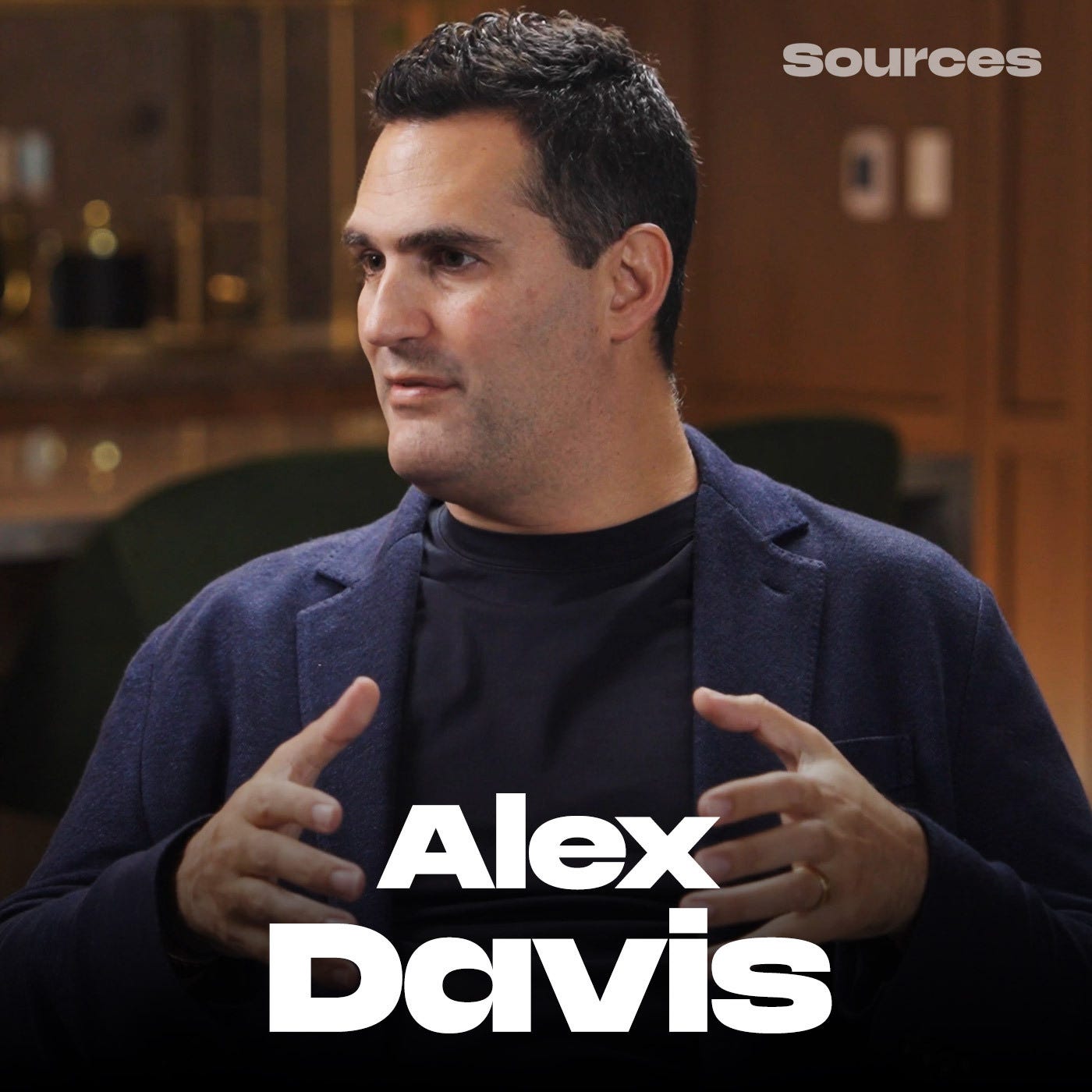
Alex Davis plans to put $10 billion into roughly 10 companies. His firm, Disruptive, has maintained a low profile out of Texas while backing Reflection AI, ElevenLabs, Groq, Shield AI, Databricks, and Helsing. Its earlier investments include Palantir, Airbnb, and Spotify. I sit down with Davis in Dallas for his first-ever podcast interview to understand how he picks the companies worth a billion-dollar check. He focuses on companies he thinks are already winning, even as their valuations climb. We discuss why he doubled down on Palantir before it went public, what he’s building at Groq after its $20 billion licensing deal with Nvidia, and the opportunities he sees in open AI models, compute, and defense technology. I also ask where the AI boom goes wrong, from speculative data centers to investment vehicles promising access to private companies. Thanks to the show’s premiere sponsors: Atlassian, Granola, and Mercury.
A brief, last minute podcast in which we drastically lower our conviction level on the strong blue wave scenario for the US mid-term elections after listening to a very interesting podcast suggesting, based on plausible analysis, that the polls give us no idea of what may happen and that the Republicans could even retain the house. Link: The Grant Williams Podcast interviewing Marvin Barth on the midterm elections (https://ttmygh.podbean.com/e/the-grant-williams-podcast-ep-135-marvin-barth-full-episode/). Excellent questions from the host. DISCLAIMER This content is marketing material. Trading financial instruments carries risks. Historic performance is not a guarantee of future results.