The Huge Conversation with Mark Zuckerberg... I interviewed Meta CEO Mark Zuckerberg before Connect. There are not many people with more power over our future. Right now, Mark Zuckerberg and his team are imagining the future billions of people might live in, soon, and building towards it. So, in this conversation, my goal is to figure out what that future looks like. To paint a picture of the future Mark Zuckerberg is trying to build, so that you can decide for yourself what you think of it. We talked about the Meta's new Orion prototype AR glasses, creating holograms and the Star Trek universal translator, generative AI changing social media, big trends in human connection, open sourced AI, Ray Ban Meta glasses and Quest 3S, the biggest genuine question on his mind right now, and more... Welcome to the first episode of our new series, Huge Conversations… Special thanks to Derek Thompson, for his generous guidance on my first long-form interview! Chapters: 0:00 What is Mark Zuckerberg
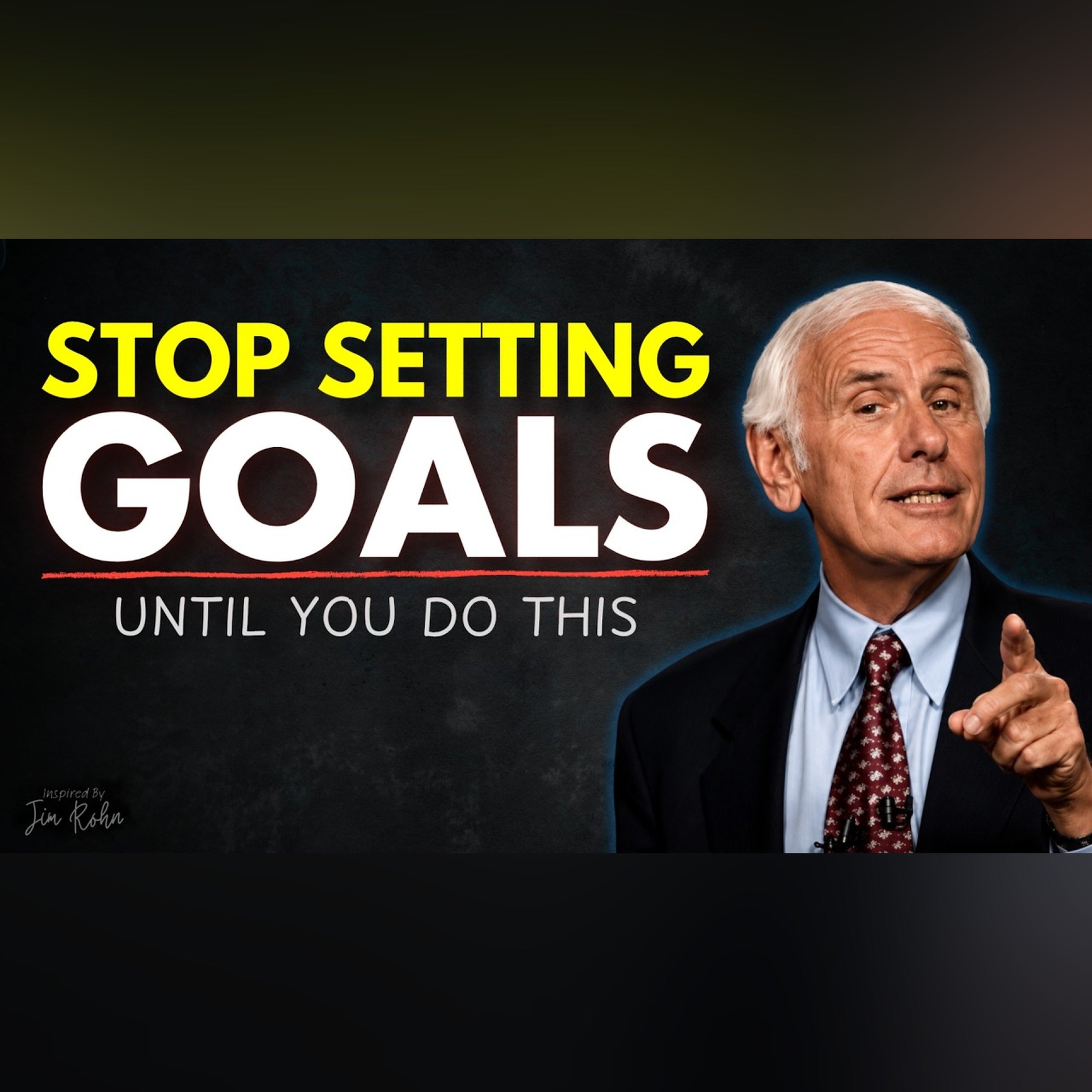
There's a pattern that has ruined more lives than almost anything else. Uploaded 02-06-26 People decide what they want. They set a goal. They write down the number. They put a date on it. They tell their friends. They make a plan. And somewhere between week 3 and week 6, the goal quietly dies. The plan falls apart. The date is going to come and go. And the person who set the goal sits in their disappointment and tries to figure out what went wrong. They blame their willpower. They blame their schedule. They tell themselves next January will be different. But that isn't what went wrong. They didn't fail because the goal was wrong. They failed because they had it backwards. They tried to install the goal before they built the habit. They built the destination before they built the road. They wrote the postcard before they laid the bricks. A goal without a habit underneath it is a wish dressed up in a deadline. It cannot survive. It was never going to survive. This seminar lays out why th
Project Synapse: Markets in Freefall, Fragile Infrastructure, and AI's Perfect Storm The hosts banter through the show's intro before focusing on a sense that "things are out of control," citing a WallStreetBets suicide-hotline post amid a market crash and discussing cascading system failures involving Microsoft, the FAA, and a reported NSA internal communications outage. They argue politicians and leadership lack technical competence and clear messaging, increasing panic, while emphasizing that many problems stem from aging, underfunded infrastructure and complex, brittle software (PHP, NGINX, Java), not proven AI attacks—more a "perfect storm" of crises. They debate whether AI should help fix complexity, stressing critical thinking, accountability, and using multiple AIs to verify each other. In a lightning round they cover Anthropic's IPO performance, mixed reactions and token limits with ChatGPT 6.2 (favoring "Sol" over "Astra"), Google's cheaper Neon model and confusing UX, Loblaw
Puzzle through this classic ethical dilemma and decide: is community safety more important than individual privacy? -- Your government has introduced a plan to address record-breaking rates of traffic tickets and deadly hovercar accidents. They propose assigning “driver credit scores” to every citizen, but would need to install cameras and microphones in every vehicle. While it would make the roads safer, is this undeniable benefit worth the cost to drivers’ privacy? Michael Vazquez and Sarah Stroud investigate. Lesson by Michael Vazquez and Sarah Stroud, directed by Jeff Le Bars, JetPropulsion.space. This video made possible in collaboration with the Parr Center for Ethics Learn more about how TED-Ed partnerships work: https://bit.ly/TEDEdPartner Support Our Non-Profit Mission ---------------------------------------------- Support us on Patreon: http://bit.ly/TEDEdPatreon Check out our merch: http://bit.ly/TEDEDShop ---------------------------------------------- Connect With Us ------
The same complaint takes another hour of your week. You may have every reason to be upset. What change would you want that time and attention to help create? In this episode of The Level Up Podcast, Paul Alex breaks down how to turn recurring frustration into a direction you can begin working toward. Paul makes room for unfair situations and appropriate ways to address them. A necessary conversation, request for help, or formal concern may deserve action. Repeating the same argument in your head can still leave your own future waiting. Name the change beneath the complaint, whether it involves time, a role, or a boundary. Then look for movement that does not require someone else to apologize or agree. The step can matter while you are still upset; you do not have to resolve every feeling before acting. In this episode, you’ll learn: • How to notice when replaying a complaint has stopped providing useful information. • Why naming the desired change gives frustration a practical directio
Zvi does the reading on OpenAI’s system card for GPT-6.2 Astra and Sol: the first externally deployed model to meet OpenAI’s High threshold for AI self-improvement, already at Critical for cybersecurity. He works through the preparedness results, the safeguards against misuse, distillation and model escape, and the alignment and monitorability findings, including rising evaluation awareness, reasoning that happens without visible chain of thought, and UK AISI’s tour of misaligned behaviours, asking what the numbers do and don’t show. This has been an Askwho Casts audio conversion. Thanks for listening. * 00:00 - Introduction * 01:10 - Table of Contents * 02:45 - Safety Overview (1) * 05:19 - Internal Deployment (1.2) * 05:32 - Preparedness Assessment (2) * 06:40 - Biological Threats (2.1.1) * 09:55 - Cyber Threats (2.1.2) * 11:36 - AI Self-Improvement Threats (2.1.3) * 14:32 - OpenAI Epoch Capabilities Index (OECI) * 16:10 - Safeguards (2.2) * 17:34 - AI Self-Improvement Threat Modelin
What's really happening when AI keeps improving but customers have less reason to pay for the upgrade? The common story is that more capable models automatically create more revenue — but the reality is that buyers can test what is good enough and move routine work to cheaper models. In this video, I share the inside scoop on who gets paid as AI becomes more useful and the market for intelligence becomes more demanding. Why token use can rise while the bill stays the same. How evals turn model selection into a purchasing decision. What Ramp's spending data reveals about adoption and pricing power. Where productivity gains go when customers expect lower prices. What stays valuable as models improve and technical work becomes easier. For business leaders, the decision is about the full cost of useful work: model spend, review, repairs, and the surrounding systems. Set a baseline on real assignments, then ask what value your business can retain as customers and competitors adapt. Hosted o
What's really happening to NVIDIA's position after Jensen Huang's resignation? The common story is that the product roadmap tells us everything — but the reality is that customer relationships, financing, and political influence also shape how AI infrastructure gets built. In this video, I share the inside scoop on NVIDIA's next deal, the cost of switching chip platforms, and the implications for your AI bill. Why replacing coordination and deal-making authority matters. How CUDA supports NVIDIA's competitive position. What Anthropic's AMD example means for software portability. How infrastructure financing and export rules affect customers. Why competition could lead to cheaper inference. For operators and builders, the stakes are practical: deployment schedules, access to compute, and the price of using AI. Hosted on Acast. See acast.com/privacy for more information. Hosted on Acast.
What's really happening when a stronger AI model still feels like an assistant? The common story is that more capability makes every task better — but the reality is that people still have to find problems where the improvement is worth the cost. In this video, I share the inside scoop on my early access to Fable 5.2 and the e-ink display project it helped finish after earlier attempts fell short. How the model inferred my design intent from failed attempts. Why a proactive handoff made the build easier. What task-level saturation means for everyday work. How to identify projects with enough value to justify expensive AI. Why judging solutions and communicating intent remain essential skills. For operators and builders, the useful question is where better AI can deliver a result worth paying for. Meanwhile, labs have a clear use for that intelligence: building the next model. Hosted on Acast. See acast.com/privacy for more information. Hosted on Acast.
Reports of research should distinguish clearly between association and proven causation.
Share your view, then see how readers voted. No sign-in required. This poll is shared across stories.
Do you agree or disagree?
Common Quandary
A Common Quandary to discuss
Another conversation to explore, separate from this news story.
A donor's family wants to hear their loved one's heart beating in you. Do you meet them?
A transplant recipient receives a letter from the donor's family asking to meet. The recipient feels profound gratitude but also discomfort and wants their recovery to remain private and separate from another family's grief.
Can receiving an extraordinary gift create a personal obligation to strangers?