View full lesson: http://ed.ted.com/lessons/the-science-of-macaroni-salad-what-s-in-a-molecule-josh-kurz Uploaded 16-08-13 What do macaroni salad and gasoline have in common? They are made of exactly the same stuff -- specifically, the same atoms, just rearranged. So, while we put the former in our mouths and the latter in our cars, they are really just variations on the same atomic theme. Josh Kurz breaks macaroni salad down to its smallest chemical components. Lesson and animation by Josh Kurz.
For centuries, “official” art spaces have shaped whose work gets taken seriously. But there are no required qualifications for making art! In this episode of Crash Course Art History, we’ll explore amateurs and outsiders. We’ll learn how the line separating who’s in and who’s out has shifted over time — and how influences have drifted across it. Introduction: What Is an Amateur? 00:00 The Origins of "Amateur" 01:05 "Amateur" Women Artists 03:31 Wohaw's Drawings 04:53 Outsider Art & Art Brut 07:05 Review & Credits 09:40 Image Descriptions: https://docs.google.com/document/d/1ETiCxe4GrVzFii7dBhF42oHx1EUCCh5y12wbtUjsH8A/edit Sources: https://docs.google.com/document/d/1GW2NKzhpMNMmRyAFJVhFJG9cSfUOMRL-QrcWuHcWcIA/edit?usp=sharing *** Support us for $5/month on Patreon to keep Crash Course free for everyone forever! https://www.patreon.com/crashcourse Or support us directly: https://complexly.com/support Join our Crash Course email list to get the latest news and highlights: https://mailchi
Cornerstone Metals Link: https://www.CornerstoneAssetMetals.com (https://www.cornerstoneassetmetals.com/) Phone by: 888-747-3309 Jingos Cleaner Link: https://www.BuyJingos.com (https://www.buyjingos.com/) THE GREAT UFO DECEPTION SUMMIT 2026 – UNMASKING THE STRONG DELUSION Stream Replay of the Conference Event: What happens to you and your family’s faith if our president and other world leaders make a formal announcement that we are not alone in the universe? How will that affect your Christian faith? The Great UFO Deception Summit 2026: Unmasking the Strong Delusion will address this from a biblical perspective and so much more. "Walter G. Haut is the stuff of legend and now with the release of the 7th Traunch we find out that the Roswell crash was real. There was debris and he handled it as well as saw the 'bodies.'" FULL RUMBLE CHANNEL: https://rumble.com/c/TheLamarzulli Prefer to listen? Listen on Spotify: https://open.spotify.com/show/1MkI1sBNS386dwZd7Ib0pO?si=87154dcabcad4720 L. A
Can a paper bag really help you when you are hyperventilating? It turns out that it can. In part 2 of our look at your respiratory system, Hank explains how your blood cells exchange oxygen and CO2 to maintain homeostasis. We'll dive into partial pressure gradients, and how they, along with changes in blood temperature, acidity, and CO2 concentrations, change how hemoglobin binds to gases in your blood. (And yes, we'll explain the paper bag thing too!) Pssst... we made flashcards to help you review the content in this episode! Find them on the free Crash Course App! Download it here for Apple Devices: https://apple.co/3d4eyZo Download it here for Android Devices: https://bit.ly/2SrDulJ Chapters: Introduction: Hyperventilation 00:00 How Blood Cells Exchange Oxygen and CO2 2:09 Partial Pressure Gradients 2:41 How Hemoglobin Binds to Gases in the Blood 4:40 Why Breathing into a Paper Bag Works 7:58 Review 9:25 Credits 9:58 *** Crash Course is on Patreon! Thanks to the following Patrons fo
Escape was one of the many ways that enslaved people resisted their captivity in the system of American slavery. The Underground Railroad was not literally a railroad. It was a network of people, routes, and safe houses that helped people escape from slavery in the south to freedom in the north. Today we'll talk about the origins of the Underground Railroad, the systems that helped people escape, and the people who helped along the route. Clint's book, How the Word is Passed is available now! https://bookshop.org/a/3859/9780316492935 SOURCES Watch our videos and review your learning with the Crash Course App! Download here for Apple Devices: https://apple.co/3d4eyZo Download here for Android Devices: https://bit.ly/2SrDulJ Crash Course is on Patreon! Thanks to the following patrons for their generous monthly contributions that help keep Crash Course free for everyone forever: Toni Miles, Oscar Pinto-Reyes, Erin Nicole, Steve Segreto, Michael M. Varughese, Kyle & Katherine Callahan, Lau
Anthony Torres called himself a functioning alcoholic. He went to work, paid the bills, and provided for his family. But behind those responsibilities were drinking, drug use, and broken promises that were slowly damaging the life he thought he had under control. In this episode of the Sober Motivation Podcast, Anthony shares how drinking became normal growing up, how he became a father at 17, and why he thought marriage and children would help him leave the party behind. Instead, his alcohol addiction escalated into binges, a separation from his wife, and the loss of his job. Eventually, Anthony found himself sitting on the floor of a treatment center in El Paso, Texas, asking, “How did I get here?” Now 17 years sober, Anthony reflects on what it took to stop drinking and begin rebuilding his life. He talks openly about his wife’s perspective on his addiction, repairing his relationship with his oldest daughter, the role of faith in his recovery, and the loneliness of leaving old frie
The hidden cost of AI solutionism and what happens when optimization replaces human judgment. AI can analyze data, rank people, predict risks and recommend decisions. But what happens when it solves the wrong problem? This episode of A Beginner’s Guide to AI examines AI solutionism, the belief that complex human problems can be fixed mainly through better technology. The idea is attractive because technical problems can be measured and optimized. Social problems involve values, power, competing interests and uncomfortable choices. AI does not remove those choices. It can hide them inside targets, datasets and risk scores. A simple cake-sharing example demonstrates how an algorithm can produce a mathematically precise answer while missing the meaning of fairness. We then examine SyRI, an algorithmic system used by the Dutch government to identify possible welfare and tax fraud. The case shows what can happen when efficiency, surveillance and social policy collide. A big thanks to the pe
Explore the specialized anatomy that allows parrots to talk, scream, curse, and recite facts like humans. -- Whether they’re belting Beyoncé, head-banging to classic rock, or rattling off curse words at zoo-goers, parrots are constantly astounding us. They are among the only animals that produce human speech, and some parrots do it almost uncannily well. How is this possible? Grace Smith-Vidaurre and Tim Wright dig into the anatomy that allows parrots to talk, scream, curse, and recite facts. Lesson by Grace Smith-Vidaurre and Tim Wright, directed by Anton Bogaty. Support Our Non-Profit Mission ---------------------------------------------- Support us on Patreon: http://bit.ly/TEDEdPatreon Check out our merch: http://bit.ly/TEDEDShop ---------------------------------------------- Connect With Us ---------------------------------------------- Sign up for our newsletter: http://bit.ly/TEDEdNewsletter Find us on Twitter: http://bit.ly/TEDEdTwitter Peep us on Instagram: http://bit.ly/TEDEd
Explore how wind turbines convert wind into electricity, and the challenges of powering the world entirely with wind energy. Uploaded 22-04-21 -- Every 24 hours, wind generates enough kinetic energy to produce roughly 35 times more electricity than humanity uses each day. And unlike coal or oil, this resource is totally renewed each day. So how can we harness this incredible amount of energy, and is it possible to create a world powered entirely by wind? Rebecca Barthelmie and Sara Pryor dig into the science of wind turbine technology. Lesson by Rebecca J. Barthelmie and Sara C. Pryor, directed by Gavin Edwards, Movult. Support Our Non-Profit Mission ---------------------------------------------- Support us on Patreon: http://bit.ly/TEDEdPatreon Check out our merch: http://bit.ly/TEDEDShop ---------------------------------------------- Connect With Us ---------------------------------------------- Sign up for our newsletter: http://bit.ly/TEDEdNewsletter Find us on Twitter: http://bit.
Comments or questions? Text us here (https://www.buzzsprout.com/1146131/fan_mail/new) In this episode, Evan and Sam discuss Canada’s 2026 budget—including Canada Strong investment notes, an “RRSP for life,” higher tax instalment thresholds, and increased grocery benefits—highlighting what could change for Canadians and which details remain unclear. ---- ---- Mutual funds and ETFs provided through Sterling Mutuals Inc. Please read the prospectus carefully before investing.
In which John Green finally gets around to talking about some women's history. In the 19th Century, the United States was changing rapidly, as we noted in the recent Market Revolution and Reform Movements episodes. Things were also in a state of flux for women. The reform movements, which were in large part driven by women, gave these self-same women the idea that they could work on their own behalf, and radically improve the state of their own lives. So, while these women were working on prison reform, education reform, and abolition, they also started talking about equal rights, universal suffrage, temperance, and fair pay. Women like Susan B. Anthony, Carry Nation, Elizabeth Cady Stanton, the Grimkés, and Lucretia Mott strove tirelessly to improve the lot of American women, and it worked, eventually. John will teach you about the Christian Temperance Union, the Seneca Falls Convention, the Declaration of Sentiments, and a whole bunch of other stuff that made life better for women. H
Uploaded 07-05-18 View full lesson: https://ed.ted.com/lessons/what-causes-constipation-heba-shaheed Visiting the bathroom is part of the daily human experience. But occasionally, constipation, a condition that causes a backup in your digestive system, strikes. In some especially uncomfortable cases, the food you eat can take several days to exit your body. What's behind this unsettling phenomenon? Heba Shaheed takes us into the digestive system to find out. Lesson by Heba Shaheed, animation by Augenblick Studios. Thank you so much to our patrons for your support! Without you this video would not be possible! Jordan Tang, Christopher Jimenez, Juan, Tracey Tobkin, Sid, emily lam, Kathryn J Hammond, Elliot Poulin, Noel Situ, Oyuntsengel Tseyen-Oidov, Latora Slydell, Sydney Evans, Victor E Karhel, Bernardo Paulo, Eysteinn Guðnason, Andrea Feliz, Natalia Rico, Josh Engel, Bárbara Nazaré, Gustavo Mendoza, Zhexi Shan, Hugo Legorreta, PnDAA, Sandra Tersluisen, Ellen Spertus, Fabian Amels, sam
We’ve already learned a bit about substitution reactions in organic chemistry and the two different paths they can follow: SN1 and SN2. In order to better predict the products of a substitution reaction and understand how they work, we need to be able to figure out which mechanism a reaction is likely to follow. In this episode of Crash Course Organic Chemistry, we’ll deepen our knowledge of substitution reactions by looking at factors like substrate structure and reaction conditions to determine whether SN1 or SN2 is the more likely mechanism. Episode Sources: Brookes, P., Lawley, P.D. “The Reaction of Mono-and Di-Functional Alkylating Agents with Nucleic Acids,” , Biochem. J., 1961, 80, 496-503. Copley, Shelley, D., “Microbial dehalogenases: Enzymes recruited to convert xenobiotic substrates,” Current opinion in Chemical Biology, 1998, 2, 613-617. Janssen, D. B., Scheper, A., Dijkhuizen, L, Witholt, B., “Degradation of halogenated aliphatic compounds by Xanthobacter autotrophicus GJ1
Over the course of this series, we've seen that outbreak science is actually MANY sciences, including biology, epidemiology, sociology, and even economics! Because outbreak science is an interdisciplinary field, everyone has a role to play in ending outbreaks, including you! In this final episode of Crash Course Outbreak Science, we'll take a look at how different fields come together to prepare for and prevent outbreaks. This episode of Crash Course Outbreak Science was produced by Complexly in partnership with Operation Outbreak and the Sabeti Lab at the Broad Institute of MIT and Harvard—with generous support from the Gordon and Betty Moore Foundation. Episode Sources: https://journals.plos.org/plosmedicine/article?id=10.1371/journal.pmed.1001413 (https://journals.plos.org/plosmedicine/article?id=10.1371%2Fjournal.pmed.1001413) https://pubmed.ncbi.nlm.nih.gov/25960093/#:~:text=The%20disease%20infects%20humans%20through,died%20of%20Ebola%20virus%20disease. (https://pubmed.ncbi.nlm.ni
Explore what happens in your body when you don’t acclimate to higher altitudes and the dangers of altitude sickness. -- If you teleported from sea level to the top of Mount Everest, things would go bad fast. At an altitude of 8,848 meters, you would likely suffocate in minutes. However, for people that make this journey over the course of a month, it’s possible to survive at the peak for hours. So what happens in our bodies that allows us to endure this incredible altitude? Andrew Lovering investigates. Lesson by Andrew Lovering, directed by Vitalii Nebelskyi, and action creative agency. Designed by Alexandra Bolotova Animated by Volodymyr Boyko Support Our Non-Profit Mission ---------------------------------------------- Support us on Patreon: http://bit.ly/TEDEdPatreon Check out our merch: http://bit.ly/TEDEDShop ---------------------------------------------- Connect With Us ---------------------------------------------- Sign up for our newsletter: http://bit.ly/TEDEdNewsletter Find
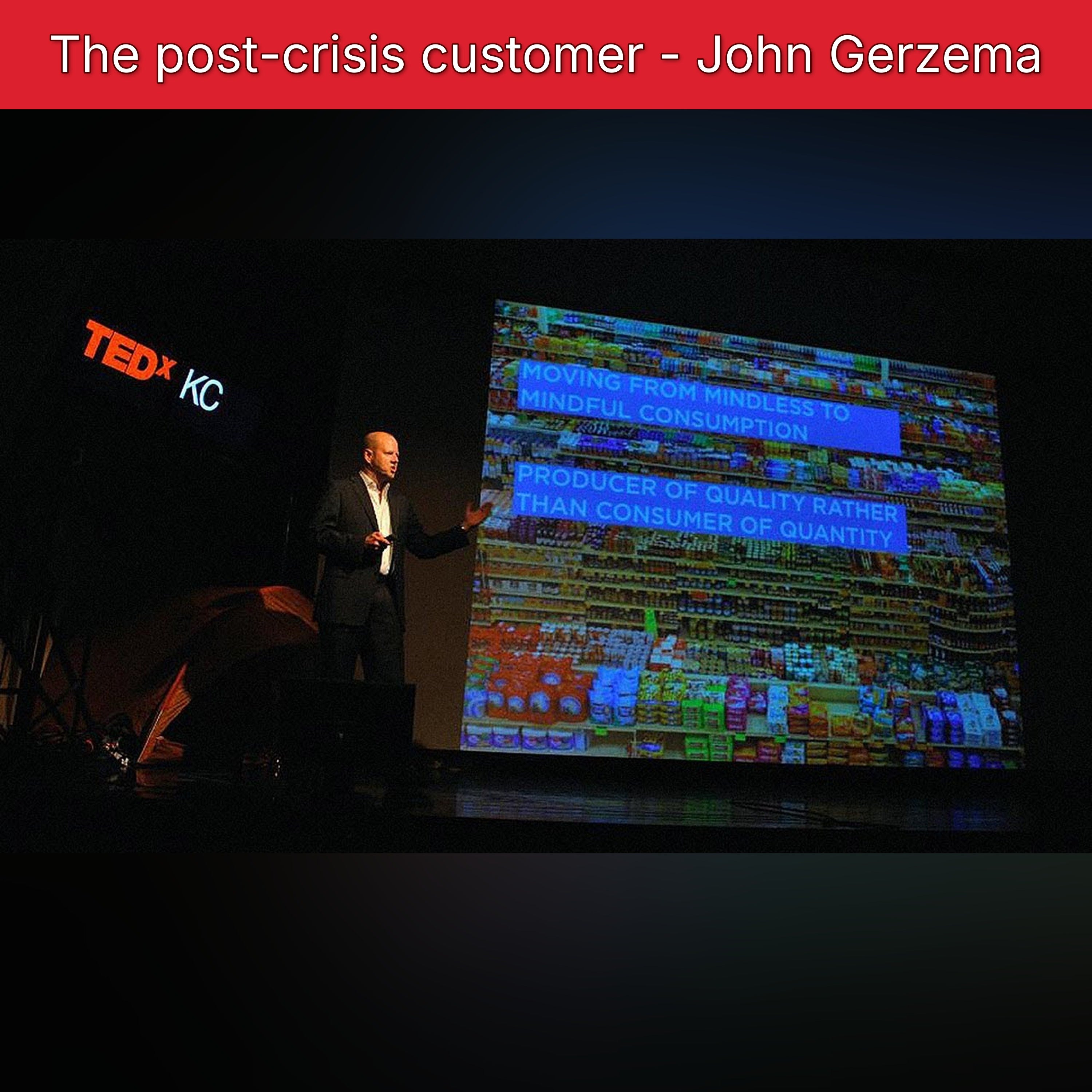
John Gerzema says there's an upside to the recent financial crisis -- the opportunity for positive change. In this talk, he identifies four major cultural shifts driving new consumer behavior and shows how businesses are evolving to connect with thoughtful spending. (Filmed at TEDxKC.) Talk by John Gerzema.
What happens when a Bitcoiner goes to work inside a central bank? Marek Feder spent about two and a half years in the crypto asset team at the National Bank of Slovakia, and joins Honest Money to share what he learned about Bitcoin, central bankers and how to have better conversations. Marek explains how his Crypto Coffee workshops reached about 20% of the bank’s staff, why a heated debate on Bitcoin and energy changed how he communicates, and why he believes most central bankers aren’t hostile to Bitcoin. He also shares why he left, the Bitcoin museum he built inside the bank, and his work training Bitcoin educators around the world. ️ EPISODE SUMMARY Marek and Anja discuss how colleagues and the local Bitcoin community reacted to a Bitcoiner joining a central bank. Marek shares practical ways to lower the temperature of Bitcoin conversations by listening, defining terms and understanding the fear behind objections. The conversation then turns to the immersive Bitcoin museum, lecturin
A table full of squishies shouldn’t feel like a mirror, but it does. When I watch my daughter make a passionate, well-researched case for a sparkly purple dumpling, I can’t help noticing the uncomfortable truth: she genuinely believes every word. Then the real question lands, because adults do the same thing, just with better arguments and bigger consequences. We talk about the quiet art of self-justification, how we collect evidence, replay past mistakes, and stack up “perfectly sensible” reasons until our conclusion feels inevitable. In work and leadership, it shows up as “it’s easier if I do it myself”, “I’m too busy to change anything”, or “the timing isn’t right”. At home, it can be the same pattern in different clothes: the mental load we keep, the help we don’t ask for, the boundaries we delay because we’ve built a rock-solid PowerPoint deck in our head. This moment is also a loving call-out for capable women. Our strengths, analysing, anticipating, problem solving, can turn us
In this episode, Katie Mack and John Green discuss why life was able to happen. Head to https://policygenius.com/crashcourse to get your free life insurance quotes and see how much you could save. This show is a production of Complexly. If you want to help keep Crash Course free for everyone, forever, you can join our community on Patreon at http://www.patreon.com/crashcourse Chapters 0:00 Introduction 2:10 The Elements We're Made Of 25:25 Our Solar System Forms 31:04 Life on Earth 41:32 Life on Other Planets 55:33 The Human Pursuit of Understanding *** Support us for $5/month on Patreon to keep Crash Course free for everyone forever! https://www.patreon.com/crashcourse Or support us directly: https://complexly.com/support Join our Crash Course email list to get the latest news and highlights: https://mailchi.mp/crashcourse/email Get our special Crash Course Educators newsletter: http://eepurl.com/iBgMhY Thanks to the following patrons for their generous monthly contributions that help
Get the Biblical Highway tumbler → https://israelguys.link/tumbler-7IC Israel's president, Isaac Herzog just issued a warning to Bibi Netahyahu, Defense Minister Israel Katz, and National Security Council head Shmuel Ben Ezra. In this warning Herzog laid out a very specific set of circumstances happening in Israel, that in his opinion, could quickly escalate to civil war. The warning was issued in the form of a private letter, delivered to the involved leaders a few weeks ago. But somehow, the Jerusalem Post was able to obtain the letter, and they just released it to the public. Ben Hilton breaks it all down for you on today's show.
The New Discourses Podcast with James Lindsay, Ep. 228 The Woke Right that calls itself the New Right is one of the most deceptive movements American conservatives have faced in a long time, even given everything we've been through over the last decade. By playing off the fact that we were in need of a new approach to the Republican Party that abandons the mondialism of the 1990s and 2000s, it positions itself as the necessary change to American right-wing thought even though that renaissance has already occurred. Through a litany of deceptive and sometimes subtle lies about itself, its agenda, and its vision, it is attempting nothing short of a coup of American conservatism. In this episode of the New Discourses Podcast, host James Lindsay walks through all the necessary background and exposes many of these lies one by one so that they can be made plain for all. Join him so that you can see. Support New Discourses: https://newdiscourses.com/support Follow James Lindsay: https://linktr
Today, Craig is going to talk about the most important part of the Constitution - the Fourteenth Amendment. In particular, we're going to discuss the "equal protection" clause and how it relates to our civil rights. So we've spent the last few episodes talking about civil liberties , or our protections from the government, but civil rights are different as they involve how some groups of citizens are able to treat other groups (usually minorities) under existing laws. We'll talk about the process the Supreme Court follows in equal protection cases, called strict scrutiny, and look at one landmark case, Brown v Board of Education, and explain its role in starting the Civil Rights Movement of the 1960s. Produced in collaboration with PBS Digital Studios: http://youtube.com/pbsdigitalstudios Support is provided by Voqal: http://www.voqal.org (http://www.voqal.org/) All attributed images are licensed under Creative Commons by Attribution 2.0 Want to find Crash Course elsewhere on the inter
Hank bursts our ideal gas law bubble, er, balloon, and brings us back to reality, explaining how the constants in the gas law aren't all that constant; how the ideal gas law we've spent the past two weeks with has to be corrected for volume because atoms and molecules take up space and for pressure because they're attracted to each other; that Einstein was behind a lot more of what we know today than most people realize; and how a Dutch scientist named Johannes van der Waals figured out those correction factors in the late 19th century and earned a Nobel Prize for his efforts. Pssst... we made flashcards to help you review the content in this episode! Find them on the free Crash Course App! Download it here for Apple Devices: https://apple.co/3d4eyZo Download it here for Android Devices: https://bit.ly/2SrDulJ Table of Contents Constants in the Gas Laws Aren't all that Constant 1:20 The Ideal Gas Law has to be Corrected for Volume and Pressure 3:26 Einstein was the Bomb 5:02 Van Der Wa
View full lesson: http://ed.ted.com/lessons/mysteries-of-vernacular-ukulele-jessica-oreck-and-rachael-teel Uploaded 18-10-13 When 19th century Portuguese travelers landed in Hawaii with a small four-stringed guitar, a member of the king's court, nicknamed Jumping Flea, or ukulele in Hawaiian, took to the instrument. Jessica Oreck and Rachael Teel explain how an affinity for the ukulele gave the instrument its name. Lesson by Jessica Oreck and Rachael Teel, animation by Jessica Oreck.