On this week’s episode, we’re joined by Vanessa Feltz, who was supposed to be winding down when we last spoke four years ago. Instead, at 64, she has launched her own YouTube show, where guests join her on her bed, and is running a business for the first time in her life. After 38 years of bosses telling her what she couldn’t do, she is the one making the calls now, and she loves it. She talks about nearly four years on her own after a lifetime of never being single for more than a few weeks, and why she counts that as progress. She tells the story of meeting a date on a Tube escalator. And she explains why every year she has lived beyond her mum, who died at 57, feels like a bonus. At Home with Vanessa is on YouTube now, and you can still hear her on LBC. Hosted on Acast.
Do you live with a man? Has he started showing signs of becoming comfortable? Does his existence disgust you? Well in this episode, join Chidera as she discusses ways you can still maintain your leverage and power while sharing a roof with that man! Join my patreon (https://cms.megaphone.fm/organizations/81a8496c-a46f-11ec-9c25-e367ce834a47/podcasts/396c4010-e962-11ee-a204-17c275425c9a/episodes/patreon.com/theslumflower) for access to more revealing episodes, a 65-page guide on whether to keep or leave that guy, as well as answering your dilemma questions! Get my latest book POCKET POWER FROM THE SLUMFLOWER (https://geni.us/pocketpower)
Welcome back to The Calm & Happy Home Podcast! This week I’m joined by someone I’ve stalked for about four years, the beautiful Lucy Lord, two times Sunday Times bestselling author, recipe creator and the founder of Supper Club. Lucy shares simple, homemade recipes with a community of people who feel like friends, and she is every bit as lovely in real life as she is online. We chat about her path from veterinary pharmaceutical sales to Sydney and back again, the pull to do something that made no sense on paper, and why feeling cringe when you put yourself out there never really goes away. We also talk about the event we’ve been planning together for what feels like years: a Bend & Bake online event on Sunday 22nd November, where I’ll be the guest expert, taking you through a feng shui session to help you slow down and reset before the end of the year. How an air fryer book, a love of simple cooking and “doing something for ourselves” became a form of meditation From planning to be a v
*This video was published in 2015 and therefore does not reflect recent historical events, nor context about the ongoing conflict between Israel and Palestine.* In which John Green teaches you about the conflict in Israel and Palestine. This conflict is often cast as a long-term beef going back thousands of years, rooted in a clash between religions. Well, that's not quite true. What is true is that the conflict is immensely complicated, and just about everyone in the world has an opinion about it. John is going to try to get the facts across in under 13 minutes. Note: We mispronounced the Arabic word "nakba" at 6:06. Sorry about that! Citation 1: Arthur James Balfour, Balfour Declaration (letter to Baron Rothschild, leader of British Jewish community). 1917. Crash Course is on Patreon! Want to find Crash Course elsewhere on the internet? Facebook - http://www.facebook.com/YouTubeCrashCourse Twitter - http://www.twitter.com/TheCrashCourse Instagram - https://www.instagram.com/thecrashc
While Jupiter is nowhere near massive enough to initiate fusion in its core, there are even more massive objects out there that fall just short of that achievement called brown dwarfs. Brown dwarfs have a mass between giant planets and small stars. They were only recently discovered in the 1990s, but thousands are now known. More massive ones can fuse deuterium, and even lithium, but not hydrogen, distinguishing them from “normal” stars. Sort of. Correction: In the illustration at 9:30, the numbers listed after the star names are the year of discovery, not distance. Check out the Crash Course Astronomy solar system poster here: http://store.dftba.com/products/crashcourse-astronomy-poster -- Chapters: Introduction: Brown Dwarfs 00:00 L Stars & The Lithium Test 2:50 Discovering the First Brown Dwarfs 4:14 What Color Are Brown Dwarfs? 6:24 Physical Characteristics of Brown Dwarfs 7:30 Small Stars vs. Big Planets 8:11 Review 10:17 -- PBS Digital Studios: http://youtube.com/pbsdigitalstudio
From 1932 to 1972, the United States Public Health Service and the Centers for Disease Control and Prevention operated an extremely unethical medical experiment on the effects of outcomes of untreated syphilis. Hundreds of poor Black men from Macon County, Alabama were enrolled in the study, and treatment for syphilis was withheld from them. Even after antibiotics became available that could cure syphilis, these men were left to suffer from the disease and expose their families to syphilis as well. Today we're learning about the Tuskegee Syphilis Experiment, a shameful example of racism in American medicine, and a tragedy that still impacts how many Black Americans think about healthcare today. Clint's book, How the Word is Passed is available now! https://bookshop.org/a/3859/9780316492935 VIDEO SOURCES ● Susan Reverby, Examining Tuskegee: The Infamous Syphilis Study and Its Legacy (Chapel Hill, N.C.: University of North Carolina Press, 2009). ● Susan Reverby ed., Tuskegee’s Truth’s: R
Dig into the psychology of how memories are susceptible to false information and why we shouldn’t treat them as truth. Uploaded 08-09-20 -- In a 1990’s study, participants recalled getting lost in a shopping mall as children. Some shared these memories in vivid detail, but there was one problem: none of these people had actually gotten lost in a mall. They produced these false memories after psychologists told them they’d gotten lost and parents confirmed it. So what’s going on? Daniel L. Schacter explores the fallibility of our memory. Lesson by Daniel L. Schacter, directed by AIM Creative Studios. Animator's website: http://aimcreativestudios.com/ Sign up for our newsletter: http://bit.ly/TEDEdNewsletter Support us on Patreon: http://bit.ly/TEDEdPatreon Find us on Twitter: http://bit.ly/TEDEdTwitter Peep us on Instagram: http://bit.ly/TEDEdInstagram View full lesson: https://ed.ted.com/lessons/are-all-of-your-memories-real-daniel-l-schacter Thank you so much to our patrons for your s
⚡️⚡️⚡️ Black Friday Sale ⚡️⚡️⚡️ 12 months for the price of 4 ⏱ Ends at 23:59, Sunday, November 29th 2026. --- Horatio Nelson was a sickly clergyman’s son who became Britain’s greatest naval hero, despite lifelong illness, losing an eye and an arm. His daring victories against France made him famous across Europe, but his final battle at Trafalgar would turn him into a national legend. Sickly Horatio Nelson joins the Royal Navy aged twelve, following his captain uncle He gains rapid promotion, despite lifelong seasickness and dangerous adventures at sea Nelson marries Fanny Nisbet, then waits unhappily in Norfolk during peacetime War with France begins, and Nelson first meets Lady Hamilton in Naples He loses sight in one eye, then wins fame at Cape St Vincent A failed attack on Tenerife costs Nelson his right arm, while Fanny nurses him Nelson destroys the French fleet at the Battle of the Nile, cutting off Napoleon In Naples, Nelson and Emma Hamilton fall in love; their daughter Horati
What do you do when the dream is real, but the rent is due? Fresh off the Forever Forward weekend, with a couple of weeks left before their new book We Is Greater Than Me drops, CJ and Eric Thomas go back to the one season CJ almost folded. Money was so tight that CJ, the first in his family to get a degree, master's in hand, was calling his blue collar parents to borrow five hundred dollars. So he started substitute teaching on the side. By the end of his first day he had a struggling classroom singing, the principal asked him to come back every day, and the district wanted to offer him a role worth close to six figures. Then ET found out, and told him to quit. ET explains why. CJ had already turned down Western Michigan. ET had already watched people from Detroit make enough to survive but never enough to thrive. And the calls coming into their office at Michigan State, from Reggie Bush to Puff, told him the needle was moving. You can't half do this. Then the real reason CJ took the
On today's episode of Crash Course Anatomy & Physiology, Hank continues our exploration of tissues, with an introduction to your connective tissues. Pssst... we made flashcards to help you review the content in this episode! Find them on the free Crash Course App! Download it here for Apple Devices: https://apple.co/3d4eyZo Download it here for Android Devices: https://bit.ly/2SrDulJ Chapters: Introduction 00:00 What is Connective Tissue? 2:14 Four Classes of Connective Tissue 2:34 What Makes Connective Tissues Different From Other Tissue Types? 3:25 The Extracellular Matrix 4:07 Types of Fibers 5:34 Connective Tissue Cells 6:34 How Marfan Syndrome Affects Connective Tissue 8:31 Review 9:37 Credits 10:08 Crash Course is on Patreon! Want to find Crash Course elsewhere on the internet? Facebook - http://www.facebook.com/YouTubeCrashCourse Twitter - http://www.twitter.com/TheCrashCourse Instagram - https://www.instagram.com/thecrashcourse/ CC Kids: http://www.youtube.com/crashcoursekids
Interested in earning more rental income? Discover how PadSplit helps property owners maximize their rental potential at https://link.padsplit.com/ken The Fed says the economy is strong and inflation is still too high, so why did it suddenly hit pause on interest rates just days before the midterm elections? Join Ken and Danielle McElroy LIVE as they break down the Fed's conflicting signals, the politics of monetary policy, and what the next rate decision could mean for the economy, housing, and your money. • • • If you're an accredited investor and are interested in learning about opportunities to invest with Ken follow this link: https://thefoundersgroup.com/invest • • • Ken has a new YouTube channel for his podcast! Check it out and subscribe at this link: @KenMcElroyPodcast (https://www.youtube.com/@KenMcElroyPodcast) Follow Ken on social media at: https://x.com/kenmcelroy (https://www.youtube.com/redirect?event=video_description&q=https%3A%2F%2Fx.com%2Fkenmcelroy&redir_token=QUl
Welcome to Crash Course Zoology! In this fourteen-episode series made in partnership with PBS and Nature, Crash Course Zoology will take a rapid deep dive into the weird and wonderful biology of animals. Host, wildlife ecologist, and conservation scientist, Dr. Rae Wynn-Grant will guide us across the tree of life as we endeavor to answer what makes an animal an animal anyway? We’ll explore the current state of the world and how it's evolving with in-depth looks at particular animals, show how the science is applied, and even take you along for the journey with day-in-the-lives of some astonishing creatures. Learn more about Rae here! https://www.raewynngrant.com (https://www.raewynngrant.com/) Watch our videos and review your learning with the Crash Course App! Download here for Apple Devices: https://apple.co/3d4eyZo Download here for Android Devices: https://bit.ly/2SrDulJ Crash Course is on Patreon! Thanks to the following patrons for their generous monthly contributions that help k
In which John Green teaches you about the United States Constitution. During and after the American Revolutionary War, the government of the new country operated under the Articles of Confederation. While these Articles got the young nation through its war with England, they weren't of much use when it came to running a country. So, the founding fathers decided to try their hand at nation-building, and they created the Constitution of the United States, which you may remember as the one that says We The People at the top. John will tell you how the convention came together, some of the compromises that had to be made to pass this thing, and why it's very lucky that the framers installed a somewhat reasonable process for making changes to the thing. You'll learn about Shays' Rebellion, the Federalist Papers, the elite vs rabble dynamic of the houses of congress, and start to find out just what an anti-federalist is. Hey teachers and students - Check out CommonLit's free collection of re
In the security news: Supermarket refrigeration attacks, again! Rapid7's Ivanti findings and why we can't have "nice" things Google's massive Android TV botnet takedown Linux TCP kernel flaw that no one is patching The Binance theft APT flaw gives out root PHP security debt The porn and Digital billboard problem Your own phone system to pwn From PoC to weaponized exploit Hacking to change time Rooting an Echo Dot Firmware should just work AI chained bugs into working exploits USB power states leak data across an air gap AI-assisted vulnerability finding GoAhead's TLS handling Hackers hijack emergency alert apps Taiwan's emergency services become an AI-agent target CUI exposed through GSA's Google Drive GCHQ can't account for thousands of storage devices Railway employee blames an attempted intrusion on AI VulnCheck opens its initial-access playground to the public Show Notes: https://securityweekly.com/psw-951
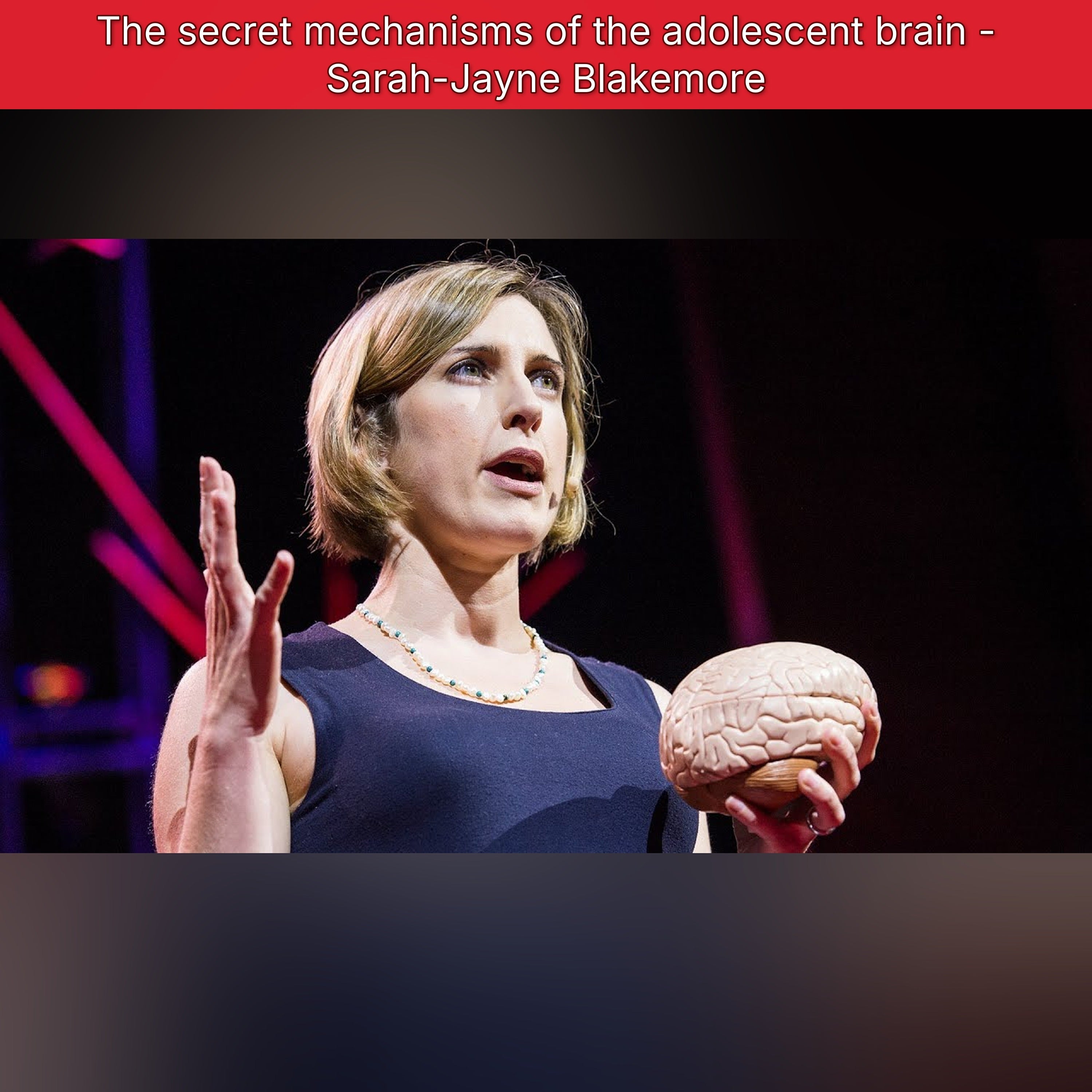
View full lesson: http://ed.ted.com/lessons/the-mysterious-workings-of-the-adolescent-brain-sarah-jayne-blakemore Why do teenagers seem so much more impulsive, so much less self-aware than grown-ups? Cognitive neuroscientist Sarah-Jayne Blakemore compares the prefrontal cortex in adolescents to that of adults, to show us how typically "teenage" behavior is caused by the growing and developing brain. Talk by Sarah-Jayne Blakemore.
EMERGENCY POD! Some breaking news today. Looks like LIV officially folds. Is Bryson going to the DP World Tour? Did Rory cheat? Where to find us: Mark Crossfield on Twitter: https://twitter.com/4golfonline Lou Stagner on Twitter: https://twitter.com/LouStagner Greg Chalmers on Twitter: https://twitter.com/GregChalmersPGA
The Harlem Renaissance produced many remarkable artists, writers, and thinkers. Today we'll talk about one of the most interesting minds of the time, Zora Neale Hurston. Hurston was an anthropologist by training and spent much of her career studying and documenting the lives of Black people in the southern US. She later went on to write several remarkable novels, including Their Eyes Were Watching God, which we discussed in Crash Course Literature. https://www.youtube.com/watch?v=4kF0U8kIMp4&t=1s (https://www.youtube.com/watch?t=1s&v=4kF0U8kIMp4) Clint's book, How the Word is Passed is available now! https://bookshop.org/a/3859/9780316492935 VIDEO SOURCES Susan Reverby, Examining Tuskegee: The Infamous Syphilis Study and Its Legacy (Chapel Hill, N.C.: University of North Carolina Press, 2009). Susan Reverby ed., Tuskegee’s Truth’s: Rethinking the Tuskegee Syphilis Study (Chapel Hill, N.C.: University of North Carolina Press, 2000). Harriet A. Washington, Medical Apartheid: The Dark His
It's time to start talking about some of the terrible things you can do to your own body, like blood doping. We'll start by explaining the structure and function of your erythrocytes, and of hemoglobin, which they use to carry oxygen. We'll follow the formation and life cycle of a red blood cell, including how its levels are regulated by EPO and its signaling molecules. We'll wrap up by looking at how blood doping works and how it is truly a recipe for disaster. Pssst... we made flashcards to help you review the content in this episode! Find them on the free Crash Course App! Download it here for Apple Devices: https://apple.co/3d4eyZo Download it here for Android Devices: https://bit.ly/2SrDulJ Chapters: Introduction: Blood is Powerful Stuff 00:00 Form and Function of Erythrocytes (Red Blood Cells) 1:34 Hemoglobin 2:30 Formation of a Red Blood Cell: Hematopoiesis 4:11 How Erythropoietin (EPO) Regulates Blood Oxygen Levels 5:43 How Red Blood Cells Die 6:54 Don't Dope Your Blood! 7:53 R
In which Craig Benzine teaches you about delegation and informal powers. What are all these federal agencies about? Well, the President has a lot of stuff to do as the chief executive, and as much as Americans like to talk about personal responsibility, the President can't really do all this stuff alone. Because it's a huge job! Same deal with Congress. So, they delegate authority. This is where all the government agencies and stuff come from. Congress creates them to actually get around to enforcing laws. You'll learn about stuff like OSHA, the FDA, and maybe even the FCC. Although you hear an occasional complaint about bureaucracies and such, the business of government wouldn't get done without agencies and delegation. Support is provided by Voqal: http://www.voqal.org (http://www.voqal.org/) This episode is sponsored by Squarespace: http://www.squarespace.com/crashcourse Chapters: Introduction: Delegation 00:00 What is delegation? 0:39 How Congress limits an agency's discretion 1:37
You Can't Fake Shabbos: The Way We Eat, Pray and Live All Week Determines Whether Shabbos Becomes an Escape -- or a Revelation This class is the second and final in a series on the Maamar Yegaleh Lan Taamei, presented by the Alter Rebbe on Shabbos Tetzaveh, 5567 (1807), published in Torah Or Parshas Chayei Sarah. This class was presented by Rabbi YY Jacobson on Thursday, Parshas Chaye Sarah, 25 Cheshvan, 5787, November 5, 2026. View Source Sheets: https://portal.theyeshiva.net/api/source-sheets/10023
Jacob Beningo explores the shift from using AI as a coding assistant to agentic firmware development, where AI agents autonomously build, debug, test, and verify embedded systems. He shares a real experiment using an NXP MCX N947 board and an AI-written I2C driver. He also covers hardware safety guardrails, simulation, and how embedded engineers can evolve into systems engineers. Key Takeaways: • Most teams use AI only as a coding assistant. The bigger gains come from agentic workflows where AI builds, debugs, tests, and verifies firmware. • AI doesn't get firmware right on the first try, and neither do human engineers. It needs the ability to iterate, as with test-driven development. • Connecting an AI agent to real hardware or a simulator lets it observe results, find root causes, and fix problems instead of guessing. • In the I2C experiment, the agent correctly diagnosed a hardware problem (a backwards click board) that the engineer had wrongly blamed on the software. • Once the boa
View full lesson: http://ed.ted.com/lessons/the-uncertain-location-of-electrons-george-zaidan-and-charles-morton Uploaded 14-10-13 The tiny atoms that make up our world are made up of even tinier protons, neutrons and electrons. Though the number of protons determine an atom's identity, it's the electrons -- specifically, their exact location outside the nucleus -- that particularly perplex scientists. George Zaidan and Charles Morton show how to make an educated guess of where those itty-bitty freewheeling electrons might be. Lesson by George Zaidan and Charles Morton, animation by Karrot Animation.
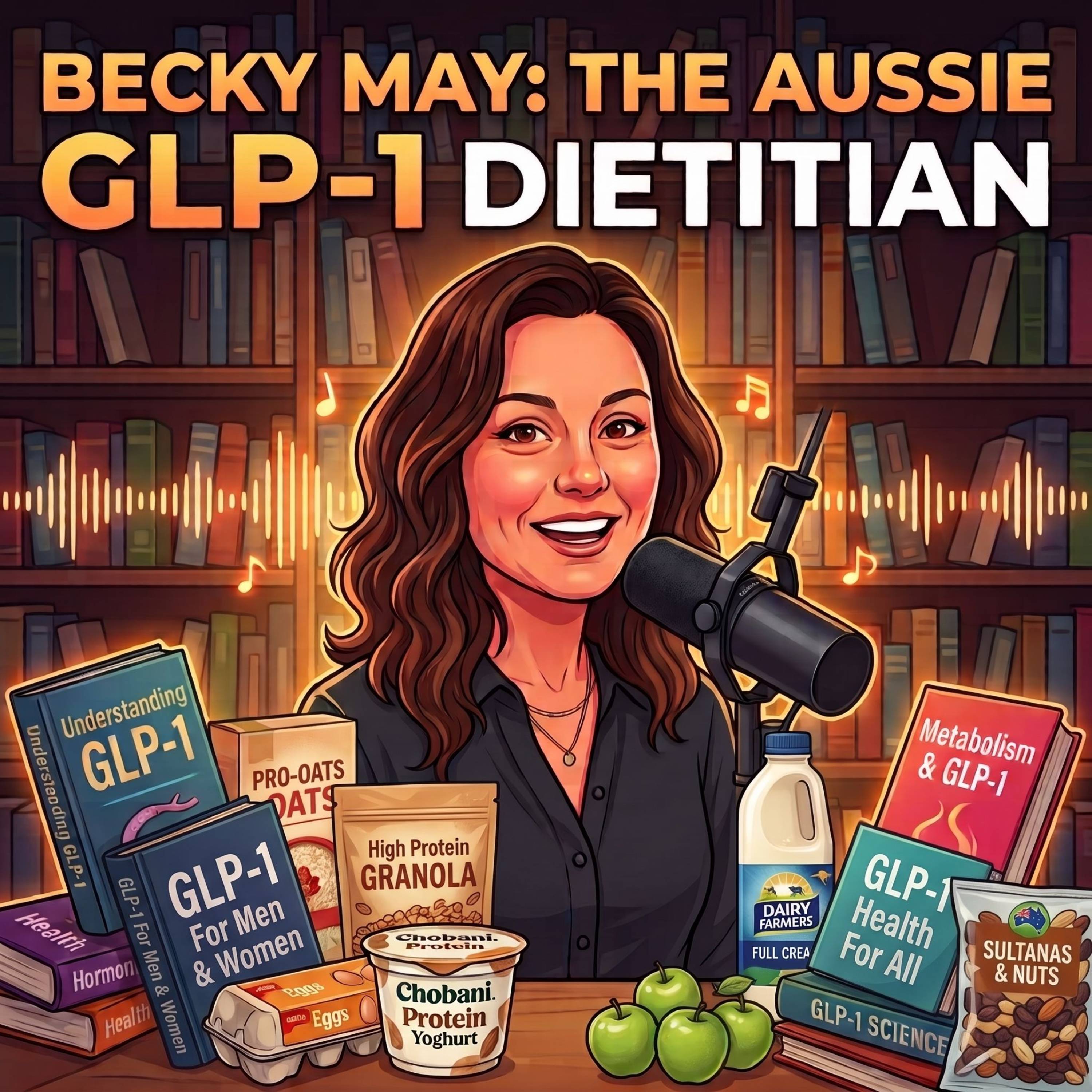
Confused by what should be in your GLP-1 trolley? Here's what supermarket foods you need to grab next trip. Your appetite has shrunk, you're full after half a plate, and your trolley is still full of food bought for the old you. So what should actually go in it now? In this episode, I walk you through the Australian supermarket aisle by aisle and share the products I'd put in a GLP-1 trolley. Not a perfect trolley. A realistic one that works on a busy weeknight and feeds the whole household. You'll learn the simple three-question filter I use for every product, and exactly what to look for on the label so you can choose well at Coles, Woolworths or Aldi in about ten seconds. In this episode • The trolley rule: why every bite has to earn its place when your appetite is small • The three questions to ask of every product: protein, fibre, easy • The dairy fridge: high-protein yoghurt, cottage cheese, protein milks, eggs and cheese • Meat, seafood and the deli: the hot roast chicken, lean
What began as student protests in Paris has spread to Belgium, Italy, Spain, Germany and beyond. The left blames school funding and the cost of living. The right blames mass migration. Neither side is focusing on the bigger problem: a generation of young people, of every race, taught in school and on social media that the West is the root of all evil. The question is, will Britain and America be the next dominoes to fall? Follow the podcast so you don’t miss a single episode! Pre-order Katharine’s new book, “Diversity Is Not Our Strength”: https://geni.us/DiversityNotStrength _____________________________________ Katharine Birbalsingh, Britain’s strictest headmistress, talks about what matters for our culture both at school and in the home. Gentle parenting and progressive schooling have replaced the values our grandparents understood instinctively. Whether you’re a parent, a teacher, or anyone interested in how politics impacts children, Strictly Education is your source for the tradi