Today on Crash Course Economics, Adriene and Jacob talk about the 2008 financial crisis and the US Goverment's response to the troubles. So, all this starts with home mortgages, and the use of mortgages as an investment instrument. For years, it seemed like the US housing market would go up and up. Like a bubble or something. It turns out it was a bubble. But not the good kind. And the government response was...interesting. Anyway, why are you reading this? Watch the video! More Financial Crisis Resources: Financial Crisis Inquiry Report: http://www.gpo.gov/fdsys/pkg/GPO-FCIC/pdf/GPO-FCIC.pdf TAL: Giant Pool of Money: http://www.thisamericanlife.org/radio-archives/episode/355/the-giant-pool-of-money Timeline of the crisis: https://www.stlouisfed.org/financial-crisis/full-timeline Crash Course is on Patreon! Thanks to the following Patrons for their generous monthly contributions that help keep Crash Course free for everyone forever: Fatima Iqbal, Penelope Flagg, Eugenia Karlson, Alex S
Calculate your net worth (https://ter.li/0cu4ys8k) Start your free budget today. Download the EveryDollar app! (https://ter.li/1vgt2y) Next Steps: Have a question for the show? Call 888-825-5225 weekdays from 2–5 p.m. Connect with our Sponsors: Explore more from Ramsey Network: ️The Ramsey Show (https://ter.li/vuhftj) The Dr. John Delony Show (https://ter.li/8igfgf) Smart Money Happy Hour (https://ter.li/8glqru) The Rachel Cruze Show (https://ter.li/j2myuh) George Kamel (https://ter.li/za59q3) EntreLeadership (https://ter.li/wffxnr)
In this Jim Rohn Motivation speech, discover the hidden barriers holding you back from success. Explore the subtle, often unspoken fear of success and how it shapes your thoughts, actions, and potential. Learn actionable steps to overcome self-doubt, procrastination, and perfectionism, and unlock the path to personal growth and fulfillment. Key Topics From This Motivational speech: - The subtle nature of the fear of success - How procrastination and self-sabotage hinder growth - The role of relationships and societal expectations in shaping fear - Strategies to reframe your mindset and embrace change - Cultivating resilience and self-trust in the pursuit of success Fear of success isn’t about avoiding failure; it’s about navigating the responsibilities and changes that come with achievement. Jim Rohn helps illuminate this internal struggle and offers practical strategies to move beyond hesitation, procrastination, and self-sabotage. Recognize how to shift your mindset, break down intim
In our final episode of Crash Course Psychology, Hank discusses the ideas of Aggression and Altruism. These two things are difficult to understand and explain so sit tight and get ready to run the gauntlet of human emotions. Want more videos about psychology? Check out our sister channel SciShow Psych at https://www.youtube.com/scishowpsych! -- Chapters: Introduction: Robber's Cave Experiment 00:00 Conflict vs. Cooperation 2:26 Aggression 3:05 Genetic, Neurological, & Biochemical Reasons for Aggression 3:26 Frustration-Aggression Hypothesis 4:24 Altruism 5:17 Bystander Effect 5:48 Why do we help others? 6:57 Social Exchange Theory & the Norm of Reciprocity 7:19 Social Responsibility Norm 7:47 Conflict & Self-Interest 8:09 Review & Credits 9:37 -- Crash Course is on Patreon! Want to find Crash Course elsewhere on the internet? Facebook - http://www.facebook.com/YouTubeCrashCourse Twitter - http://www.twitter.com/TheCrashCourse Instagram - https://www.instagram.com/thecrashcourse/ CC Kid
Learn more about TED-Ed's student voice initiative here: http://bit.ly/2sHzrqU Uploaded 20-02-18 -- A brown thrasher knows a thousand songs. A wood thrush can sing two pitches at once. A mockingbird can match the sounds around it — including car alarms. These are just a few of the 4,000 species of songbirds. How do these birds learn songs? How do they know to mimic the songs of their own species? Are they born knowing how to sing? Partha P. Mitra illuminates the beautiful world of birdsong. Lesson by Partha P. Mitra, animation by TED-Ed. Support Our Non-Profit Mission ---------------------------------------------- Support us on Patreon: http://bit.ly/TEDEdPatreon Check out our merch: http://bit.ly/TEDEDShop ---------------------------------------------- Connect With Us ---------------------------------------------- Sign up for our newsletter: http://bit.ly/TEDEdNewsletter Find us on Twitter: http://bit.ly/TEDEdTwitter Peep us on Instagram: http://bit.ly/TEDEdInstagram -----------------
As we mentioned last episode, one of the best test spaces for building new AI systems are games. This is because games provide a great framework for an AI to learn an objective and slowly improve. In recent years, AI has made huge strides in games from beating Jeopardy! champions to crushing a five-person team in DOTA 2. Today, we’re going to walk you through creating a Tic Tac Toe bot that uses the minimax algorithm to become undefeatable and we’ll talk about evolutionary neural networks like in SethBling’s MarI/O project. Next week we’ll create our very own game and create an AI to master it! Watch SethBling’s MarI/O video: https://www.youtube.com/watch?v=qv6UVOQ0F44 Crash Course is produced in association with PBS Digital Studios: https://www.youtube.com/pbsdigitalstudios Crash Course is on Patreon! Thanks to the following patrons for their generous monthly contributions that help keep Crash Course free for everyone forever: Eric Prestemon, Sam Buck, Mark Brouwer, Indika Siriwardena
When we venture to new places, we need navigational tools to guide us. In organic chemistry, those are reaction mechanisms! In this episode of Crash Course Organic Chemistry, we’ll learn all about how to write reaction mechanisms. Having this super useful skill means we don’t have to worry about memorizing every reaction that has ever existed. Series Sources: Brown, W. H., Iverson, B. L., Ansyln, E. V., Foote, C., Organic Chemistry; 8th ed.; Cengage Learning, Boston, 2018. Bruice, P. Y., Organic Chemistry, 7th ed.; Pearson Education, Inc., United States, 2014. Clayden, J., Greeves, N., Warren., S., Organic Chemistry, 2nd ed.; Oxford University Press, New York, 2012. Jones Jr., M.; Fleming, S. A., Organic Chemistry, 5th ed.; W. W. Norton & Company, New York, 2014. Klein., D., Organic Chemistry; 1st ed.; John Wiley & Sons, United States, 2012. Louden M., Organic Chemistry; 5th ed.; Roberts and Company Publishers, Colorado, 2009. McMurry, J., Organic Chemistry, 9th ed.; Cengage Learning,
In this episode of the Medical English Podcast, we follow a consultation with Jake, a young patient attending a follow-up appointment after his first seizure, as his doctor works through triggers, treatment, and what to do if it happens again. You'll learn how to: Use key vocabulary including "seizure," "aura," "trigger," "antiepileptic medication," and "status epilepticus" Take a history that identifies warning sensations and common triggers like missed sleep or missed medication Explain why a diagnosis of epilepsy still warrants medication even when a trigger is identified Discuss what to do — and what not to do — if someone around the patient has a seizure Recognise status epilepticus as a medical emergency and communicate that urgency clearly We explore a full epilepsy follow-up consultation from history-taking through to medication planning and safety advice, and how a clear explanation turns a frightening diagnosis into something a patient feels in control of. This episode is per
Are you consuming a credit card’s worth of misinformation every week? In this episode of Crash Course Scientific Thinking, we’ll learn how to check facts and evaluate sources, so we can figure out what science coverage to believe, and what to ignore. Introduction: Eating Plastic? 00:00 WWF Study and Types of Sources 0:26 The SIFT Method 4:02 Evaluating Sources 7:42 Review & Credits 9:01 Sources: https://docs.google.com/document/d/1Kv2_mFsDxQURuFDxpflD45dy-pCxlqnM9iPSNYxigmQ/edit?tab=t.0#heading=h.vk5i2fgqyumq (https://docs.google.com/document/d/1Kv2_mFsDxQURuFDxpflD45dy-pCxlqnM9iPSNYxigmQ/edit?tab=t.0) *** Support us for $5/month on Patreon to keep Crash Course free for everyone forever! https://www.patreon.com/crashcourse Or support us directly: https://complexly.com/support Join our Crash Course email list to get the latest news and highlights: https://mailchi.mp/crashcourse/email Get our special Crash Course Educators newsletter: http://eepurl.com/iBgMhY Thanks to the following patr
When was the last time you did a job all the way to the end? Not eighty percent. Not good enough. All the way. The last ten percent, the part nobody would ever notice if you skipped it. Most people can't remember, because most people have trained themselves to stop at good enough. Uploaded 21-10-26 Good enough feels efficient. It feels smart. You tell yourself you're saving your energy for the things that really matter. But you're not saving it. You're spending it on a thousand little exits, and all those exits add up to a life that looks almost like the one you wanted, but never quite becomes it. Here is the truth: your future is decided not in the big dramatic moments you've been waiting for, but in the small things nobody else will bother to master. This seminar unpacks the single mechanic behind why some people quietly pull ahead while most stay exactly where they are. CHAPTERS 0:00 Intro — The last ten percent 2:50 What the small things actually are 4:40 Why people skip them: no f
It is amazing what we get used to in life. Sometimes, the things we once found unacceptable gradually become part of our everyday existence. We get used to being unhappy, tolerating disrespect, living with unnecessary stress, accepting poor behaviour and convincing ourselves that this is simply how life is supposed to be. The problem is that human beings are incredibly adaptable. We can become comfortable in environments, relationships and circumstances that are doing us absolutely no good. We adjust our expectations, lower our standards and slowly lose sight of what a healthy, fulfilling life should actually look like. This is particularly important when it comes to our relationships, mental health, personal standards and the way we treat ourselves. We can become so accustomed to operating under pressure, putting everyone else first and ignoring our own needs that we no longer recognise how much we are carrying. The same applies to our thinking and behaviour. If we repeatedly accept e
Dr Sabine Ware from Equine HSD (Health, Spine and Dentistry) in Seymour, Victoria, joins us to discuss equine rehabilitation, pain management and the importance of looking at the whole horse rather than treating individual injuries in isolation. Sabine shares her journey into equine rehabilitation and how her approach has developed through years of clinical experience, further study and working with horses with complex physical challenges. In this episode, we discuss: How shockwave therapy, laser, acupuncture and water treadmills can support rehabilitation and pain management. Why the stage of healing, pain levels and individual circumstances influence treatment choices. The relationship between posture, hoof balance, movement patterns and recurring injuries. Why rehabilitation isn't always a 12-week program, but often an ongoing part of managing a horse throughout its life. How riding, training and owner involvement can influence long-term rehabilitation outcomes. The importance of de
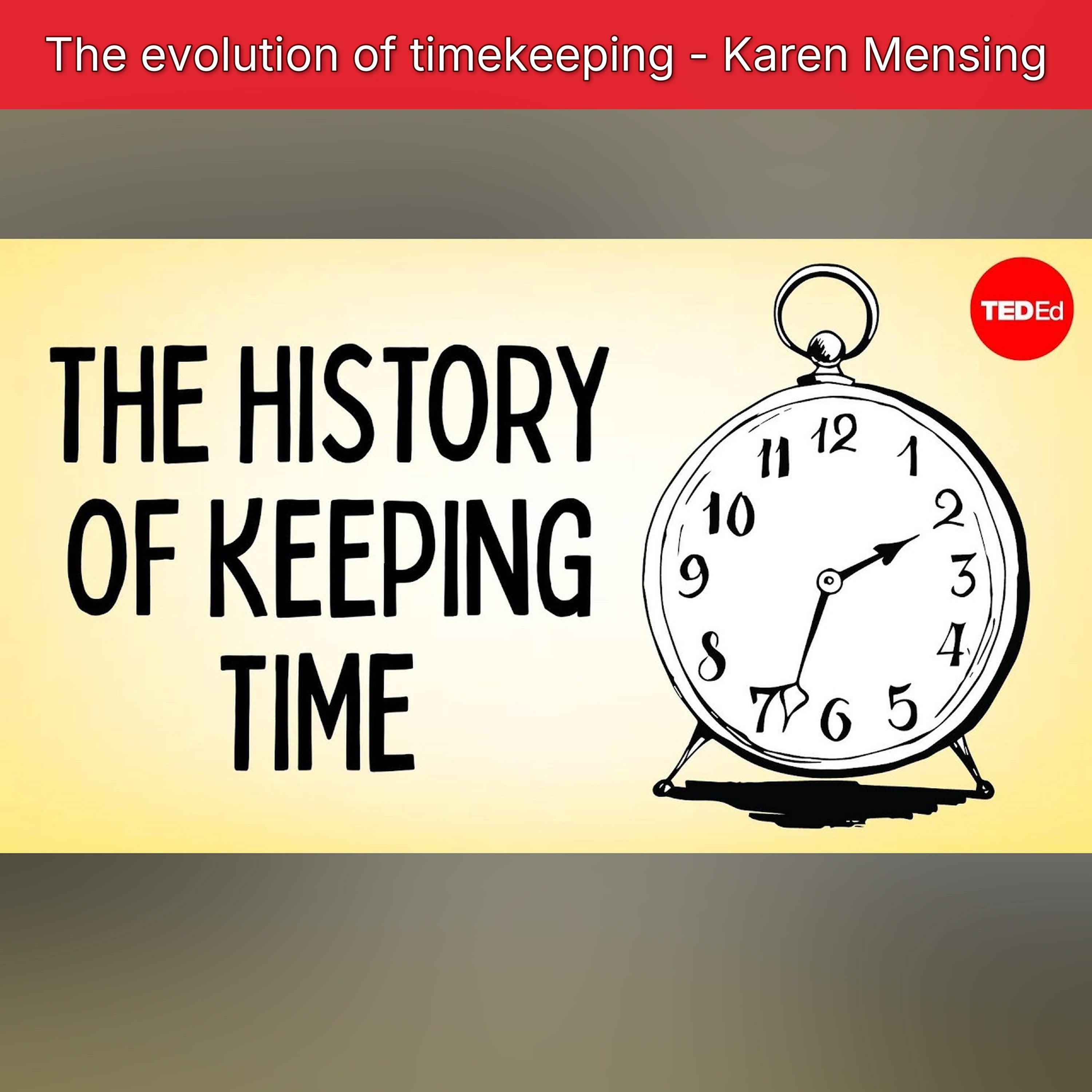
View full lesson: http://ed.ted.com/lessons/the-history-of-keeping-time Where did time-telling come from? What are time zones and why are there so many of them? Get the answers to these questions and more in this journey through the history of time -- from sundials to hourglasses to modern clocks. Lesson by Karen Mensing, animation by Avi Ofer.
Seven headnoted appellate decisions from four courts in the Court of Appeal edition of Friday 13 November 2026, with the New South Wales and Western Australia editions of the same roll-up folded in. Going behind a guilty plea and its agreed facts; contractual interest and the appeal-as-of-right threshold; bias claims that need a link to the merits; fitness to be tried in a Commonwealth prosecution; a serious repeat offender label wrongly applied; and a native title claim brought to the wrong court. Child abuse material offences and historical child sexual offences are reported as legal doctrine only. Criminal Law Desk (opening story). Chimmalee v R [2026] NSWCCA 188 - where a plea was not sought to be withdrawn below, the s 6(1) Criminal Appeal Act 1912 (NSW) question is whether a miscarriage of justice is established, requiring a real question about guilt; agreed facts disclosing each s 192E(1)(b) Crimes Act 1900 (NSW) element are not undermined by civil remedies or by many transfers;
A quiet list in the Tribunals edition of Friday 13 November 2026: six decisions from two state tribunals, none with a headnote, and two worked examples from synopses. What evidence counts when the registry is asked to correct a birth record, and how to frame a pure question of law on an NCAT internal appeal; then, in Western Australia, the tests a tribunal applies before appointing someone to manage another person's affairs. Tribunals Desk: correcting a birth record (lead; synopsis, framework only; no outcome stated). HVB v Registrar of Births, Deaths and Marriages [2026] NSWCATAP 362 - the s 45(1) correction power: "correct" implies a pre-existing error, and the "most reliable information available" means information about the registrable event at the time of the event; medical and hospital records made around the birth are probative, later absence from Medicare, Centrelink or passport records is not; a pure question of law under s 80(2), stated with precision, is not pure if it needs
Adriene and Jacob teach you all about markets. So, in free market(ish) economies like the United States and most of the world, markets are a big deal. Markets work to produce the stuff that consumers want, and that society needs. Today we'll talk about productive and allocative efficiency, skinny jeans, price signals, and more in this information-dense installment of Crash Course. Crash Course is on Patreon! Thanks to the following Patrons for their generous monthly contributions that help keep Crash Course free for everyone forever: Mark, Eric Kitchen, Jessica Wode, Jeffrey Thompson, Steve Marshall, Moritz Schmidt, Robert Kunz, Tim Curwick, Jason A Saslow, SR Foxley, Elliot Beter, Jacob Ash, Christian, Jan Schmid, Jirat, Christy Huddleston, Daniel Baulig, Chris Peters, Anna-Ester Volozh, Ian Dundore, Caleb Weeks -- Want to find Crash Course elsewhere on the internet? Facebook - http://www.facebook.com/YouTubeCrashCourse Twitter - http://www.twitter.com/TheCrashCourse Tumblr - http://t
Are we still paying for the 2008 financial crisis, and could countries usually seen as safe face risks investors underestimate? On the Australian Investors Podcast, Owen Rask sits down with VanEck’s Eric Fine to explore what decades in global markets have taught him about money, debt and the limits of certainty. Above all, Eric makes the case for changing your mind when the evidence changes and thinking through unlikely but consequential scenarios before a crisis arrives. This is both the story of an unusual investing career and a challenge to assumptions about which markets are truly resilient. Episode resources – Speak with the Rask Advice team (https://rask.com.au/advice) Show partner resources – ETF investor? Rask resources – All services (https://bit.ly/R-services) – Financial Planning (https://bit.ly/R-plan) – Invest with us (https://bit.ly/R-invest) – Access Show Notes (https://bit.ly/R-notes) – Ask a question (https://bit.ly/R-quest) – We love feedback! (https://raskau.typeform
In this Jim Rohn Motivation speech, learn how unstoppable confidence is not inherited but constructed through discipline, clarity, and daily follow-through. Confidence isn’t ego — it’s ownership over your behavior, your standards, and your mindset. Key Topics From This Motivational speech: Why confidence is earned, not given How to build self-trust through small daily promises The power of challenging your comfort zone Why your internal dialogue defines your identity The importance of finishing what you start This Jim Rohn motivational speech dismantles the myth that confidence is something you wait to feel. It reveals confidence as a system — a series of repeatable, intentional actions. When you confront patterns, shift your self-talk, and honor your commitments, you don't chase confidence — you carry it. It becomes who you are, not something you need to find. This Jim Rohn Motivational speech Is Perfect For: Anyone struggling with self-doubt or imposter syndrome Individuals seeking t
10 episodes in, we're taking a short breather here on Anatomy & Physiology because even Hank's been struggling with all this vocab. --- Crash Course is on Patreon! Want to find Crash Course elsewhere on the internet? Facebook - http://www.facebook.com/YouTubeCrashCourse Twitter - http://www.twitter.com/TheCrashCourse Instagram - https://www.instagram.com/thecrashcourse/ CC Kids: http://www.youtube.com/crashcoursekids *** Music: "Monkeys Spinning Monkeys" - Kevin MacLeod (incompetech.com) Licensed under Creative Commons: By Attribution 3.0
*Spotify Ad Information: Following disturbance from "mid content" and "post content" adverts, I have now changed the settings so you will only be served ads PRE content. Apologies if there are now more of these - but you are able to skip through and be assured that there are no ads during or after the episode. Tonight’s Sleep Hypnosis focuses on Seasonal Blues and Seasonal Affective Disorder (SAD), helping you find comfort, warmth and a more positive outlook during the darker months of the year. Through deep relaxation, soothing imagery and gentle positive affirmations, this session is designed to support your emotional wellbeing, ease the impact of seasonal changes and help you rediscover everyday moments of happiness. Reconnect with your own sense of inner light as you drift into a peaceful and restorative night’s sleep. Hypnotherapy is an incredible tool that enables us to speak to the subconscious part of the mind – the part that is in control of our emotions and habits, therefore
You've spent years being careful with money. What would you actually be happy to splash out on? A woman in her 50s had her eye on a Chanel bag. Her friends told her she'd earned it. She picked the bag and booked the appointment. When it came time to hand over her card, she changed her mind. Maybe you know the feeling. You can afford the nicer room on holiday and still open six tabs to find the cheapest one. Then there are the things you'd gladly pay for, if you gave yourself a minute to think about what would actually make your life better. The Chanel story got Paul Benson thinking about what he'd call a luxury. In this episode of Financial Autonomy, he shares a few things that make his list, including one you might appreciate the next time you've had a rotten day at work. Inside this episode What happened at the Chanel counter after everyone told her to go for it The luxury you'll want most on the day you've had enough of your job The payday decision that can change how you feel about
Day to day, hospitals provide all kinds of services to help us get better and stay healthy, but during an outbreak, hospitals are the front line of the emergency. In this episode of Crash Course Outbreak Science, we'll look at how hospitals and other healthcare facilities adapt in the face of an outbreak, from resources needs, the roles of healthcare workers, and costs. This episode of Crash Course Outbreak Science was produced by Complexly in partnership with Operation Outbreak and the Sabeti Lab at the Broad Institute of MIT and Harvard—with generous support from the Gordon and Betty Moore Foundation. Sources: *** Watch our videos and review your learning with the Crash Course App! Download here for Apple Devices: https://apple.co/3d4eyZo Download here for Android Devices: https://bit.ly/2SrDulJ Crash Course is on Patreon! Thanks to the following patrons for their generous monthly contributions that help keep Crash Course free for everyone forever: Shannon McCone, Amelia Ryczek, Ken
We’ve all heard the phrase “opposites attract.” It may or may not be true for people, but it’s definitely true in organic chemistry. In this episode of Crash Course Organic Chemistry, we’re learning about electronegativity, polarity, resonance structures, and resonance hybrids. We’ll practice a very important skill for this course that will help us avoid a lot of memorization in the future: electron pushing. It’ll be a lot of trial and error at first, but we all start somewhere! Episode Sources: “THINK BIG! Must the molecules of life always be Left-Handed or Right-Handed?” Smithsonian Magazine. Spinoff 2004 - “A NATURAL WAY TO STAY SWEET”, NASA. Series Sources: Brown, W. H., Iverson, B. L., Ansyln, E. V., Foote, C., Organic Chemistry; 8th ed.; Cengage Learning, Boston, 2018. Bruice, P. Y., Organic Chemistry, 7th ed.; Pearson Education, Inc., United States, 2014. Clayden, J., Greeves, N., Warren., S., Organic Chemistry, 2nd ed.; Oxford University Press, New York, 2012. Jones Jr., M.; Fl
Why do people buy the stuff they buy? In classical economics, most models assume that consumers behave rationally. As you've probably noticed in your real life, in case after case, people don't actually make rational decisions. There can be emotional or social reasons for all this irrationality, and behavioral economics tries to address this. We'll talk about risk, nudge theory, prices and perception, and the ultimatum game. So, let's get irrational, in a logical way, of course. Crash Course is on Patreon! Thanks to the following Patrons for their generous monthly contributions that help keep Crash Course free for everyone forever: Mark, Eric Kitchen, Jessica Wode, Jeffrey Thompson, Steve Marshall, Moritz Schmidt, Robert Kunz, Tim Curwick, Jason A Saslow, SR Foxley, Elliot Beter, Jacob Ash, Christian, Jan Schmid, Jirat, Christy Huddleston, Daniel Baulig, Chris Peters, Anna-Ester Volozh, Ian Dundore, Caleb Weeks -- Want to find Crash Course elsewhere on the internet? Facebook - http://w