The Second Circuit hears United States versus Roman. Mark Roman pleaded guilty to producing and possessing child sexual abuse material. The investigation began with a report that his email account was transmitting illegal images, and a search of his home uncovered recordings involving children. His federal prison sentence was corrected to thirty years, followed by lifetime supervised release. That means supervision and restrictions after prison. As you listen, keep the prison term separate from the conditions governing life after release. What must a judge say in court to impose those conditions? When is a reference to a written report enough? And what difference does a plea agreement make to a defendant's ability to challenge a sentence? Listen for the distinction between notice of a restriction and the reasons for imposing it. United States of America v. Roman (No. 23-6708) — U.S. Court of Appeals for the Second Circuit, argued November 18, 2026. Sources: Official Second Circuit oral
The Ninth Circuit hears Volkswagen versus On-Line Administrators. Volkswagen hired a marketing company, known as Peak, to contact customers by telephone. Consumers sued both companies, claiming the calls violated the Telephone Consumer Protection Act. Defending that lawsuit left Volkswagen with legal bills, which it asked Peak to cover. Volkswagen relies on a promise to defend and indemnify it, meaning to pay defense costs and other covered losses. The district court sided with Volkswagen, and Peak appealed. Peak's lawyer will argue that it followed Volkswagen's instructions and owes no defense costs without an actual breach of the underlying service agreement. Volkswagen's lawyer will argue that this agreement requires a defense when covered wrongdoing is alleged, whether or not it is ultimately proved. The judges will also consider whether website terms and conditions properly became part of the parties' purchase orders. Listen for the distinction between an accusation of breach and
Hub Headlines features audio versions of the best commentaries and analysis published daily in The Hub. Enjoy listening to original and provocative takes on the issues that matter while you are on the go. 0:23 - Ottawa has started shrinking its main payroll. Now it must tackle its $19.2 billion ‘shadow payroll’ (https://thehub.ca/2026/11/18/ottawa-has-started-shrinking-its-main-payroll-now-it-must-tackle-its-19-2-billion-shadow-payroll/), by Charles Lammam 8:47 - The simple pro-investment tax reform no one is talking about (https://thehub.ca/2026/11/19/the-simple-pro-investment-tax-reform-no-one-is-talking-about/), by Trevor Tombe This program is narrated by automated voices. https://tinyurl.com/3a7zpd7e (Apple) https://tinyurl.com/y8akmfn7 (Spotify) Watch The Hub on YouTube: https://www.youtube.com/@TheHubCanada The Hub on X: https://x.com/thehubcanada?lang=en For more information on Jackery power solutions visit the HomePower 3000 product page (https://ca.jackery.com/products/jackery
The Ninth Circuit hears Samuels versus AH Capital Management. Andrew Samuels bought LDO cryptocurrency tokens through the Gemini exchange, then sold them at a loss. He sued the token issuer and several venture-capital firms, claiming the firms were its partners and responsible for sales of unregistered securities. This appeal concerns where that lawsuit belongs, not whether he is entitled to recover his investment. The firms want private arbitration under Samuels's agreement with Gemini, even though they were not parties to that contract. The district court concluded that waiting nearly fourteen months while pursuing rulings on the merits amounted to waiver of the right to arbitrate. Their lawyer will argue they lacked the necessary evidence that Samuels accepted the terms until they obtained discovery. Samuels's lawyer will argue they knew enough already and could have sought limited discovery, the exchange of evidence, on arbitration earlier. The judges will examine both what the fir
Sony Europe and British Paralympic athlete, photographer and videographer Zak Skinner recently unveiled the new online Through Their Lens photography collection. Moving from the running track and the long-jump pit to the studio, the series brings together Zak’s experiences as an athlete and a creator, exploring how his visual impairment influences the way he sees the world. RNIB Connect Radio’s Toby Davey caught up with Zak to find out more about his life behind the lens and how the collection of his photographs draws on the relationship between movement, light and the way he sees. To view Zak’s great photography series with Sony Europe called Through Their Lens do search for Sony United Kingdom and Zak Skinner on instagram or visit - https://www.sony.co.uk/presscentre/sony-and-paralympian-zak-skinner-spotlight-accessible-photography-in-new-through-their-lens-collection Image shows: British Paralympian and photographer Zak Skinner holds his Sony camera beside an athletics track, bringi
The Ninth Circuit hears Pacific Reign versus OXE Marine. Two friends commissioned a custom sport-fishing boat fitted with OXE engines. They say persistent problems kept them from using it, despite repeated repairs and replacement engines. Their company and the two owners sued the boatbuilder and OXE companies over the vessel and its warranties. This appeal concerns where the warranty dispute will be heard, not who is responsible for the engine failures. OXE wants arbitration in Sweden under its contract with the engine distributor. The boatowners did not sign that contract and say their claims depend on a separate recreational-use warranty with no arbitration clause. The district court refused to compel arbitration, and OXE appealed. OXE's lawyer will argue that the owners cannot knowingly claim that contract's benefits while rejecting its arbitration requirement. The owners' lawyer will argue they are enforcing a different warranty, not the distributor's contract. The judges will also
The Tenth Circuit hears Moses versus Denver. Victor Moses was a police recruit who suffered catastrophic injuries during Fight Day, a police academy training exercise in January twenty twenty-three. His complaint says that he collapsed repeatedly, yet paramedics cleared him to continue and trainers kept using force. After months in the hospital, both of his legs were amputated below the knee. He sued Denver, police officers, Denver Health, and paramedics. The district court dismissed his federal civil-rights claims and sent the remaining state-law claims back to state court. He is asking the appeals court to let the federal claims proceed. A central question is whether this became a seizure: government restraint of his freedom triggering the Fourth Amendment's protections. His lawyer will argue that voluntary participation ceased to be meaningful once he could no longer consent. Denver will argue this was training, not police detention, and that the medics cleared him to continue. The
Sarah Isgur and David French discuss the nature of lame-duck confirmations after the showdown between Texas Senators John Cornyn and Ted Cruz, journalists’ records, and weakening the presidential veto. The Agenda: –A Texas showdown? (https://www.yahoo.com/news/politics/articles/bullsh-t-john-cornyn-ted-203455268.html?guccounter=1) –How legitimate is it for the GOP to do anything during the lame duck? –Denying cert on sensitive places gun ban (https://www.nbcnews.com/politics/supreme-court/supreme-court-rejects-challenge-marylands-sensitive-places-gun-ban-rcna608565) –’Dangerous and unusual’ and what citations actually mean –Private speech vs. government speech (https://www.ca4.uscourts.gov/opinions/264303.P.pdf) –Weakening the presidential veto Show Notes: –We’re hiring! –Shurtleff v. Boston (https://www.supremecourt.gov/opinions/21pdf/20-1800_7lho.pdf)
The Tenth Circuit hears United States versus Barraza-Ramirez. Border Patrol encountered him in southern New Mexico in February twenty twenty-four, after he had previously been removed from the country. A jury later convicted him of illegal reentry. His proposed defense centered on his belief that he was an American citizen through his grandfather. Before trial, the judge barred evidence supporting that claim. The appeal is not simply about whether he actually acquired citizenship. It asks whether prosecutors must prove he knew he was not a citizen, and whether he should have been allowed to present his belief to the jury. His lawyer will argue that newer Supreme Court decisions require revisiting this circuit's earlier rule. The government will defend that rule and argue that any error made no difference to the verdict. As you listen, keep actual citizenship distinct from knowledge of citizenship, and legal error distinct from whether it changed the result. United States v. Barraza-Ram
The Ninth Circuit hears a dispute over protest masks detained in the mail. Movement Ink, an Oakland screen-printing business, made thousands of face masks for the Movement for Black Lives during the protests of twenty twenty. Four packages were diverted for postal inspection, where contractors squeezed and smelled them for signs of drugs. They were eventually delivered, but the business and its owner sued, alleging violations of their speech and privacy rights and harm to customer relationships. The district court dismissed claims against individual officials and ultimately ruled for the United States on the remaining claims. The appeal asks both who can be sued and whether these particular claims can proceed. You will hear the Westfall Act, which generally replaces a federal employee with the United States as the defendant for wrongful acts within the scope of employment. Its exception for constitutional violations is central here. The plaintiffs will argue that it preserves claims un
The Tenth Circuit hears United States versus Anglin. A jury convicted Anglin of failing to pay employment taxes. Her challenge concerns where that jury deliberated: a courtroom equipped with surveillance cameras. She will seek a new trial over concerns that the equipment could have chilled the jurors' discussions. The district judge denied a new trial but allowed a limited inquiry into the jurors' awareness of the camera. The panel must first decide whether it has authority to hear the appeal before that inquiry takes place. The lawyers will also debate whether, years later, a hearing could still reliably establish what happened. You will hear Remmer hearings mentioned: investigations into possible outside influence on a jury. The issue is not whether the cameras existed, but what their presence meant for a fair verdict. United States v. Anglin (No. 25-6191) — U.S. Court of Appeals for the Tenth Circuit, argued November 18, 2026. Sources: Official Tenth Circuit audio (post-submission a
The Tenth Circuit hears United States versus Jenkins, a forced-labor conspiracy appeal. The prosecution concerned the United Nation of Islam, a religious organization with businesses and a school based in Kansas City, Kansas. Children worked without pay in its restaurants, bakeries, and other businesses. Trial evidence described beatings, threats, and isolation that kept members obedient and working. Jenkins was one of the organization's leaders, and a jury convicted him of conspiring to obtain forced labor. The appeal challenges instructions telling jurors what prosecutors had to prove. The disputed language concerns a climate of fear that caused people to work against their will. Listen for the difference between fear causing work and deliberately using coercion to obtain it. Also listen for how that language fits with the judge's other instructions. United States v. Jenkins (No. 25-3140) — U.S. Court of Appeals for the Tenth Circuit, argued November 18, 2026. Sources: Official Tenth
The Ninth Circuit hears Edwin Bernard's challenge to evidence found on his digital devices. The FBI searched his home under a warrant in a child-exploitation investigation and seized digital devices. Investigators found child sexual abuse material on the devices. Bernard later pleaded guilty to child-exploitation offenses. He is appealing the district court's refusal to suppress the digital evidence, meaning to keep it out of the criminal case. For digital evidence, taking the hardware and reviewing its contents can be separate stages. But a warrant does not remove the Fourth Amendment's requirement that searches and seizures be reasonable. Listen for two different interests: privacy in the data, and possession of the hardware. The amendment also requires a warrant to describe the place to be searched and the things to be seized with particularity. USA v. Bernard (No. 25-4584) — U.S. Court of Appeals for the Ninth Circuit, argued November 18, 2026. Sources: Official Ninth Circuit oral
So, Mr Healey, sir, we have another proposition for you. Polly Mackenzie, formerly an advisor to the coalition government and chief exec of the think tank Demos, has a plan. She wants to rewrite the government's industrial strategy so that we are focusing on incentivising plans that don't just look at short-term economic rewards, but could help the whole country become more productive. But is this just a moonshot? And how do the politics of a plan that involves investment today for a (possible) bounty in many years time shape up? Thankfully your ambassador to Planet Wonk, Rob Hutton, is on hand to interrogate the idea. Dear John is a Podot podcast. Hosted by Robert Hutton. Created by Nick Hilton. Additional production by Ewan Cameron and Lulu Goad. Music by Ewan Cameron. For sales and advertising, please contact [email protected] Hosted on Acast.
An envelope under the studio door. A dossier marked The OpenLaw Files. An anonymous source in a car park, a stake-out in Martin Place, and a whiteboard covered in red string. In this special, The Petal investigates the secret projects of BarNet OpenLaw, the people who make JADE, and finds that every secret is something genuinely useful. In full candour: this is an episode about our own products, made by the people who make them. No prices, no customers, nothing confidential. The files File one: the Ledger, and The Petal. Daily awareness, weekly strategy, permanent record: the Petal, Clover and Ledger editions, alerts, and the AI producer that is never allowed to press Publish. ledger.jade.io (https://ledger.jade.io/) File two: Jasmine. A research assistant, kept modest, and the practitioners of The Legal Ring who check the machine's work. jasmine.jade.io (https://jasmine.jade.io/) File three: Briefly. The barrister's brief, organised: court books and page concordances, chronologies wit
The first annual Petals, the Law Nerd Awards: a one hour awards night special. Nineteen statuettes for 2026 decisions The Petal aired, by topic, each winner explained, plus a quiz and other nonsense. The awards are The Petal's own whimsy, not a ranking any court endorses. Best Statutory Construction: Reward Interiors v Tackelly No 8 [2026] NSWCA 133 (https://jade.io/article/1236588) (a link does not give a document by email). Nominees: Coal Mining LSL Funding Corp v Orica [2026] HCA 30 (https://jade.io/article/1254544); Chaplin v Secretary, DSS [2026] HCA 22 (https://jade.io/article/1233076). Preposition of the Year: for The King v McGregor [2026] HCA 3 (https://jade.io/article/1185591); IQ Renew v FCT [2026] FCA 1393 (https://jade.io/article/1260926). The Golden Ledger (tax): Uber Australia v Chief Commissioner of State Revenue [2026] HCA 40 (https://jade.io/article/1293946) (6:1, supplied to and under a contract). Nominees: FCT v Bendel [2026] HCA 18 (https://jade.io/article/1232288)
Every farmer is looking for an extra €5 or €10 per tonne - the difference between an average year and a profitable one. On this episode of the Tillage Edge, Rory Deverell, CEO of Black Silo Commodity Consulting, explains why effective grain marketing and risk management could help growers achieve an additional €20-30 per tonne on grain sales each year. Rory discusses the key principles of grain price risk management, outlines practical selling strategies for Irish tillage farmers, and highlights how one Irish business has successfully implemented these techniques to protect itself from falling market prices while improving returns.
The Ninth Circuit hears Dyer-Hogan's appeals from the denial of compassionate release in two criminal cases. The original prosecutions involved possession of child sexual abuse material and sex trafficking. A jury convicted him of possession; while he remained out of custody, he was arrested again on suspicion of trafficking minors. He later sought a shorter prison term through compassionate release, but the district court refused. This is a limited way to reduce a sentence, not a new trial on guilt. A judge must find extraordinary and compelling reasons, follow the Sentencing Commission's applicable policy statement, and consider the ordinary sentencing factors. In Bryant, this court rejected youth at the time of the crime as an extraordinary and compelling reason. Listen for the difference between meeting that threshold and weighing the ordinary sentencing factors. USA v. Dyer-Hogan (No. 25-6232) — U.S. Court of Appeals for the Ninth Circuit, argued November 18, 2026. Sources: Offici
Leidos is advancing the development of its Sea Archer uncrewed surface vessel as Australia explores autonomous maritime capabilities, littoral warfare requirements and new approaches to contested logistics. Speaking with Defence Connect news editor Robert Dougherty at the annual Military Communications and Information Systems Conference 2026 in Canberra, Leidos' director of international science and technology, Kevin "Q" Quarderer, discusses the progress of Sea Archer, including its harbour and sea acceptance trials, autonomy certification and preparations for upcoming Australian Defence Force evaluations and exercises. The conversation also explores the growing international USV market, opportunities for Australian industry to develop and integrate maritime payloads, and the potential application of autonomous vessels across maritime intelligence, surveillance and reconnaissance, strike, electronic warfare and logistics missions. Q shares his views on the potential role of Sea Archer
Welcome to Ark News Daily with Deborah Pardes. In this episode: - Eisenkot's bloc takes control of Knesset agenda, while Bennett surprises partners with Netanyahu meeting - Hakeem Jeffries wins House Democratic nomination for speaker amid progressive push for a tougher stance on Israel - Pew projects major shifts in global religious populations, with Muslims growing fastest and Israel home to an increasing share of Jews *Correction: A previous version of this episode contained an error about where Jews ranked among the global religious population. It's been updated. ____ This episode is sponsored by RootOne, which helps thousands of Jewish teens travel to Israel every year. Visithttps://rootone.org/https://rootone.org/ to learn more. ____ ____ More Ark Media: Listen to: For Heaven’s Sake (https://arkmedia.org/podcasts/for-heavens-sake) There you can ask questions, hear other takes, and keep talking about it with people who care as much as you do. Credits: Deborah Pardes, Jon Reed, Ava
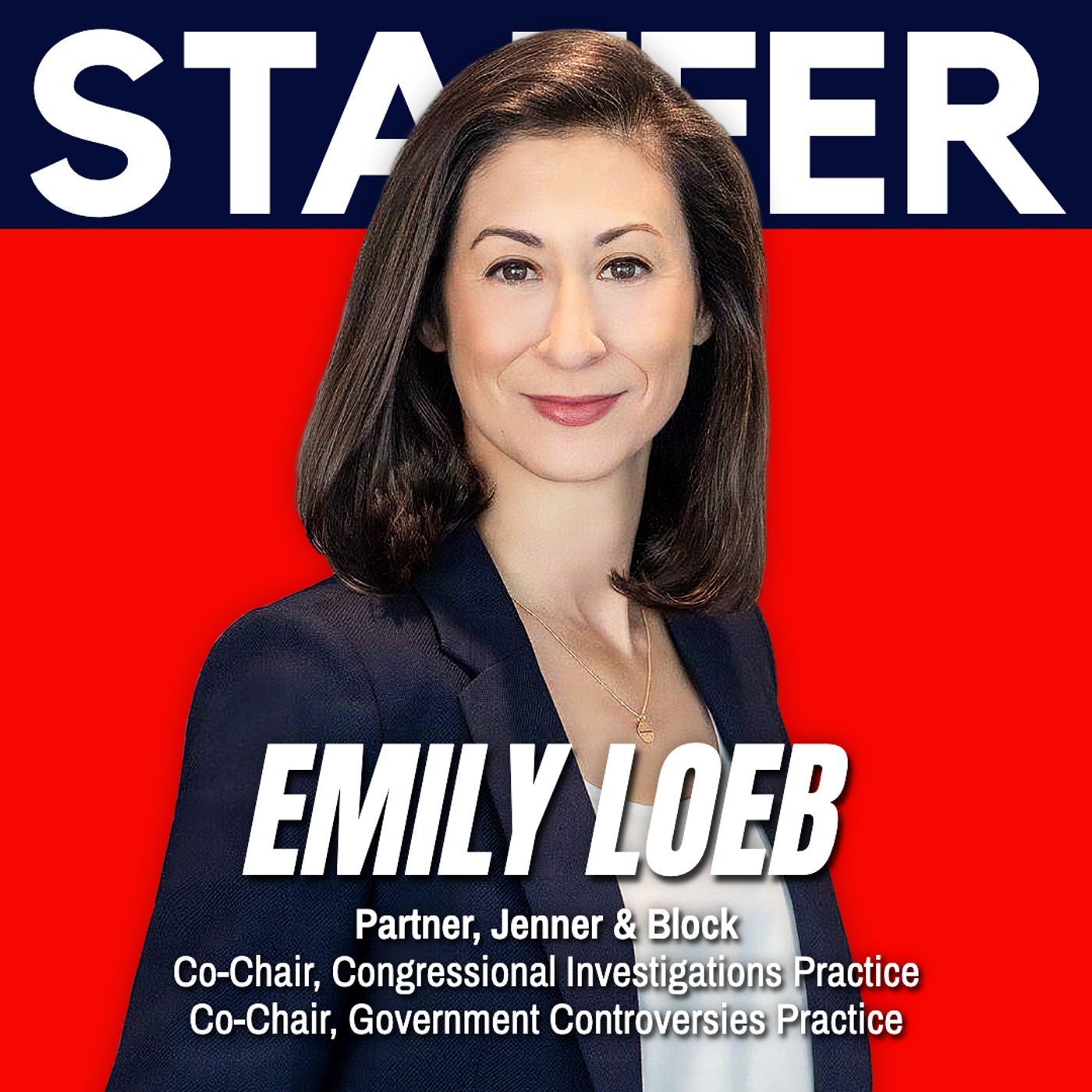
STAFFER guest Emily Loeb reflects on a career that has taken her from the campaign trail to the Obama White House and the Justice Department under two presidents. She talks about how congressional oversight is changing, what comprises an effective response, and why there’s no better training ground for a young person than a political campaign.
Democrats nominate Hakeem Jeffries for speaker as internal party tensions continue over leadership and the direction of the party. A key Hegseth adviser faces scrutiny over reported ties to an Israeli defense contractor and Saudi Arabia. Jake Sullivan faces accusations of facilitating billions in weapons transfers to Israel during the Gaza war. Thanks to today's sponsors: Visit www.sleep.me/tyt (http://www.sleep.me/tyt) to get up to $640 off your Chilipad 2.0 with code TYT Host: Ana Kasparian
The rich and powerful have long used UK law to keep their secrets under wraps. The newspapers may know the allegations, social media thinks it knows and Auntie Shirley in Swindon is certain she knows. And yet nobody can officially say a word. There are injunctions, super-injunctions, gagging orders and SLAPPs – “Strategic lawsuits against public participation”. But what even are they and how do they work? Is it really about protecting privacy or power? And do you really need one if you’ve done nothing wrong? Mark Stephens CBE, one of Britain’s most experienced media lawyers, joins Emma Kennedy to break down the injunctions crisis. • Read Mark’s contributions to the New York Times’ explainer on the injunctions crisis (https://www.nytimes.com/2026/11/14/world/europe/russell-brand-david-walliams-gag-order.html) Back The Bunker on Patreon (https://www.patreon.com/bunkercast/membership?vanity=bunkercast) to help keep the podcast going – and get early, ad-free episodes, merch and more. Writt
Mark Walters and Arizona Rep. Quang Nguyen break down what the midterms could mean for gun rights, how Article II, Section 26 protects the right to bear arms, and why duty to retreat, state preemption, and Gov. Katie Hobbs matter in the fights ahead.