The White House is warning Democrats that investigating the Trump administration could be a crime, and the guys get the news mid-episode. Tim, Rich, and Luke dig into the threat against incoming Oversight chair Robert Garcia, the push to impeach Pete Hegseth over the boat strikes, and what happens when the people questioning Trump’s cabinet finally control the hearings. Plus, why Mark Kelly might have a few questions of his own. Before that, Lauren Boebert’s defeat gives the guys another reason to celebrate, and they look at the Democratic gains in state governments that aren’t getting enough attention. Republicans’ response to the losses? More Stephen Miller and Jim Jordan. Also, John Fetterman picks a fight with Chris Van Hollen, Abdul El-Sayed’s results challenge the panic over his coalition, and the guys make the case for Democrats showing up in communities they’re usually told they can’t win.
Sarah Isgur and David French analyze the last three election cycles as influenced by free speech issues, from Donald Trump’s “they/them” ad as an effective closing argument in 2024 to contentious campus speech and protests and the Trump administration’s threats to social media companies. The two also discuss the next free speech fight in the last two years of the Trump administration. The Agenda: –Free speech highlights from the last few years –Talarico and Texas (https://www.nytimes.com/2026/10/04/opinion/talarico-paxton-texas-senate-evangelicals.html) – The consequential side of Callais (https://www.supremecourt.gov/opinions/25pdf/24-109_21o3.pdf) –The next free speech fight –A math teacher’s legal question –Audience Q&A Show Notes: –We’re hiring! –Murthy v. Missouri (https://www.supremecourt.gov/opinions/23pdf/23-411_3dq3.pdf) –Divided We Fall (https://us.macmillan.com/books/9781250836731/dividedwefall/) –Tinker v. Des Moines Independent Community School District (https://www.oyez.o
Is all foreign direct investment good for productivity? Can the UK still compete for the world's most valuable investment projects? And what makes FDI transformative rather than merely incremental? This episode explores the shift from the quantity of inward investment to its quality, what researchers now call transformative FDI, and uses the West Midlands as a case study in how investment promotion, local capabilities, and long-term economic strategy can work together to drive productivity growth. Host Professor Bart van Ark is joined by: Professor Jun Du, Managing Director, The Productivity Institute; Professor of Economics, Alliance Manchester Business School. Nigel Driffield, Professor of International Business, Warwick Business School; Deputy Pro-Vice-Chancellor for Regional Engagement, University of Warwick. Neil Remi, Chief Executive, West Midlands Growth Company. For more information on the topics discussed: Transformative FDI & Regional Productivity Research: Publications and s
South America is a major driver of global grain production, so weather and policy developments can have significant implications for grain markets worldwide. On this episode of the Tillage Edge, Rory Deverell, CEO of Black Silo Commodity Consulting, discusses the potential impact of El Niño on global grain production and prices, and examines how the new EU Deforestation Regulation (EUDR) could affect grain supplies and market dynamics across Europe in the months ahead. Rory explains what these developments could mean for Irish tillage farmers and outlines the key market signals that growers should be watching as the season unfolds.
No one has made an aerospike engine that could fly, even 60 years after it was first conceived. Adrià Argemí, founder and CEO of Pangea Propulsion, thinks he can do it. Using the "black magic" of super-precise 3D printing, his Barcelona-based team plans to turn the company into the "Rolls Royce of space." He talks about 3D-printing metal engines, the impact of defence spending on space, and why scaling a European space company takes too long. He also makes an impassioned proposal for more political and financial integration across the European Union. Hosted on Acast.
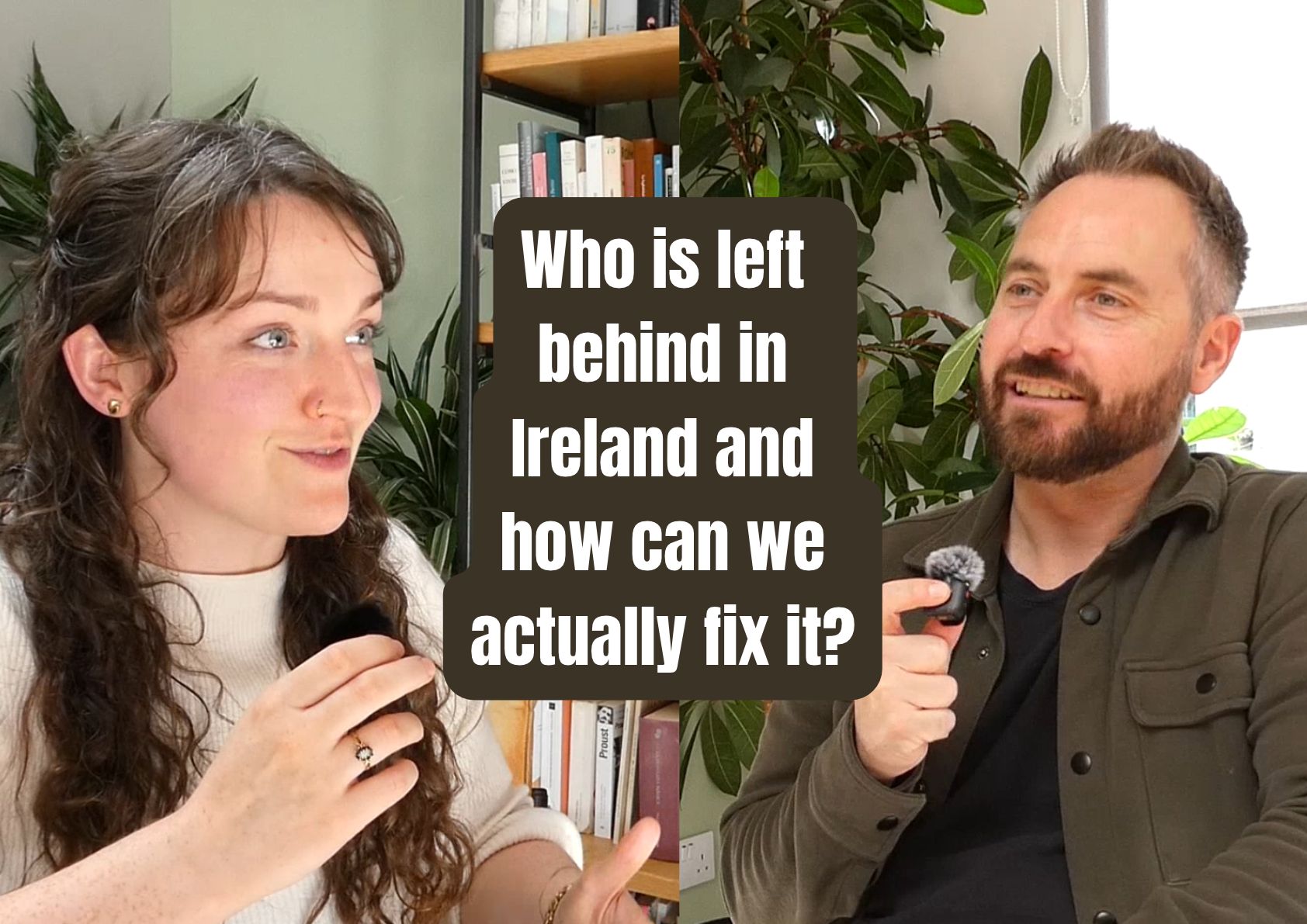
Why is entrenched poverty such an issue in some communities in Ireland and is there a way to actually change it instead of just treating the symptoms? Does our welfare state paper over the cracks instead of getting to the root causes of problems? What would getting to those root causes look like? Hosted by Keire Murphy and Aidan Regan. YouTube: https://www.youtube.com/@GetShtDonePod Substack: https://getshitdonepod.substack.com/ Instagram: https://www.instagram.com/getshitdonepod/ Hosted on Acast. See acast.com/privacy (https://acast.com/privacy) for more information.
Dear John is a brand new podcast that's for one man only: John Healey, the Chancellor of the Exchequer. Each week, a top guest will pitch the Chancellor a great idea to get Britain going again. First up, it's the turn of Duncan Weldon. An economist, journalist and author of books like Two Hundred Years of Muddling Through (a history of the British economy), Duncan has devised a plan to fill the Treasury's coffers. His idea? Adding 1% to VAT for every year of a Parliament. But is VAT not, in Gordon Brown's words, the Tory tax? And wouldn't this just put more pressure on beleaguered consumers? Dear John is a Podot podcast. Hosted by Robert Hutton. Created by Nick Hilton. Additional production by Ewan Cameron and Lulu Goad. Music by Ewan Cameron. For sales and advertising, please contact [email protected] Hosted on Acast.
Tonight on America At Night with McGraw Milhaven, we're exploring the world of corporate espionage, honoring America's military veterans, and revisiting the remarkable story of a soldier once buried in the Tomb of the Unknown Soldier. Eric O'Neill, former FBI investigator, founder of NexAssure AI, and author of Spies, Lies, and Cybercrime, joins McGraw to discuss the Nvidia corporate honeytrap investigation and the evolving tactics of modern espionage. He examines how intelligence operations, cybercrime, and corporate security threats intersect in today's technology-driven world. Mary Keeser, founder of America's Adopt A Soldier®, joins the show for a special Veterans Day conversation about honoring those who have served. She highlights the organization's letter-writing campaign and how Americans can show appreciation and support for military personnel and veterans through personal messages of gratitude. Plus, Bill Thomas, former Washington Post writer, shares the extraordinary story o
The Veterans Court hears Frank Lynn Morrison's appeal over additional disability compensation for his adult stepdaughter. Morrison married her mother in 2021, when the daughter was already over eighteen. He says she lives with the family and has been unable to support herself since childhood. The Board of Veterans' Appeals denied the dependency claim because VA's regulation requires stepchild status to begin before eighteen. The dispute concerns two different questions: when the disability began, and when the stepchild relationship legally began. Congress's definition of a child includes some unmarried adults who became permanently incapable of self-support before eighteen. Morrison will argue that Congress did not also require the stepchild relationship to begin before that age. The Secretary's lawyer will defend VA's rule as continuing a relationship formed in childhood, not creating eligibility through a later marriage. The judges will also consider whether a victory on that legal i
Child care in Maryland is among the most expensive in the country, and for many families it costs as much as a mortgage. Councilman Zac Blanchard sits down with Councilmember Mark Parker, chair of the Education, Youth, and Older Adults Committee and founder of a neighborhood daycare and preschool that began at his church, to ask why daycare costs so much and what the city and state can actually do about it. Mark explains why staffing drives the bill, how Maryland's teacher-to-child ratios shape the math, and what happened when the state's Child Care Scholarship Program ran out of money and froze new enrollment. They dig into the squeeze on middle income families, the debate over infant care ratios, and how public pre-K and private centers can work side by side after Maryland's Blueprint reforms. On the city side, Mark previews two proposals coming before the Council: zoning changes that would make it easier to open a center (by right versus conditional use) and capital loans and grants
Welcome to Ark News Daily with Deborah Pardes. In this episode: - US attack on Iran unlikely, but assassination threats against senior Trump officials raise alarms in Washington - Midterm results show Jewish voters continue to support Democrats, but US policy on Israel and antisemitism are becoming increasingly important considerations Check out political analyst Dan Schnur’s podcast and newsletter here (https://danschnur.substack.com/). ____ This episode is sponsored by the Genesis Prize Foundation. Don't just admire greatness. Nominate it. Visit https://genesisprize.org (https://genesisprize.org/). ____ Ark News Daily is hiring! It’s a full-time, remote job based in the US, for someone who knows news, writes for the ear, and follows Israel and the Jewish world closely. If that sounds like you, or someone you know, visit arkmedia.org/careers (http://arkmedia.org/careers). ____ ____ More Ark Media: Listen to: For Heaven’s Sake (https://arkmedia.org/podcasts/for-heavens-sake) There you
The race has finally been called for Democrat Scott Colom in Mississippi. Meanwhile, Sen. Patty Murray is facing pressure over how Democrats will use government funding negotiations to rein in Trump’s war on Iran, while insisting Republicans won’t get a blank check for military spending. Thanks to today's sponsors: Visit www.sleep.me/tyt (http://www.sleep.me/tyt) to get up to $640 off your Chilipad 2.0 with code TYT Host: Ana Kasparian
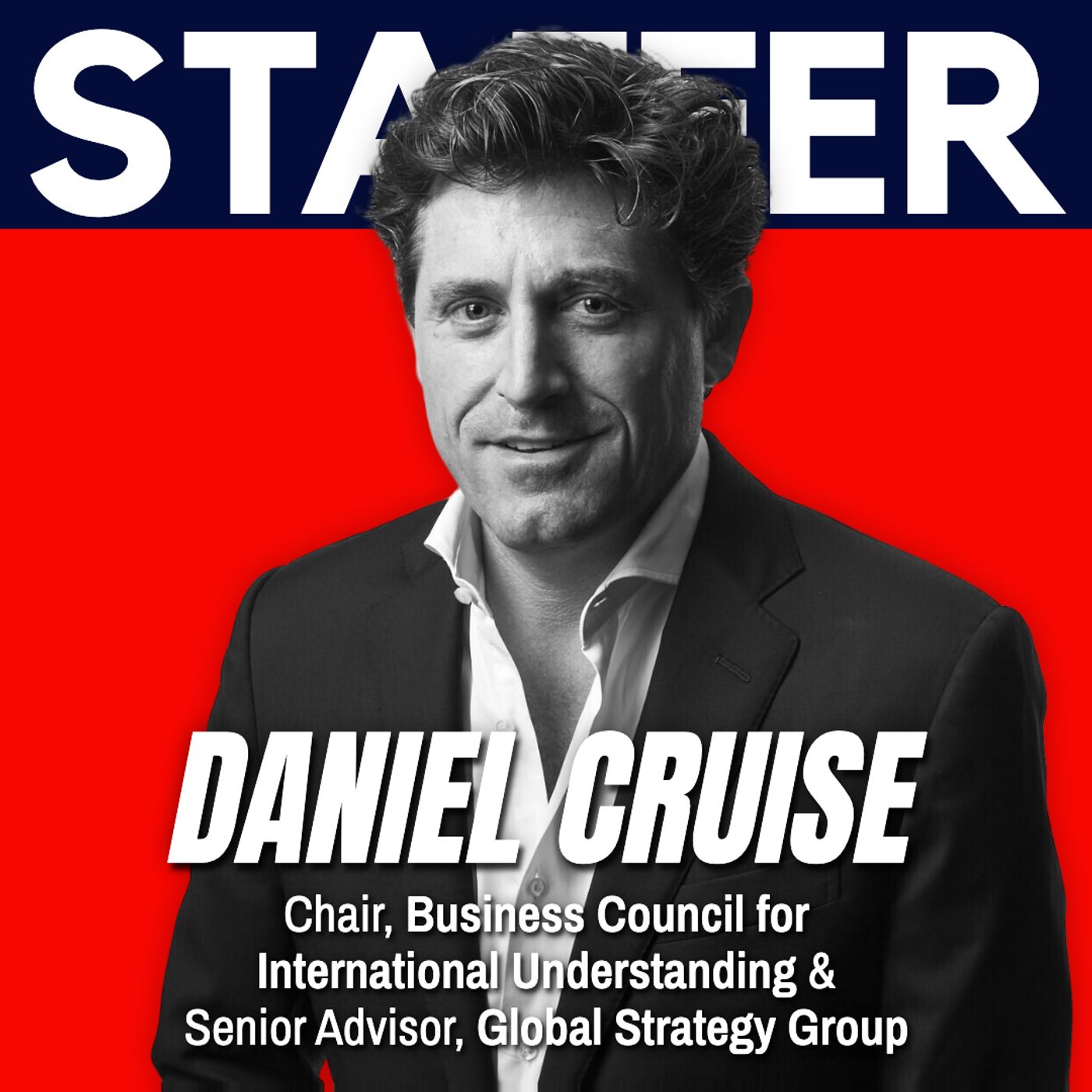
On this episode of STAFFER, Daniel Cruise — Operating Partner at Tikehau Capital and Senior Advisor at Global Strategy Group — reflects on his years in the Clinton Administration, from the U.S. International Trade Administration to the White House, where he served as Director of Public Affairs at the National Security Council. He also shares how those experiences carried him into leading public affairs at Alcoa and Arconic, and why so many of the most important relationships of his career started in government.
The world’s superpowers have become increasingly unpredictable. How should ‘middle powers’ such as Japan, Canada, Brazil and the UK react? Gideon speaks to Robin Niblett, warden of New College, Oxford, who is the former chief executive of Chatham House, and author of ‘After America: The End of the Old Order and the Rise of the Middle Powers'. They discuss how middle powers are co-ordinating on defence and trade, how necessity is drawing former rivals closer together, and why co-operation is worthwhile – even when it’s difficult. Clip: Face the Nation Further reading: Australia’s treasurer says middle powers should co-operate to avoid being hostage to geopolitics (https://www.ft.com/content/653f5a48-94f5-4e92-86dd-7d118e8849a8?accessToken=zwAAAaJmFVjkks9XZicFE-NKqtO4ppUblUpGsc9lP1pIlPVOktOG3X0RjohJqAE.MEYCIQDJdUWfQKMCRa49DAMAXsvKomQHbeb_EEOnOu6RwVhKVQIhAKUnTTzrv8JlA-4MjLp9t-XUFSpUrSah8kud-hdyB7j-&segmentId=8978e9c0-1eba-4a83-da29-db2c2eaf2e61) Sorry Carney, the world does need a great p
How did the Australian Defence Force coordinate one of the nation's largest non-combatant evacuation operations, and what lessons does the 2006 Lebanon War offer for Australia's preparedness for future conflict? Speaking with Defence Connect's former news editor Steve Kuper, Australian Army Colonel (Ret'd) Andrew Condon reflects on his experience commanding the Australian Defence Force taskforce responsible for Operation Ramp, the 2006 evacuation of Australians from Lebanon during the conflict between Israel and Hezbollah. The conversation explores the scale and complexity of the operation, which ultimately brought almost 5,500 Australians home, including the challenges of coordinating military and diplomatic resources, securing evacuation routes and establishing an air bridge between Cyprus and Turkey. Condon discusses the logistical and operational challenges of deploying a relatively small Australian force into a rapidly deteriorating security environment, including negotiations wit
What would Australia lose if our existing nuclear capabilities stopped operating tomorrow? How does nuclear science already support Australians – from healthcare and critical minerals to national security? As AUKUS expands Australia’s nuclear ambitions, what do policymakers need to know about the capability we already have – and what it will take to prepare for the future? In this episode, Sharryn Parker is joined by Dr Miles Apperley to discuss Australia’s nuclear research capabilities and the important role they play in the country’s sovereign capability and national security. Sharryn Parker is Senior Policy Advisor at the ANU National Security College, on secondment from the Department of Defence. Dr Miles Apperley is Group Executive Nuclear Operations, Safety and Security at the Australian Nuclear Science and Technology Organisation (ANSTO). TRANSCRIPT (https://nsc.anu.edu.au/podcast/nuclear-capability-australia-already-has) Show notes: AUKUS at five: facts and fears (https://nsc.a
Could we be on the verge of genuine progress on the EU-UK front? In a few days, Andy Burnham will be in Brussels for the delayed 2026 summit with Ursula Von der Leyen. Naomi and Kenny are joined by Lib Dem MP and Business Select Committee member Charlie Maynard for a look at what's in store in the EU shop. Hotly anticipated deals are expected on agrifoods, emissions trading and youth mobility, and Burnham has been warming up the great British electorate for what might follow the summit. The usual suspects are lining up to bellow 'betrayal' but the polls are staying firmly in Labour’s favour. Dare we hope? • How much has Brexit impacted YOUR community? Use this handy tool (https://eu.bestforbritain.org/) to find out • Arthur Snell's latest Behind The Lines (https://podcasts.apple.com/gb/podcast/ukraine-the-latest-with-sian-norris/id1704344656?i=1000800887738), on Ukraine • We're on Instagram (https://www.instagram.com/quietriotpod/)! • Email us at [email protected] Quiet Riot is a
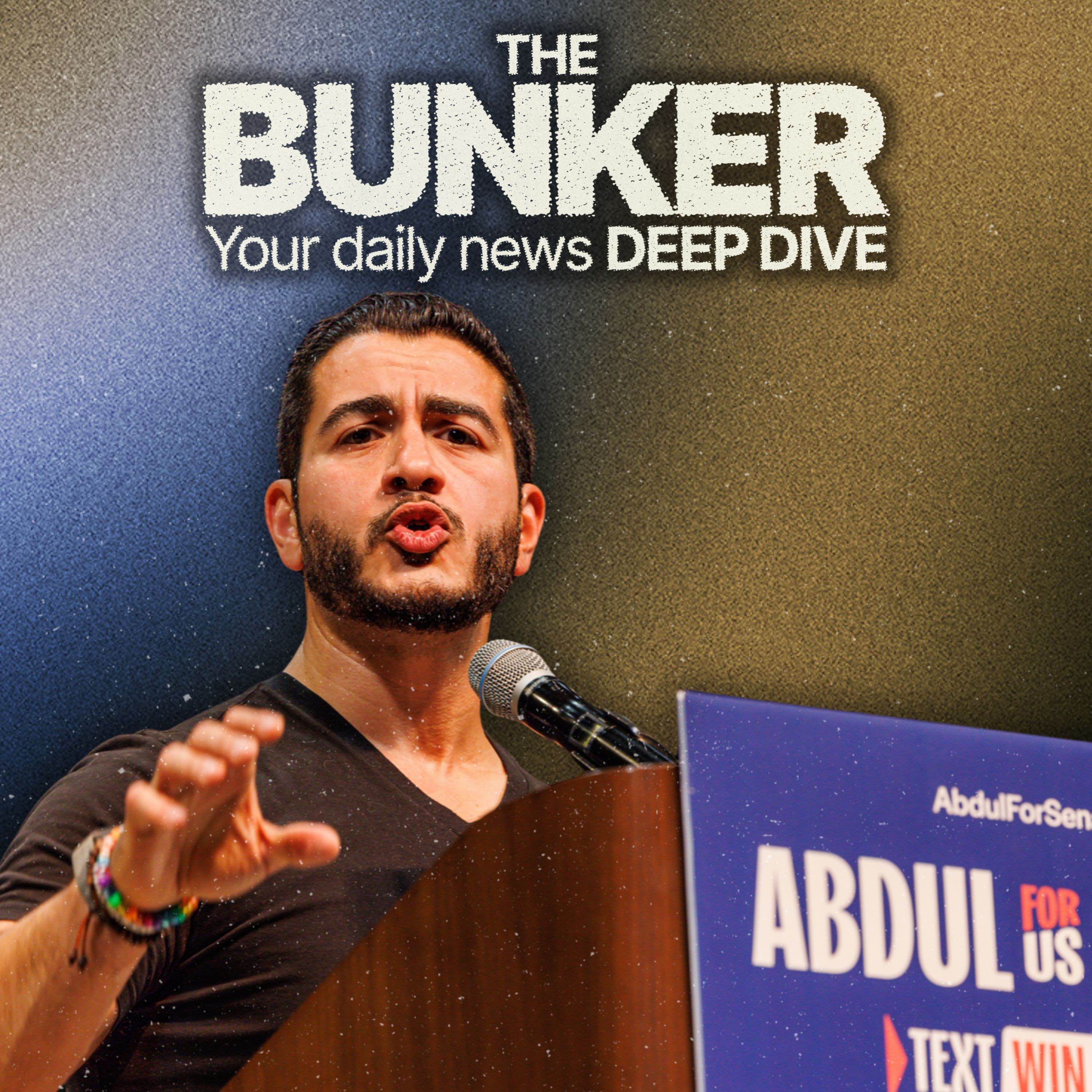
Abdul El-Sayed romped to victory in Michigan and is set to become America’s first Muslim senator. He’s become a key target of Trump’s attacks, but thus far they haven’t worked. Is he the Democrat who can take down MAGA? Jason Zengerle, staff writer for The New Yorker, has recently interviewed the incoming congressman and joins Zing Tsjeng to discuss who he is, what he stands for and what he might mean for America. • Read Jason Zengerle’s latest New Yorker piece (https://www.newyorker.com/news/election-2026/the-electability-of-abdul-el-sayed) on Abdul El-Sayed • And you can buy Jason’s latest book Hated by All the Right People: Tucker Carlson and the Unravelling of the Conservative Mind (https://uk.bookshop.org/a/13277/9781914484483) from our affiliate bookshop Back The Bunker on Patreon (https://www.patreon.com/bunkercast/membership?vanity=bunkercast) to help keep the podcast going – and get early, ad-free episodes, merch and more. Written and presented by Zing Tsjeng. Producer: James
Four High Court decisions and seven more appellate decisions in the Court of Appeal edition of Wednesday 11 November 2026, with the New South Wales, Queensland, Western Australia and ACT editions of the same day folded in. Kirk and a State planning bar; a restorative injunction and the limits of a constructive trust after covert filming; a deceased offender's convictions in a civil claim; community safety in visa refusals; Bugmy and the evidence a deprivation case needs; bail before a new trial; suppression pending special leave; and appellate restraint, pro bono referrals and extensions of time. Historical abuse claims, family violence and sexual offences against children are reported as legal doctrine only. Public Law Desk (opening story; all four High Court decisions also in today's Federal Courts brief). Minister for Planning v IGA Retail Services Pty Ltd [2026] HCA 43 - a State provision cannot prevent a non-colourable Supreme Court claim for jurisdictional error, so s 39(8) Plann
Nineteen decisions in the Federal Courts edition for Wednesday 11 November 2026: four from the High Court of Australia and fifteen from the Federal Court of Australia. The opening story: a Federal Court ruling consolidates the principles for suppression and pseudonym orders, and holds that the safety ground turns on necessity, not proof that harm is probable. Then two members' schemes of arrangement at their first court hearing, a checklist on default judgment and late leave to appeal, and the registry. The four High Court decisions feature in today's Courts of Appeal brief. Practice and Procedure Desk (opening story). eSafety Commissioner v Telegram FZ-LLC (suppression orders) [2026] FCA 1700 (Beach J, 11 November 2026) - Signal: Illustrative. Six overlapping principles for suppression and pseudonym orders under ss 37AE, 37AF and 37AG of the Federal Court of Australia Act 1976 (Cth): orders are exceptional, the applicant bears a heavy onus, the order must be necessary, and there is no
The Petal's New Zealand edition for 11 November 2026 carries sixteen decisions newly reported, three from the Supreme Court and thirteen from the High Court; thirteen are aired at depth and three are noted. The thread is how sure you have to be: reasonable assurance before hearsay goes in, proof beyond reasonable doubt without a witness's certainty, and evidence for commercial practice and every dollar of collection costs. Criminal Law Desk (first story). Jury v The King [2026] NZSC 171 - the s 18(1)(a) Evidence Act 2006 threshold, reasonable assurance that a hearsay statement is reliable, requires the judge as gatekeeper to give the s 16(1) circumstances a hard look and be reasonably confident the statement as a whole is reliable; not near certainty, and distinct from s 7 relevance; the formulation that hearsay need only be reliable enough for the fact finder to consider (Anderson v R [2020] NZCA 106) was disapproved, and facially unreliable hearsay is not cured by the trial process o
Eight decisions from the civil and administrative tribunals of New South Wales and Victoria in the Tribunals edition of Wednesday 11 November 2026, two with headnotes and three more worked examples from synopses. Why an agency must take active steps to check personal information before using it, even with no reason to doubt it, and why a correction request cannot be declined because a claim has settled; a building appeal on crediting the unpaid contract price against an uninsured builder; and worked examples on disability discrimination, leave to proceed and firearms prohibition orders. Tribunals Desk: accuracy before use and correction (lead; headnoted). GJO v Insurance and Care NSW [2026] NSWCATAP 358 - the duty in s 16 of the Privacy and Personal Information Protection Act 1998 (NSW) and HPP 9 to ensure accuracy before use requires active steps; having no reason to doubt the information is no licence to take none; the purpose of use must be identified with specificity; the s 15(1)(a
Andrew Carter, Chief Executive, is joined by Sam Freedman, author of the Sunday Times best-seller 'Failed State' and co-author of the popular politics Substack ‘Comment is Freed’. They discuss the complexities of centralisation and explore if devolution can provide an answer to the UK’s economic problems
For review: 1. The Saudi-led coalition supporting Yemen’s internationally recognized government said Wednesday that air defenses intercepted and destroyed three cruise missiles and two drones launched by Yemen’s Houthi group toward different regions of Saudi Arabia. 2. Iran is producing 50 ballistic missiles a month, about half its prewar capacity, according to Western intelligence estimates reported on Wednesday, shortly before Iran unveiled a new underground “missile city.” 3. US Treasury Secretary Scott Bessent has recently moved from his Washington, DC, residence to a US military base due to Iranian threats against his life, three people familiar with the matter said on Tuesday. 4. US Secretary of State Marco Rubio says he sees no need to resume major combat operations against Iran because economic restrictions are working so effectively. 5. The US diverted refueling tankers from RAF Mildenhall on Monday because of a threat from Iran, WSJ reported. 6. After criticism from the US-ba