***Top 5% Globally Ranked*** Can Prediabetes Be Reversed? What to Do Before It Becomes Type 2 Diabetes Can prediabetes be reversed? If you’ve been told your blood sugar is “a little high,” you may be wondering what that means—and what you can do next. In Episode 58 of the Health Beyond Weight Loss Podcast, TaShawn Davis, RN, explains the connection between prediabetes, insulin resistance, and blood sugar in a way that’s easier to understand. She also shares a moment from a Metabolic Intensive class when participants spoke honestly about receiving a diagnosis without feeling clear on their next steps. A prediabetes diagnosis can bring up fear and questions, especially if you’ve watched a loved one live with type 2 diabetes. This episode offers a starting point for a more informed conversation about your health. In This Episode What a prediabetes diagnosis means How insulin resistance and blood sugar are connected Why prediabetes does not mean type 2 diabetes is inevitable What research
Vincent travels to the 8th Measles Mini Symposium at the Mayo Clinic in Rochester, MN where he meets with Paul Rota and Patrick Sinn to discuss their careers and their work on measles virus. Host: Vincent Racaniello (https://en.wikipedia.org/wiki/Vincent_Racaniello) Guests: Paul Rota and Patrick Sinn Become a patron (https://www.microbe.tv/contribute) of TWiV! Intro music is by Ronald Jenkees (http://www.ronaldjenkees.com/)
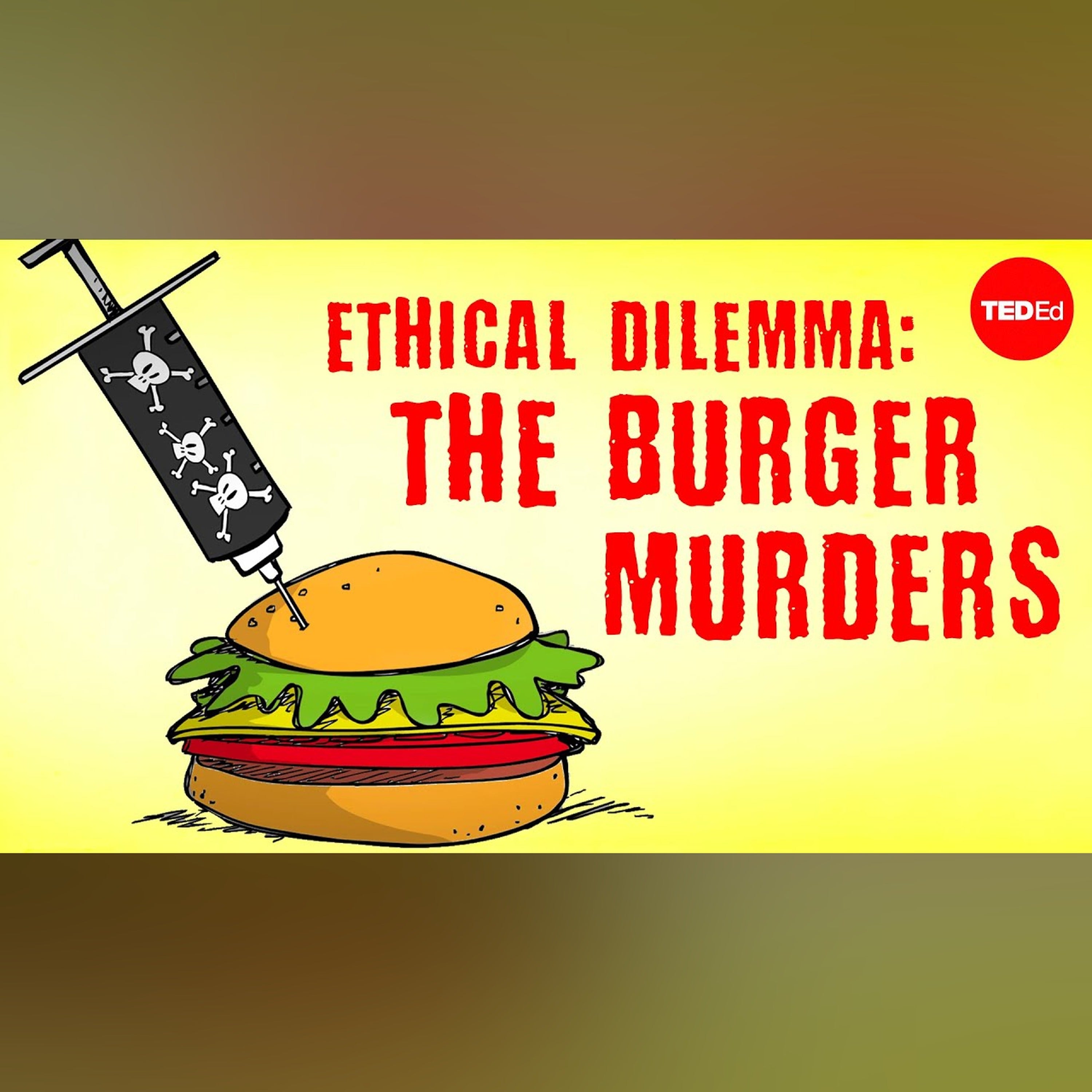
What’s the best way to handle a crisis in business? Dig into how different strategies can work when faced with an ethical dilemma. Uploaded 28-07-20 -- You founded a company that manufactures meatless burgers that are sold in stores worldwide. But you’ve recently received awful news: three people in one city died after eating your burgers. A criminal has injected poison into your product! The deaths are headline news and sales have plummeted. How do you deal with the crisis? George Siedel and Christine Ladwig explore the different strategies of this ethical dilemma. Lesson by George Siedel and Christine Ladwig, directed by Patrick Smith. Animator's website: http://blend-films.blogspot.com/ Sign up for our newsletter: http://bit.ly/TEDEdNewsletter Support us on Patreon: http://bit.ly/TEDEdPatreon Find us on Twitter: http://bit.ly/TEDEdTwitter Peep us on Instagram: http://bit.ly/TEDEdInstagram View full lesson: https://ed.ted.com/lessons/ethical-dilemma-the-burger-murders-george-siedel-a
Why do geese fly in V formation? Why do leaves change colour in autumn? And why do birds eat rocks? Join Chris Packham, Kyle Thomas and Megan McCubbin for Naturewatch as they answer intriguing questions about our British wildlife. This episode is followed by an exclusive bonus episode on BBC Sounds. Naturewatch: Down the Rabbit Hole.
Welcome to a very special, shoulder-pad-wearing episode of The Poshcast! This week, Sophia Money-Coutts and Cleo Watson are joined by Dominic Treadwell-Collins, the mastermind showrunner behind the Disney+ smash-hit television adaptation of Rivals. As the latest instalment of Rivals episodes hit our screens, Dominic takes us behind the scenes in Rutshire. He reveals how he first discovered Jilly Cooper while backpacking in China, his drunken sleepovers with the author involving lethal sloe gin fruit salad, and exactly why he made the controversial choice to cast a brunette Rupert Campbell-Black. We also get the inside scoop on Jilly's incredibly strict script notes, and a peek into Lady Monica's funeral. Finally, Dominic helps tackle a thorny listener dilemma: if you are placed in a separate bedroom from your fiancé at your future in-laws' home for Christmas, is a spot of corridor creeping acceptable? W.W.J.D: What would Jilly do? Email us: [email protected] Instagram: @thepo
This week, follow Seán on a deeply moving auditory journey exploring the hidden toll our firework celebrations take on local wildlife. From the sudden, disorienting blasts of fireworks that drive roosting birds into the freezing night sky, to the awe-inspiring, natural explosive sounds of rolling winter storms, Seán contrasts artificial chaos with nature's own raw power. Along the way, he shares a breathtaking compilation of winter soundscapes he has carefully curated over the years and how learning to truly listen to the quiet beauty of the season. This is a HeadStuff podcast produced by Hilary Barry and Dan Wilcox. Original artwork is by Matt Mahon.
Birding editor Ted Floyd joins host Nate Swick again for another Random Birds episode, featuring a list of birds, a random number generator and a whole lot of bird stories. This time around the generator is truly random, featuring rails and gulls, and then rails and gulls again, along with a few other surprises. We appreciate it!
Join National Trust ranger Ajay Tegala and author, musician and solitary witch Zoë Howe for a magical conversation recorded live at the Emmetts Garden Autumn Festival. Journey around the zodiac as Ajay and Zoë explore the connections between nature, folklore and the turning year. Discover the plants, animals and ancient traditions that have shaped our seasonal stories, and find new ways to connect with, enjoy and protect the natural world throughout the year. From seasonal wonders to age-old folklore, uncover the magic hiding in the world around us. Watch a video of this podcast on the National Trust’s YouTube: https://youtu.be/CniyYJXYjXw Production Host: Ajay Tegala Producer: Jesus Gomez and Pippa Tilbury-Harris Sound: Jack Glover-Higgins and Jesus Gomez Contributor: Zoë Howe Discover more Ajay and Zoë’s book ‘Witching the Wild Year’ will be published in 2027 via The History Press If you’d like to hear or read more from Zoë you can do so here: https://linktr.ee/zoehowe If you'd like
Uploaded 29-03-18 View full lesson: https://ed.ted.com/lessons/a-day-in-the-life-of-a-roman-soldier-robert-garland The year is 15 CE, and the Roman Empire is prospering. Most of the credit will go to the emperor, but this success wouldn’t have been possible without loyal soldiers like Servius Felix. Robert Garland illuminates what life was like for a solider in the Roman army. Lesson by Robert Garland, animation by Brett Underhill. Thank you so much to our patrons for your support! Without you this video would not be possible! Luis Felipe Ruiz Langenscheidt, QIUJING L BU, Ernest Chow, Kyanta Yap, Shawar Khan, Elizabeth Cruz, Rohan Gupta, Sarah Lundegaard, Michael Braun-Boghos, Yujing Jiang, Aubrie Groesbeck, Kyoung-Rok Jang, Kathryn J Hammond, sammie goh, Delene McCoy, Mayank Kaul, Ruth Fang, Scott Gass, Mary Sawyer, Jason A Saslow, Joanne Luce, Rishi Pasham, Bruno Pinho, Javier Aldavaz, Craig Sheldon, Andrew Bosco, Nik Maier, Adi V, Hiroshi Uchiyama, Chris , Vik Nagjee, Della Palacios
In which Craig Benzine talks about the structure of the U.S. court system and how exactly it manages to keep things moving smoothly. You'll learn about trial courts, district courts, appeals courts, circuit courts, state supreme courts, and of course the one at the top - the U.S. Supreme Court. It’s all quite a bit to manage with jurisdictions and such, but it's important to remember that the vast majority of cases never even make it to court! Most are settled out of court, but also terms like mootness and ripeness are used to throw cases out altogether. Today, we're going to focus on how cases make it to the top, and next week we’ll talk about what happens when they get there. Produced in collaboration with PBS Digital Studios: http://youtube.com/pbsdigitalstudios Support is provided by Voqal: http://www.voqal.org (http://www.voqal.org/) All Flickr.com images are licensed under Creative Commons by Attribution 2.0 Crash Course is on Patreon! Want to find Crash Course elsewhere on the i
The post-World War II decades in Europe are sometimes called the Thirty Glorious Years. As those years wore on, tensions between East and West grew, and economic growth slowed or was unevenly distributed across Europe, protests and dissent arose across the continent. Sources: -Bolton, Jonathan. Worlds of Dissent: Charter 77, The Plastic People of the Universe, and Czech Culture under Communism. Cambridge: Harvard University Press, 2012. -Green Parties Worldwide: http://www.greens.org (http://www.greens.org/) -Greenwald, Lisa. Daughters of 1968: Redefining French Feminism and the Women’s Liberation Movement. Lincoln: University of Nebraska Press, 2018. -Smith, Bonnie G. Europe in the Contemporary World, 1900 to the Present, 2nd ed. London: Bloomsbury, 2020. -Zantovsky, Michael. Havel: A Life. New York: Grove, 2014. Watch our videos and review your learning with the Crash Course App! Download here for Apple Devices: https://apple.co/3d4eyZo Download here for Android Devices: https://bit.
In which John Green teaches you about Harper Lee's famous novel, To Kill a Mockingbird. John will cover a bit about Harper Lee's personal life, (seeing as this novel has some autobiographical elements) and her long association with Truman Capote, who figures as a character in the book. You'll get an overview of the plot, and we'll talk a bit about Mockingbird as an example of bildungsroman (again) and Southern Gothic, and look into the novel as a commentary on the racism and patriarchy of the Alabama in which Harper Lee grew up. Consider supporting local bookstores by purchasing your books through our Bookshop affiliate link https://bookshop.org/shop/complexly or at your local bookseller. Crash Course is on Patreon! Want to find Crash Course elsewhere on the internet? Facebook - http://www.facebook.com/YouTubeCrashCourse Twitter - http://www.twitter.com/TheCrashCourse Instagram - https://www.instagram.com/thecrashcourse/ CC Kids: http://www.youtube.com/crashcoursekids
Episode 136 of Father-Offspring Interviews. Topics in this episode include a recent report that the brain has two lineages of cells and the implications, as well as why some species reproduce and then promptly die. Social & Websites Question Submission: https://ha66meqrpqz.typeform.com/sapolsky Instagram: https://www.instagram.com/robert.sapolsky 00:00 Intro 00:00:14 Question 1 (Dual lineages of brain cells) 00:11:51 Question 2 (Post-mating deaths)
Discover how scientists and doctors used bats' ultrasound capabilities as inspiration for SONAR and non-invasive medical procedures. Uploaded 01-04-21 -- In a dark cave, bats can’t see much. But even with their eyes shut, they can navigate rocky topography at incredible speeds. This is because bats aren't just guided by their eyes, but rather, by their ears. It may seem impossible to see with sound, but bats, naval officers, and doctors do it all the time. How is that possible? Jacques S. Abramowicz digs into the unique properties of ultrasound. Lesson by Jacques S. Abramowicz, directed by Sofia Pashaei. Support Our Non-Profit Mission ---------------------------------------------- Support us on Patreon: http://bit.ly/TEDEdPatreon Check out our merch: http://bit.ly/TEDEDShop ---------------------------------------------- Connect With Us ---------------------------------------------- Sign up for our newsletter: http://bit.ly/TEDEdNewsletter Find us on Twitter: http://bit.ly/TEDEdTwitter
Last week we explored the National Emergency Briefing, a film trying to change how we think about climate change. This week we're joined by Nick Oldridge, one of the people behind it, to discover how an idea between two brothers became a nationwide campaign with thousands of screenings. We explore why the film takes such a different approach to communicating climate change, the extraordinary response it's received, and how bringing communities together could help inspire action. Music licence ID: 6WPY8Q4O2RPFIOTL
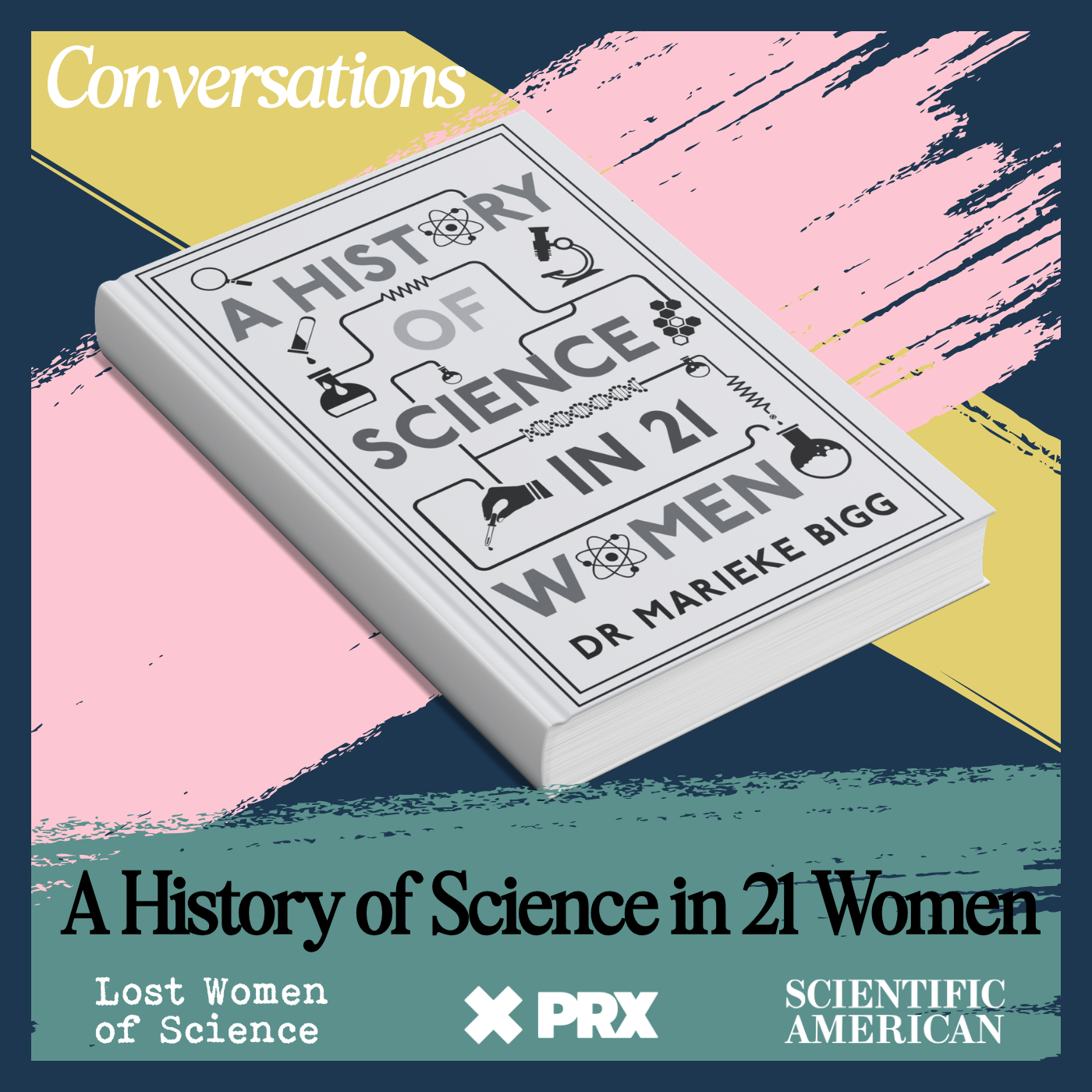
In this episode of Lost Women of Science Conversations, host Carol Sutton Lewis speaks with Dr. Marieke Bigg about her new book, A History of Science in 21 Women (https://www.simonandschuster.com/books/A-History-of-Science-in-21-Women/Marieke-Bigg/History-in-21-Women/9781836432142?gad_campaignid=24283565508&gad_source=1&gbraid=0AAAAADv-uEnw23Gpk7PqzrkGbCQnQRVR-). In the book, Bigg set out to tell the story of 21 women scientists spanning different fields throughout history. She writes about well known names, like Marie Curie and Rosalind Franklin, all the while challenging common stereotypes and beliefs about their work. The book also reveals the stories of lesser known scientists that never got the recognition they deserved, like Anne McLaren, who was the focus of this interview. Bigg asks us to think differently about what scientific achievement really looks like, how we decide who gets remembered and for what. Learn about your ad choices: dovetail.prx.org/ad-choices (https://dovetai
Climate change has no bias, but our societies and systems do. And although it’s a danger to all of us, a changing climate affects some groups disproportionately, raising issues of justice and equity. In this episode of Crash Course Climate and Energy, we’ll take a look at the ways injustice within societal structures causes climate change to affect some more than others and discuss some of the work that environmental justice advocates are doing in response. Chapters: Introduction: The Rohingya & Climate Inequality 00:00 How Climate Affects Our Lives 1:45 Climate Justice 3:22 Redlining & Climate Inequality 7:18 Social Inequality & The Climate 9:43 Renewable Energy & Inequality 12:15 Review & Credits 13:21 Sources: *** Crash Course is on Patreon! Thanks to the following patrons for their generous monthly contributions that help keep Crash Course free for everyone forever: Katie, Tori Thomas, DL Singfield, Amelia Ryczek, Ken Davidian, Stephen Akuffo, Toni Miles, Steve Segreto, Kyle & Kath
Tim Roberts is an Australian Sports Physiotherapist working as the Sports Medicine Manager at the UFC Performance Institute in Mexico City. Tim was previously the Sports Medicine Manager at UFC China, a Sports Physiotherapist at the English Institute of Sport, and he started his career in Australian rules football as a physio in the SANFL. In this episode, Tim discusses all things surrounding the athletic neck. He identifies key sinister pathologies to screen for and rule out, his comprehensive assessment of the neck, thoracic spine, and shoulder girdle. His rehabilitation approach to the neck, including range of motion, motor control, endurance, strength, rate of force development, sensorimotor skills, and sports specific training. The role of the neck in rehabilitating and preventing concussion injuries. And sport specific rehabilitation progressions in mixed martial arts. Topics Sinister Pathologies and Key Red Flags Around the Neck Assessment of Athletic Neck Pain Rehabilitation of
In this episode of Crash Course Psychology, Hank talks about how we learn by observation... and how that can mean beating up an inanimate clown named Bobo. Want more videos about psychology? Check out our sister channel SciShow Psych at https://www.youtube.com/scishowpsych! -- Chapters: Introduction: The Bobo Doll Experiment 00:00 Social Cognitive Learning 1:05 Limitations of Classical & Operant Conditioning 1:58 Learning Associations 2:38 Learning & Cognition 4:06 Latent Learning 4:58 Observational Learning, Modeling, & Imitation 5:36 Reward Pathways & Mirror Neurons 6:59 Observational Social Learning 7:58 Review & Credits 8:48 -- Crash Course is on Patreon! Want to find Crash Course elsewhere on the internet? Facebook - http://www.facebook.com/YouTubeCrashCourse Twitter - http://www.twitter.com/TheCrashCourse Instagram - https://www.instagram.com/thecrashcourse/ CC Kids: http://www.youtube.com/crashcoursekids
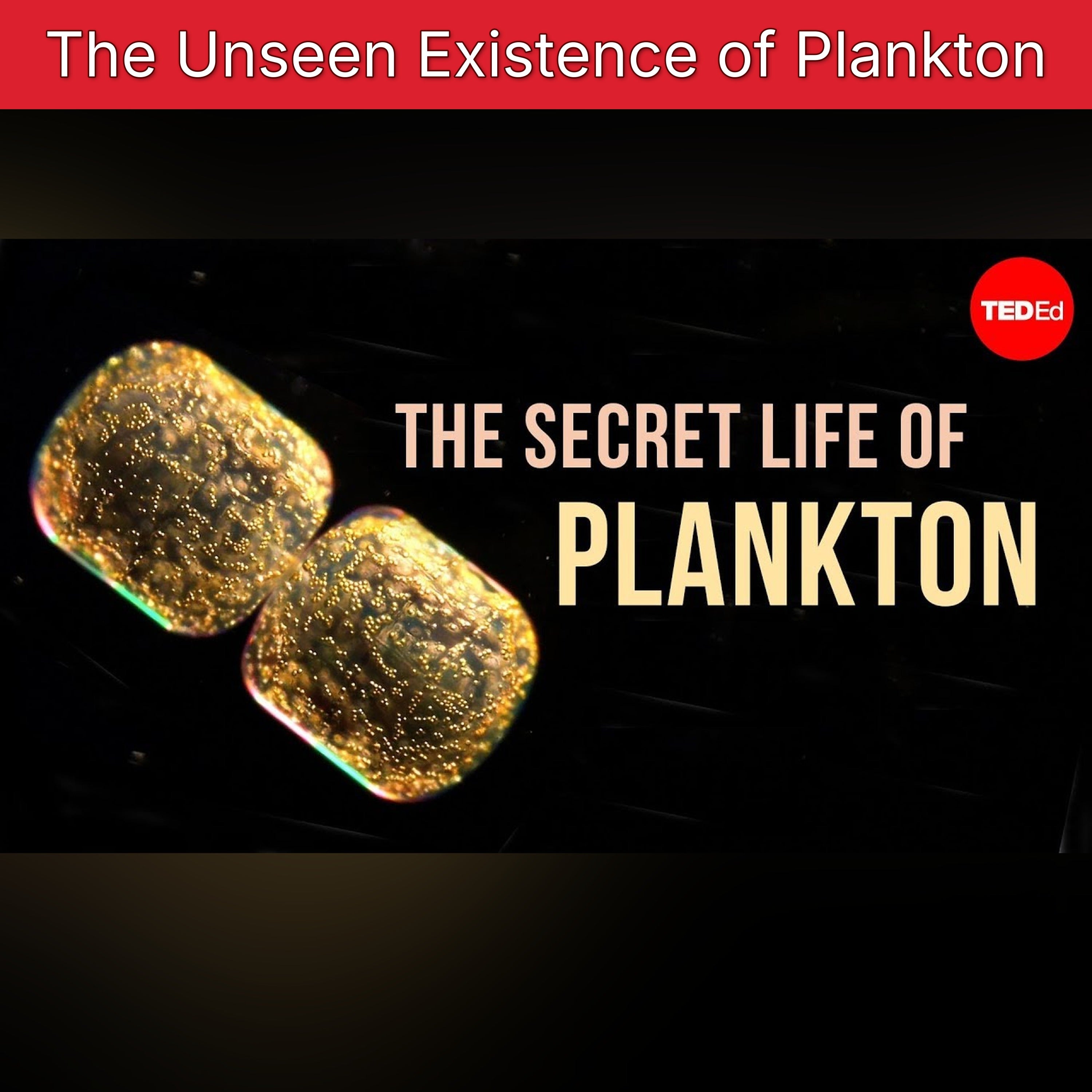
New videography techniques have opened up the oceans' microscopic ecosystem, revealing it to be both mesmerizingly beautiful and astoundingly complex. Marine biologist Tierney Thys has used footage from a pioneering project to create a film designed to ignite wonder and curiosity about this hidden world that underpins our own food chain.
A newly married couple thought they'd found the perfect place to begin their life together—a charming old house in a quiet neighborhood. It needed some attention, but they saw its potential and were excited to make it their home. Not long after moving in, however, strange things began happening. An unseen hand seemed to touch one of them in bed, heavy footsteps echoed through the house, and objects moved without explanation. Then came an unsettling encounter involving an elderly woman watching them from an upstairs window. When the couple learned more about the home's history, they began to suspect that its former owner might never have left. But rather than abandon the house, one of them decided to address the mysterious presence directly. Could two very different occupants find a way to share the same home—or was someone determined to remain its only resident? #RealGhostStoriesOnline #TrueGhostStories #HauntedHouse #HistoricHaunting #GhostlyApparitions #ParanormalEncounters #Restless
What began as an ordinary night out with friends in Denver took a frightening turn when one woman began sensing something dark and threatening nearby. She couldn't see it directly, but she felt its presence growing stronger, almost as though something was following her—and trying to get inside her. Leaving the bar didn't help. Neither did walking around or trying to distract herself. Desperate for answers, she contacted a psychic friend who suggested an unusual ritual to sever whatever connection might have formed. To her relief, it worked. But the darkness wasn't finished with her. It returned on other occasions, always bringing that same unsettling feeling. And during its final visit, something happened that made the experience even more disturbing. #RealGhostStoriesOnline #ParanormalAttachment #DarkEntities #ShadowPeople #ParanormalEncounters #SpiritAttachment #UnexplainedPhenomena #PsychicProtection #TrueGhostStories #HauntingEncounters Love real ghost stories? Want even more? Want
Delayed release of the November 10, 2026 edition. News reflects the November 10 research cutoff. Bayer's Sunharbo (asundexian) wins FDA approval for stroke prevention, with bleeding risks shaping patient selection. Beam's risto-cel meets its pivotal sickle cell goal, but a year-end filing could precede detailed public results. Lilly's Foundayo (orforglipron) sleep apnea data, Boehringer and Zealand's survodutide safety result, and the FDA's GLP-1 vision-warning action put benefit and tolerability in focus. Also: Novocure's Optune Mya setback in lung-cancer brain metastases, EMD Serono's pimicotinib approval for tenosynovial giant cell tumor, Compass's COMP360 depression filing, and argenx's deal for Unnatural Products. Alex Mercer and Maya Patel host.
Climate change is being addressed by individuals, activist groups, and large corporations, but it’s going to take getting entire nations on board if we want to really meet our climate goals. In this episode of Crash Course Climate and Energy, we’ll learn about the alphabet soup that is global climate organization and take a look at some successful – and not-so-successful – international climate policies. Chapters: Introduction: Global Cooperation 00:00 The UNEP, IPCC, & UNFCCC 1:43 The Kyoto Protocol 5:34 The Paris Agreement & Green Climate Fund 6:43 The Stockholm Declaration 8:30 The Montreal Protocol & Kigali Amendment 10:06 Review & Credits 12:09 Sources: *** Crash Course is on Patreon! Thanks to the following patrons for their generous monthly contributions that help keep Crash Course free for everyone forever: Katie, Tori Thomas, DL Singfield, Amelia Ryczek, Ken Davidian, Stephen Akuffo, Toni Miles, Steve Segreto, Kyle & Katherine Callahan, Laurel Stevens, Burt Humburg, Allyson Ma